
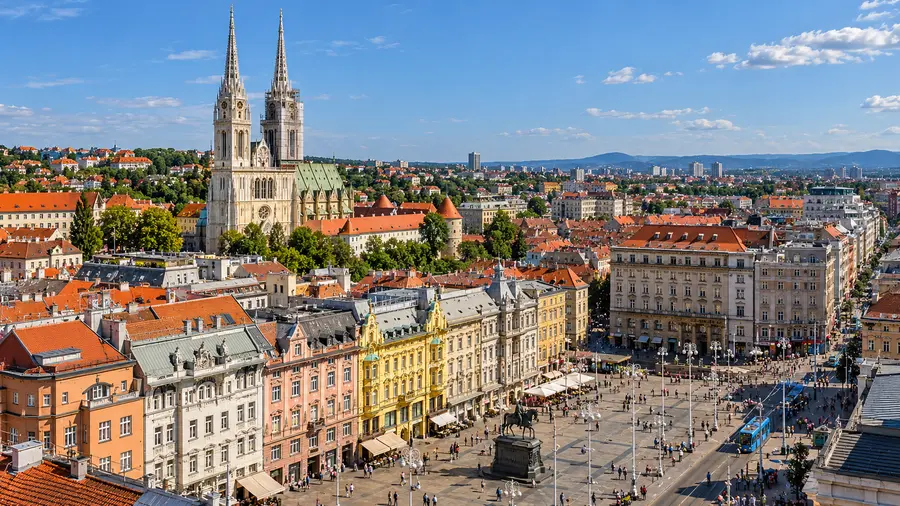
Croatia's capital, Zagreb, is the city many travellers skip on their way to the Adriatic, and most of those who stop wish they had stayed longer. It grew out of two rival hilltop settlements, the church town of Kaptol and the craftsmen's town of Gradec, which squabbled for centuries until they were merged into one city in 1850. That history gives Zagreb its double character: an Upper Town of cobbles, gas lamps and tiled roofs, and a Lower Town of Viennese facades, leafy squares and café terraces where a single coffee can last all afternoon. Is Zagreb worth visiting? With around 770,000 people, a cannon that booms over the rooftops every day at noon and a museum devoted to broken hearts, it is far livelier than its low-key reputation suggests. Here are twenty places to help you decide what to see in Zagreb before you head to the coast.
What to see in Zagreb first
Central Zagreb is compact: Ban Jelačić Square is a ten-minute walk from St Mark's Church and fifteen minutes from the main railway station. The Upper Town is best covered on foot, the Lower Town slowly, with regular coffee stops. For Mirogoj Cemetery, Maksimir Park and Mount Medvednica, hop on one of the city's blue trams or a bus.
1. St Mark's Church
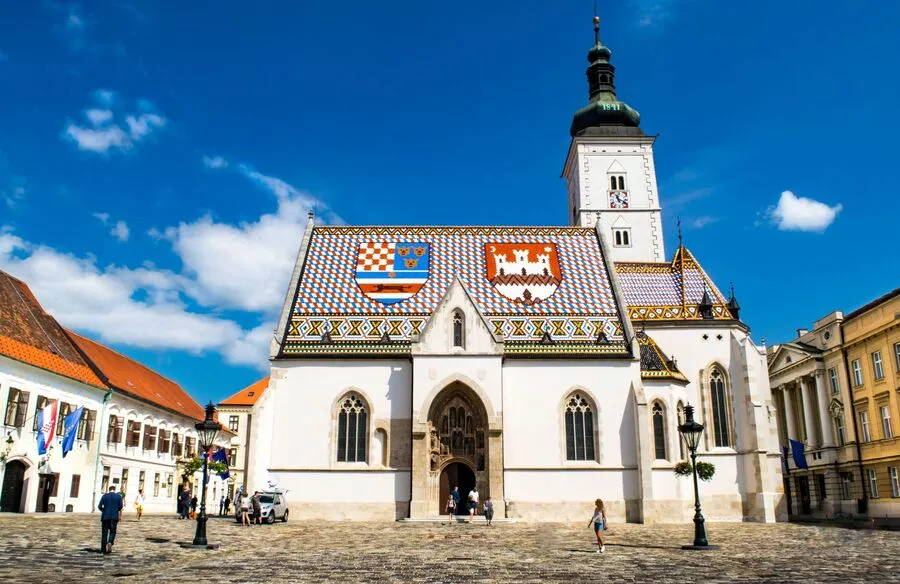
Croatia's most photographed roof is covered in glazed coloured tiles that form two coats of arms: on the left, the Kingdom of Croatia, Dalmatia and Slavonia; on the right, the city of Zagreb. The tiles went on during an 1880 restoration, but the church is far older, with roots in the thirteenth century. From its Gothic rebuilding survives an elaborate south portal crowded with figures of Christ, the Virgin and the apostles.
The church stands at the centre of its own square, flanked by the Sabor, Croatia's parliament, and Banski Dvori, the seat of the government. In other words, the country is run from a tiny cobbled square. For the best photo, stand on the parliament side, where both coats of arms are fully in view.
2. Zagreb Cathedral
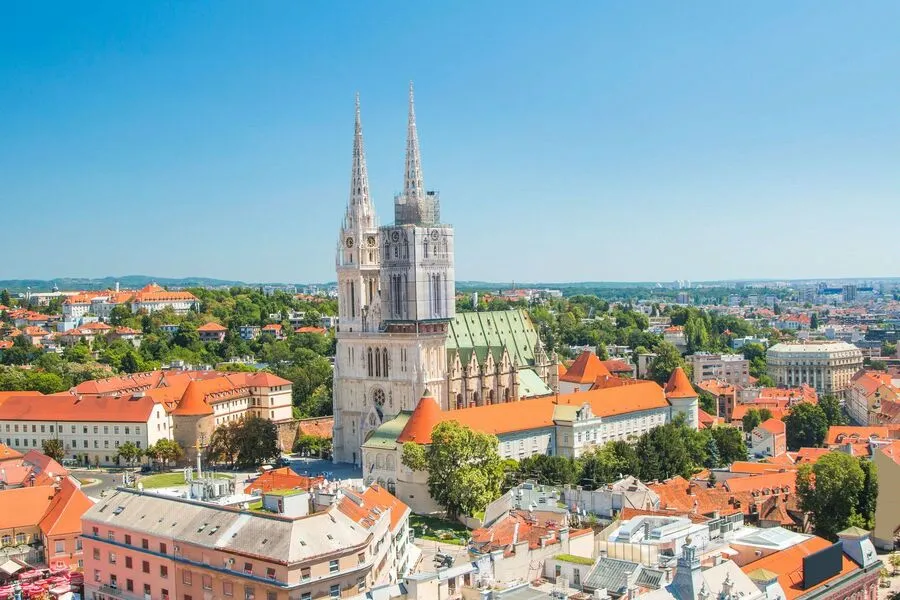
Croatia's principal church, the Cathedral of the Assumption, can be seen from almost anywhere in the city. Its story goes back to the eleventh century, when a diocese was founded here. The cathedral took on its neo-Gothic look, with two needle-sharp spires, after an earthquake in 1880, when Hermann Bollé oversaw the rebuilding; his name crops up at half the sights in Zagreb.
Before the cathedral rises a gilded column topped by the Virgin and surrounded by four angels, while behind it run stretches of defensive walls raised against the Ottomans. Kaptol, the hill around the cathedral, still belongs to the Church and is home to the archbishop's palace and the old canons' houses. From here it is a two-minute stroll down to Ban Jelačić Square.
3. Ban Jelačić Square
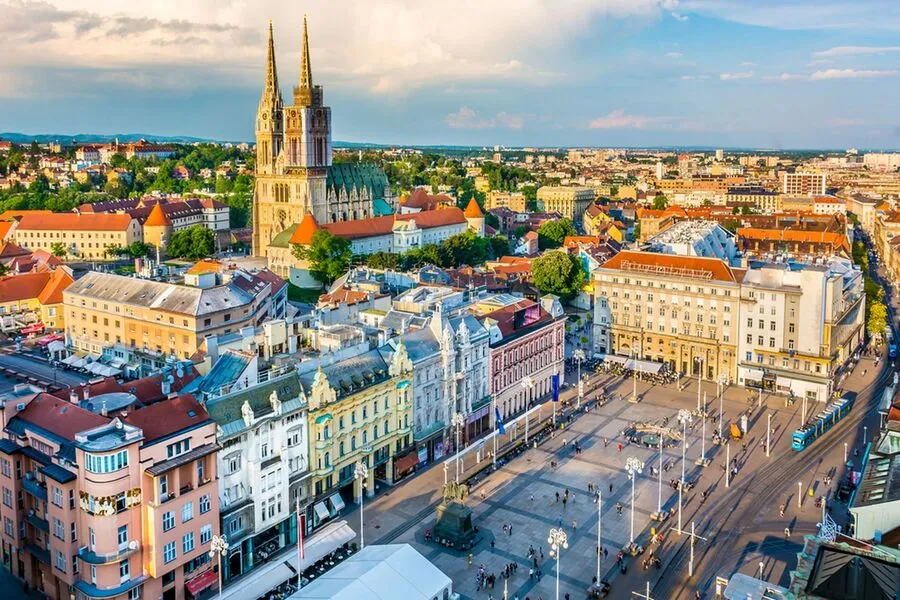
Zagreb's central square is where locals arrange to meet "under the clock" or "under the horse". The horse carries the bronze figure of Ban Josip Jelačić, a nineteenth-century general and governor of Croatia, and the clock stands on one corner. All around are buildings from different eras, from Biedermeier to Art Nouveau, and an endless parade of trams.
In one corner flows the Manduševac fountain, linked to the favourite legend about the city's name. A thirsty ban supposedly asked a girl called Manda to "zagrabi", to scoop up some water for him, and the word stuck. From the square, Ilica shopping street heads west, a lane climbs to the cathedral and steps lead up to Dolac Market.
4. Dolac Market
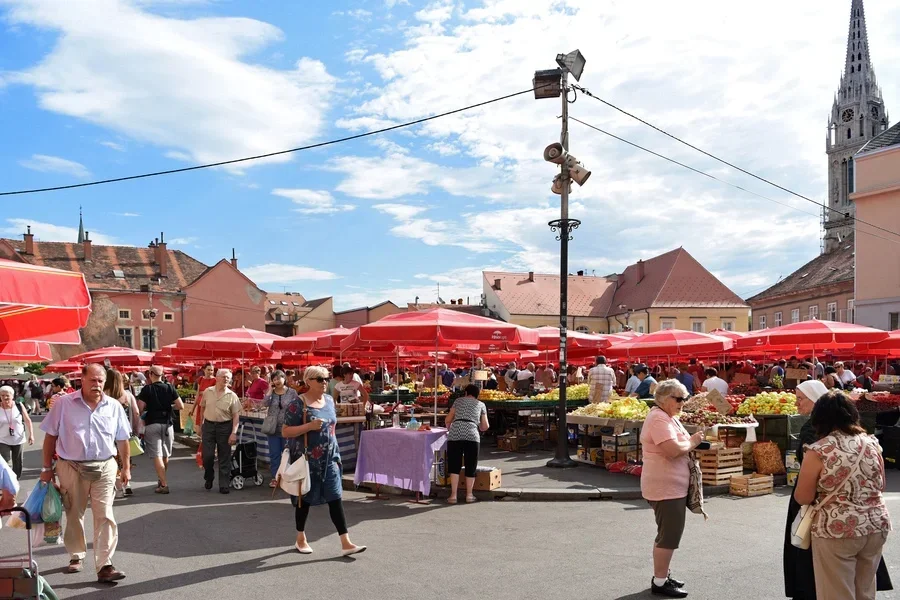
"The belly of Zagreb" has filled a terrace above Ban Jelačić Square since 1930. Under rows of red parasols, farmers who drove in before dawn sell strawberries, cherries, mushrooms, honey and flowers. The parasols are no accident: they copy the traditional umbrellas of nearby Šestine and have become a city symbol.
The covered halls below are for cheese, cured meats and fish, while separate rows belong to women in folk headscarves selling fresh cottage cheese and cream. Try a tub of fresh cheese with sour cream, and for a souvenir pick up a licitar, a red gingerbread heart decorated with icing and a tiny mirror; the craft is on UNESCO's list of intangible heritage.
5. Stone Gate
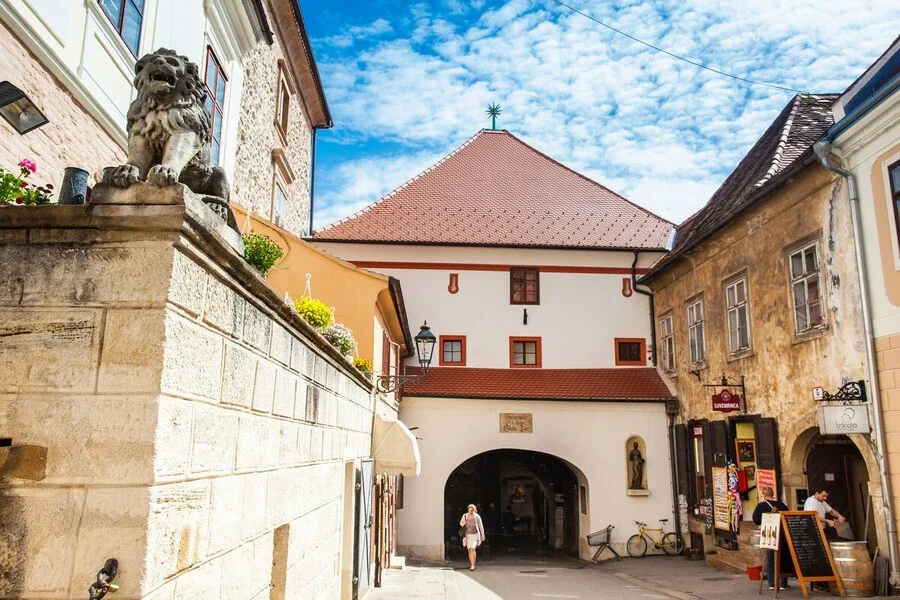
Of the four gates of medieval Gradec, only this one survives. In 1731 a great fire swept through the Upper Town, destroying its wooden houses and the gate itself, yet the image of the Madonna hanging above the passage came through untouched. Ever since, Our Lady of the Stone Gate has been honoured as Zagreb's patron.
Today the dim vaulted passage holds a small shrine: candles flicker before the painting behind a wrought-iron grille, people stop to pray, and the walls are lined with thank-you plaques. Even noisy tour groups instinctively lower their voices here. Just outside stands a statue of Dora, the goldsmith's daughter from a much-loved Croatian novel.
6. Lotrščak Tower and the Funicular
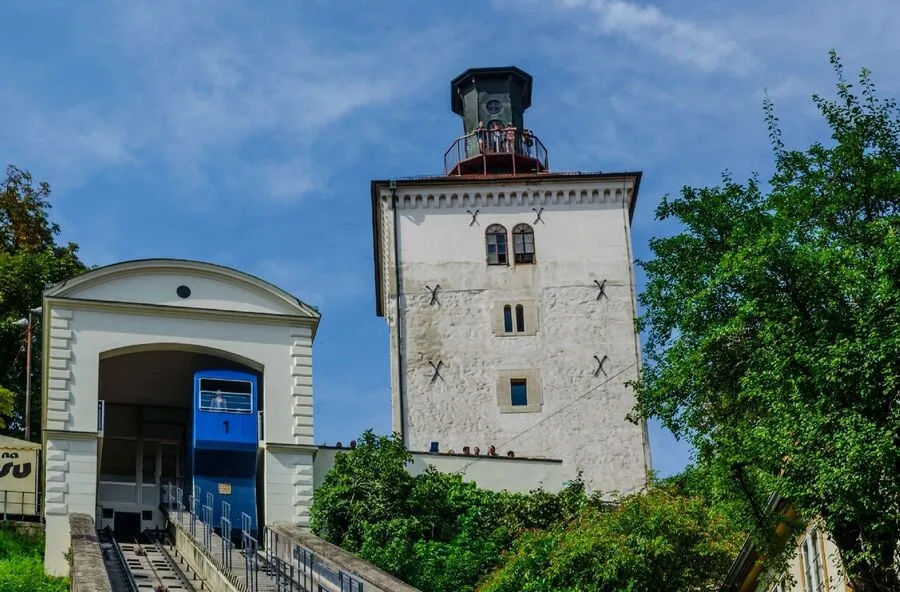
This thirteenth-century watchtower was once locked every evening to the sound of a bell, and its name comes from the Latin for "bell of thieves", since nobody was let through the gates after it rang. Every day since 1877, at noon sharp, the Grič cannon has fired from the tower. Legend says a cannonball once struck a rooster that Ottoman soldiers across the river were about to roast for lunch, and the shaken invaders gave up and left.
Right next door is the upper station of the funicular, among the world's shortest. Its little carriage covers 66 metres of track in about a minute and has been running since 1890. The terrace by the tower looks out over the Lower Town's rooftops and the cathedral spires.
7. Museum of Broken Relationships
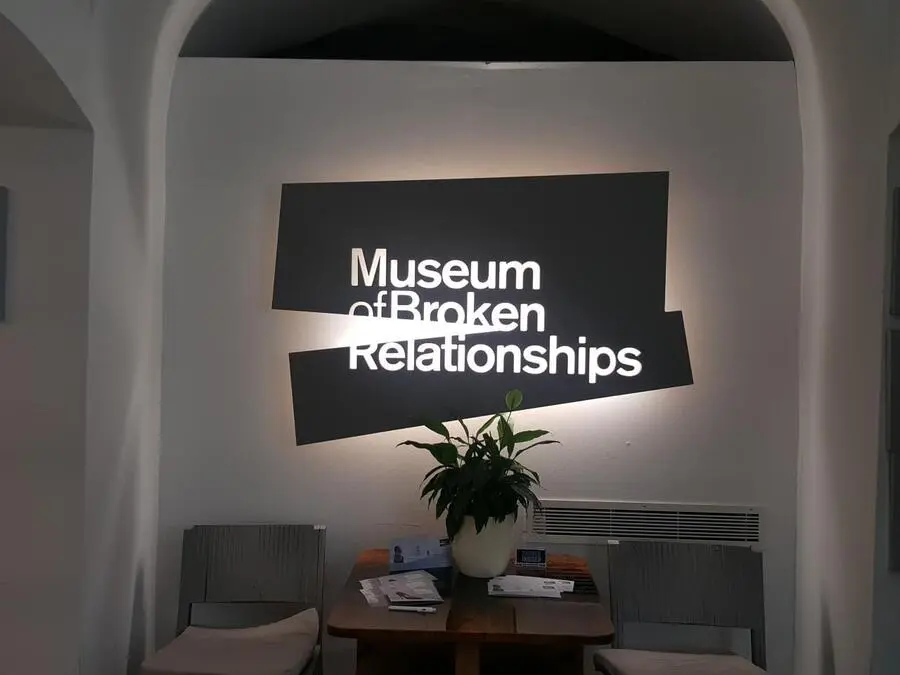
Zagreb's most unusual museum began as an art project by two local creatives who, after splitting up, decided to collect the objects that love leaves behind. It now fills a Baroque palace in the Upper Town as a permanent exhibition, and the items arrive from people all over the world: dresses, letters, toys and even an axe someone used to chop up an ex-partner's furniture.
Every object comes with a short story from its donor, some funny, some that leave the room silent. The museum is less about heartbreak than about how people get through it, so visitors tend to leave feeling oddly lighter. Its café, with a view over the rooftops, is a good place to reflect.
8. Tkalčićeva Street
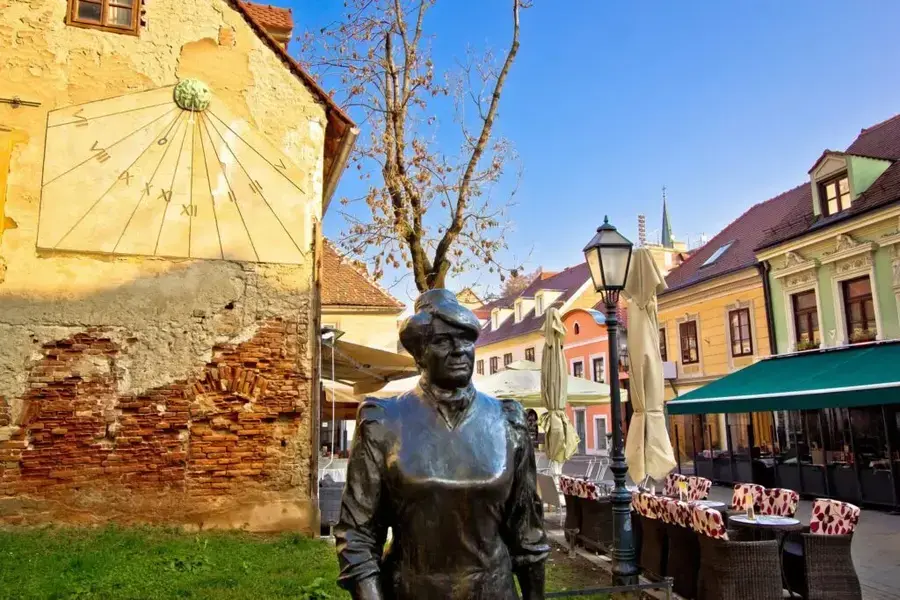
A stream called the Medveščak once flowed here, dividing quarrelsome Kaptol from Gradec, and the bridge across it went by the name of the Bloody Bridge, after the brawls between the neighbours. In the 1890s the stream was covered over, and a gently curving street of low pastel houses grew up on top.
Today Tkalčićeva is the busiest street in the Upper Town, lined end to end with cafés, bars and small restaurants whose terraces fill up every evening. It is the place to try štrukli, dough filled with fresh cheese and either baked or boiled, and a Zagreb schnitzel stuffed with ham and cheese.
9. Mirogoj Cemetery
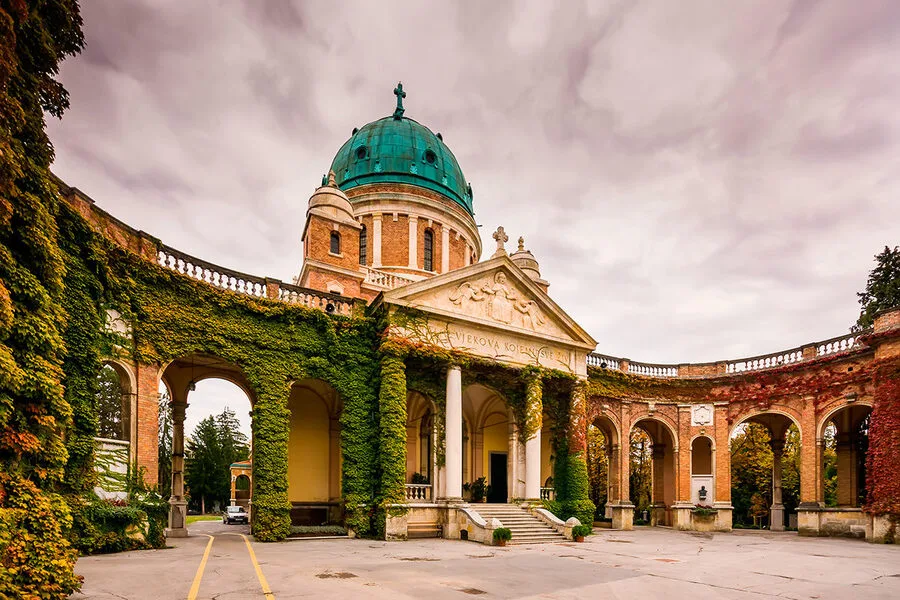
Mirogoj is often called one of the loveliest cemeteries in Europe, and the claim holds up. Its entrance is a long run of neo-Renaissance arcades and domes that Hermann Bollé designed as an open-air gallery, with sculptures and tombs of eminent Croatians beneath the vaults. In summer ivy climbs the walls, and in autumn it turns a deep red.
People of every faith rest here side by side, Catholics, Orthodox Christians, Protestants, Jews and Muslims, and the famous names include Franjo Tuđman, who led Croatia to independence and became its first president, and the basketball star Dražen Petrović. Mirogoj is a fifteen-minute bus ride from the cathedral, and an hour among its avenues is time well spent.
10. The Green Horseshoe
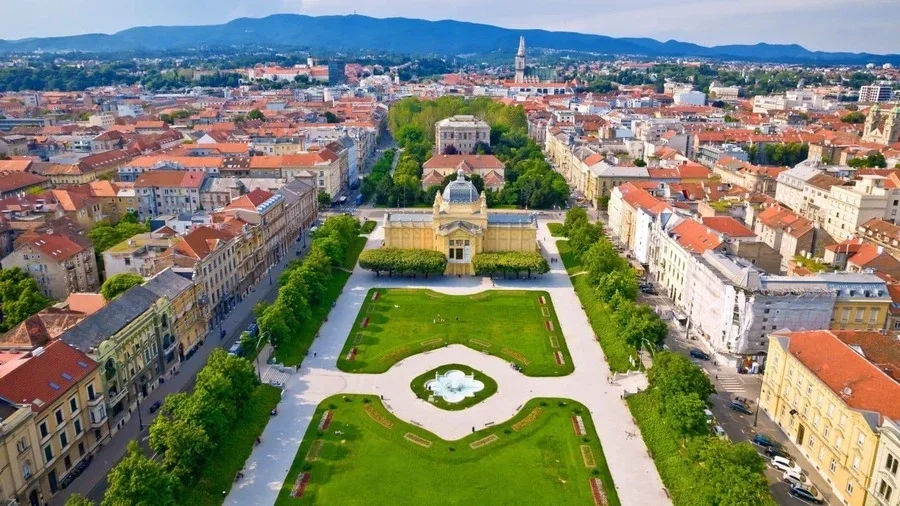
Over the 1880s and 1890s the city engineer Milan Lenuci planned a chain of seven squares and gardens for the Lower Town, laid out in the shape of a letter U. This "green horseshoe" includes Zrinjevac park with its music pavilion, a square with the yellow Art Pavilion, brought over from an exhibition in Budapest, and the Botanical Garden, where entry costs nothing.
The western end is anchored by the Croatian National Theatre, a grand yellow building designed by the Viennese architects Fellner and Helmer. Before its steps sits "The Well of Life", a fountain by the sculptor Ivan Meštrović. Walking the whole horseshoe at an easy pace takes about an hour and is the best way to see Zagreb's Austro-Hungarian side.
Zagreb Attractions: What Else to Visit While in the City
- Grič Tunnel — a 350-metre Second World War tunnel under the Upper Town that once served as an air-raid shelter. It is now a free shortcut through the hill from the Lower Town.
- Mimara Museum — a large collection of art from antiquity to the twentieth century, donated to the city by the collector Ante Topić Mimara, with glass, ceramics, icons and paintings spread over several floors.
- Croatian Museum of Naïve Art — one of the world's first museums devoted to naïve art, best known for the oil-on-glass paintings of the Hlebine school.
- Museum of Illusions — the very first branch of a chain that now operates in dozens of cities. The room where people seem to grow and shrink, and the mirror tunnel, delight kids and adults alike.
- Nikola Tesla Technical Museum — aircraft, steam locomotives and a replica coal mine, plus demonstrations of Tesla's lightning experiments that leave children buzzing for hours.
- Maksimir Park — the oldest public park in south-eastern Europe, with lakes, oak woods and romantic pavilions, and the city zoo within its grounds.
- Lake Jarun — "Zagreb's sea", with pebble beaches, cycle paths and a rowing course. People swim here in summer and gather at the lakeside clubs after dark.
- Medvednica and Sljeme — the mountain above the city, reached by cable car. The ruins of medieval Medvedgrad fortress cling to its slopes, and the summit looks out over all of Zagreb.
- Museum of Contemporary Art — a modern building in Novi Zagreb with a permanent collection of Croatian art. Its most famous exhibit is Carsten Höller's double spiral slide, which visitors can actually ride.
- The Grounded Sun — a bronze sphere by the sculptor Ivan Kožarić on Bogovićeva Street. Nine planets on the same scale are scattered around the city, and tracking them down is a game in its own right.
What to See in Zagreb in 1, 2 or 3 Days
Is 2 days enough for Zagreb? One day covers the essentials, while two or three let you take it slowly and venture beyond the city. With a single day, begin at Ban Jelačić Square and Dolac Market, climb to the cathedral, continue along Tkalčićeva to the Stone Gate and St Mark's Church, be at Lotrščak Tower for the noon cannon, ride the funicular down and spend the afternoon on the Green Horseshoe. Give day two to Mirogoj, the Museum of Broken Relationships, the Mimara Museum and Maksimir Park. On day three take the cable car up Medvednica or visit Samobor, a small town half an hour away famous for its custard cream cakes. The most popular day trip of all is to the Plitvice Lakes, around two hours away by bus.
How far is the sea? The nearest stretch of coast, the Kvarner Gulf near Rijeka, is roughly 160 km away and Split about 400 km, which makes Zagreb a natural first stop before a holiday on the Adriatic. Among the free things to do in Zagreb are the Botanical Garden, the Grič Tunnel, Mirogoj, Maksimir Park and the Green Horseshoe. Children usually love the Museum of Illusions, the Tesla museum, the zoo in Maksimir and Lake Jarun. In the evening, locals fill the bars of Tkalčićeva and the courtyards of the Upper Town, where open-air concerts are staged in summer.
What is Zagreb best known for, apart from its sights? Croatians gave the world the necktie: the French word "cravate" comes from the scarves worn by Croatian soldiers serving in seventeenth-century Paris. A Croatian tie therefore makes a good souvenir, as do a licitar heart, a bottle of honey rakija or Istrian truffle oil. In December the whole city turns into Advent in Zagreb, a Christmas market repeatedly voted among Europe's best, with mulled wine, an ice rink in the park and lights across the Lower Town.
Direct flights link Warsaw and Zagreb in about an hour and a half, and an airport bus reaches the centre in roughly half an hour. Zagreb pairs easily with Budapest or Vienna, each about five hours away by coach.
Heading to Croatia? TurPoisk online travel agency can help you shape the route, reserve a room in the Upper Town or near the Green Horseshoe and work out where to go next. After Zagreb the obvious next step is the sea, so we recommend tours to Croatia on the Adriatic coast, for example to Makarska with its long pebble beach beneath the Biokovo mountains. Our tour search will find options for your dates, and the last-minute deals are worth a look for bargains. Our managers can suggest how to fit the capital and the coast into one trip.


