
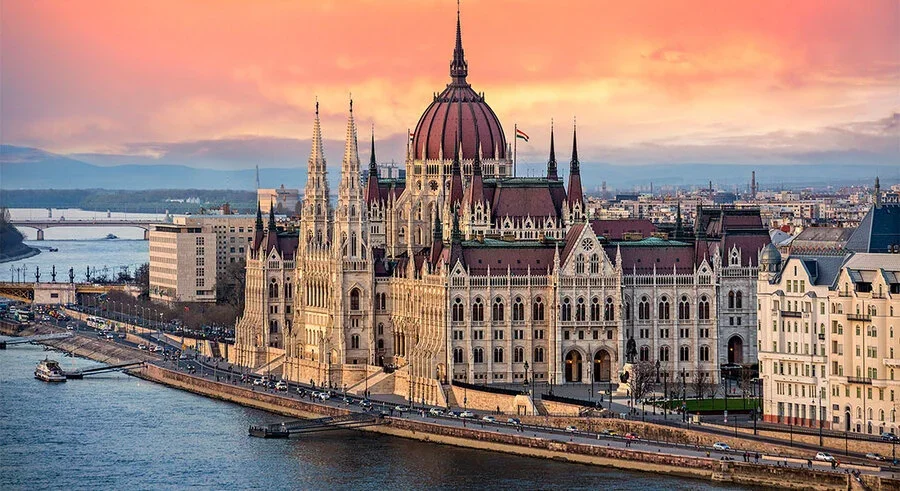
Budapest is really two cities that decided to share a river. On the hilly Buda side you find the royal castle and quiet medieval lanes; across the Danube, flat Pest is all grand boulevards, coffee houses and the Neo-Gothic Parliament mirrored in the water. Buda, Pest and historic Óbuda only merged into a single capital in 1873, yet today it is hard to imagine one without the other. The city is best known for its thermal baths, fed by more than a hundred hot springs beneath the streets, and for the way its bridges glow after dark. Budapest also sits remarkably close to the Ukrainian border, so a holiday here fits easily into a long weekend.
What to see in Budapest first
The riverbanks, Castle Hill and Andrássy Avenue together make up a UNESCO-listed zone. Put the main Budapest attractions on a map and you will notice that they line up along the Danube: viewpoints and the castle on the Buda side, Parliament, the basilica and the opera house on the Pest side. Below are ten places that make the best introduction to the Hungarian capital, from imperial palaces to the bathing culture that locals swear by.
1. Hungarian Parliament Building
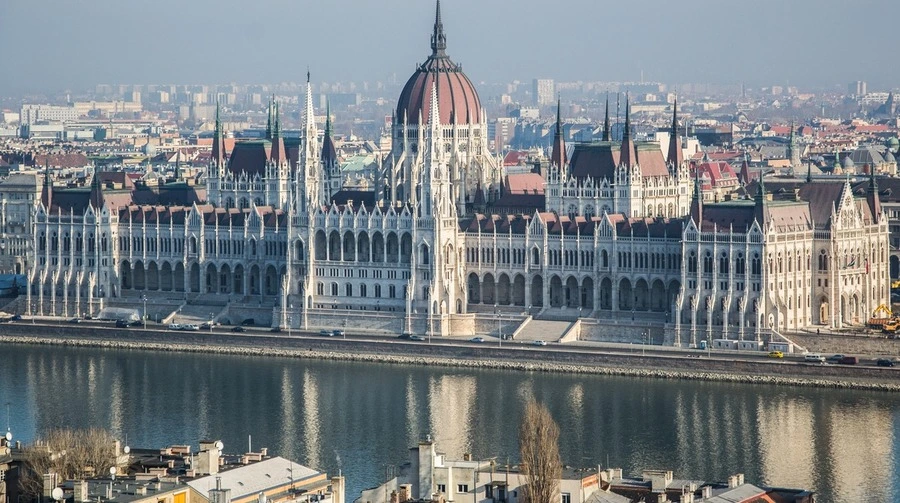
The Parliament is the image most people picture when they think of Budapest. Designed by Imre Steindl, the Neo-Gothic giant took nearly two decades to build and was completed in 1904. Its riverside façade stretches for 268 metres, and the dome reaches exactly 96 metres — a deliberate echo of 896, the year Hungarians traditionally mark as the moment their ancestors reached the Carpathian Basin.
The building has well over six hundred rooms, but guided tours focus on the showpieces: the gilded main staircase, the domed hall and the former Upper House chamber. Beneath the dome lies the nation's most treasured relic, the Holy Crown, placed on the heads of Hungarian kings for centuries. Book tour tickets in advance, and for the classic photo head across the river to Fisherman's Bastion or the Buda embankment.
2. Buda Castle and the Royal Palace
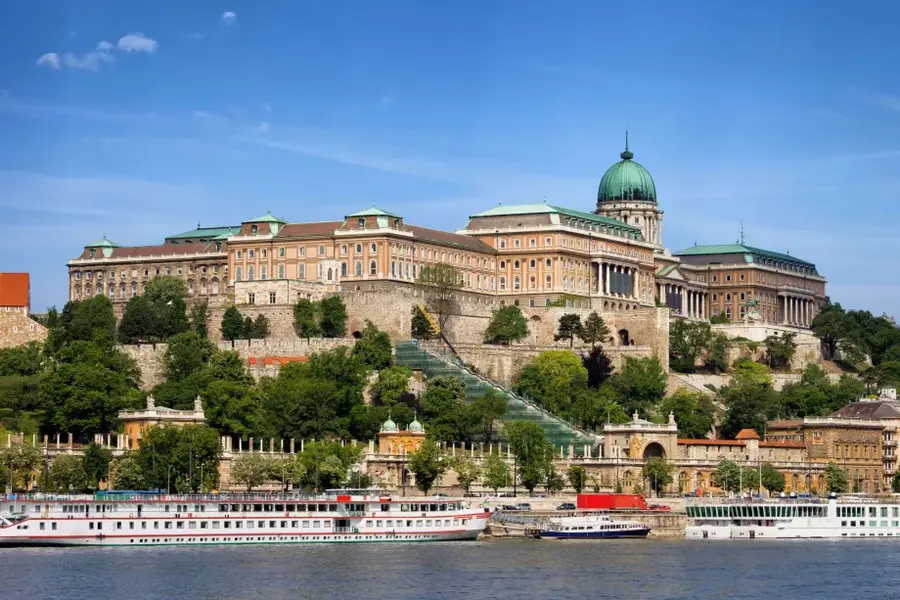
Castle Hill is where Budapest began, and Hungarian kings held court up here from the 13th century onwards. The Royal Palace has been flattened and rebuilt several times — after the expulsion of the Ottomans, during the 1848 revolution and in the final months of World War II. Today its massive green-domed wing towers over the Danube and houses museums.
The real joy, though, is wandering the Castle District itself: cobbled streets, pastel façades, old-fashioned pastry shops and little galleries. The Sikló funicular has been hauling visitors up from the riverside since 1870, and beneath the hill lie caves and an underground labyrinth for the curious. At night the castle is floodlit, and the view over the lights of Pest is every bit as good as the daytime panorama.
3. Fisherman's Bastion
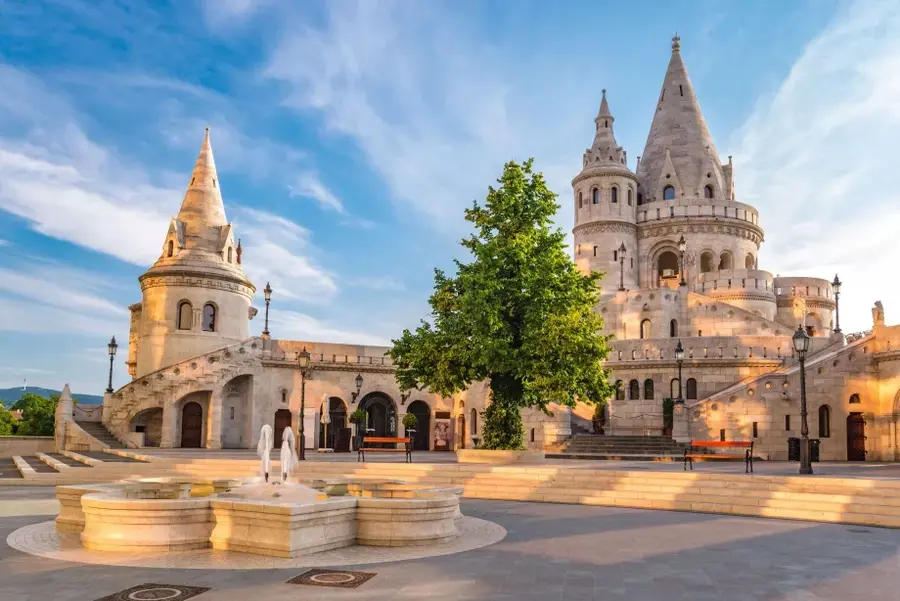
Fisherman's Bastion looks like a fairy-tale fortress, but it is younger than it seems: architect Frigyes Schulek created it around 1900, purely as a viewing terrace. Its seven pointed turrets honour the seven tribes led into the region by the chieftain Árpád, while the name recalls the guild of fishermen who once defended this stretch of the city walls.
People come mainly for the view: from the white stone terraces you look straight across to Parliament, the Danube and its bridges. The lower walkways are free, and a small fee applies for the upper turrets. Arrive at sunrise or late in the evening if you want photos without the crowds.
4. Matthias Church
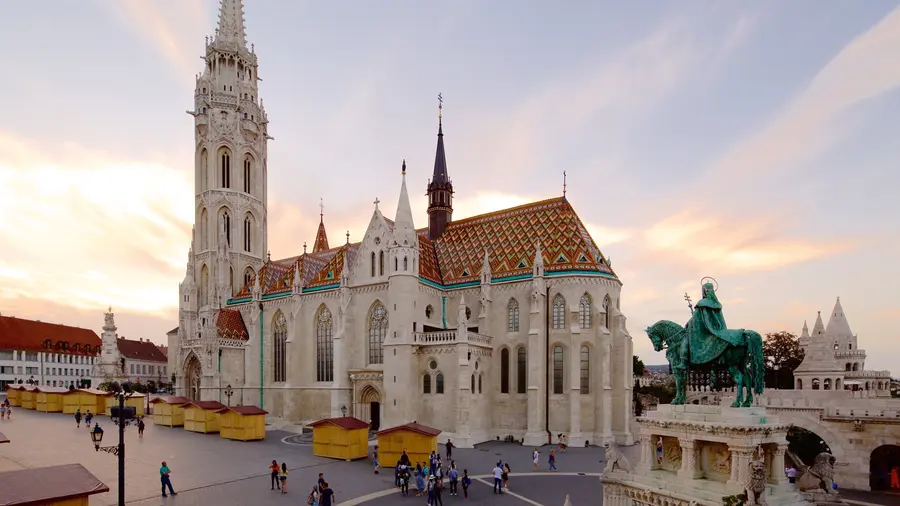
Its formal dedication is to the Virgin Mary, yet everyone calls this church Matthias — King Matthias Corvinus married here not once but twice. Under Ottoman rule it was turned into a mosque, and in the 1870s–1890s Frigyes Schulek restored its Gothic character. The patterned roof of glazed Zsolnay tiles makes it easy to recognise from afar, especially when it glitters in the sun.
Step inside and the colour continues, with every wall and column painted in motifs that blend Gothic style with Hungarian folk patterns. In 1867 Emperor Franz Joseph and his wife Elisabeth received the Hungarian crown beneath these vaults. Evening organ concerts take place regularly and are a lovely way to experience the church's acoustics.
5. Széchenyi Chain Bridge
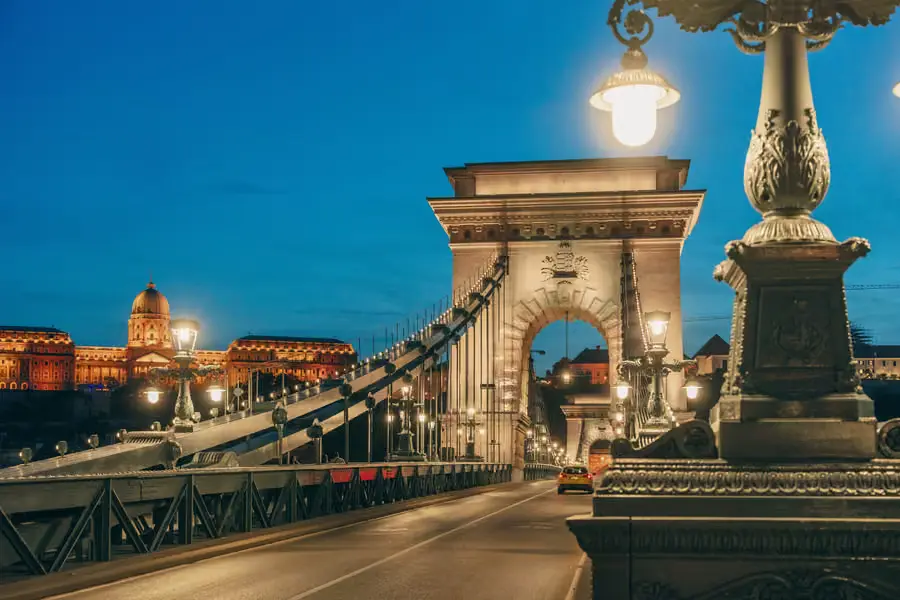
Before this bridge existed, crossing between Buda and Pest meant relying on boats or a seasonal pontoon, so in a sense it made a single city possible. Count István Széchenyi championed the project, the British engineer William Tierney Clark drew up the plans, and traffic started rolling across in 1849. Stone lions guard both ends, and locals still enjoy telling the tale of the sculptor who supposedly forgot to give them tongues.
Retreating troops blew the bridge up in 1945, but it was back in service by 1949, and a thorough restoration in 2021–2023 has left it looking pristine. Crossing it at sunset is one of the most romantic moments of any trip, and seeing it from the water is even better: an evening Danube cruise glides past Parliament, the castle and every illuminated bridge.
6. St. Stephen's Basilica
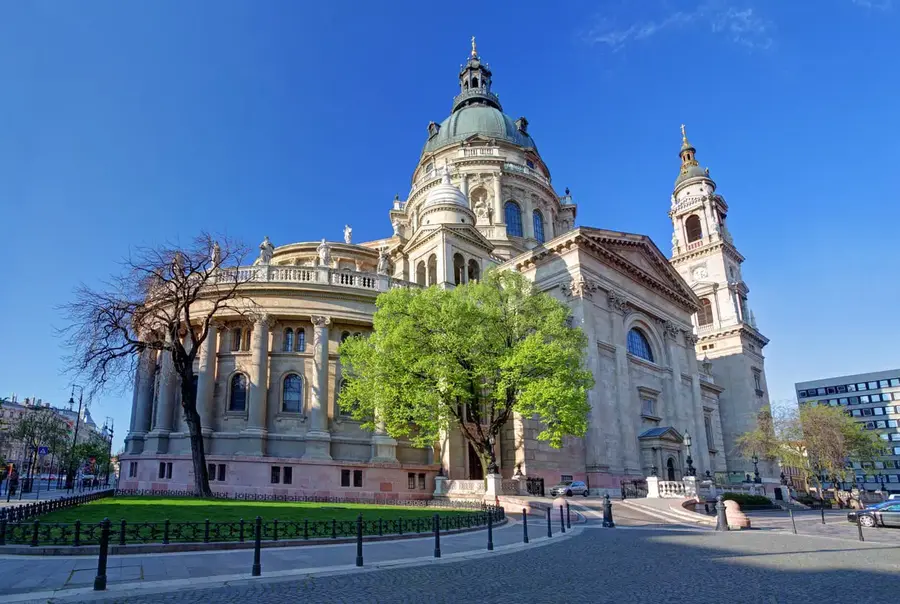
The city's biggest church is dedicated to King Stephen, who founded the Christian Hungarian state. Construction dragged on for more than half a century before it was finally completed in 1905. Like Parliament, the basilica rises to 96 metres, and by local convention no building in the historic centre may be taller than these two.
A side chapel keeps the Holy Right — the preserved hand of the king and Hungary's most revered Christian relic. The interior glows with marble, mosaics and gold, while a lift or staircase takes you up to a terrace around the dome with sweeping views over the rooftops of Pest. In winter the square in front hosts one of the city's most charming Christmas markets.
7. Széchenyi Thermal Bath
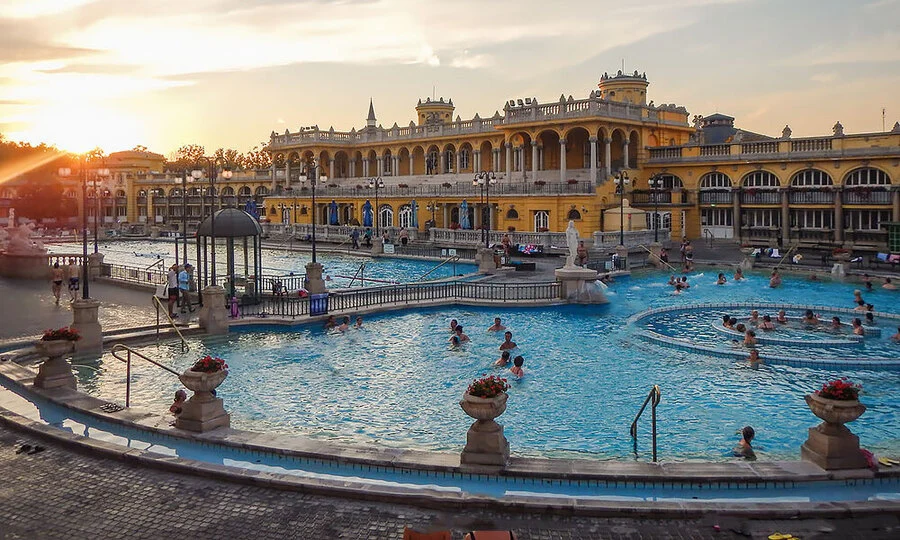
No visit to the "City of Spas" is complete without a soak, and this is the bath that ends up on every postcard. The Neo-Baroque complex in City Park opened in 1913, and its yellow domed buildings have become the emblem of Budapest's bathing culture. Inside are nearly twenty pools of mineral-rich water at different temperatures, plus saunas and steam rooms.
The outdoor pools are the highlight: the water stays hot even in freezing weather, so you can swim while snow falls and watch elderly locals playing chess waist-deep in the water. Keep in mind that the famous Gellért Baths shut their doors for a major overhaul in autumn 2025 and are not due back before 2028, so Széchenyi is the obvious choice for a first visit.
8. Heroes' Square
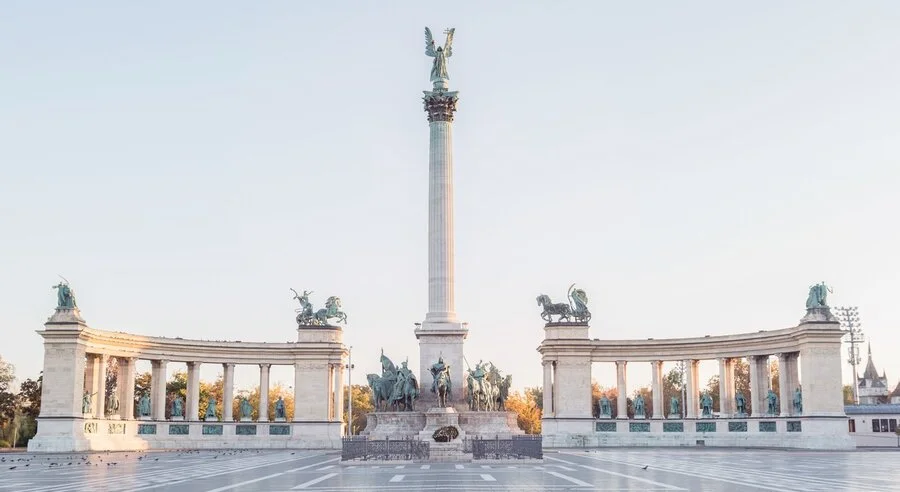
Heroes' Square marks the end of Andrássy Avenue and feels like an open-air hall of fame. A 36-metre column topped by the Archangel Gabriel rises in the centre, with mounted statues of the seven tribal chieftains at its base and two curved colonnades of bronze kings and national heroes behind. Work on the monument began for the 1896 millennium celebrations, though the final statues arrived decades later.
An art museum stands on each side — the Museum of Fine Arts to the left and the Műcsarnok exhibition hall to the right — and behind the colonnades stretches City Park (Városliget). You could easily spend a whole day here: stroll to Vajdahunyad Castle, visit the zoo or, in winter, skate on the lakeside rink, which ranks among the biggest open-air rinks in Europe.
9. Hungarian State Opera and Andrássy Avenue
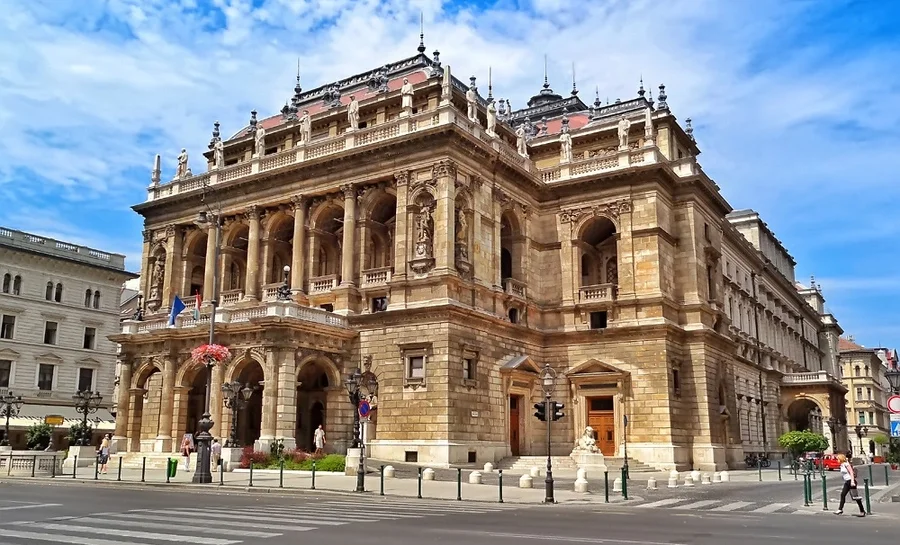
Lined with mansions, embassies and designer boutiques, Andrássy is the city's most elegant boulevard. Beneath it runs the Millennium Underground, opened in 1896 and still the first metro on the European mainland; its tiny yellow carriages and tiled, wood-trimmed stations still feel like a trip back in time.
The avenue's crown jewel is the opera house, built in 1884 to a design by Miklós Ybl. It reopened in 2022 after a multi-year restoration, and its gilded auditorium, frescoes and huge bronze chandelier are once again dazzling audiences. Join a daytime tour to see the interiors, or book an evening performance — tickets are noticeably cheaper than at most Western European opera houses.
10. Gellért Hill and the Citadel
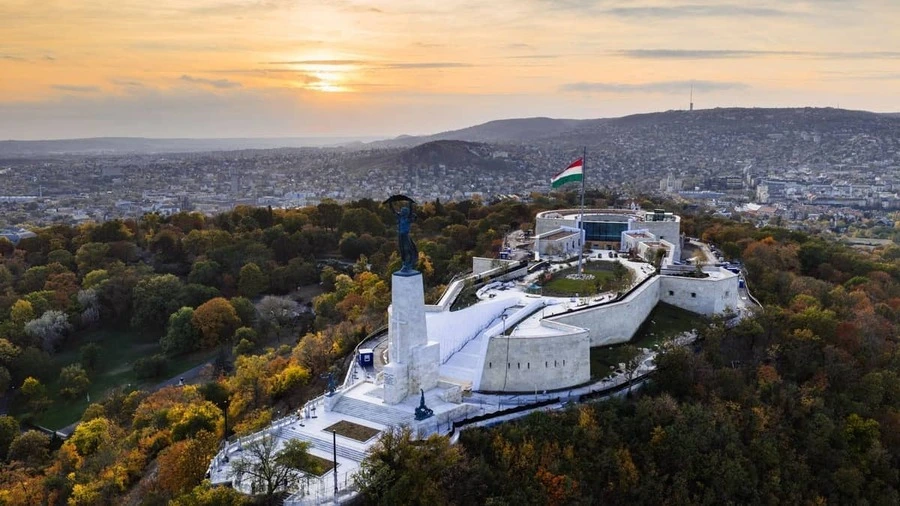
The rocky, 235-metre Gellért Hill takes its name from a bishop who, according to legend, was martyred here while spreading Christianity. Its summit is crowned by the Citadel, a fortress the Habsburgs built after crushing the 1848–1849 revolution so they could keep the city under their guns. Next to it stands the Liberty Statue, a woman holding a palm frond aloft, a silhouette you will keep spotting from all over town.
After years of reconstruction, the Citadel reopened to visitors in spring 2026, giving the climb a fresh reason to make the effort. Footpaths wind up through the park past the Cave Church, and once you reach the summit both banks of the Danube unfold in a full panorama — the best spot in town to watch the sun go down.
Budapest Attractions: What Else to Visit While in the City
- Dohány Street Synagogue — no synagogue in Europe is bigger than this Moorish-style landmark, completed in 1859. In the garden stands a Holocaust memorial shaped like a weeping willow cast in metal, each leaf bearing the name of someone who perished.
- Great Market Hall — a vast covered market opened in 1897 under a roof of colourful tiles. Downstairs you can stock up on paprika, salami and Tokaji wine; upstairs, stalls fry hot lángos.
- Margaret Island — a leafy, almost car-free island in mid-river, about two and a half kilometres long. Joggers circle it in the morning, families pedal rented bike-carts by day, and in the evening crowds gather around the musical fountain.
- Shoes on the Danube Bank — a deeply moving memorial of sixty pairs of iron shoes near Parliament. It remembers the Jews who were lined up and shot at the water's edge in 1944–1945.
- Vajdahunyad Castle — a storybook castle in City Park built from copies of famous Hungarian buildings from different eras. It started life in wood and cardboard for the millennium exhibition, but residents grew so fond of it that it was recreated in stone.
- Rudas Baths — a 16th-century Turkish bath with an octagonal pool under a stone dome. Its rooftop pool overlooks the Danube and is especially atmospheric after dark.
- House of Terror — a sombre museum at Andrássy út 60, where Hungary's Nazi party and later the communist secret police had their headquarters. The exhibition is a frank and powerful account of two 20th-century dictatorships.
- Ruin bars — Budapest's signature nightlife: bars set up in abandoned buildings of the old Jewish Quarter and filled with mismatched furniture and quirky art. The best known is Szimpla Kert, which also hosts a farmers' market on Sundays.
- New York Café — an opulent café dating from 1894 that many travellers rank as the world's loveliest. Marble, gilding and painted ceilings turn an ordinary coffee into an occasion.
- Hospital in the Rock — a secret hospital in the caves beneath Castle Hill that treated the wounded while the city was besieged in 1944–1945 and again in 1956. It later became a nuclear bunker and is now a museum with original equipment.
How many days do you need in Budapest? If you are deciding what to see in Budapest in one day, stick to the classic loop: Parliament, the Chain Bridge, Buda Castle with Fisherman's Bastion and an evening Danube cruise. With 2 days, add the basilica, the opera house, Andrássy Avenue and the Széchenyi Baths. A third day leaves room for Gellért Hill, Margaret Island and a night in the ruin bars, and anyone staying longer can head out to picturesque Szentendre or the Visegrád fortress on the Danube Bend.
Many of the best moments in Budapest cost nothing: strolling around Castle Hill, the lower terraces of Fisherman's Bastion, the Chain Bridge, Heroes' Square, Margaret Island and the riverside memorial. Families with kids will enjoy the City Park zoo, Margaret Island and the Hospital in the Rock. And when hunger strikes, try a proper Hungarian goulash, lángos and kürtőskalács, the sweet chimney cake baked right on the street.
Thinking about a trip to Budapest? TurPoisk, an online travel agency, puts the offers of every tour operator side by side so you can pick a Budapest tour at the best price. Try our online tour search, find a hotel in Budapest near the Danube or send our consultants a message — they will suggest excursions and help you pair the Hungarian capital with a stay on Lake Balaton or at one of Hungary's thermal spa resorts.


