
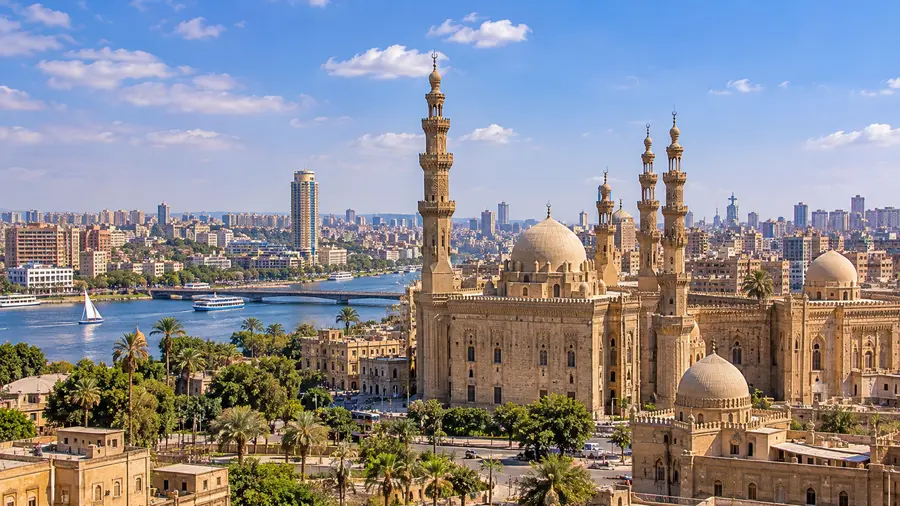
Cairo, the capital of Egypt and the Arab world's biggest city, sprawls along the Nile right beside the Giza pyramids. Nearly ten million people call it home, and the suburbs more than double that. The Fatimids founded it in 969 under the name Al-Qahira, "the Vanquisher", although pharaonic Memphis had stood nearby for thousands of years by then. So many medieval mosques survive that it earned the nickname City of a Thousand Minarets, and its historic core is on the UNESCO list. Plenty of holidaymakers come for one day, see the pyramids and head straight back to the beach, which is a pity, since the most rewarding part starts after them. So what to do in Cairo besides the pyramids? Our 20 picks run from Khan el-Khalili and the brand-new Grand Egyptian Museum to Coptic churches and the Step Pyramid at Saqqara.
What to See in Cairo First
Cairo is immense, so tackle it one district at a time. Giza, site of the pyramids and new museum, is a separate city on the Nile's west side. Tahrir Square marks the centre, Islamic Cairo with its bazaar, mosques and Citadel lies to the east, Coptic Cairo is to the south, and Zamalek occupies an island in the river. The metro works well where it runs; elsewhere use the Uber or Careem apps, and allow plenty of time for the traffic.
1. The Pyramids of Giza and the Sphinx
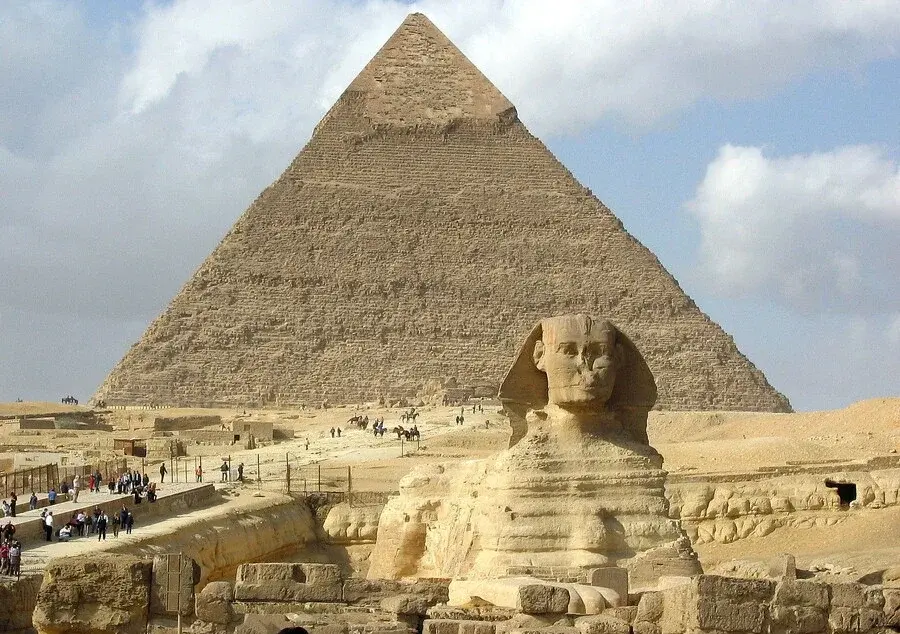
On a stony plateau beyond the suburbs of Giza stands the sole survivor of the ancient Seven Wonders. Khufu's pyramid went up around 2600 BC and nothing on earth topped it for over 3,700 years. It measures about 138 metres today, flanked by the pyramids of Khafre and Menkaure, smaller tombs of queens and whole streets of nobles' burial chambers.
Further down the slope crouches the Sphinx, a lion-bodied giant carved from the living rock, 73 metres long and roughly 20 high. Going inside Khufu's pyramid needs a separate ticket and means cramped, stuffy passages leading to a bare chamber, so skip it if you dislike tight spaces. Arrive at opening time before the sun gets fierce, and turn down pushy vendors quickly and politely.
2. The Grand Egyptian Museum
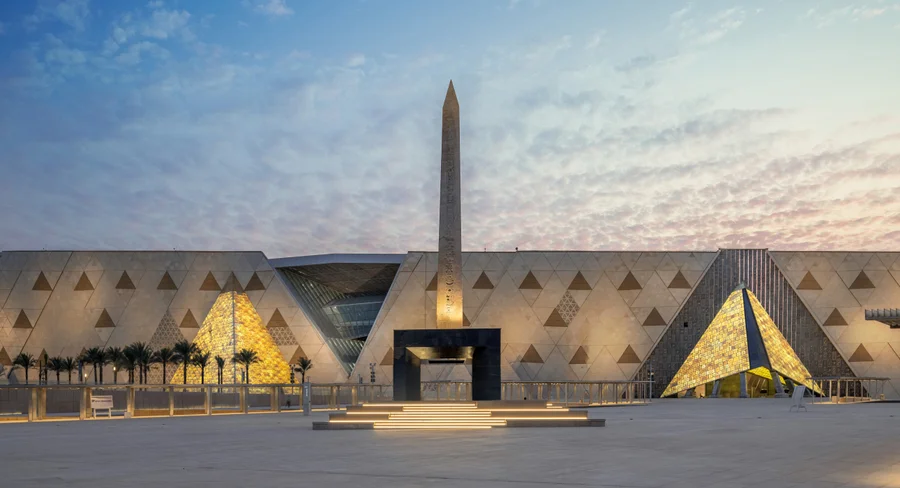
Older guidebooks are out of date on one key point: Tutankhamun's treasures now live here rather than on Tahrir Square. This colossal building sits about 2 km from the plateau, and its windows frame the pyramids. An 83-ton Ramesses II, for decades a fixture outside the main railway station, greets you in the atrium, and a ceremonial staircase lined with pharaohs climbs to the permanent galleries.
Two Tutankhamun halls display everything Howard Carter recovered from the tomb for the first time, over 5,000 objects including the gold mask, thrones and chariots. In all the museum is designed for around 100,000 artefacts, and a separate wing is set aside for Khufu's solar boats. Set aside a good half-day, and only combine it with the pyramids if you start very early.
3. The Egyptian Museum on Tahrir Square
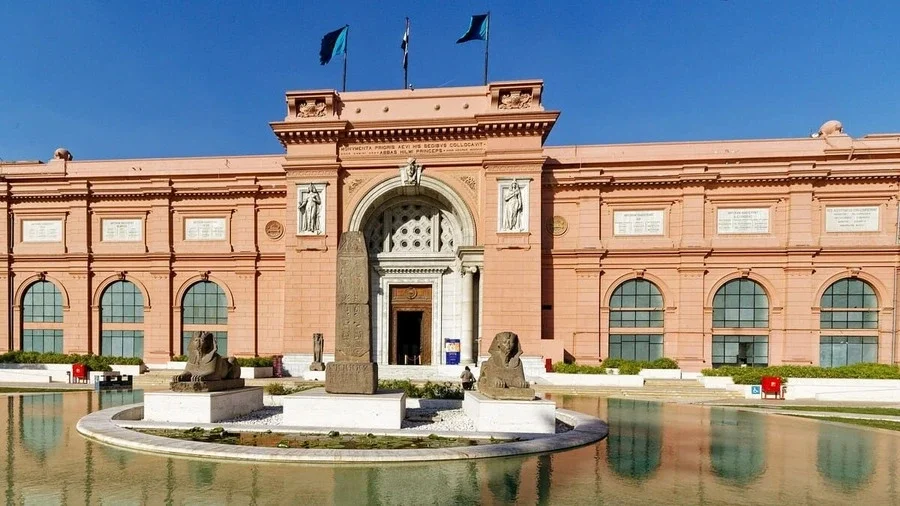
Many people now skip the old pink museum of 1902, and they're wrong to. Losing its biggest headliners has freed up space, yet the collection remains astonishing. Think old-school displays, all wooden cases, dim lighting and labels partly written by hand, so the building feels like an exhibit in itself.
Look for Old Kingdom statues such as Khafre, the strangely elongated figures from Akhenaten's city at Amarna, and the huge group of Amenhotep III with Queen Tiye. Upstairs are plenty of sarcophagi, papyri, jewellery and small everyday objects. Its central location makes it easy to fit in two or three hours before exploring the faded boulevards of downtown.
4. Khan el-Khalili and Al-Muizz Street
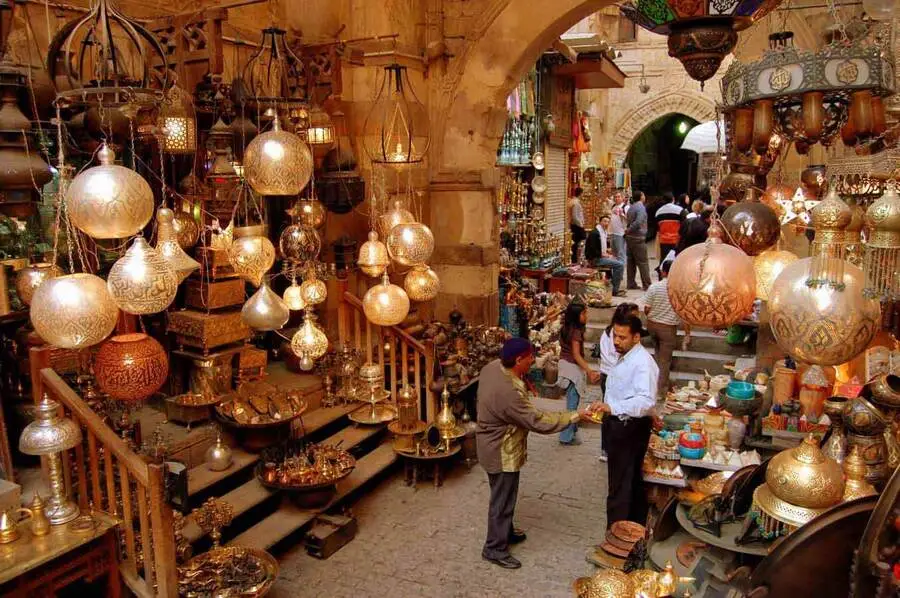
The bazaar grew out of a 14th-century caravanserai and still seems untouched by the calendar. Its narrow lanes are full of brass lamps, spices, perfume oils, silver, papyrus and figurines, and bargaining isn't merely allowed but expected. Sip mint tea at Fishawi's, a cafe dating from the 18th century that once counted the Nobel laureate Naguib Mahfouz among its regulars.
Close by runs Al-Muizz, the great artery of the Fatimid city. For a little over a kilometre it passes madrasas, mausoleums, fountains and the mosques of Mamluk sultans, with the Qalawun complex standing out. Follow it to the northern gate of Bab al-Futuh, then return after dark, when the facades glow and there are fewer cars.
5. Saladin's Citadel and the Mosque of Muhammad Ali
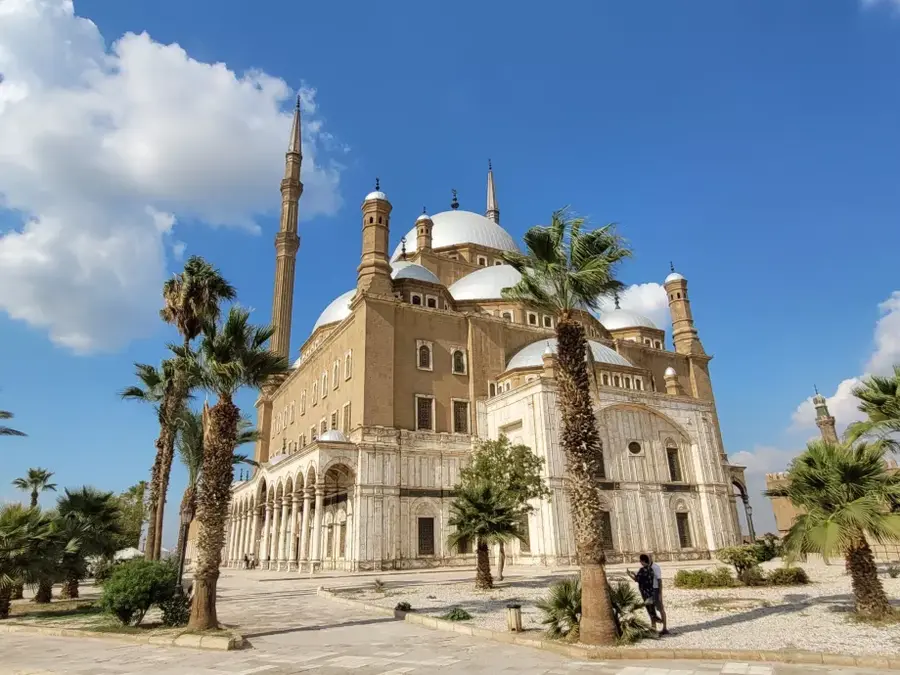
Saladin began this fortress on a spur of the Mokattam hills in the 1170s as a defence against the Crusaders, and Egypt was governed from here for nearly seven centuries. Inside you'll find several mosques, palaces and military museums, but the terraces are the real draw, overlooking a sea of minarets and, if the haze lifts, even the pyramids.
Muhammad Ali's great mosque, raised in Ottoman style during the 1830s and 1840s, dominates the skyline, and its wall cladding earned it the name Alabaster Mosque. In the courtyard, note the clock tower: France's Louis-Philippe sent the timepiece to thank Egypt for the obelisk that now adorns the Place de la Concorde. It wasn't much of a bargain, as legend has it the mechanism never kept proper time.
6. The Sultan Hassan and Al-Rifa'i Mosques
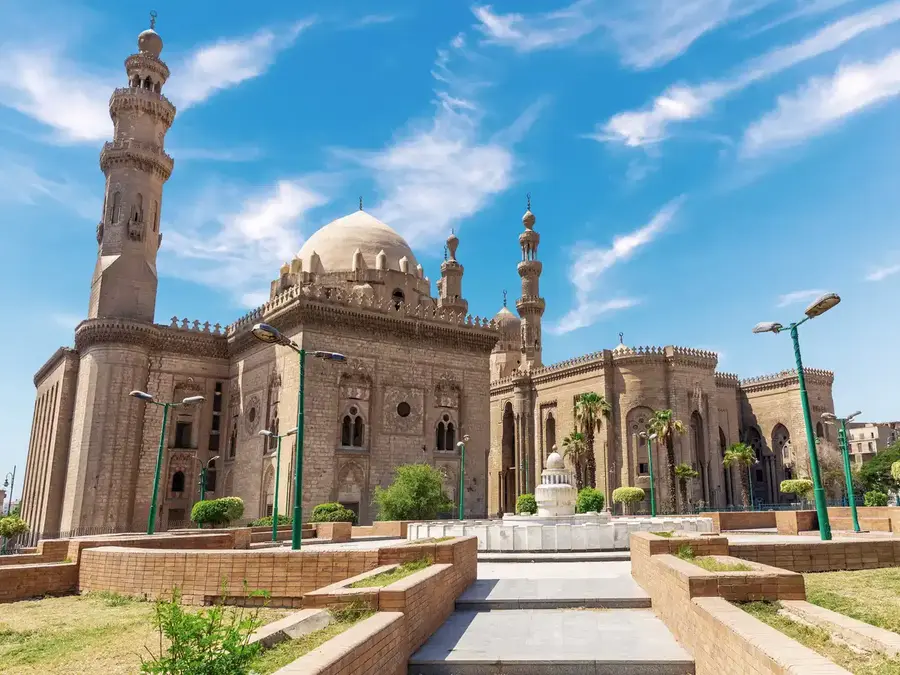
Below the Citadel loom two gigantic mosques built five centuries apart. Sultan Hassan's complex dates from the 1350s, just after the plague had swept through Cairo, and its sheer scale is overwhelming: a dark corridor delivers you into a sunlit courtyard whose four vast vaulted halls served the four schools of Islamic law.
Al-Rifa'i opposite went up between 1869 and 1912, deliberately echoing its neighbour. Its interior is the more lavish, and it holds members of Muhammad Ali's dynasty, Egypt's last king, Farouk, and the last Shah of Iran. Remove your shoes on entering, and women will need a headscarf.
7. Coptic Cairo and the Hanging Church
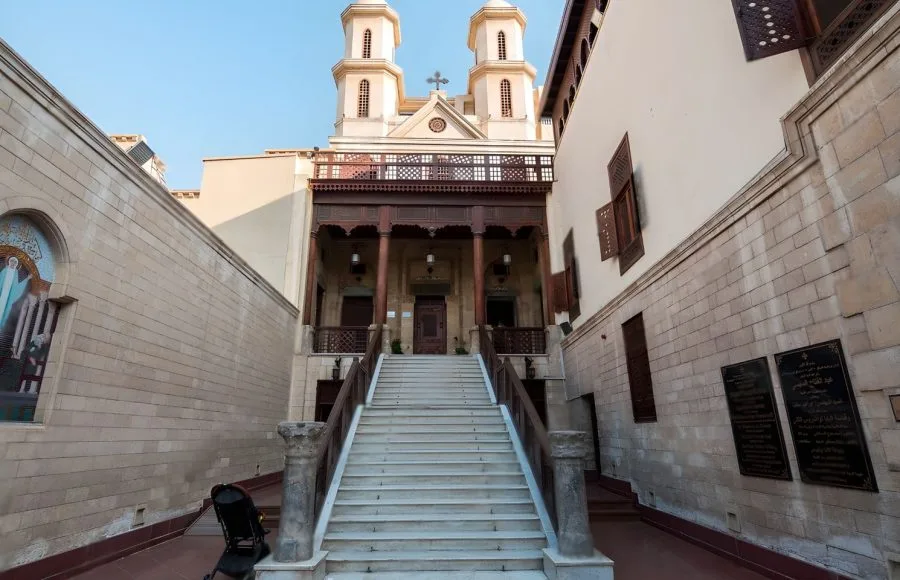
South of the centre, inside the old Roman stronghold of Babylon, is the city's oldest Christian quarter. The Hanging Church sits above one of the fortress gates, so its nave appears to float over the passage, and a steep stairway leads up to carved wood, ivory inlays and old icons. Nearby, the crypt of Saints Sergius and Bacchus is said to have sheltered the Holy Family as they fled Herod.
The same alleys hide the Ben Ezra Synagogue, where a huge cache of medieval manuscripts came to light in the 1890s. Drop into the Coptic Museum for frescoes and textiles, then walk to the Mosque of Amr ibn al-As, the first in Africa. The metro is the easy way here, since Mar Girgis station opens right by the walls.
8. Zamalek and the Cairo Tower
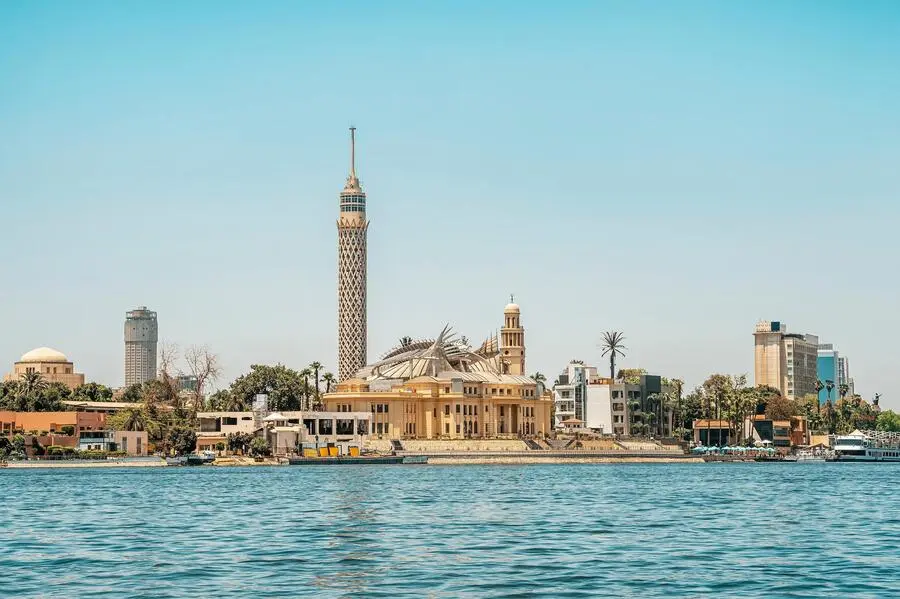
On Gezira Island the city changes completely: the leafy streets, embassies, galleries, bookshops and cafes of Zamalek offer a break from the noise. The Opera House is on this same island, and the 187-metre tower completed in 1961 is shaped like a lotus stem. Its viewing deck gives you the clearest sense of how vast the capital is.
The nicest way to end a day here is on a felucca, a wooden sailboat you can hire by the hour from the riverbank. Set off an hour before sunset: the din fades a few metres from shore, and the bridge lights come on while you're still afloat.
9. Al-Azhar Park and Mosque
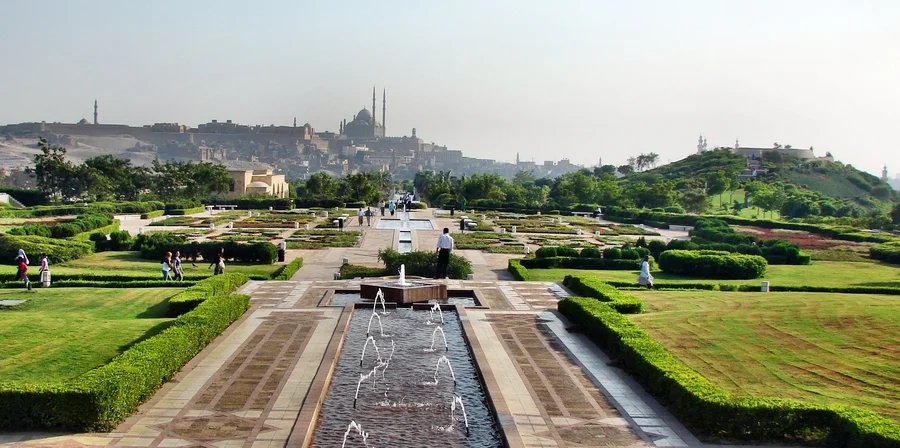
Not long ago this hilltop was a mound of centuries-old rubbish; today it's the city's finest park, with fountains, lawns and roses. When the Aga Khan's foundation landscaped it, a medieval wall from Saladin's day emerged, more than a kilometre long. Visit towards sunset, when the Citadel and minarets spread out before you and the call to prayer rises from every side.
Only a few blocks separate the park from Al-Azhar Mosque, founded by the Fatimids around 970. A university among the oldest anywhere operates alongside it, and students still sit with books under the arcades of its marble courtyard. Entry is free; just take off your shoes and dress modestly.
10. Saqqara and Dahshur
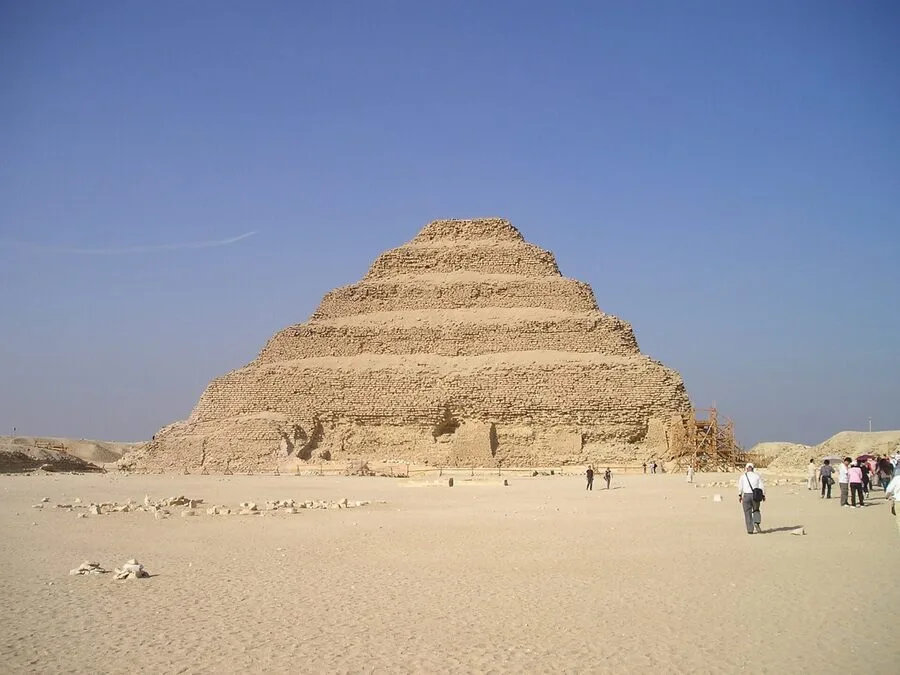
About 30 km south of the centre lie necropolises older than Giza, with far fewer tourists. At Saqqara, Djoser's Step Pyramid, raised around 2670 BC by the architect Imhotep, marks the point where stone pyramids began. Surrounding tombs keep vivid scenes of everyday Egyptian life, and the Serapeum astonishes with its massive sarcophagi for sacred bulls.
A little further on at Dahshur stand the Bent Pyramid, whose angle was changed partway through, and the Red Pyramid, an early success with smooth sides. You can climb down into the latter with hardly any queue. It's simplest to hire a car and driver for the day and add Memphis to the route.
Cairo Attractions: What Else to Visit While in the City
- Mosque of Ibn Tulun — a 9th-century building that best preserves its original look, with a spiral minaret and a vast courtyard. The Gayer-Anderson Museum next door occupies old houses.
- Museum of Islamic Art — mosque lamps, carpets, woodcarving and manuscripts from across the Muslim world in an early 20th-century building.
- National Museum of Egyptian Civilization — in the Fustat district, where a dark separate hall displays the royal mummies, brought here in a grand procession.
- Baron Empain Palace — a Belgian industrialist's eccentric mansion in Heliopolis, styled like a Hindu temple.
- Cave Church of St Simon — an enormous church cut into the Mokattam cliffs, reached through Manshiyat Naser, the garbage collectors' district.
- Bab Zuweila — Fatimid Cairo's southern entrance from the 11th century, where you can scale the minarets of the adjacent mosque and survey the rooftops of old Cairo.
- Wikala al-Ghuri — an early 16th-century caravanserai whose courtyard hosts whirling tanoura performances.
- Abdeen Palace — a former residence of Egypt's kings, with museums of arms, silver, medals and gifts.
- Memphis — capital of Egypt when the country was first unified, where a fallen colossus of Ramesses II and an alabaster sphinx recall its past glory.
- Alexandria — a Mediterranean city with Qaitbay Fort, catacombs and a modern library, within easy reach by train for a full-day outing.
What to See in Cairo in 1, 2 or 3 Days
Is 3 days in Cairo enough? Yes, for the essentials, and a fourth can go to Saqqara. One day allows for the pyramids first thing, the big new museum after lunch and dinner near Khan el-Khalili. Devote day two to the old city: the Citadel, the mosques of Sultan Hassan and Ibn Tulun, and sunset in Al-Azhar Park. On day three visit Coptic Cairo and the Museum of Civilization, see Tahrir after lunch and finish aboard a felucca.
October to April is the time to come, with warm days, no draining heat and hardly any rain. Summer afternoons approach 40°C, and better-off Cairenes themselves leave for the north coast. Pack comfortable shoes, a hat and light clothes covering shoulders and knees, as mosques won't admit you in beachwear. What is Cairo most famous for? The pyramids, of course, but also Islamic architecture, street food and a frantic energy you won't find at any resort.
Free things to do in Cairo include wandering the bazaar and Al-Muizz Street and visiting the Al-Azhar and Ibn Tulun mosques, the Coptic churches and the Cave Church. Children will enjoy the Giza plateau, Al-Azhar Park, the lift up the Cairo Tower and an evening on the river. On the food front, try koshari, a filling mix of rice, pasta, lentils and tomato sauce topped with fried onions, plus ful beans, taameya (the local falafel), molokhia soup, the om ali dessert and chilled karkade. Places to visit in Cairo at night include Fishawi's for coffee, the restaurants of Zamalek, the Opera and dervish shows, and the bazaars stay open late.
The trip from Ukraine begins in a neighbouring country: Warsaw has nonstop services taking around four hours, and a change in Istanbul is another popular choice. Many arrive from the Red Sea: domestic flights from Hurghada or Sharm el-Sheikh take about an hour, while the coach from Hurghada needs roughly six. Taxis reach the centre from the terminal in 40–60 minutes, traffic permitting. Ukrainians usually get a tourist visa on arrival or online in advance.
Cairo works best paired with the sea: a few packed days in the city leave you longing for nothing more than a beach. Consultants at TurPoisk, an online travel agency, can reserve a hotel near the pyramids or in the centre for your first nights, then arrange a stay in El Gouna, Dahab or Marsa Alam, where coral reefs begin almost at the shoreline. Tours to Egypt for your dates are easy to compare using the search form, and good offers appear among the last-minute deals. Our managers will work out which part to do first so you don't lose your holiday to transfers.


