
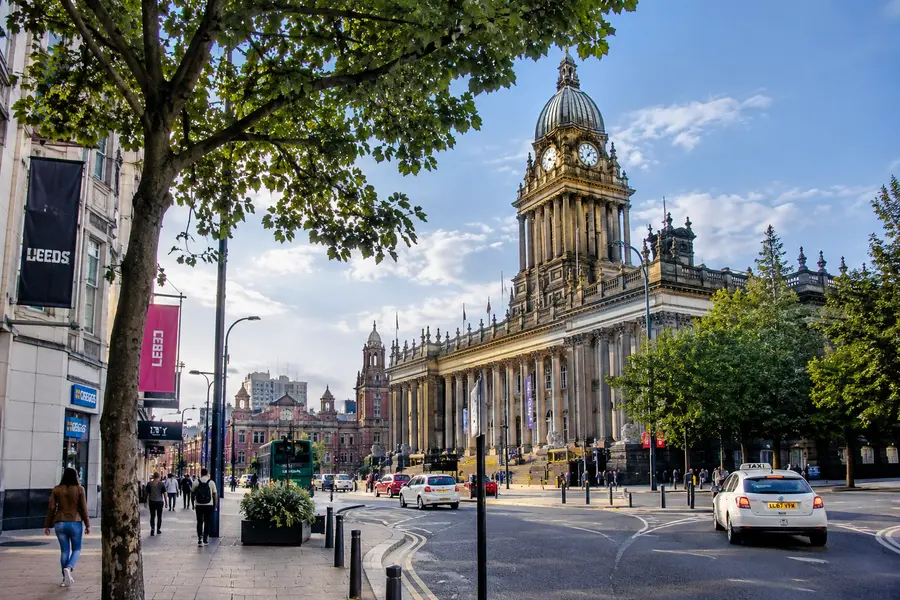
Leeds, West Yorkshire's biggest city, sits in northern England and grew rich on the banks of the River Aire from wool, cloth and trade. Between the Georgian and Victorian eras huge textile mills worked here, and merchants built the lavish arcades, exchanges and theatres that still shape the city centre. Today more than 800,000 people live in Leeds and the towns around it; it is England's biggest financial and legal centre after London and one of the country's great student cities, so the evenings are lively. For Ukrainians the city has a special link too: in 2023 Leeds signed a friendship agreement with Kharkiv and became its partner city. If you are wondering what to see in Leeds, here are 20 places, from a museum packed with knights' armour and the ruins of a medieval abbey to Victorian arcades, stately homes and parks, plus ideas for trips half an hour out of town.
What to see in Leeds first
Central Leeds is easy to explore on foot: the station, the main shopping street Briggate, Kirkgate Market and the arcades of the Victoria Quarter are all within ten minutes of one another. South of the station, along the canal and the river, lie the restored warehouses of Granary Wharf and the Leeds Dock waterfront with the Royal Armouries, and to the north are the university and museum quarter. Kirkstall Abbey, Temple Newsam, Roundhay Park and Harewood House are best reached by bus or taxi, 15 to 30 minutes from the centre.
1. Royal Armouries Museum
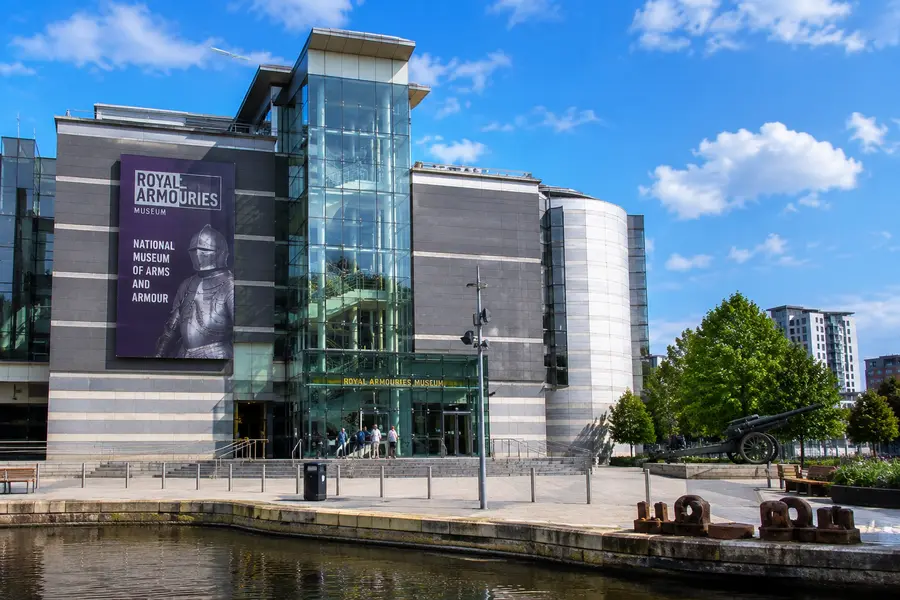
For centuries the country's arms and armour collection was kept in the Tower of London; in 1996 most of it moved to a purpose-built museum on the Leeds waterfront. Five floors of galleries cover tournaments, hunting, the Orient, war and self-defence, and the treasures include armour made for Henry VIII, samurai suits and a complete set of battle armour for an elephant.
The showstopper is the glass Hall of Steel, where thousands of swords, shields, helmets and guns spiral up the walls. In summer there are combat displays in the courtyard, and costumed interpreters in the galleries show how a sword was held and a musket loaded. Entry to the main galleries is free, so it is worth a visit even if military history is not your thing.
2. Kirkstall Abbey
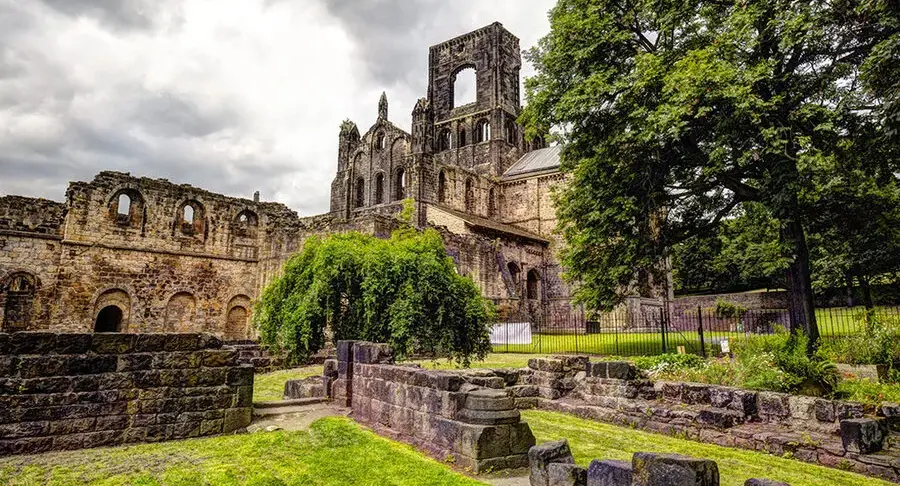
Five kilometres north-west of the centre, in the green valley of the Aire, stand the ruins of a Cistercian monastery founded in 1152. The monks left when Henry VIII dissolved the monasteries, but the church walls, the chapter house and the cells survive so well that the abbey ranks among the most complete monastic sites in England.
You can wander freely among the arches and columns, and the visitor centre explains how the monks lived, prayed and worked. The surrounding park hosts markets, outdoor film screenings and food festivals in summer, and across the road the Abbey House Museum recreates Victorian streets with shops and workshops.
3. Kirkgate Market
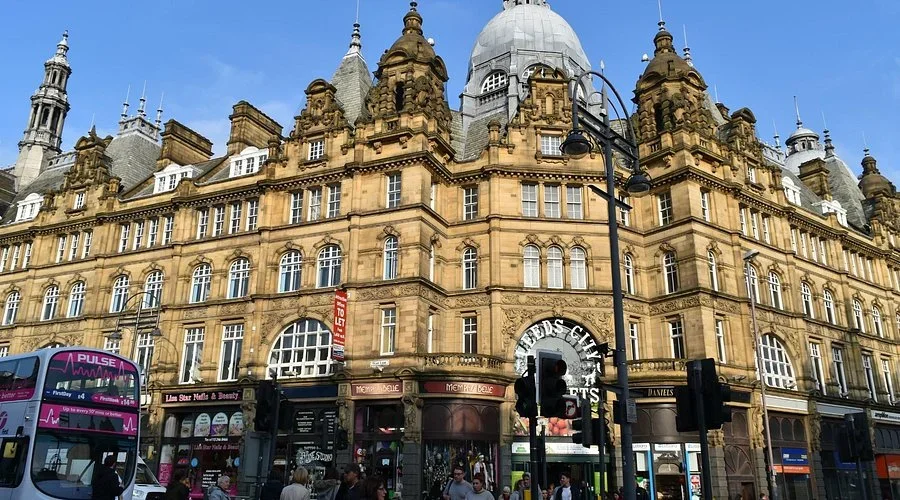
One of Europe's largest covered markets fills a splendid Edwardian hall of 1904 with domes, wrought-iron balconies and a glass roof. Inside are hundreds of stalls selling fish, meat, cheese, vegetables, fabrics and bric-a-brac, along with cafés and street-food counters from around the world, which makes it a good place for lunch.
It was here in 1884 that the immigrant Michael Marks opened his Penny Bazaar with the slogan "Don't ask the price, it's a penny", the business that grew into Marks & Spencer. A clock and a plaque by the entrance tell the story, and the company still runs a small stall in the market. Next door, on Briggate, the main shopping streets begin.
4. The Victoria Quarter and the arcades
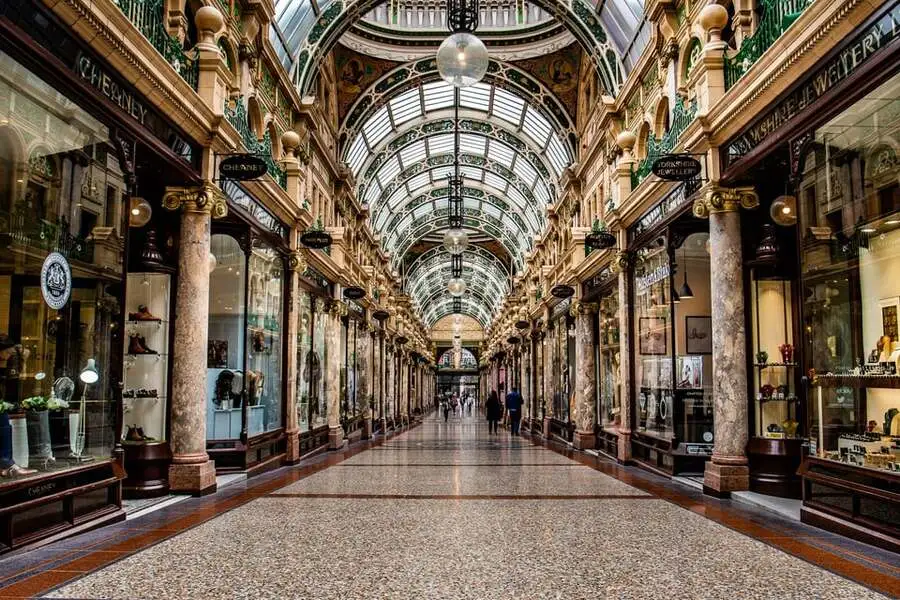
Late in the 19th century Leeds built a series of covered shopping arcades, and the most beautiful of them is County Arcade by the theatre architect Frank Matcham. Mosaic marble floors, glazed tiles, gilded plasterwork and glass domes make a walk through it feel like time travel, even though the shop windows belong to international brands and to Harvey Nichols, which opened its first store outside London here.
Neighbouring Queen Victoria Street has been roofed with stained glass by the artist Brian Clarke, among the largest stained-glass works in Britain, so on a sunny day the paving is dappled with colour. Close by are the modern Trinity Leeds shopping centre and Thornton's Arcade with its old mechanical clock, whose figures strike the hours.
5. Leeds Corn Exchange
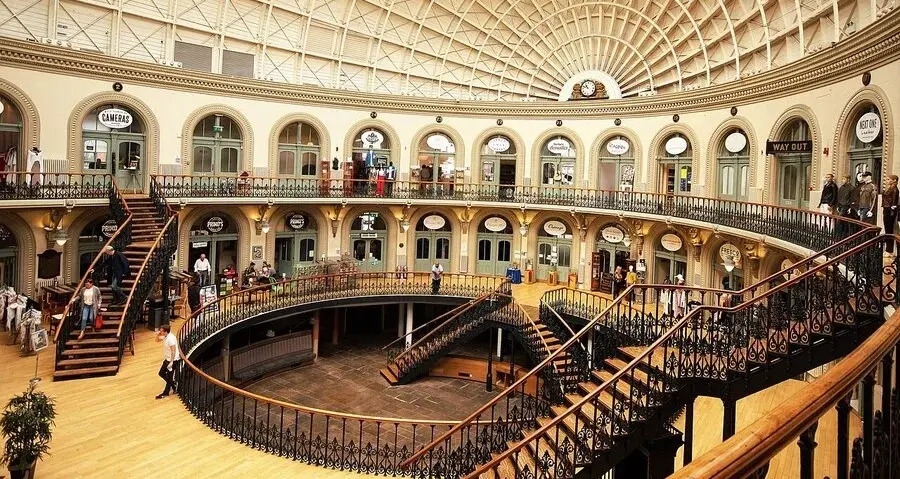
Cuthbert Brodrick gave Leeds this oval hall with an enormous glass dome in 1863; merchants once judged grain here by the daylight pouring in from above. From the outside it resembles a classical amphitheatre, and inside a circular atrium with cast-iron arches and balconies takes your breath away.
Today the Corn Exchange is home to independent shops selling clothes, vintage, books and jewellery, along with cafés and salons, and markets are often held in the middle of the atrium. It is one of the most photogenic spots in the city, especially if you go down to the lower level and look up at the dome. Around it lies the Exchange Quarter, with restaurants and bars in old warehouses.
6. Leeds Art Gallery and the Henry Moore Institute
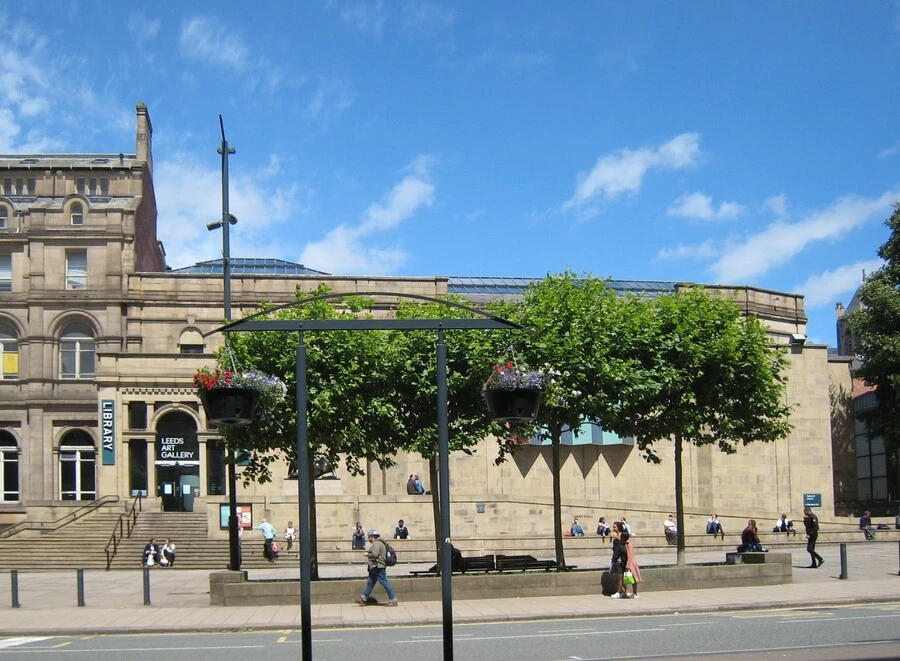
On The Headrow stands the City Art Gallery of 1888, home to one of Britain's finest collections of 20th-century sculpture. Henry Moore, the country's best-known sculptor, studied in Leeds, and his work fills several rooms alongside pieces by Barbara Hepworth and contemporary artists, while the paintings range from the Victorians to Francis Bacon.
Next door, behind a black granite façade, the Henry Moore Institute hosts sculpture exhibitions and keeps an archive and a research library. Do not miss the Tiled Hall café in the gallery, a Victorian room covered entirely in colourful tiles and mosaics. Both the gallery and the institute are free.
7. The canal and Granary Wharf
The Leeds and Liverpool Canal starts beside the station and runs for more than two hundred kilometres over the hills and through mill towns all the way to Liverpool. Its first stretch, Granary Wharf, is a cluster of restored brick warehouses with locks, bridges and waterside bars and cafés, while restaurants and little shops hide under the railway arches.
You can follow the towpath to Leeds Dock and the Royal Armouries or head the other way out of town: within half an hour's walk you reach meadows, narrowboats and old textile mills. In summer a water taxi runs from the dock, and on warm evenings students and office workers fill the terraces along the canal.
8. Temple Newsam
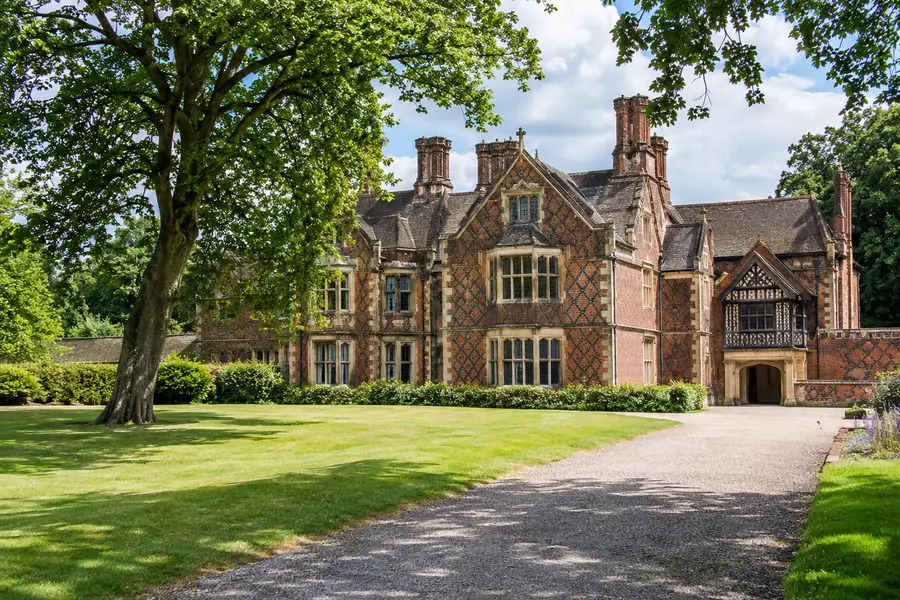
On the eastern edge of the city, in the middle of a vast park, stands a Tudor-Jacobean brick mansion whose dozens of rooms are filled with antique furniture, portraits, silver and porcelain. Lord Darnley, who married Mary Stuart, was born here, and later the house belonged to one of Yorkshire's most powerful families.
The grounds were laid out by the great landscape gardener Lancelot "Capability" Brown, with lakes, woods, a rhododendron walk and flower gardens. At the Home Farm you will meet rare breeds of cattle, pigs, sheep and goats, which makes Temple Newsam one of the best family outings around Leeds.
9. Roundhay Park and Tropical World
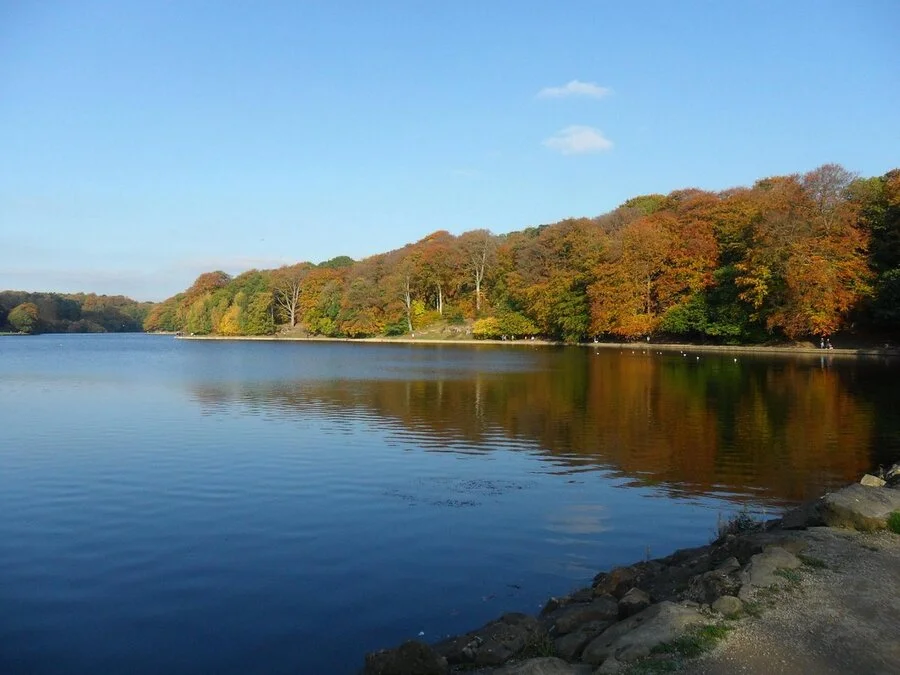
Roundhay is one of the biggest city parks in Europe, with more than 280 hectares of meadows, woodland, lakes and gardens in the north of Leeds. People come to walk their dogs, run and go boating, and its great arena once hosted Michael Jackson, Madonna and the Rolling Stones. A mock castle ruin stands by one of the lakes, built purely for the romantic view.
The children's favourite is Tropical World, a glasshouse with a rainforest, a waterfall, butterflies fluttering overhead, meerkats, reptiles and nocturnal animals. Themed gardens, cafés and playgrounds are close by, so Roundhay easily fills half a day.
10. Harewood House
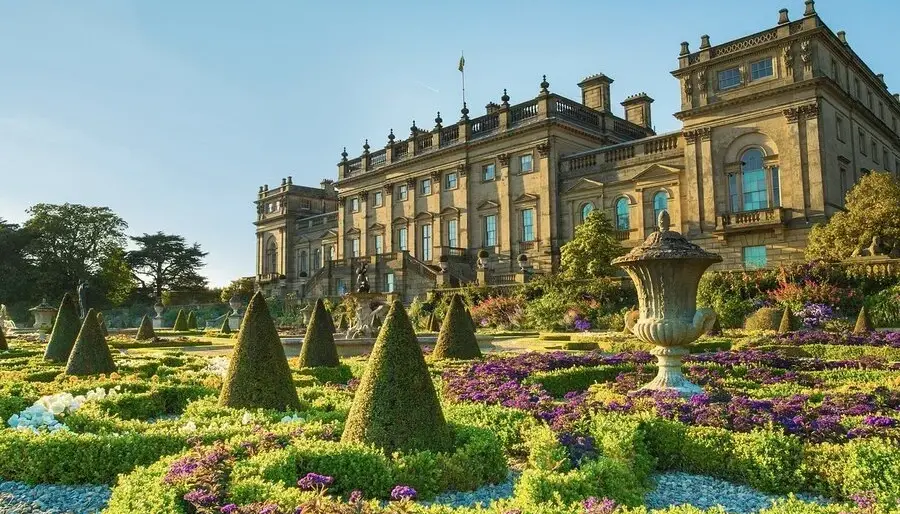
Twelve kilometres north of the centre, among rolling hills, stands one of England's finest 18th-century houses. Robert Adam designed its interiors, Thomas Chippendale, born nearby in Otley, made the furniture, and the walls are hung with paintings by Titian, Turner and Reynolds.
The house sits in a huge landscaped park with a lake, terraced gardens, a Himalayan garden and a bird garden with penguins, flamingos and parrots. Harewood still belongs to the family of the Earls of Harewood, and scenes from the films Downton Abbey and Victoria & Abdul were shot here.
Leeds Attractions: What Else to Visit While in the City
- Leeds City Museum — a museum on Millennium Square with the Egyptian mummy of the priest Nesyamun, Roman mosaics, the Leeds Tiger and galleries on the city's history. Admission is free.
- Thackray Museum of Medicine — a former workhouse where a street of 1840s Leeds has been recreated, smells and sounds included, to show how medicine has changed.
- Leeds Industrial Museum at Armley Mills — a riverside woollen mill on the Aire that was the biggest anywhere in its day, with looms, steam engines and a vintage cinema.
- Hyde Park Picture House — a cosy cinema of 1914 with gas lamps on the walls, showing classics, art-house titles and new releases.
- Leeds Minster — the Victorian parish church of St Peter with a huge organ, stained glass and a choir that sings at Sunday services.
- Leeds Grand Theatre — a gilded Victorian theatre of 1878, home of Opera North, with Northern Ballet performing close by.
- Middleton Railway — a line that has carried trains without a break since 1758, longer than any other on Earth, with steam trains at weekends.
- Elland Road — home of Leeds United, with stadium tours and statues of the legendary captain Billy Bremner and manager Don Revie outside.
- The Tetley — a contemporary art centre in the brewery's old Art Deco offices, with exhibitions, a café and a bar.
- Golden Acre Park — a peaceful park with a lake, heather gardens and trails in the north of the city, close to Otley Chevin and its views over Wharfedale.
What to See in Leeds in 1, 2 or 3 Days
What to do in Leeds for one day? Start at Kirkgate Market, stroll through the Victoria Quarter arcades and look into the Corn Exchange, then visit the Art Gallery and the City Museum. In the afternoon follow the canal from Granary Wharf to the Royal Armouries and finish the day in the bars of the Exchange Quarter. Is Leeds worth visiting for longer? Yes: a second day leaves time for Kirkstall Abbey in the morning and Temple Newsam or Roundhay and Tropical World in the afternoon, with Harewood House if you can fit it in, and a third day is perfect for York or the Yorkshire Dales.
What is Leeds most famous for? Its textile past, its arcades and markets, Leeds United and a buzzing nightlife. May to September is the most pleasant time to visit, with daytime temperatures around 20°C and concerts in the parks. At the end of August the city hosts Leeds Festival, one of Britain's biggest rock festivals, and the Leeds West Indian Carnival in Chapeltown, the oldest in Europe, while in winter a Christmas market fills Millennium Square. Beyond Leeds, Yorkshire offers York with its Minster and medieval walls 25 minutes away by train, the UNESCO-listed mill village of Saltaire, Haworth, home of the Brontë sisters, the spa town of Harrogate and the hills and valleys of the Yorkshire Dales.
Places to visit in Leeds for free include the Royal Armouries, the Art Gallery, the Henry Moore Institute, the City Museum, Kirkstall Abbey, Kirkgate Market, the arcades, the Corn Exchange and all the city parks. Children will enjoy Tropical World, the farm at Temple Newsam, Harewood's bird garden, the armour and combat displays at the Royal Armouries and the steam trains at Middleton. As for food, try a Sunday roast with Yorkshire pudding, fish and chips, anything made with the forced rhubarb grown in dark sheds in the Rhubarb Triangle south of the city, local ale and a proper cup of Yorkshire tea. In the evening students and office workers head for the pubs of the Exchange Quarter, Call Lane and Headingley, while culture lovers go to the opera or ballet at the Grand Theatre.
Ukraine has no direct flights to Leeds, so the most convenient route is via Poland: Jet2 and Ryanair fly direct from Kraków, and Ryanair from Warsaw, with a flight time of about two and a half hours. Leeds Bradford Airport is 11 km from the centre, and the airport bus reaches the station in around half an hour. The UK is not part of the Schengen Area, so Ukrainians need a British visa. From Leeds it is easy to travel on by train: Manchester is about an hour away, London two and a quarter hours and Edinburgh around three.
For real warmth, people from Leeds most often fly to Spain and Turkey: according to Yorkshire newspapers, the most popular summer routes from Leeds Bradford Airport are Palma de Mallorca, Alicante, Tenerife and Antalya. The TurPoisk online travel agency can help with both parts of the journey: book a hotel near the Victoria Quarter or by the canal, and for a seaside break find tours to Turkey, whether to Antalya, golf-friendly Belek or Alanya with its wide beaches, or to Tenerife, warm even in winter. Use our tour search to see options for your dates, browse last-minute deals, and our managers will help you pair the Yorkshire hills with a warm sea.


