
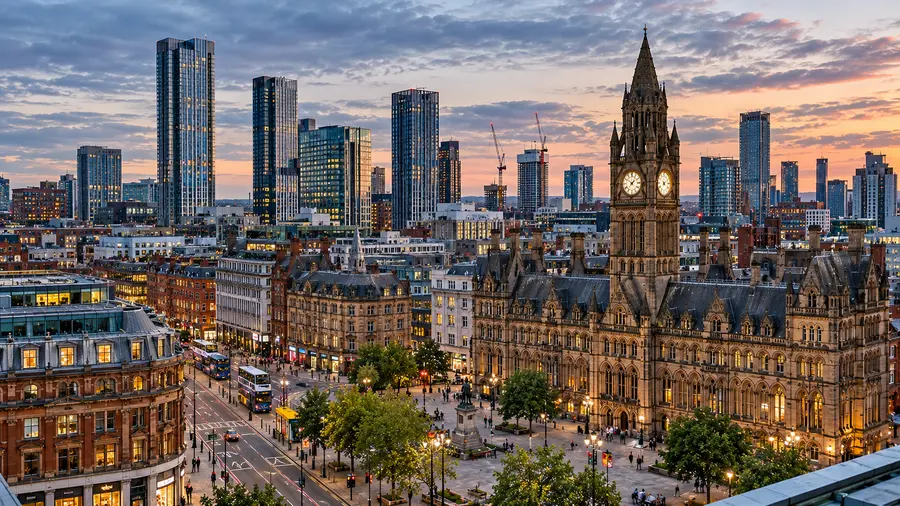
Most people know Manchester through two football clubs, yet the city behind those famous badges hides one of Europe's most remarkable life stories. This is where the Industrial Revolution gathered pace: cotton mills earned it the nickname "Cottonopolis", the first steam-hauled passenger line between two cities started here, and a university team ran the earliest program held in a computer's own memory. Today the red-brick warehouses house bars, studios and galleries, grand Victorian Gothic libraries welcome anyone through their doors at no charge, while whole blocks of the Northern Quarter have become a sprawling outdoor canvas of murals. For a first-timer weighing up what to see in Manchester, we have picked twenty places, from a medieval cathedral to the stadium everyone calls the "Theatre of Dreams".
What to see in Manchester first
Over half a million people live in the city itself and close to three million across Greater Manchester, but the centre is pleasantly walkable. Strolling from Piccadilly station to the cathedral or Albert Square takes about a quarter of an hour, while Deansgate runs from the northern edge of the centre down to Castlefield. The Free Bus loops between the main districts, and Metrolink trams reach the football grounds, Salford Quays and Heaton Park. The weather changes quickly, so pack an umbrella; the upside is that most museums charge nothing for entry and make a rainy afternoon easy to fill. Here are the ten places to put at the top of your list.
1. Manchester Town Hall and Albert Square
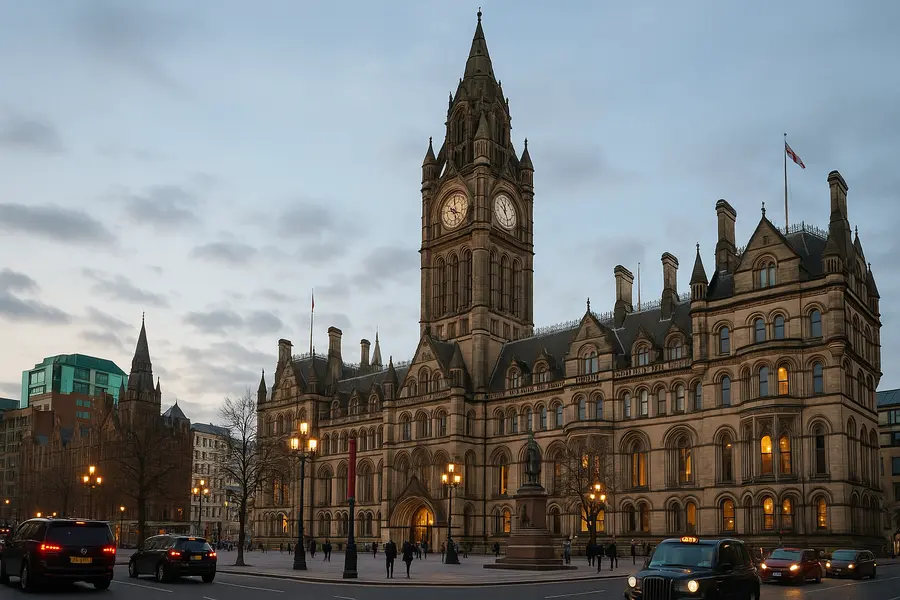
Alfred Waterhouse's neo-Gothic Town Hall, completed in 1877, is the boldest statement of the wealth Manchester earned from cotton. Its 85-metre clock tower rises above Albert Square, with Agricola, the Roman general who founded the first fort, keeping watch above the entrance, and the benefactor Humphrey Chetham among the figures on the corner. Inside, the Great Hall is lined with twelve Manchester Murals by the Pre-Raphaelite Ford Madox Brown, telling the city's story from Romans laying out their fort to the day the Bridgewater Canal opened.
Look down at the mosaic floor and you will spot bees. The worker bee has been the city's emblem since the Victorian era, a nod to its hard-working mill hands, and after the Manchester Arena attack it became a symbol of solidarity: you will find bees painted on bins and bollards and inked on the arms of locals. At the centre of the square, under a Gothic canopy, stands the Albert Memorial, unveiled a few years before its better-known London cousin. In winter the squares of the centre fill with one of the largest Christmas markets in Britain.
2. John Rylands Library
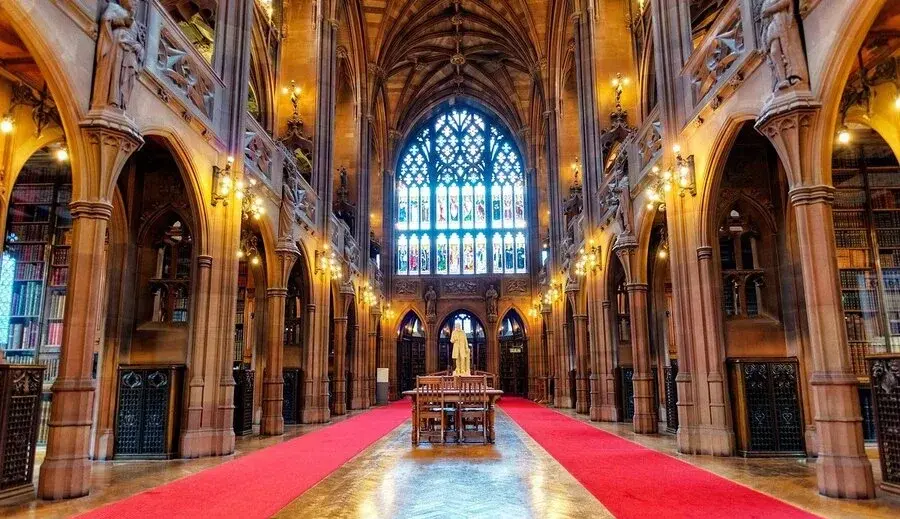
Halfway along busy Deansgate, a building that looks like a cathedral suddenly appears among the shops. It is a library, commissioned by Enriqueta Rylands as a tribute to her late husband John, a cotton magnate and Manchester's first multimillionaire. Basil Champneys built it from red sandstone, and readers were first let in on New Year's Day 1900. The vaulted Historic Reading Room, with its stained glass and stone statues, feels more like a temple to books than a place to borrow them, and it is the spot every visitor ends up photographing.
Today the university runs the library, which looks after medieval manuscripts, rare early printed books and volumes from William Caxton's press. Its most precious item is tiny: papyrus P52, a scrap bearing a few lines from John's Gospel that scholars count among the oldest known pieces of the New Testament. You don't need a ticket, and the quiet upper galleries are a lovely place to sit for a while and take in the carved woodwork.
3. Manchester Cathedral
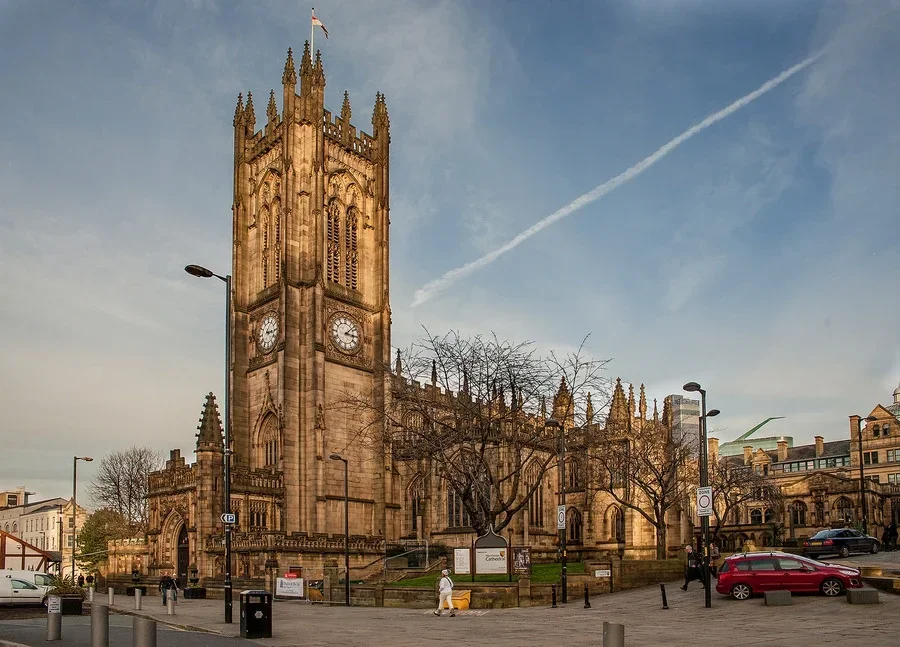
The oldest corner of the city hides behind modern blocks near Victoria station. The collegiate church of St Mary, St Denys and St George was founded in 1421 and rebuilt in Perpendicular Gothic over the following century, though it only became a cathedral in the mid-1800s. Thanks to the wide side chapels, the nave feels unusually spacious, and it is often described as the widest of any English cathedral.
The building came through German raids in the Blitz and the 1996 IRA bomb a short walk away, which is why several windows are now modern, vivid and abstract. The real treasure is the early sixteenth-century oak choir with its carved misericords, the ledges monks leaned on during long services. On one, a pair of rabbits have tied a hunter to a spit and are roasting him over the fire; others show fantastical beasts and scenes of everyday medieval life. Entry is free, and on Sundays you can hear the choir sing.
4. Chetham's Library
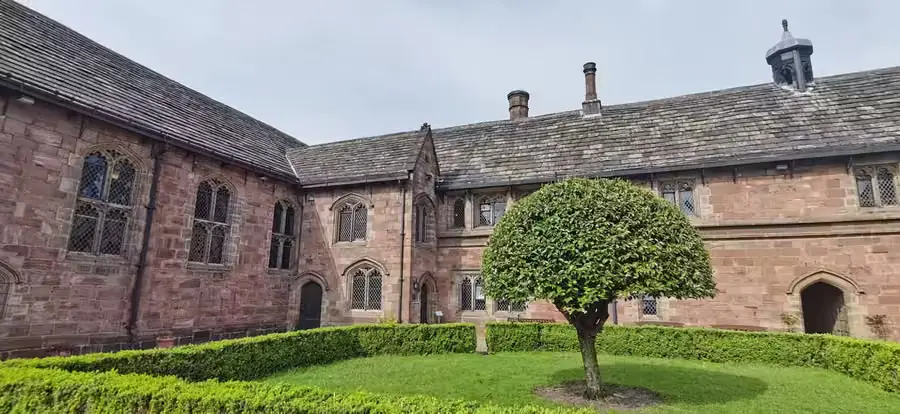
Just over the road from the cathedral, within the grounds of a music school, stands a sandstone complex put up in the fifteenth century to house the priests of the collegiate church. In 1653, as the merchant Humphrey Chetham had instructed in his will, a library opened here and has stayed open ever since, and the English-speaking world has no older free public reference library. Dark oak presses where books were once chained in place, creaking floorboards and the smell of old paper carry you straight back to the age of Cromwell.
One summer, in 1845, two visitors sat at the table in the bay window of the reading room: Karl Marx and his friend Friedrich Engels. They pored over works of economics, while Engels, then working at his father's mill business in the city, had just finished The Condition of the Working Class in England. The table and the alcove remain almost exactly as they were. The library is small and visitors are taken round in little groups, so it is worth checking times before you go.
5. Science and Industry Museum
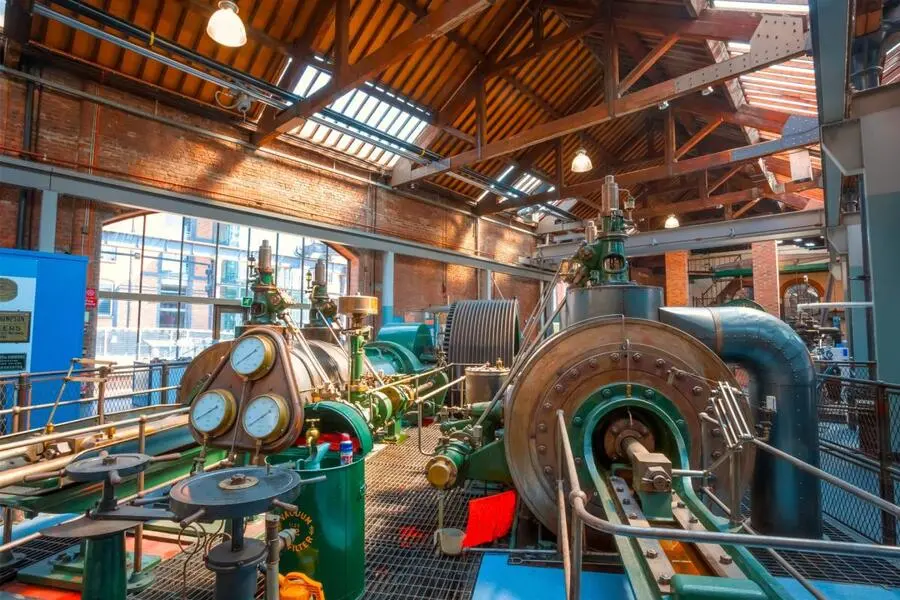
The museum occupies Liverpool Road, the station at the Manchester end of the line from Liverpool, where steam trains began carrying passengers between two cities in 1830. It is the oldest surviving passenger station on the planet, and you can wander along its platforms and through its warehouses. Inside, guides fire up looms to show how raw cotton became cloth, and huge stationary engines and locomotives still hiss into life for visitors.
A separate section celebrates ideas born in Manchester. You can see a full working copy of the "Baby", the machine on which a University of Manchester team ran the first program stored in a computer's memory in 1948, and learn about graphene, the wonder material first isolated in the city and rewarded with a Nobel Prize. Children can spend hours pulling levers and pressing buttons, so plan on spending half a day there.
6. Castlefield
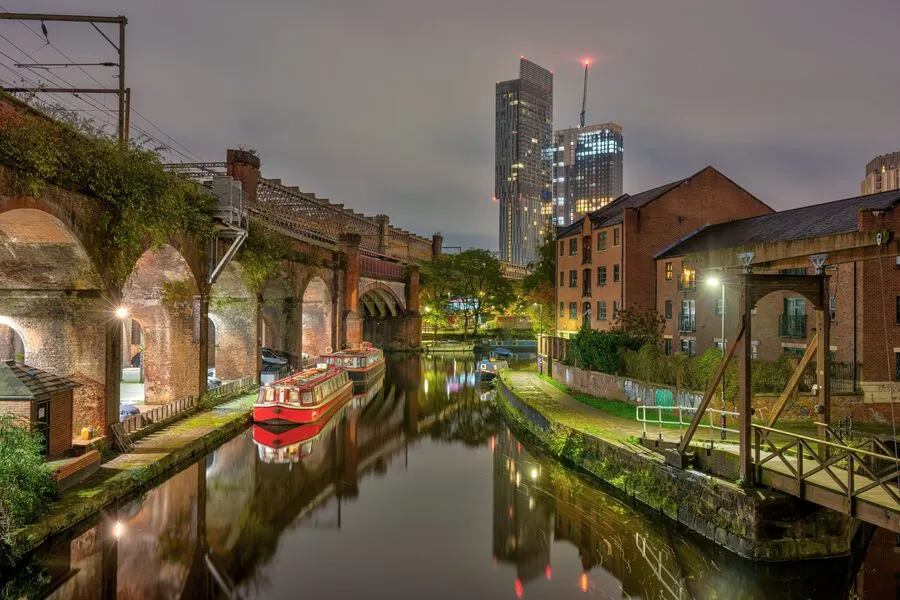
Manchester began right here. Around AD 79 the Romans built a timber fort called Mamucium on a rise above the river, and that Latin name is why locals still call themselves Mancunians. Sections of the stone wall and the fort gate have been rebuilt, with traces of the civilian settlement alongside. Some seventeen centuries later the Bridgewater Canal arrived, dug in 1761 to bring coal into town and widely regarded as the first canal of the Industrial Revolution.
Today Castlefield is the most photogenic part of the city. Cast-iron railway bridges criss-cross the canal basins, old warehouses have become pubs, and narrowboats bob at their moorings. Towering over it all is an 1892 steel viaduct 330 metres long, where the National Trust has created a "sky park" of planters and benches. Come in the evening, when the lights shimmer on the water, and enjoy a pint by the towpath.
7. Old Trafford
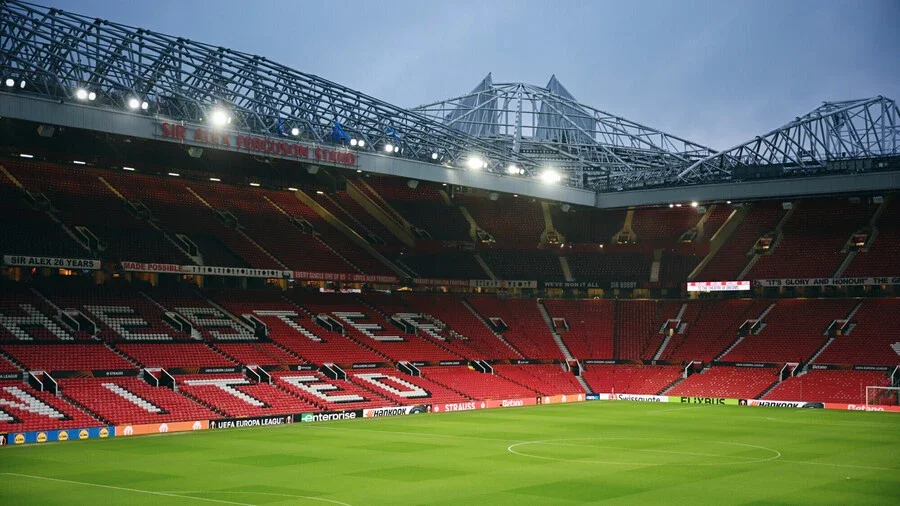
Manchester United's home opened in 1910 and now holds around 74,000 fans, more than any other club ground in the UK. Sir Bobby Charlton gave it the name "Theatre of Dreams", and the nickname has stuck ever since. Outside the main entrance stands the United Trinity, bronze figures of George Best, Bobby Charlton and Denis Law, facing a statue of the legendary manager Sir Matt Busby.
Where the East and South stands meet hangs a clock marked with the date 6 February 1958, the day the plane carrying the team crashed in Munich, killing eight players. The stadium tour and museum take you through the dressing room, down the players' tunnel and onto the dugout, while the trophy room displays more than a century of silverware. Don't mix it up with Old Trafford cricket ground about a kilometre away: the tram stop of that name sits next to the cricket, and Wharfside is the closer stop for football.
8. Northern Quarter and Afflecks
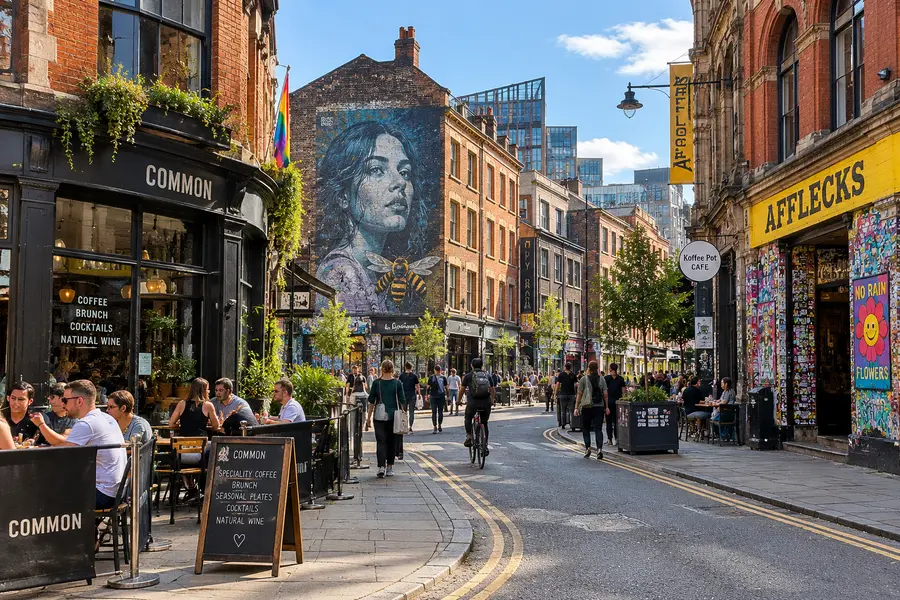
Textile warehouses and market halls once filled these streets; now the Northern Quarter is Manchester's creative heart, packed with vintage shops, record stores, coffee houses, craft beer bars and street art on almost every wall. With its brick façades and cast-iron fire escapes, the area looks so much like old New York that it stood in for 1940s Manhattan when Captain America: The First Avenger was shot, and other Hollywood crews have followed. The densest cluster of murals surrounds Stevenson Square, and the walls change constantly.
Make time for Afflecks, a multi-storey warren of independent traders selling vintage clothes, comics, jewellery and even tattoos. A few streets away, inside the old meat market with its iron frame and glass roof, Mackie Mayor serves food from several kitchens at long shared tables. Further east lies Ancoats, once a district of cotton mills, where converted brick buildings now hold some of the best bakeries and restaurants in town.
9. Manchester Art Gallery
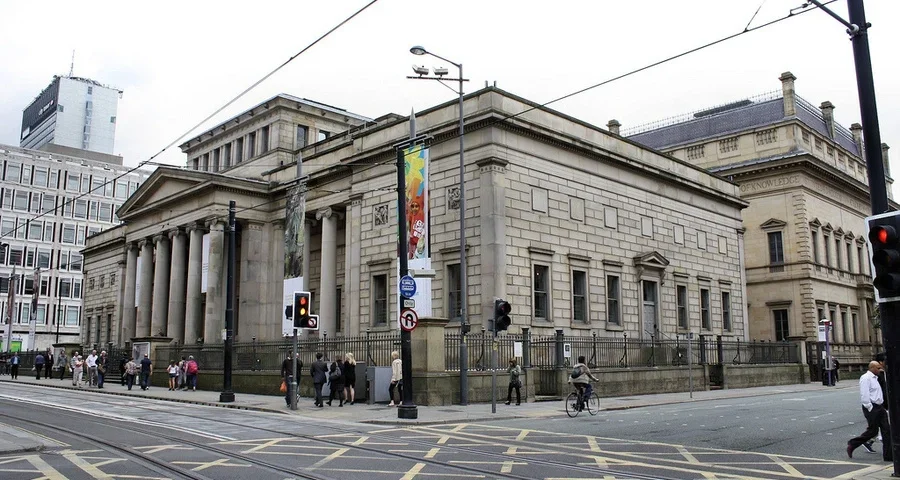
The gallery fills a columned neoclassical building designed for the Royal Manchester Institution by Charles Barry, the architect who later rebuilt the Palace of Westminster. Its strongest suit is nineteenth-century British painting, above all the Pre-Raphaelites. Look out for Ford Madox Brown's crowded street scene Work, William Holman Hunt's The Hireling Shepherd and Hylas and the Nymphs by John William Waterhouse.
Hylas and the Nymphs caused a stir a few years ago, when curators took it down for about a week to invite debate about how art portrays women, then rehung it after a storm of protest. Beyond the old masters you will find rooms devoted to craft and design, changing exhibitions and a dedicated space for children. The permanent collection is free, so it is easy to pop in between walks.
10. Salford Quays
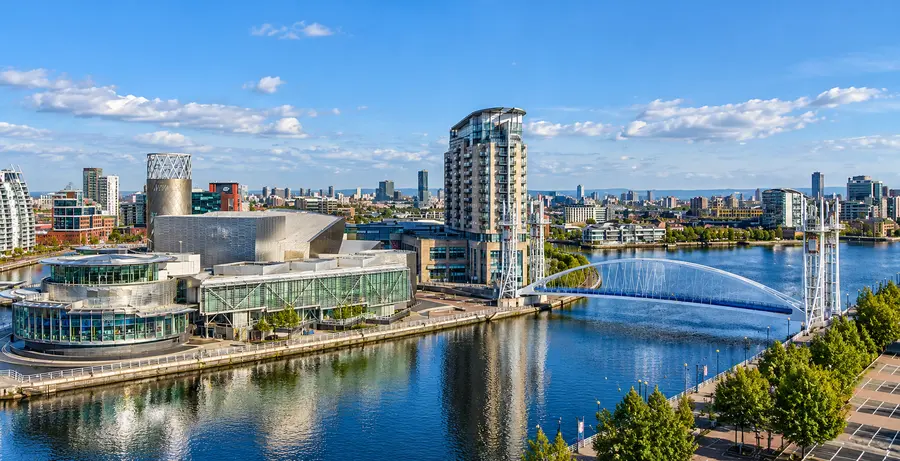
Manchester lies a long way from the sea, yet in the late nineteenth century it became a port: the 58-kilometre Manchester Ship Canal linked the city with the Mersey estuary, and ocean-going ships began unloading here. The docks actually lie in the neighbouring city of Salford, and after they closed they were reborn as a waterfront district of striking modern architecture. MediaCityUK, home to studios of the BBC and ITV, sits here too, with footbridges linking the quaysides.
The biggest draws are The Lowry, a theatre and gallery complex showing L. S. Lowry's famous "matchstick men" set against factory chimneys, and the northern outpost of the Imperial War Museum. Daniel Libeskind shaped the museum's building as shards of a shattered globe, and every hour the main hall goes dark for a projection show about the wars of the twentieth and twenty-first centuries. The tram from the centre takes about twenty minutes, and there is a large outlet mall next door.
Manchester Attractions: What Else to Visit While in the City
- National Football Museum — housed in Urbis, the glass wedge beside the cathedral, it traces the game from rowdy medieval matches between villages to today's Premier League. In the interactive zone you can take a penalty and measure the power of your shot.
- Etihad Stadium — Manchester City's home, built for the Commonwealth Games. Tours take you into the champions' dressing room and up into the stands, and a footbridge leads across to the club's training academy.
- Manchester Museum — the university's museum of nature and cultures, home to Stan, a cast of a near-complete Tyrannosaurus rex dug up in South Dakota. It also holds major collections from ancient Egypt and Sudan, a vivarium of rare frogs and a South Asia Gallery.
- The Whitworth — an art gallery in a park, known for its wallpapers, textiles and works on paper. A glass wing opens straight onto the trees, so viewing an exhibition feels like being in a garden.
- Central Library and St Peter's Square — a round 1930s building with a portico modelled loosely on Rome's Pantheon, sheltering a hushed reading room under its dome. On the square stands a statue of the suffragette Emmeline Pankhurst, a Manchester-born campaigner.
- People's History Museum — Britain's national museum of democracy, telling how ordinary people won the right to vote. It covers the Peterloo Massacre of 1819 and keeps more trade union banners than any other collection in the world.
- Chinatown — a district just behind the art gallery with an ornate paifang arch, restaurants and Asian supermarkets. Chinese New Year is celebrated here with dragon dances and fireworks.
- Canal Street and the Alan Turing Memorial — the heart of the Gay Village, with bars lining the Rochdale Canal. In neighbouring Sackville Gardens, a bronze Turing, the father of computer science who did pioneering work at the city's university, sits on a bench holding an apple.
- Victoria Baths — a 1906 "water palace" of glazed tiles, mosaics and stained glass. Its Edwardian interior is so well preserved that it regularly hosts film crews, festivals and fairs.
- Heaton Park — among Europe's biggest municipal parks, with the neoclassical Heaton Hall, a boating lake and an animal farm. The tram stops at the gates, and big summer concerts are held on its slopes.
Is Manchester worth visiting, and how many days does it need? Here is how to spend one day in Manchester: start with the Town Hall and Albert Square, stroll along Deansgate for the John Rylands Library, then the cathedral, Chetham's Library and, next door, the National Football Museum, grab lunch at Mackie Mayor, wander the Northern Quarter and finish with a drink in Castlefield. With two days in Manchester, add the Science and Industry Museum, the art gallery and Chinatown, and give the second afternoon to Old Trafford or the Etihad. On a third day head out to Salford Quays and the Manchester Museum with the Whitworth, and with extra time, hop on a train: in under an hour you can be in Liverpool, the city of the Beatles covered in our Liverpool travel guide, or in the Peak District, Britain's first national park, with its moors and stone villages. What to do in Manchester at night? Catch a concert at the Bridgewater Hall, dance in the Northern Quarter's clubs or see a play at the Royal Exchange Theatre, whose theatre-in-the-round stands right on the old cotton trading floor.
What is Manchester famous for? It is often called a city of firsts. Ernest Rutherford first split the atomic nucleus here, Charles Rolls met Henry Royce at the Midland Hotel, and the music scene gave the world Joy Division, The Smiths, The Stone Roses and Oasis. Looking for free things to do in Manchester? Try the John Rylands and Central libraries, the cathedral, the art gallery, Manchester Museum, the Whitworth, the People's History Museum, the science museum, Castlefield and the Northern Quarter's street art. Families will love the science museum, Stan the T. rex, the stadium tours and Heaton Park, while the Trafford Centre adds a Legoland Discovery Centre and an aquarium. The UK is outside the Schengen area, so check visa rules well ahead of your trip. Budget airlines connect Manchester Airport with Kraków and Warsaw in under three hours, and trains and trams run from the terminal to the city centre. From Piccadilly, fast trains reach the capital in a little over two hours, so it is easy to continue with our London travel guide.
Thinking about a Manchester break? TurPoisk online travel agency will happily take care of the details: we can help you reserve a hotel close to the action, whether in the Northern Quarter, next to Piccadilly station or with views over the Castlefield canals. After a few grey English days, sunshine starts to sound good, and the British feel the same: Manchester Airport sends a steady stream of flights to Tenerife, Mallorca and Antalya. You can round off your journey by the sea as well: compare beach packages in our tour search and grab a good deal. Our managers will gladly help you pair the north of England with a seaside break.


