
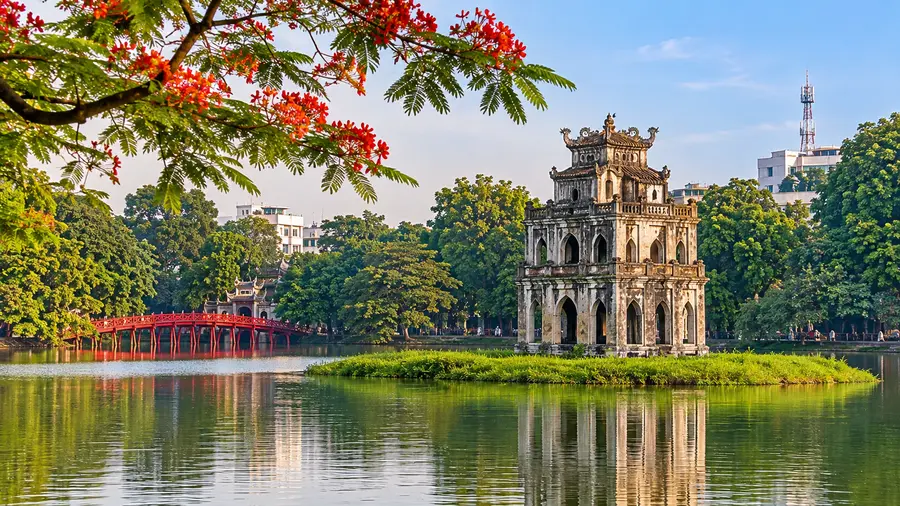
Hanoi, capital of Vietnam, spreads along the Red River as a city of lakes, pagodas and French boulevards with a thousand years behind it. What is Hanoi best known for? Scooters, street food and that long history: Emperor Lý Thái Tổ moved his court here in 1010 and named the place Thăng Long, or "Rising Dragon", while today's name arrived only in 1831. Mopeds stream past colonial villas, cooks on plastic stools and fruit sellers balancing shoulder poles. Most travellers just pass through, heading for the beaches or the limestone islands. So what should you see in Hanoi if the sea is the main reason for your Vietnam trip? Our list has 20 places, starting at Hoan Kiem Lake and ending among the islands of Ha Long Bay, with the mausoleum and an ancient university in between.
What to See in Hanoi First
So what not to miss in Hanoi? Begin at Hoan Kiem Lake, the tourist core of town, with the Old Quarter to the north and the wide avenues of the French Quarter to the south. The mausoleum, citadel and Temple of Literature lie a few kilometres west near Ba Dinh Square, an easy hop by ride-hailing taxi. Crossing the road scares most newcomers, but the trick is simple: keep a slow, even pace, never stop, and the scooters will part around you.
1. Hoan Kiem Lake and Ngoc Son Temple
The name means "Lake of the Returned Sword". Legend says that in the 15th century Emperor Lê Lợi drove out Chinese invaders with a magic blade, then surrendered it to a golden turtle that surfaced from these waters. The little Turtle Tower on an islet in the middle recalls the story, and every Vietnamese schoolchild can draw it. Crowds of locals gather on the banks at dawn for tai chi and group dancing.
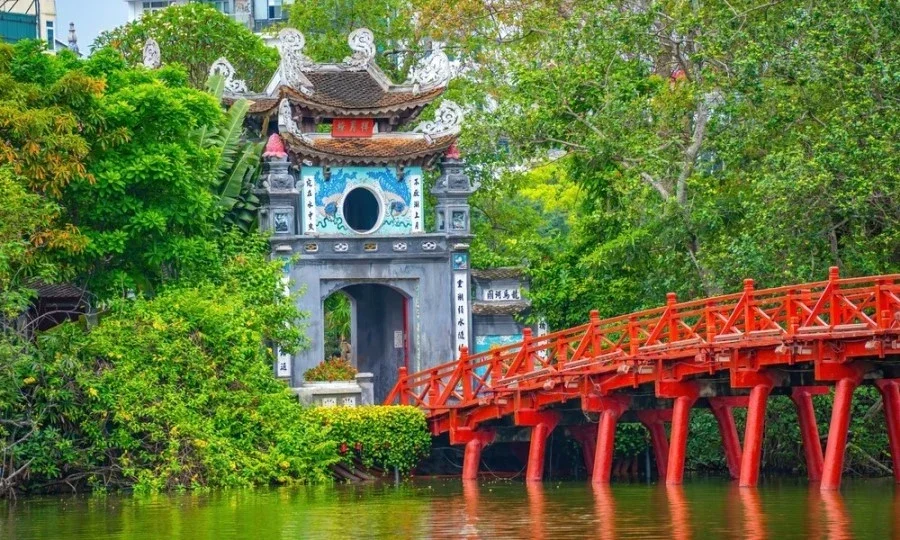
A red wooden footbridge, The Huc, crosses to Ngoc Son Temple on a neighbouring island, dedicated to the general Trần Hưng Đạo and a patron of scholars. A side hall displays a preserved softshell turtle over two metres long that once lived in the lake. From Friday evening through the weekend the surrounding streets close to traffic, and the shore fills with strollers, street games and buskers.
2. The Old Quarter
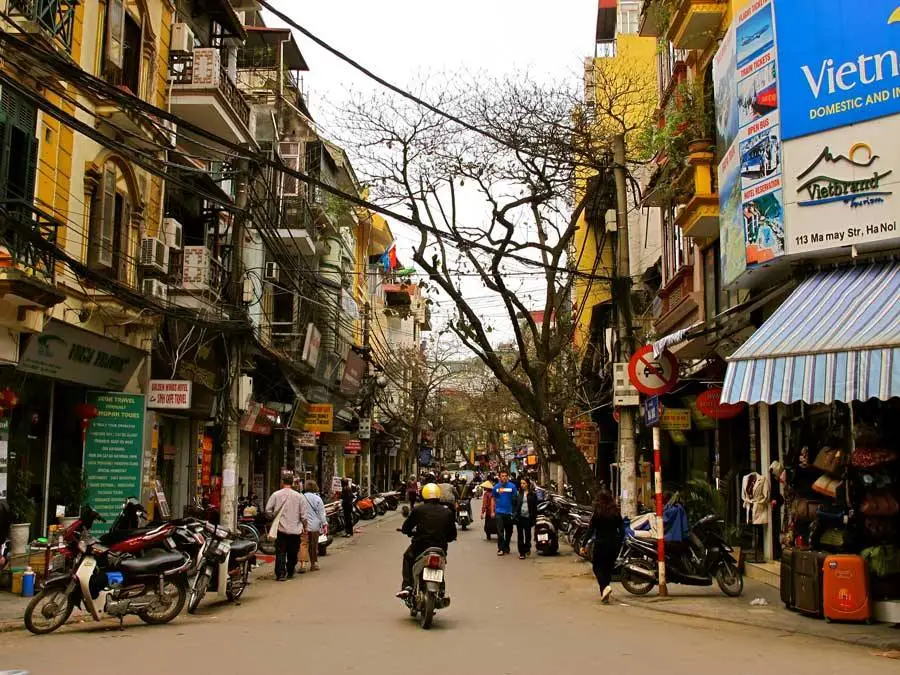
This maze of "36 streets" grew up around the craft guilds that served the imperial court. Street names still begin with Hang, meaning goods: Hang Gai sold silk, Hang Bac silver, and Hang Ma still deals in paper money burned for the ancestors. Tube houses show the street just a few metres of frontage, then run deep into the block, so an ordinary coffee shop may hide a whole family's world behind it.
Forget a set route, because the best finds are accidental. Duck into Bach Ma Temple, among the oldest in the city, seek out the old Ô Quan Chưởng city gate, then take a low stool and order whatever the neighbours are eating. Looking for things to do in the Old Quarter at night? Draught beer flows at the Ta Hien crossroads after dark, and a night market runs north from the lake from Friday to Sunday.
3. Ho Chi Minh Mausoleum and the One Pillar Pagoda
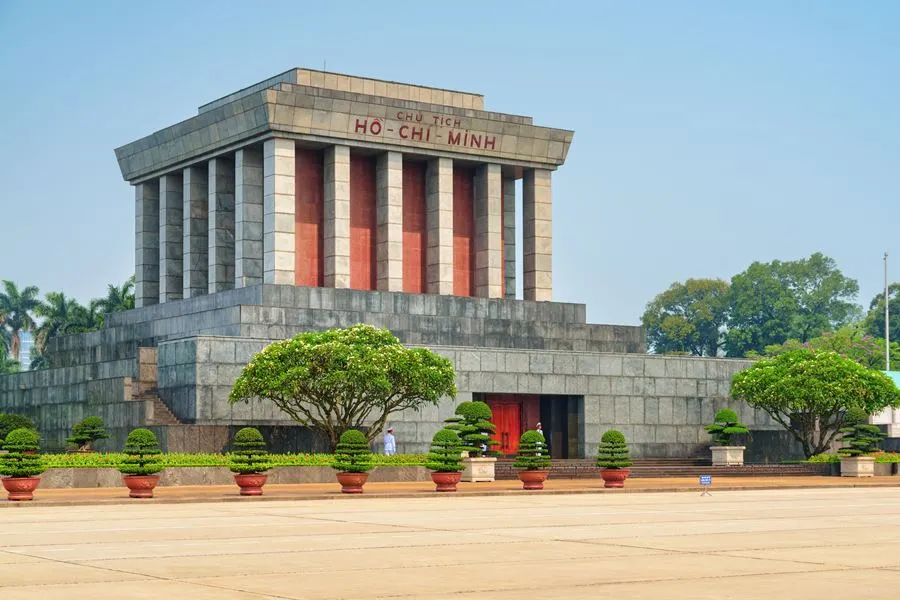
This massive granite cube rises over Ba Dinh Square, where Ho proclaimed independence on 2 September 1945. He had asked to be cremated, yet his body was embalmed, and the mausoleum opened to visitors in 1975. The line files silently past a glass sarcophagus, so take off hats, cover shoulders and knees and put your phone away. It opens only in the morning and not every day, and each autumn it shuts for several weeks of upkeep, so check the timetable first.
Close by stand the yellow French-era Presidential Palace and the modest stilt house where Ho spent his final years. Just down the path is the tiny One Pillar Pagoda, raised in 1049 on the orders of Emperor Lý Thái Tông to resemble a lotus rising from a pond. Today's structure is a reconstruction, because retreating French troops blew up the original in 1954.
4. Temple of Literature
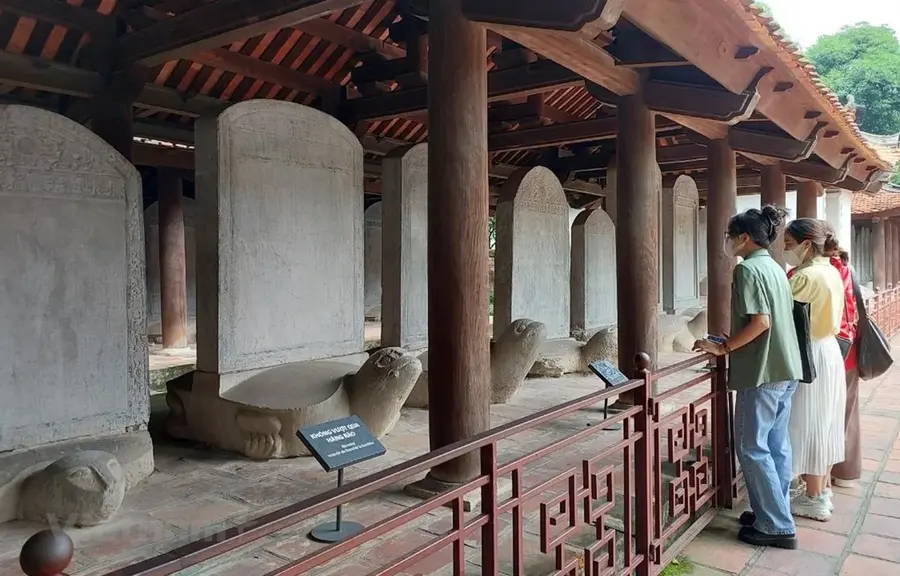
A shrine to Confucius went up here in 1070, and six years later an academy for sons of the nobility opened beside it, the country's first university. Five walled courtyards lead from gate to gate through old trees and ponds, while the roar of traffic fades away. The complex even appears on the 100,000-dong banknote, which explains the respect locals show it.
The real treasure waits in the third courtyard, where 82 steles on the backs of stone turtles record the graduates of imperial exams held from 1442 to 1779. UNESCO lists them in its Memory of the World register, and touching is forbidden. In spring, students in gowns pose for photos, and at Tet calligraphers paint wishes in red ink. Want it quiet? Arrive at opening time.
5. Imperial Citadel of Thang Long
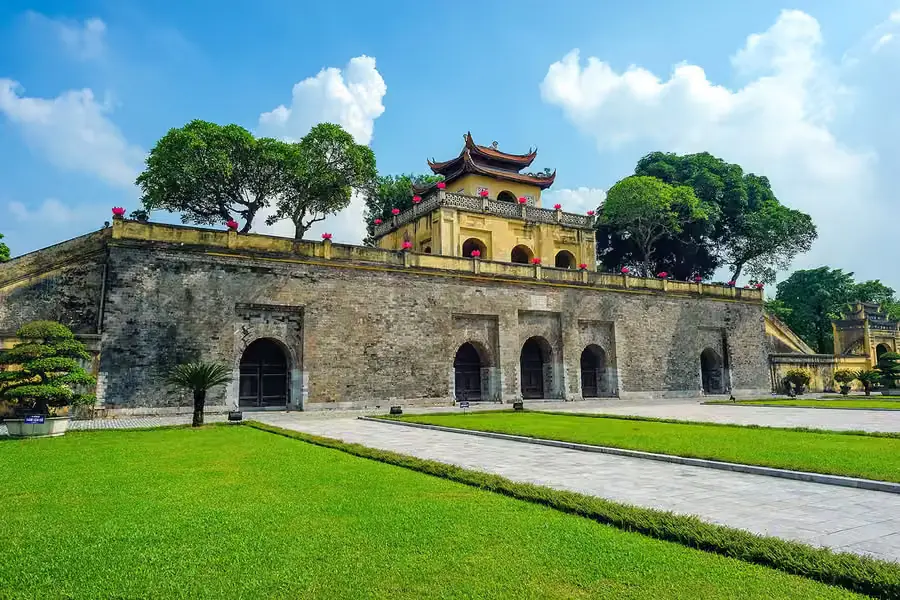
Power sat on this spot for some thirteen centuries, and UNESCO added it to the World Heritage list in 2010. The French pulled down most of the palaces, so the appeal lies more in archaeology than in splendour. Doan Mon, the ceremonial gate used by emperors, survives, and the 33-metre Flag Tower, dated 1812, looms over the avenue beside it.
Across the road, an open excavation exposes layers of successive dynasties stacked like pages in a textbook. Another era hides under a small building marked D67, where generals directed operations from a concrete bunker during the war with the United States. Crowds here are far thinner than at Ho's tomb, so even midday wandering feels peaceful.
6. Hoa Lo Prison
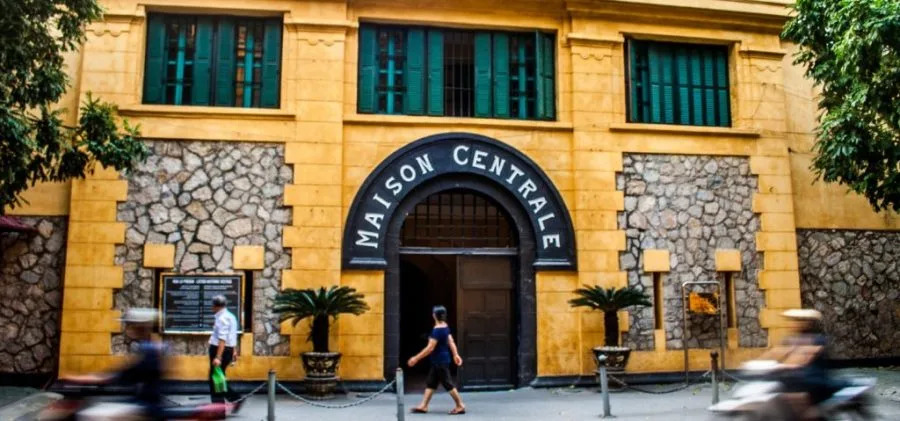
The French built this jail at the close of the 19th century for Vietnamese political prisoners, and its guillotine is still on show. Only a small section near the gate remains, with a high-rise occupying the rest of the site. Cells, shackles and models of inmates make for a grim visit, so it is not a stop for young children.
American pilots held here during the Vietnam War gave it the ironic name "Hanoi Hilton". Among them was future senator John McCain, whose flight suit sits in a display case. Bear in mind that this part of the exhibition tells the official Vietnamese story, and former captives described their time here very differently.
7. Vietnam Museum of Ethnology
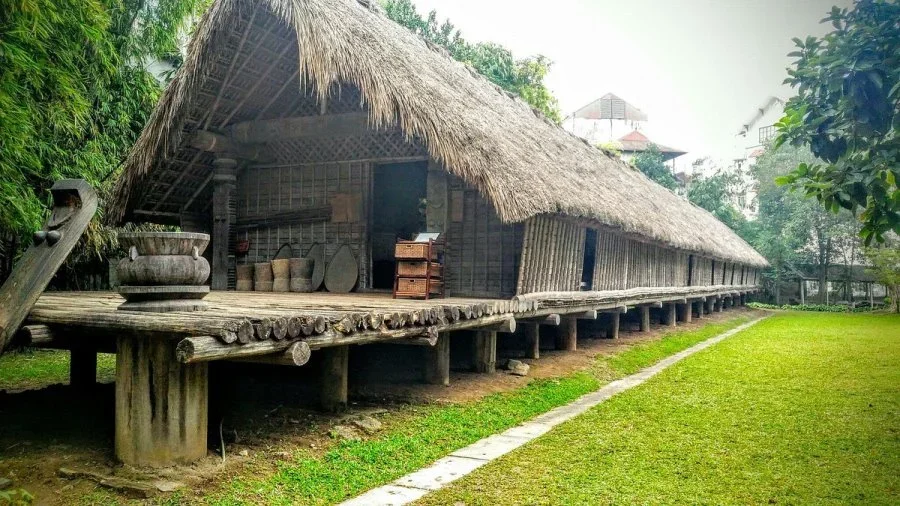
The Viet are simply the largest community among the 54 peoples officially recognised in the country, and this museum covers them all. Indoors you will find costumes, tools, and wedding and funeral customs, with short films showing community life from within. It sits well away from the centre, so allow about half an hour by taxi each way.
The highlight lies outdoors, beyond the main hall, where traditional homes stand at full size: an Ede longhouse big enough for an extended family, a steep-roofed Bahnar communal house, wooden stilt dwellings and earthen buildings. You can step inside nearly all of them, which keeps children as happy as adults. A water puppet troupe sometimes performs on the pond nearby.
8. West Lake and Tran Quoc Pagoda
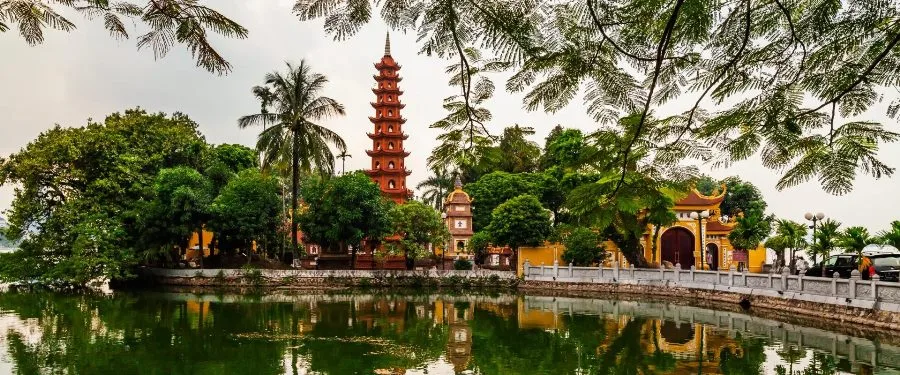
Cafes, villas and a cycle path ring the city's largest lake, and you can breathe far more easily here than in the frantic centre. On a narrow islet off Thanh Nien causeway stands Tran Quoc, Hanoi's oldest pagoda, founded back in the 6th century. Its tiered brick tower reflects in the water, most beautifully just ahead of dusk.
With a spare half day, rent a bike and follow the shore, pausing at Quan Thanh Temple or for crispy shrimp cakes. In tiny Truc Bach Lake next door, McCain's plane came down in 1967, as a modest memorial on the embankment records. Lotus flowers bloom on the water in summer, and their scent goes into a fragrant local tea.
9. Long Bien Bridge and Train Street
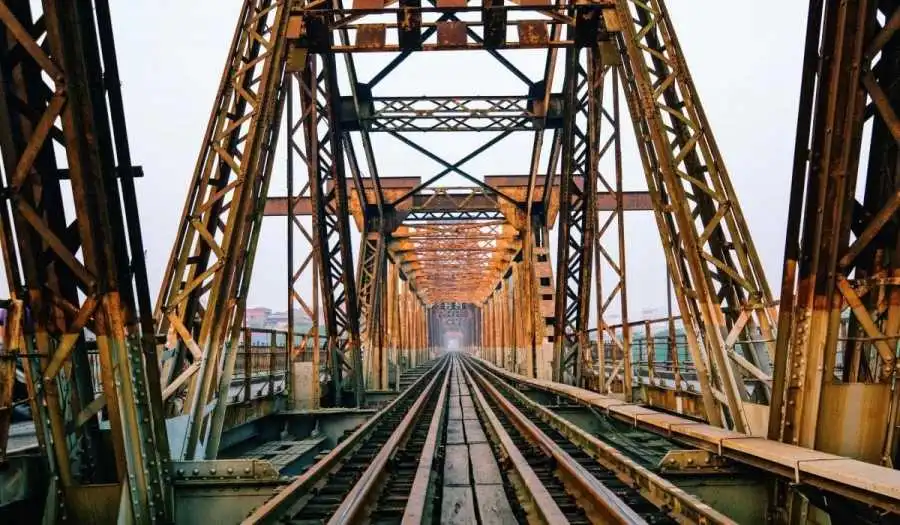
This steel span over the Red River went up between 1899 and 1902, as Hanoi became the seat of French Indochina. American bombing raids repeatedly damaged it, and patched sections are still visible on the trusses. Trains rumble down the middle, scooters take the sides, and a thin walkway lets you cross above the water to an island of banana groves.
From the bridge the rails run straight between houses, forming the famous Train Street, where carriages pass doorways with just inches to spare. Cafe owners used to set tables right beside the track, but the authorities have been limiting both trains and tourist access, so the rules shift from time to time. Stay behind any barrier and never stand on the sleepers for a photo.
10. Ha Long Bay
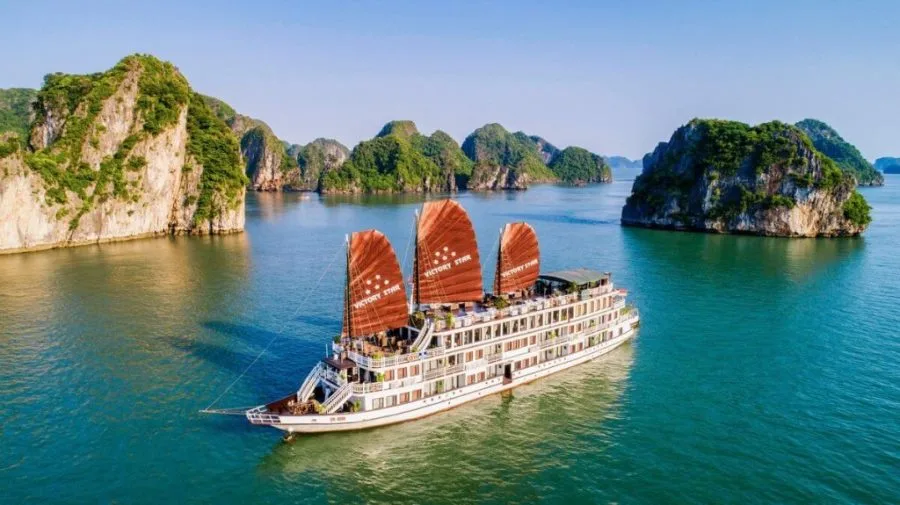
Around 1,600 limestone outcrops jut from green water 150 to 170 km east of the city. Buses on the expressway cover the distance in about 2.5 hours, so a day trip is possible, though you get only a few hours afloat. The mood really arrives once the day boats leave and you stay overnight in a cabin among the silent islands.
A typical cruise includes the vast chambers of Sung Sot Cave, some kayaking and a climb up Ti Top Island for the panorama. Go with a reputable company, since cheap vessels tend to cut corners on safety. The bay joined UNESCO's World Heritage list in 1994, and summer storms can cancel sailings, so keep a spare day.
Hanoi Landmarks: What Else to See While You're in the City
- St. Joseph's Cathedral — a neo-Gothic church of 1886 that recalls Paris's Notre-Dame, with locals sipping lemon tea on tiny stools outside.
- Thang Long Water Puppet Theatre — an old art from villages along the Red River, with wooden figures dancing on water to a live band. You can follow the plot without translation.
- Vietnamese Women's Museum — wedding customs, childbirth rituals, street vendors and women's roles in wartime, in one of the capital's most human museums.
- Dong Xuan Market — the city's largest covered market, trading fabrics, souvenirs and food since 1889. Street cooks set up nearby in the evening.
- Ceramic Mosaic Mural — kilometres of colourful panels along the Red River dyke, made for the city's millennium and entered in Guinness World Records.
- National Museum of Vietnamese History — Dong Son bronze drums, royal treasures and a fine Indochine-style building put up by the French.
- Quan Thanh Temple — an 11th-century Taoist shrine near West Lake, home to a large bronze statue of the guardian spirit Tran Vu.
- Bat Trang pottery village — a half-hour ride out of town, with workshops to peek into and a chance to shape your own bowl.
- Ninh Binh — the Trang An and Tam Coc valleys, where boatwomen row with their feet past crags rising from rice fields. People often call it Ha Long on land.
- Perfume Pagoda — a mountain pilgrimage site reached by boat along the Yen River and then cable car. Spring festival season is the busiest.
What to See in Hanoi in 1 Day, 2 Days or 3 Days
How long should you stay? Is 3 days enough to see Hanoi? Yes, and the essentials fit into one. On a single day, start with the mausoleum and One Pillar Pagoda, walk on to Confucius's temple, explore Hoan Kiem Lake after lunch and leave the evening for the Old Quarter. A second day can cover the citadel, Hoa Lo Prison, the ethnology museum and a water puppet show, then catch the sunset at Tran Quoc or on Long Bien Bridge. Give a third day to Ha Long, adding one more night for an unhurried cruise. Hanoi or Ho Chi Minh City? The first is older and more traditional, the second faster-paced, so see both if you can.
The weather behaves best from October to April: sunny and dry in autumn, then cool with occasional drizzle in winter, so pack a warm layer. May to September brings sticky heat, tropical downpours and the odd typhoon. What to avoid in Hanoi? Don't hop on a motorbike taxi without agreeing the fare, skip cruises sold by random street touts, and watch your bag where scooters pass close. Further south in Vietnam lie the rice terraces of Sapa, the lanterns of Hoi An and the imperial city of Hue.
Plenty is free: circling Hoan Kiem Lake, wandering the Old Quarter, seeing Ba Dinh Square, and walking Long Bien Bridge or the mosaic mural. Children enjoy the water puppets, the garden of houses at the ethnology museum, cycling by West Lake and a Ha Long cruise. As for food, try pho for breakfast, bun cha with grilled pork and rice noodles, banh mi baguettes, cha ca fish with dill, and egg coffee, invented here in the 1940s. Evenings call for beer at Ta Hien, the night market or a weekend concert by the lake.
Most people connect on the way here. Turkish Airlines flies nonstop from Istanbul in under 10.5 hours, and there is also a route through Doha. LOT has announced direct flights from Warsaw, so check the schedule for your dates. Noi Bai Airport lies 25 to 35 km north of the centre, and bus 86 runs to Hoan Kiem Lake. Ukrainian citizens do need a visa: an e-visa of up to 90 days can be arranged online through the immigration portal, and your passport needs six months of validity from the entry date.
Once you have got to know the capital, the warm sea is the natural next step. Phu Quoc lies a two-hour flight south, with white beaches facing the Gulf of Thailand, plus fiery sunsets. Travellers flying there directly from abroad can stay without a visa for as long as 30 days. Specialists from the TurPoisk travel agency will map out the whole trip, helping you reserve a hotel near Hoan Kiem and lining up tours to Vietnam for the second half. See prices for your dates in our tour search, while last-minute deals help anyone who decides quickly. Ask our managers how to split the nights between Hanoi and the beach.


