
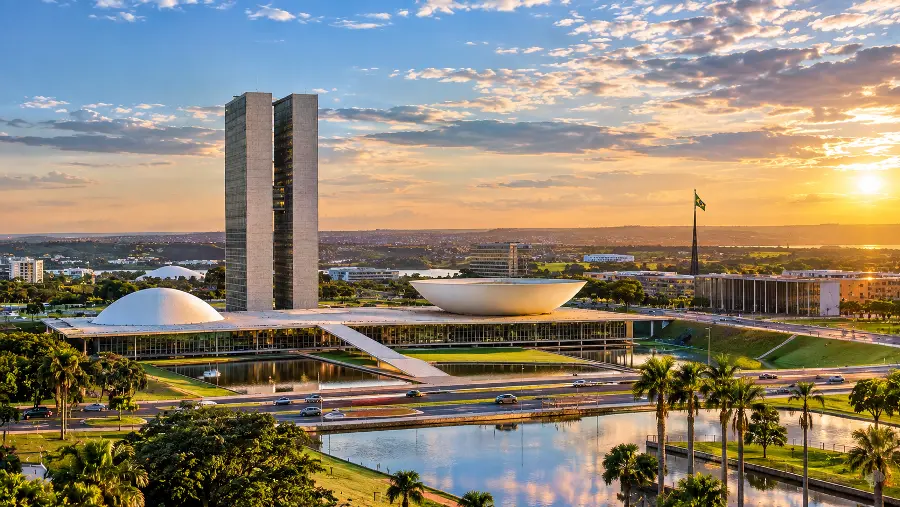
Brasília, Brazil's capital, rose in under four years from the savanna on a plateau over 1,000 metres high. What is Brasília most famous for? Its sheer audacity: President Juscelino Kubitschek promised to move the government inland from Rio de Janeiro, planner Lúcio Costa drew a city shaped like an aeroplane or a bird, and Oscar Niemeyer filled it with palaces that still look like science fiction. The new capital officially opened its doors on 21 April 1960, and today UNESCO protects its centre. Is Brasília worth visiting when the beaches beckon? Most tourists skip it, yet nowhere else offers such an open-air museum of modernism. To understand the idea behind it, start with these 20 places, from a cathedral of concrete "hands" and the National Congress to the blue Dom Bosco Sanctuary and waterfalls beyond the city limits.
What to See in Brasília First
Planned around the car, the city plays tricks with distance: a building that looks close may be a kilometre away, and the wide lawns offer almost no shade. The main landmarks line the Monumental Axis, the plane's "fuselage", while residential districts fill its "wings" to the north and south. Ride-hailing taxis are the easiest way to get about, and walking works best for compact stretches such as the Esplanade of Ministries.
1. The Monumental Axis and Esplanade of Ministries
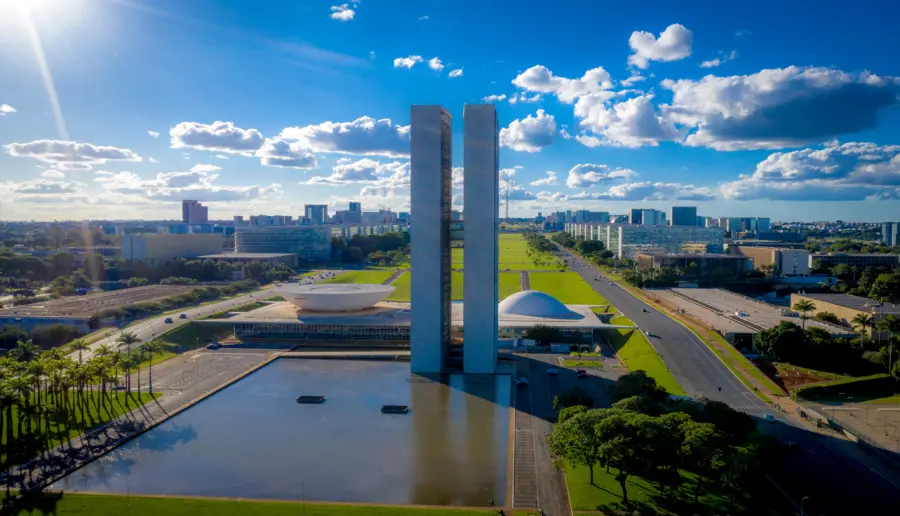
A broad avenue with a grass strip down the middle crosses the whole city from east to west, and nowhere shows Costa's plan more clearly. Government buildings cluster at one end, while the TV tower, the founder's memorial and the railway station sit at the other. All that open air and low-rise building make the city feel unfinished, which is exactly what its designers intended.
The Esplanade of Ministries packs the biggest punch, with identical green glass blocks lined up on either side of the lawn like soldiers on parade. Some visitors find the uniformity chilling, others thrilling, but it deserves a photo either way. Tens of thousands of people gather here on national holidays and during protests, so check the political calendar before you go.
2. Cathedral of Brasília
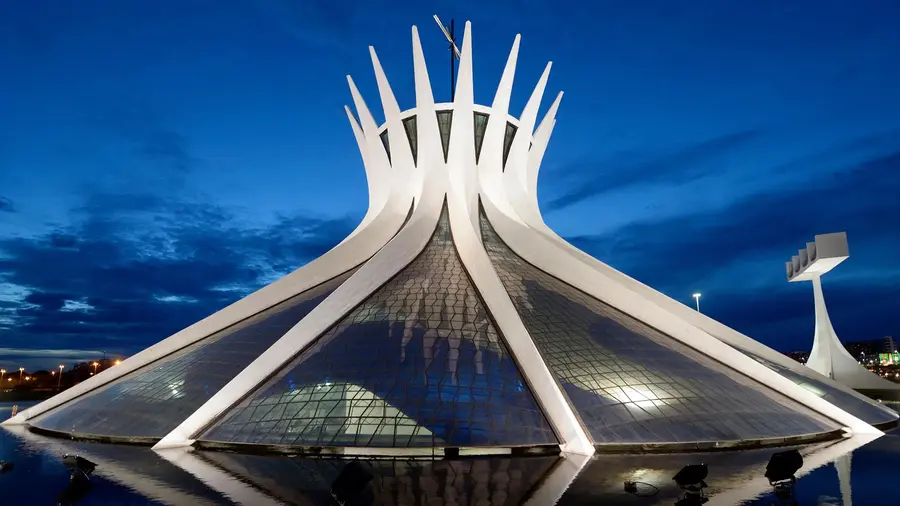
Sixteen curved concrete columns meet overhead, suggesting hands raised to heaven or a crown of thorns. Niemeyer sank most of the building below ground, so you enter through a dim passage before coloured light from the stained glass suddenly floods over you. Three angels hang on cables beneath the vault, as if frozen in mid-flight.
Bronze statues of the four Evangelists guard the approach, and a separate bell tower rises to one side. The cathedral was dedicated in 1970 and functions as an ordinary parish, so entry is free, though silence is expected during Mass. The light is at its best around noon on a sunny day, when the blue and green bands of glass practically glow.
3. National Congress
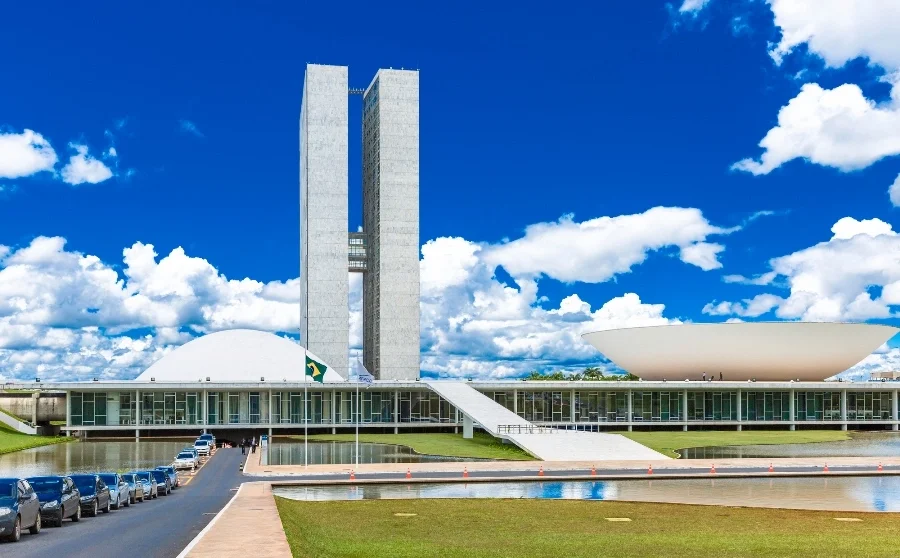
Two slim administrative towers joined by a bridge form the letter H, often read as standing for "humanity". Beside them, two half-spheres rest on a flat platform: the smaller dome covers the Senate, while the larger upturned bowl belongs to the lower house. The silhouette is so recognisable that it appears on souvenirs, coins and logos.
A free guided visit leads through the plenary halls, including the deputies' green carpet and the senators' blue one. Tours are booked online, and on weekdays visitors in shorts or flip-flops are turned away. The ramp behind the building looks down the full length of the Esplanade, a fine view shortly before sunset.
4. Three Powers Plaza
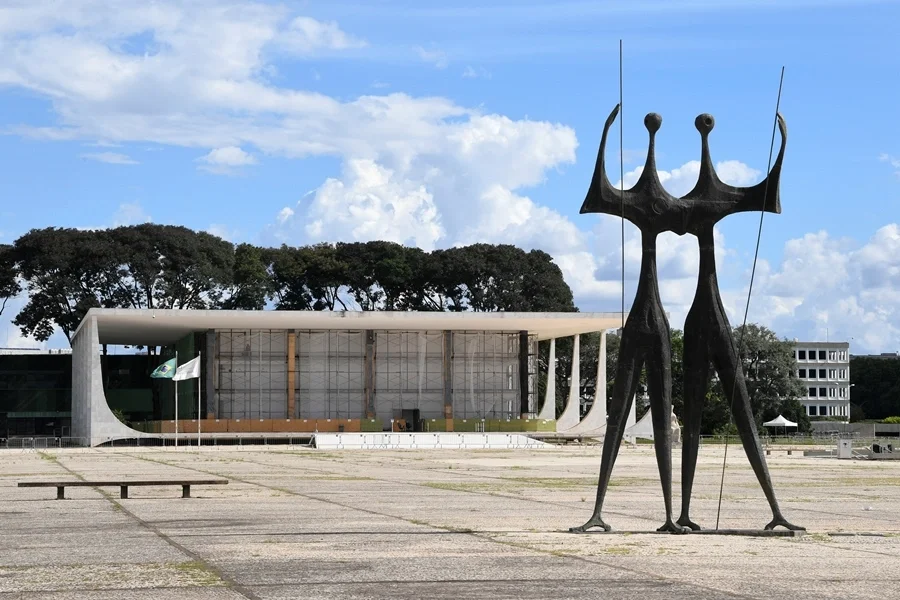
All branches of government meet here: Congress on one side, Planalto Palace, the president's office, on another, with the Supreme Federal Court completing the triangle. The square is vast and nearly empty, so each building stands like an exhibit on a plinth. Planalto Palace can be toured inside on a free visit booked in advance.
Look out for Bruno Giorgi's sculpture Os Candangos, two elongated bronze figures honouring the workers who built the city. Beneath the plaza, the Lúcio Costa Space holds a scale model of the capital, and nearby the Pantheon of the Fatherland keeps an eternal flame. Above it all flies an enormous flag on a mast of about 100 metres, swapped regularly in a formal ceremony.
5. Itamaraty Palace
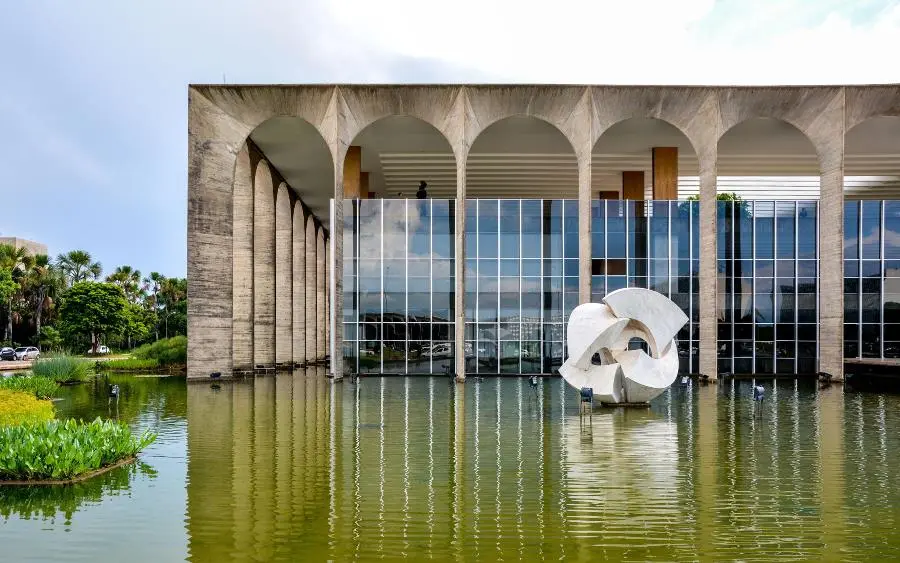
Many rate the Foreign Ministry as Niemeyer's finest work in the capital. Slender concrete arches seem to float above a reflecting pool, and from the water rises Meteor, a white marble sculpture symbolising the five continents. Roberto Burle Marx designed the gardens, which flow right into the building.
Free tours require advance booking and are worth rearranging your plans for. Guests pause at a spiral staircase without handrails that seems to hang in mid-air, pass through halls of furniture and paintings, and step out into a tropical roof garden. Aim for the morning, when the pool mirrors the sky most vividly.
6. Dom Bosco Sanctuary
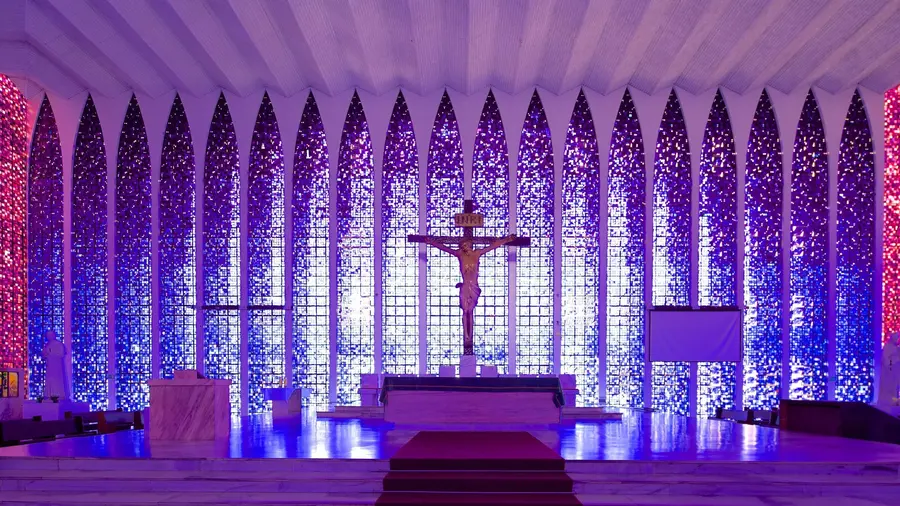
From outside it is a restrained cube with pointed arches, but one step through the door plunges you into a deep blue glow. Tall windows in twelve shades of blue glass suggest a night sky, and in the centre hangs a huge chandelier assembled from thousands of pieces of Murano glass. It feels like standing on the seabed.
The sanctuary honours the Italian priest John Bosco, regarded as the city's patron saint. In 1883 he dreamed of a new civilisation arising beside a lake between the 15th and 20th parallels, and Brasília's founders liked to recall the prophecy. Come on a bright day, as the effect fades noticeably under cloud.
7. TV Tower and Its Weekend Fair
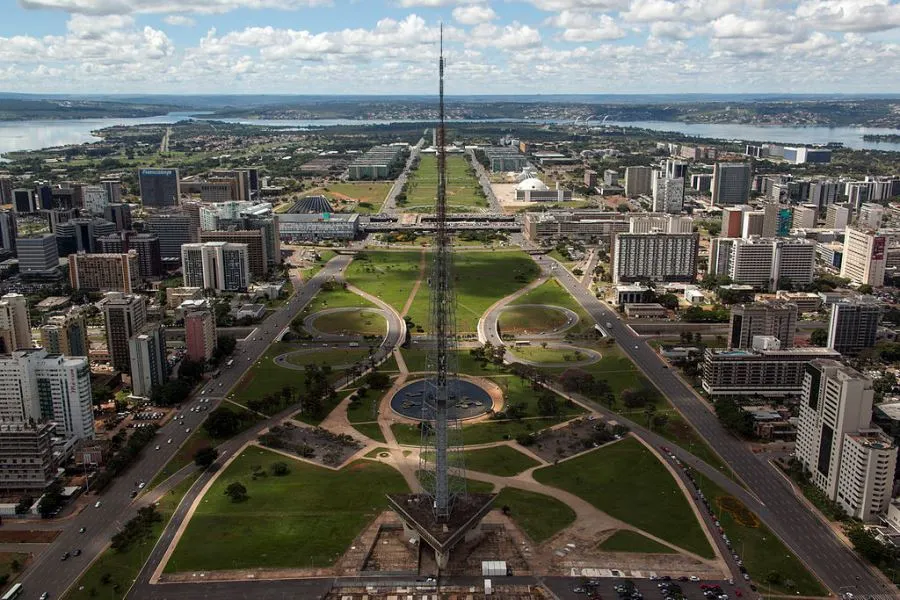
The quickest way to grasp the city plan is to take the elevator up the TV tower, built in 1967 to a design by Lúcio Costa and later extended to 224 metres. From 75 metres up, the whole axis stretches out towards Congress and the lake, and suddenly it makes sense why residents are so proud of their odd city. There is no charge, and the sunset from here is among the best in town.
At weekends a craft fair spreads around the base, selling ceramics, hammocks, jewellery made from savanna seeds and Brazilian sweets. Stalls also fry pastel turnovers and press fresh sugarcane juice, a pairing locals swear by. A fountain plays nearby, and the deck overlooks the Mané Garrincha stadium next door.
8. Lake Paranoá and the JK Bridge
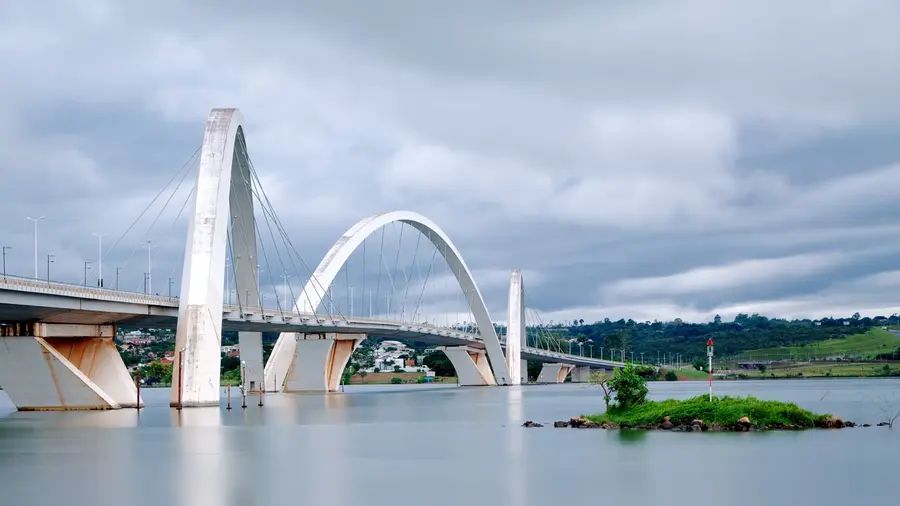
The artificial lake was created along with the city, partly to add moisture to the dry plateau air, and its shores are now lined with villas, yacht clubs and ambassadors' residences. Across it leaps the JK Bridge, whose three asymmetric arches bounce over the water much like a flat pebble thrown across the surface. Floodlit at night, it reflects beautifully on the calm surface.
On the southern shore, Pontão is a lakeside strip of restaurants and jetties where locals spend their weekends. You can rent a paddleboard or hop on a pleasure boat. For the city silhouetted at sunset, head up the hill to the little Ermida Dom Bosco chapel, where the lake and the outline of the Pilot Plan lie spread out before you.
9. JK Memorial
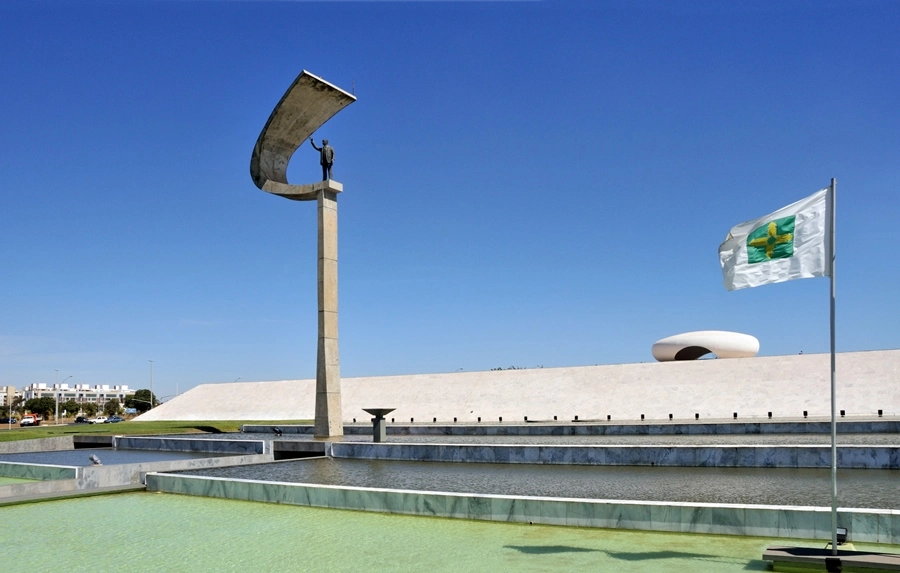
The city's founder lies in a white marble memorial that Niemeyer designed for the axis's western tip. Above it, a bronze Kubitschek stands on a tall pedestal with his arm raised, facing the capital. Inside, his tomb rests beneath stained glass, and the galleries tell the story of a construction effort that ran day and night.
The personal belongings are the real draw: his library, photographs, letters and even his car. Together they convey the mood of the late 1950s, when thousands of workers, known as candangos, poured in from all over Brazil to build the capital. The TV tower stands a short way off, so combine the two.
10. Pirenópolis
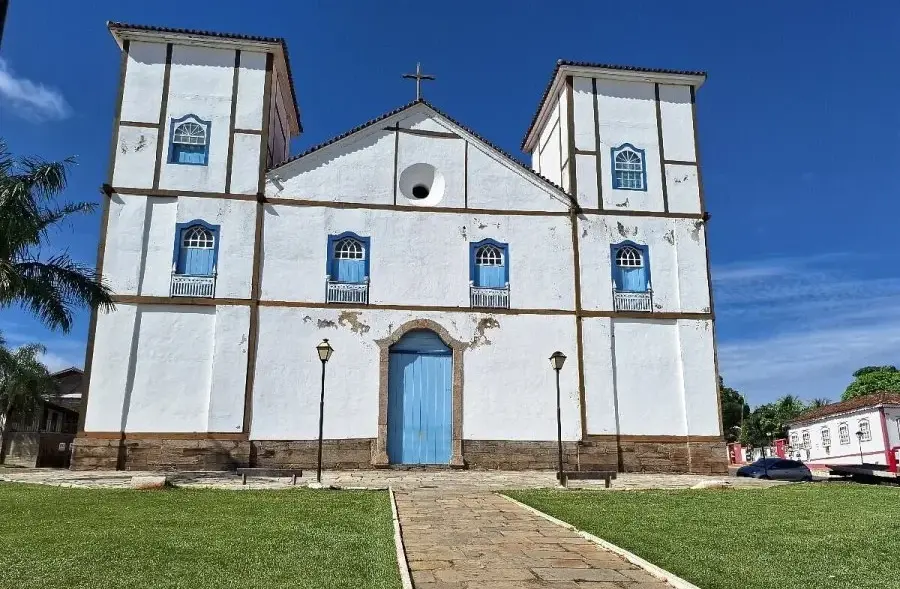
The complete opposite of the concrete capital lies about 150 km away in neighbouring Goiás state. This 18th-century gold-rush town has cobbled lanes, low whitewashed houses, bright shutters and old churches. Residents of the capital pour in at weekends, and the streets fill with music from the bars.
Dozens of waterfalls hide in the surrounding savanna woodland, reached by hiking trails, so pack a swimsuit. With more time, go further to Chapada dos Veadeiros National Park, a landscape of crystal-clear rivers, canyons and quartz cliffs. UNESCO lists it as World Heritage, and it deserves at least two days.
Brasília Landmarks: What Else to See While You're in the City
- National Museum and Library — Niemeyer's white half-dome beside the cathedral, hosting temporary exhibitions of contemporary art.
- Alvorada Palace — the presidential residence, whose sail-like columns became a symbol of the city. They are clearly visible from the fence by the lake.
- Church of Our Lady of Fátima — one of the capital's first churches, with a roof shaped like a nun's headdress and Athos Bulcão tiles showing doves and stars.
- Superquadras — residential blocks on stilts among trees, such as the model block 308 South, showing how the architects dreamed people would live.
- Temple of Good Will — a seven-sided pyramid crowned by a large crystal. Visitors follow a dark spiral path to the centre of the hall and return along a light one.
- Claudio Santoro National Theatre — a truncated pyramid whose side walls carry a relief of concrete cubes by Athos Bulcão.
- Sarah Kubitschek City Park — among the biggest urban parks anywhere, bigger than New York's Central Park, with paths, ponds and bike hire.
- Brasília National Park — savanna woodland with spring-fed pools on the city's edge, where capuchin monkeys come close to visitors.
- Catetinho — a wooden "palace" on stilts, put up within days so Kubitschek could stay overnight on the building site.
- Bank of Brazil Cultural Centre — a large Niemeyer-designed complex with exhibitions, a cinema and a lakeside cafe.
What to See in Brasília in 1 Day, 2 Days or 3 Days
What to see in Brasília in one day? Start early with the TV tower, the cathedral, the Esplanade, a Congress tour, Three Powers Plaza and Itamaraty, then head to the JK Bridge or Pontão for sunset. A second day suits the Dom Bosco Sanctuary, the Fátima church and the superquadras, the JK Memorial and City Park, with a choro concert in the evening. Spend a third day in Pirenópolis, and plan an overnight stay for Chapada dos Veadeiros.
May to September is driest and sunniest, but humidity falls below 20% in August and September, so drink plenty of water and bring moisturising eye drops. In compensation, the city is splashed with yellow ipê blossom at that time of year. October to April brings rain, mostly short late-afternoon downpours, and dengue risk rises in that season, so pack repellent. Is Brasília safe? The Pilot Plan is considered calm, but avoid the bus station after dark and keep your phone out of sight near traffic. Onward trips lead to Rio de Janeiro, the Iguaçu Falls or Salvador.
Free sights include the cathedral, Dom Bosco, Three Powers Plaza and the TV tower deck, and the tours of Congress, Planalto and Itamaraty cost nothing either. Children enjoy City Park with its rides, the National Park pools and the zoo. As for food, try pão de queijo cheese buns, rice with chicken and pequi fruit, eaten carefully because of the spines inside, Saturday feijoada and churrascarias where waiters bring meat straight to your table. After dark, catch choro music at its namesake club or join locals at the bars tucked into the residential blocks.
From Europe, TAP flies nonstop from Lisbon in just over nine and a half hours, while other routes connect in São Paulo. The airport is only about 11 km out of town. Ukrainian citizens can visit as tourists without a visa for up to 90 days in any 180-day period. Border officers may ask to see a return ticket and insurance, and the Ukrainian embassy recommends a yellow fever vaccination before travel.
Brazilians themselves love the Dominican Republic for Caribbean beaches: more than a hundred thousand travel there from Brazil each year, and Punta Cana ranks among their favourite foreign destinations. You could follow their lead. The experts of the TurPoisk travel agency will suggest tours to the Dominican Republic with white sand and a warm ocean, and help you book a hotel for the trip if needed. Check prices for your dates through our tour search, and when the decision comes at the last minute, last-minute deals are there to help. Our consultants will suggest how to combine the modernist capital and a Caribbean holiday in one journey.


