
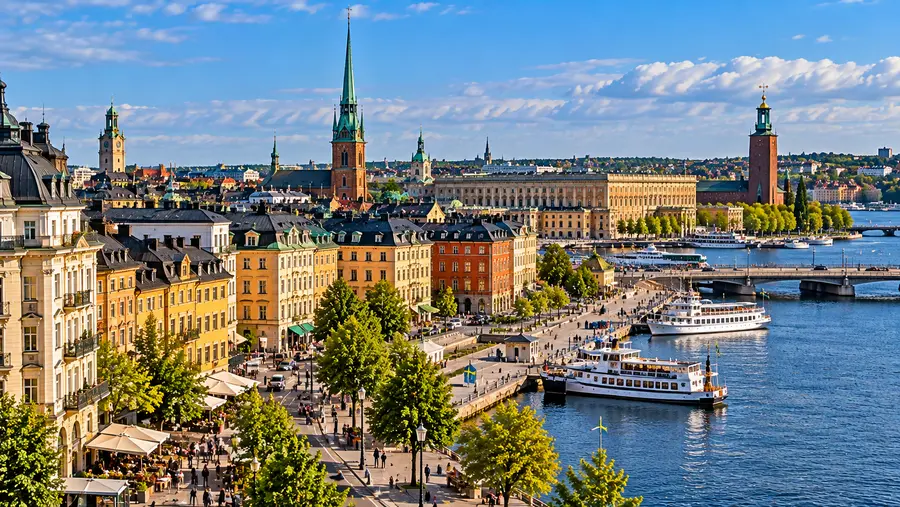
Stockholm, the capital of Sweden, spreads across 14 islands where Lake Mälaren meets the Baltic Sea. First mentioned in 1252, the city has since grown across islands linked by more than fifty bridges, so water is never out of sight. What is Stockholm most famous for? The Nobel Prize, ABBA, a royal palace with hundreds of rooms and a warship that sank on its maiden voyage and now draws bigger crowds than any other museum in Scandinavia. Almost a million people live here, yet a third of the city is green space, and the thousands of islands of the archipelago are only an hour away by boat. If you are planning a trip and wondering what to see in Stockholm, here are twenty places, from the medieval lanes of Gamla Stan and metro stations that look like caves to the king's summer residence and an open-air museum.
What to see in Stockholm first
The main sights sit on a handful of central islands. Gamla Stan, the old town with the Royal Palace, lies in the middle; north of it is Norrmalm, the business district with the Central Station; to the south is Södermalm with the best views; and to the east is leafy Djurgården with the Vasa, Skansen and ABBA museums. It is easy to walk between the islands, and the nicest way to reach Djurgården is the ferry, which is included in the city transport ticket. One ticket covers the metro, trams and ferries, and you can pay with a bank card right at the barrier.
1. Gamla Stan
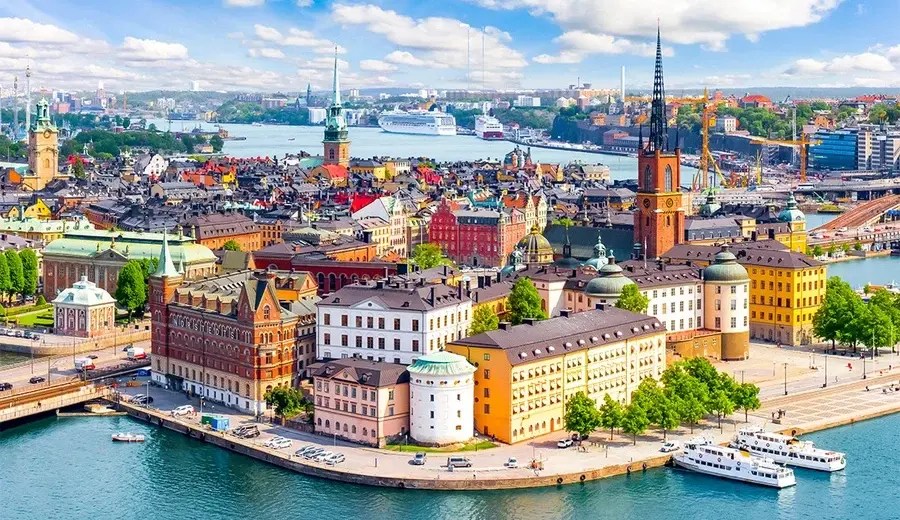
The old town covers the small island where Stockholm began: a cobbled maze of narrow lanes, houses in ochre, terracotta and saffron, and cafés in 17th-century cellars. At its heart is Stortorget, a square whose colourful gables appear on half the postcards of Sweden. In 1520 the square witnessed the Stockholm Bloodbath, when the Danish king executed dozens of Swedish nobles, a massacre that ultimately pushed the country towards independence.
Look for Mårten Trotzigs gränd, a lane just 90 centimetres wide and the narrowest in the city, and in the yard of the Finnish Church find the Iron Boy, a figure about 15 centimetres tall that locals dress in knitted hats in winter. Next to the palace stands Storkyrkan, the cathedral where Crown Princess Victoria was married; inside is a wooden St George slaying the dragon, carved in the late 15th century.
2. Royal Palace
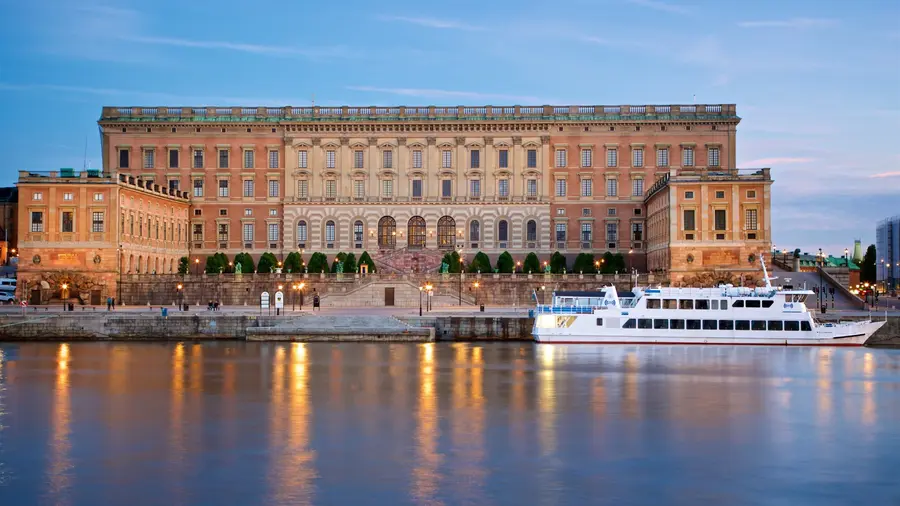
The palace rose on the ashes of Tre Kronor, a medieval fortress lost to fire in 1697, and took more than half a century to complete to designs by Nicodemus Tessin the Younger. With over 600 rooms, it is one of Europe's largest royal residences still in use: the king has his office here and state receptions are held in its halls, although the family itself lives at Drottningholm.
Visitors can tour the state apartments, the Treasury with its crowns and sceptres, and the Royal Armoury, Sweden's oldest museum, full of armour, carriages and royal costumes. The changing of the guard, with a military band, takes place in the outer courtyard daily in summer and several times a week the rest of the year. Arrive early to get a spot by the railings.
3. Vasa Museum

On 10 August 1628 the mightiest ship in the Swedish navy, armed with 64 guns, set off on her first voyage, sailed about 1,300 metres, heeled over in a gust of wind and sank in front of the watching crowds. Vasa lay on the harbour floor for more than three centuries until she was raised almost intact in 1961: the cold, brackish Baltic had kept shipworm away.
Today she stands in a hall built around her, and this is Scandinavia's most visited museum. More than 95 per cent of the ship is original, including hundreds of carved lions, tritons and Roman emperors meant to strike fear into the enemy. Around the hull are displays on life aboard, reconstructions of the crew's faces and a scale model painted in the ship's original colours.
4. Skansen
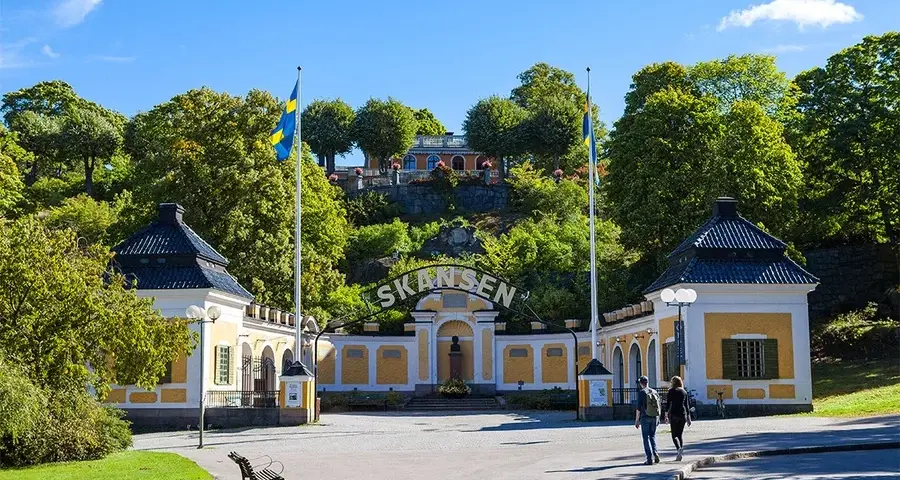
Skansen, opened on Djurgården in 1891, was the first open-air museum anywhere in the world, created by the ethnographer Artur Hazelius, who wanted to preserve a rural Sweden that was fast disappearing. Around 150 farmsteads, windmills, churches and workshops were brought here from across the country, and staff in folk costume bake bread, blow glass and explain how people lived in centuries past.
Skansen also has a zoo of Nordic animals, including elk, bears, wolves, lynx, wolverines and seals. Come in June for Midsummer, with dancing around a flower-decked maypole, or in December for the Christmas market. The hilltop offers one of the best views over Stockholm.
5. Stockholm City Hall
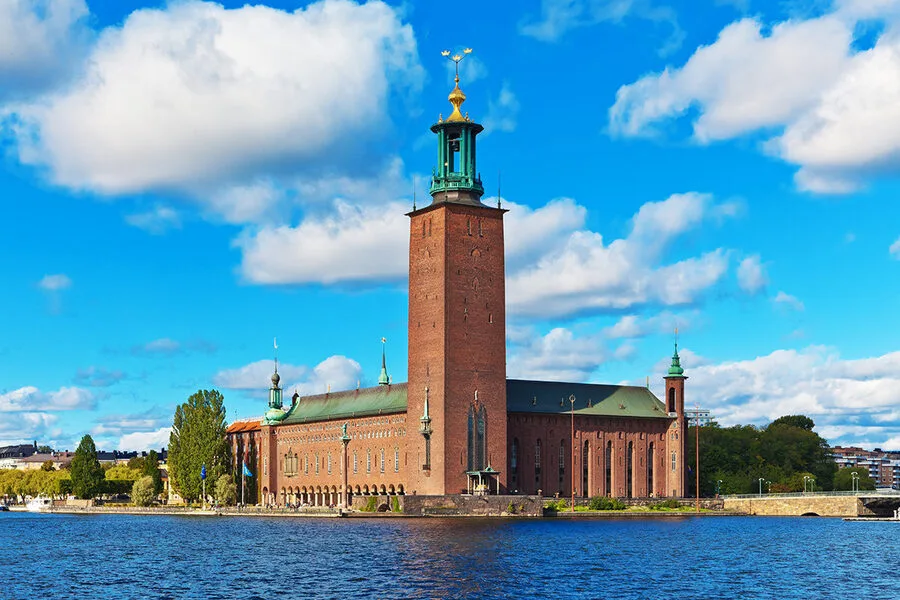
The red-brick City Hall on the shore of Lake Mälaren was built between 1911 and 1923 to designs by Ragnar Östberg, using some eight million bricks. Its 106-metre tower is topped by three golden crowns, Sweden's national emblem, and in summer you can climb it for views over Gamla Stan, Södermalm and the lake.
Each 10 December the Blue Hall hosts the banquet for the Nobel laureates. The hall is not actually blue: the architect planned to paint the walls but grew so fond of the red brick that he left it bare, and the name stuck. Even more striking is the Golden Hall, its walls covered with a mosaic of more than 18 million pieces of glass and gold leaf. Visits inside are by guided tour.
6. Metro Stations
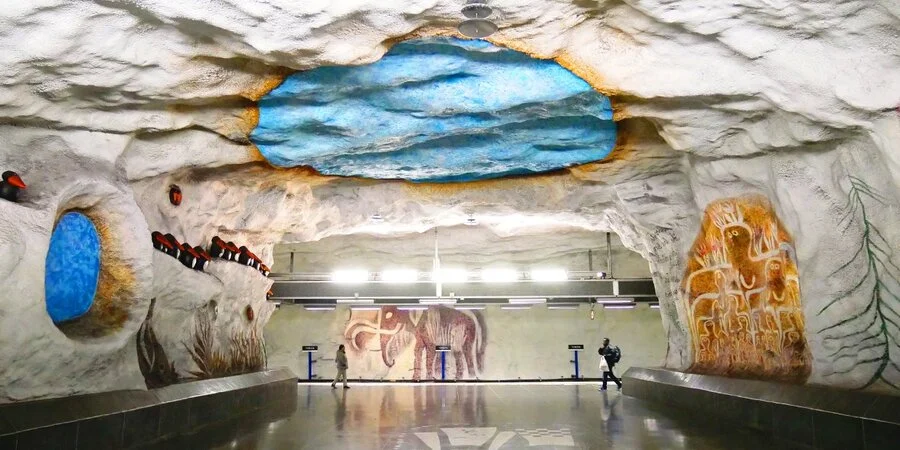
The Stockholm metro has earned the nickname of the longest art gallery on earth, since over ninety of its hundred stations were decorated by some 150 artists, and many are hewn straight out of the bedrock. The best known is T-Centralen, where blue leaves and vines climb over a cave-like vault; Kungsträdgården resembles the excavation of an old garden, Solna Centrum shows a red sky over a dark forest and Stadion a rainbow on blue rock.
No special tour is needed, just a transport ticket and a list of the stations you want to see. Most of the finest are on the blue line, so in an hour you can visit several by stepping out onto the platform and catching the next train.
7. ABBA The Museum
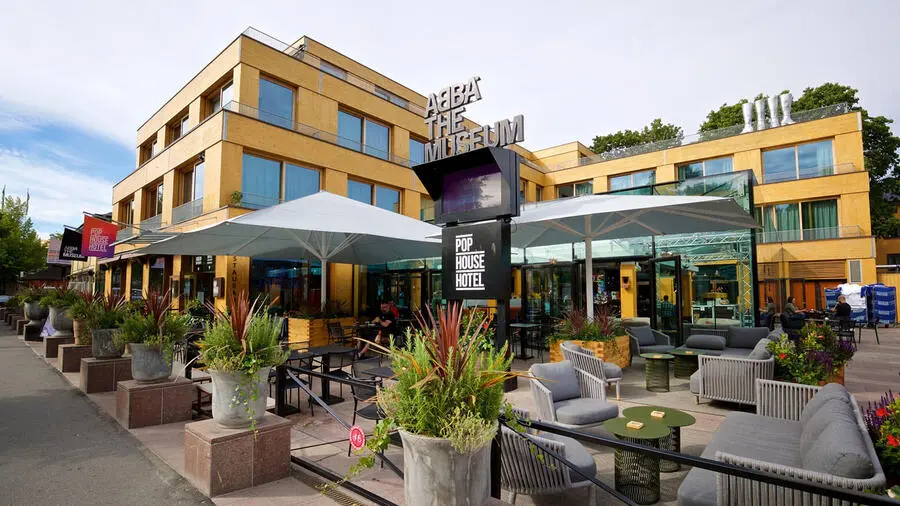
Sweden's most famous band has its own interactive museum on Djurgården, a few steps from the rides of Gröna Lund. On show are sequinned stage outfits, gold records, instruments and the studio where the hits were recorded, while Agnetha, Björn, Benny and Anni-Frid tell the group's story themselves in the audio guide.
The real fun is becoming the fifth member of the band: sing in a karaoke booth, dance on stage beside holograms of the musicians and download the recording afterwards. A telephone on the wall has a number known only to the four band members, and if it rings, you are allowed to pick up. Even visitors who would never call themselves fans tend to love it.
8. Södermalm and Monteliusvägen
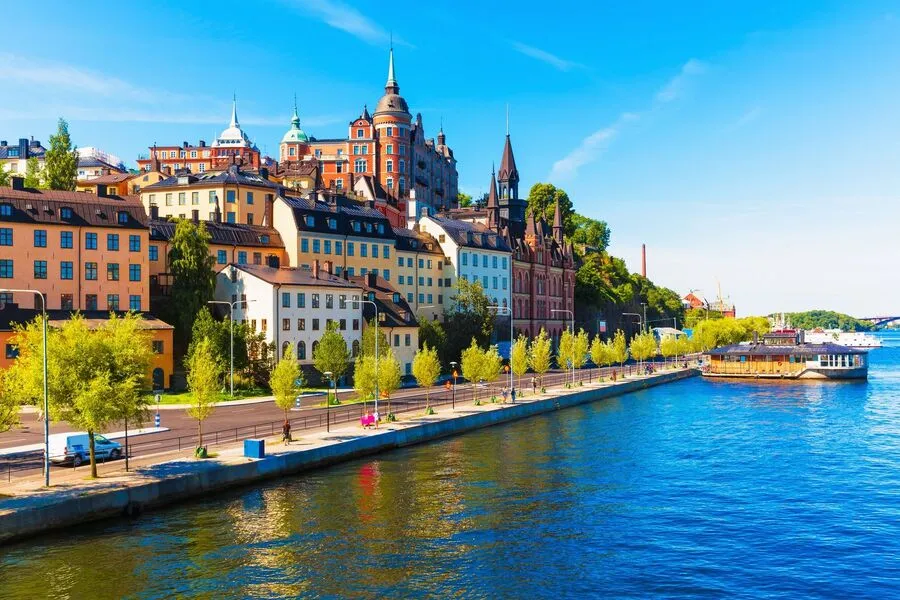
The southern island of Södermalm was once a working-class district and is now the city's creative quarter, packed with vintage shops, coffee houses, bars and street art. The area south of Folkungagatan is jokingly called SoFo, a nod to New York's SoHo.
The finest view of Stockholm is from Monteliusvägen, a footpath along the cliff above Riddarfjärden bay. From here you see City Hall, the spires of Gamla Stan and islands that seem to float on the water, and at sunset half of Södermalm gathers here. The neighbouring Skinnarviksberget rock and Fjällgatan street on the east of the island are just as rewarding.
9. Drottningholm Palace
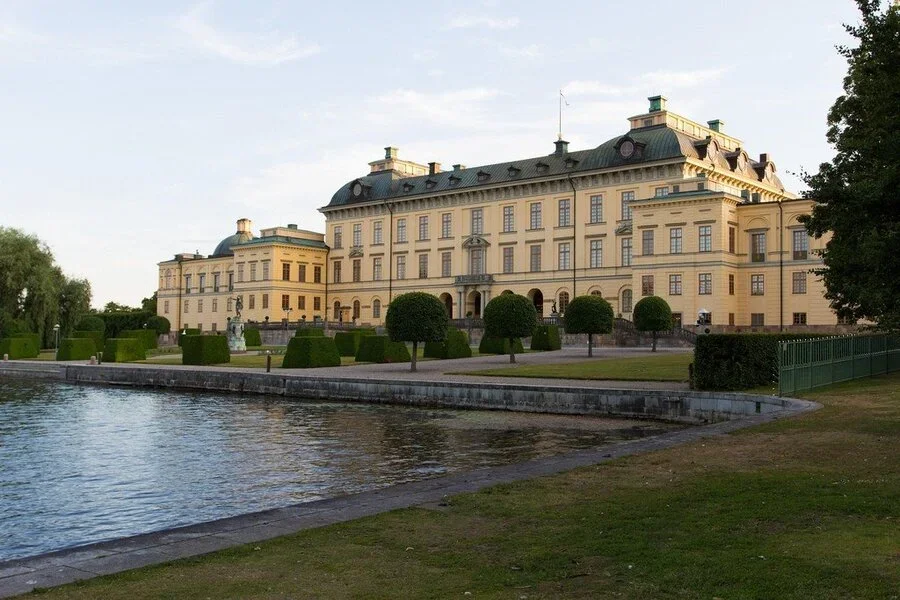
On the island of Lovön in Lake Mälaren stands a palace often called Sweden's Versailles. It has been the royal family's home since 1981, and together with its park, theatre and Chinese Pavilion it is a UNESCO World Heritage Site. Part of the palace is open to visitors, and the formal French garden with fountains and avenues gives way to an English landscape park.
Drottningholm's real treasure is the court theatre of 1766, which still has its original 18th-century stage machinery: wooden mechanisms that create waves, clouds and thunder, and in summer it stages period operas. In summer boats run to the palace from the City Hall pier, and the trip across the lake takes about an hour.
10. Stockholm Archipelago
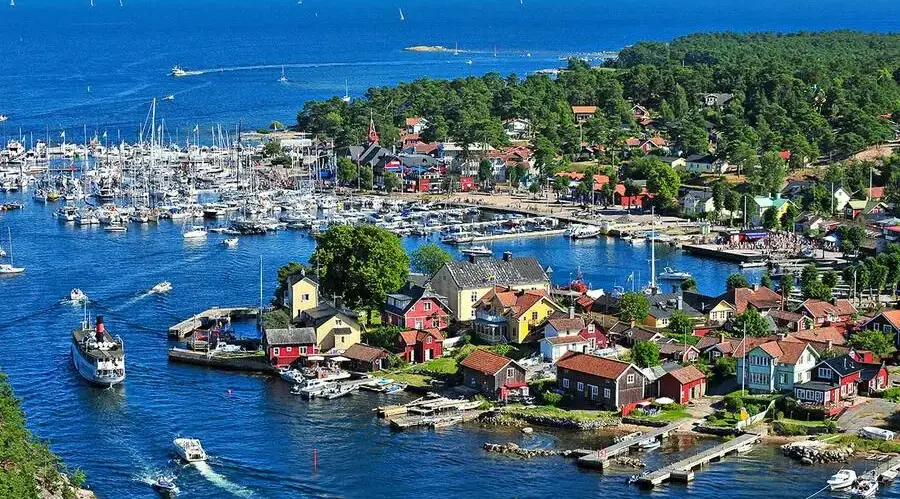
East of the city, an archipelago of roughly 30,000 islands, islets and skerries stretches out into the Baltic. Many are dotted with red wooden summer houses and their own jetties, and for Stockholmers a trip to the islands is the highlight of summer. Boats leave regularly from Strömkajen near the Grand Hotel, so you can get a taste of the archipelago in half a day.
The nearest islands, Fjäderholmarna, are half an hour away, the little town of Vaxholm with its 16th-century fortress about an hour, and Sandhamn, the capital of Swedish sailing, two. Pack a swimsuit: by July the water in the bays is warm enough for a dip off the rocks, and the islands have cafés serving smoked fish and coffee.
Stockholm Attractions: What Else to Visit While in the City
- Nobel Prize Museum — in the old Stock Exchange on Stortorget, telling the stories of the laureates and their discoveries. In the museum café, laureates sign the underside of the chairs.
- Fotografiska — one of Europe's largest centres for photography, in a brick former customs house on the Södermalm waterfront, with a top-floor restaurant looking out over the water.
- Skeppsholmen and Moderna Museet — a green island linked to the centre by a bridge, home to works by Picasso, Dalí and Warhol, with the sailing-ship hostel af Chapman moored nearby.
- Gröna Lund — Sweden's oldest amusement park, opened in 1883 on the Djurgården shore, where roller coasters swoop over the water and summer concerts fill the evenings.
- Junibacken — a fairy-tale house for children devoted to Astrid Lindgren's characters, where a story train rides through scenes from her books and kids can play at Pippi Longstocking's Villa Villekulla.
- Östermalm Market Hall — a covered market from 1888 with stalls of herring, prawns, reindeer and cheese. Try Swedish meatballs, fried herring and open prawn sandwiches here.
- Riddarholmen Church — one of the oldest buildings in the city, with an openwork cast-iron spire, where Swedish kings were buried for centuries.
- Millesgården — Carl Milles's sculpture garden on terraces above the water on Lidingö island: bronze gods, dolphins and soaring figures set against pine trees.
- Skogskyrkogården — the UNESCO-listed Woodland Cemetery, a 20th-century architectural masterpiece set in pine forest, where Greta Garbo is buried.
- Uppsala — an old university town 40 minutes away by train, with Scandinavia's largest cathedral, the oldest university in the North and the royal burial mounds of Old Uppsala.
What to See in Stockholm in 1, 2 or 3 Days
Is 2 days enough for Stockholm? One day covers the highlights, two let you take your time in the Djurgården museums, and a third is best spent at Drottningholm or in the archipelago. If you only have one day, start with Gamla Stan and Stortorget, see the guards change at the Royal Palace, walk over to City Hall and take the afternoon ferry to Djurgården for the Vasa Museum. In the evening, climb up to Monteliusvägen and have dinner on Södermalm. Spend the morning of day two at Skansen and ABBA The Museum, then ride the art-filled metro and stop by Östermalm Market Hall. Is 3 days in Stockholm too much? Not at all: on day three take a boat to Drottningholm or Vaxholm, or, if the weather is poor, the train to Uppsala.
The best time to visit is from May to September, and June is the high point, with daylight until almost midnight and the whole city celebrating Midsummer outdoors. In July daytime temperatures are usually 20–25 degrees, warm enough to swim right in the centre. Winter days are short, but 10 December brings the Nobel Prize ceremony, on 13 December St Lucia processions with candles pass through the streets, and Christmas markets fill Stortorget and Skansen. Beyond the capital, Sweden's highlights include Gothenburg, the island of Gotland with medieval Visby, and Swedish Lapland with its northern lights.
Places to visit in Stockholm for free include the lanes of Gamla Stan, Monteliusvägen, the guard ceremony at the palace, Kungsträdgården park, where cherry trees blossom in April, and Skogskyrkogården. Children love Junibacken, the animals at Skansen, the rides at Gröna Lund, the Vasa ship and the Tekniska museet science centre. In the evening locals head for the bars of SoFo on Södermalm, while the fashionable crowd gathers around Stureplan. Make time for fika, the Swedish coffee break with a cinnamon bun. And remember that Sweden has almost entirely given up on cash, so pay by card everywhere.
From Poland there are direct low-cost flights to Stockholm from Gdańsk and Kraków, taking under two hours. The main airport, Arlanda, is 40 km north of the city, and the Arlanda Express train reaches the centre in less than 20 minutes. Some flights land at Skavsta near Nyköping, about an hour and a half from Stockholm by bus. There is also an overnight ferry from Gdańsk to Nynäshamn, and large cruise ferries sail from Tallinn, Riga and Helsinki straight into central Stockholm.
Swedes are devoted fans of Thailand, their most popular Asian destination, and when the days at home are at their shortest, thousands of Stockholmers fly off to the tropical beaches of Phuket. TurPoisk travel agency can help you plan both trips: book a hotel in Gamla Stan or on Södermalm for a summer visit to Stockholm, then in winter pick tours to Thailand, whether to Phuket, palm-fringed Koh Samui or lively Pattaya. Our tour search will find options for your dates, and last-minute tours to Thailand are worth checking for bargains. The TurPoisk.ua team will tell you which month suits the North and which the beach.


