
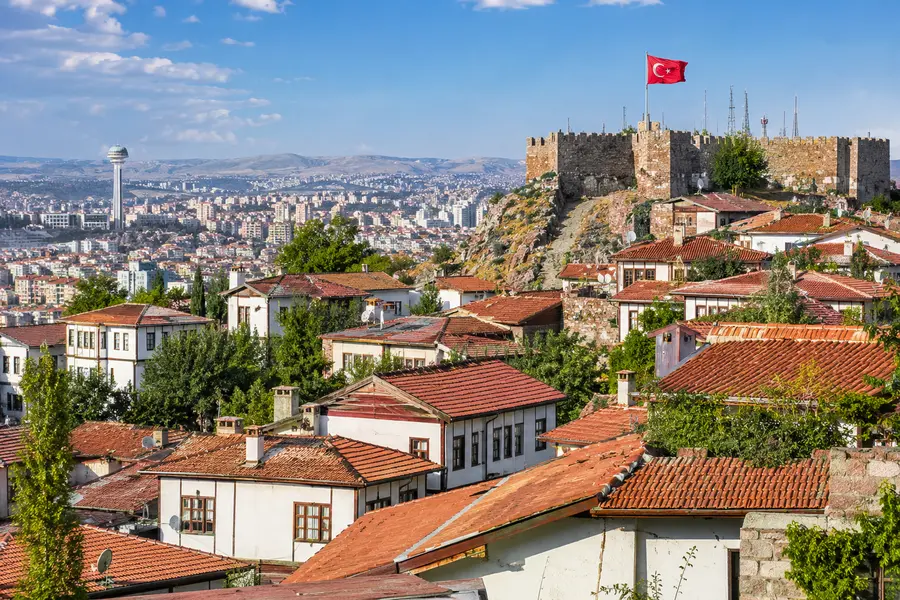
Ankara, the capital of Turkey and its second-largest city, sits in the middle of the Anatolian plateau almost a kilometre above sea level. People lived here in the days of the Hittites and Phrygians; the Romans knew the city as Ancyra and later Europeans as Angora, the name behind both the soft-fleeced Angora goat and the fluffy Angora cat. For centuries it was a small provincial town clustered around its fortress, until on 13 October 1923 Mustafa Kemal Atatürk made it the capital of the new republic. In a hundred years Ankara has grown into a city of more than five million people, with broad avenues, ministries and universities. It has neither the sea nor the crowds of Istanbul, but it does have superb museums, Roman ruins, quiet Ottoman quarters and a warm welcome free of tourist bustle. If you are wondering what to see in Ankara, here are 20 places, from Atatürk's mausoleum and the citadel to a Roman temple and the fairy-tale valleys of Cappadocia a few hours away.
What to see in Ankara first
Ankara has two halves. The old town, the Ulus district, huddles around the citadel on its hill, with museums, Roman remains, mosques and market lanes. The new town, centred on Kızılay Square, stretches south along Atatürk Boulevard with government buildings, embassies, shopping centres and the cafés of Tunalı Hilmi Street. The metro links the two, while the Anıtkabir mausoleum stands on its own hill west of Kızılay, so give Ankara at least two days rather than rushing between districts.
1. Anıtkabir
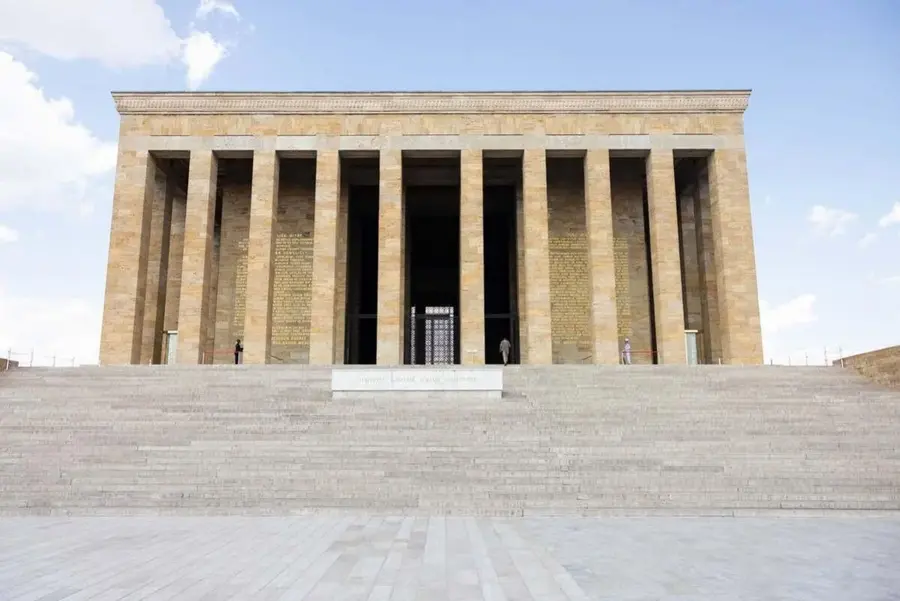
For Turks themselves this is the most important place in Ankara, perhaps in the whole country: the tomb of Mustafa Kemal Atatürk, the man who created modern Turkey. The complex was built on Rasattepe hill between 1944 and 1953 and is approached along the broad Road of Lions, flanked by 24 stone lions carved in the manner of Hittite sculpture. The road opens onto a vast stone-paved ceremonial square, above which rises a colonnade sheltering a symbolic sarcophagus carved from one enormous piece of marble.
The galleries around the square hold a museum devoted to Atatürk and the War of Independence, displaying his personal belongings, cars, battle panoramas and library. An honour guard stands at the entrance and by the sarcophagus, and the changing of the guard is a solemn ritual that draws a crowd. Entry is free, but visitors are expected to behave with restraint: this is a place of remembrance, where Turks come with their families and school classes.
2. Ankara Citadel
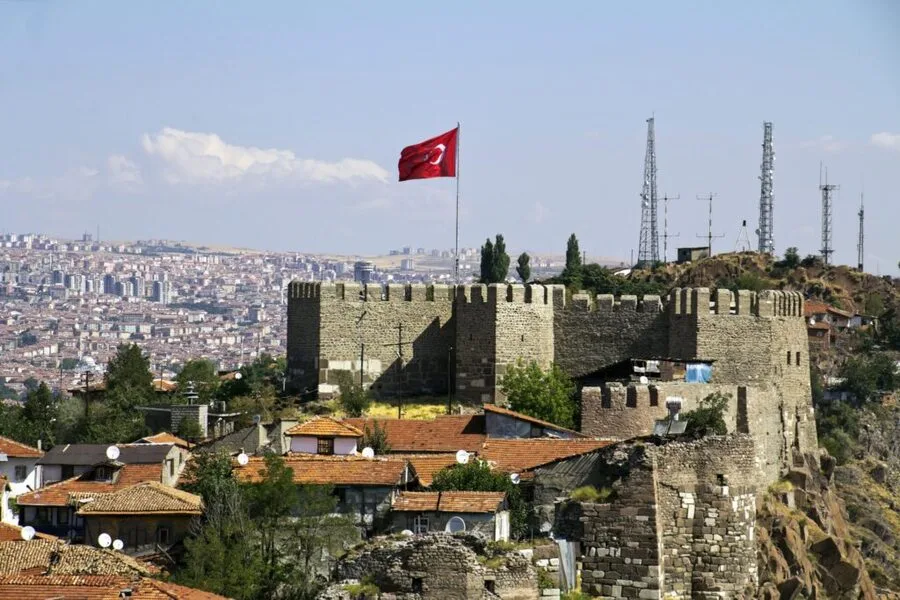
The oldest part of the city is the citadel on a rocky hill above Ulus. The first fortifications go back to the Galatians and Romans, but the present walls and towers were rebuilt by the Byzantines between the 7th and 9th centuries, using whatever they had to hand: look closely and you will spot fragments of ancient columns, tombstones and marble blocks with Greek letters set right into the masonry.
People still live inside the walls, where steep lanes wind between old Ottoman houses with wooden bay windows, small cafés, restaurants with terraces and shops selling carpets and spices. Climb up to the White Tower, Akkale, for views in every direction, from the minarets of the old town to the skyscrapers on the horizon. Is Ankara Castle free? Yes, and it is at its most beautiful at sunset.
3. Museum of Anatolian Civilisations
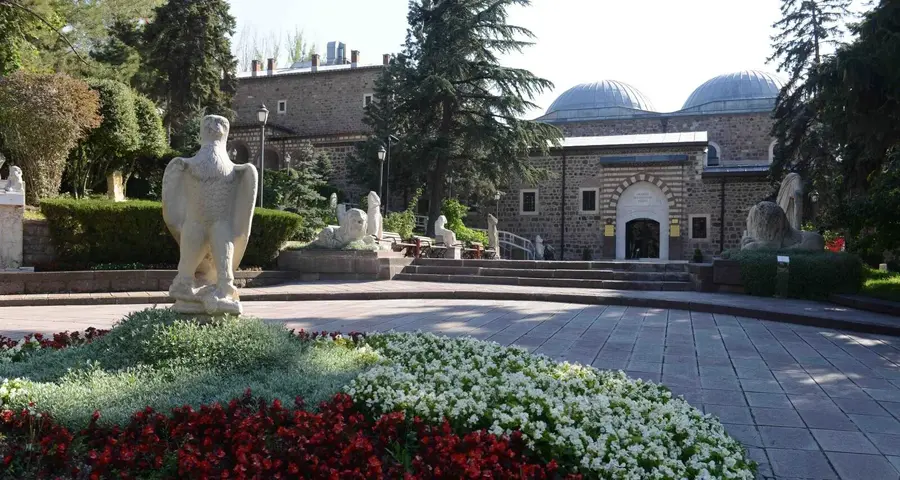
At the foot of the citadel, a 15th-century covered market and caravanserai now hold one of the world's finest archaeological museums, named European Museum of the Year in 1997. The collection runs in chronological order, from Stone Age tools and the wall paintings of the Neolithic settlement of Çatalhöyük to the Hittites, Phrygians, Urartians, Greeks and Romans.
The highlights are the Hittite stone reliefs of kings and lions, bronze ceremonial standards topped with stags, and a figurine of a mother goddess enthroned between two leopards, around eight thousand years old. The museum is compact enough to see in two unhurried hours, and it is the best possible preparation for a trip to the Hittite capital Hattusa or to Gordion.
4. Temple of Augustus and Hacı Bayram Mosque
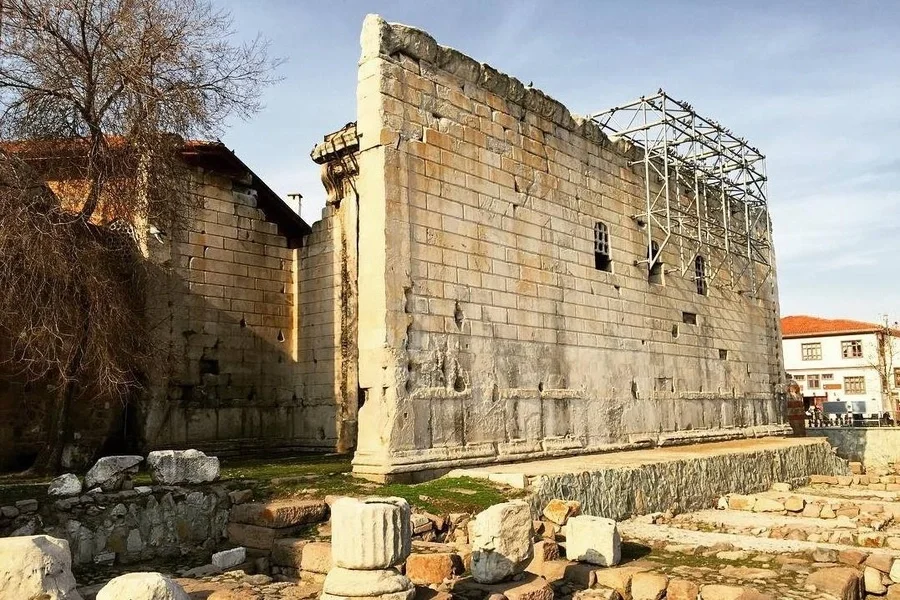
In old Ulus stand the walls of a Roman temple dedicated to the emperor Augustus and the goddess Roma. They matter less for their architecture than for their inscription: carved into the marble in Latin and Greek is the "Deeds of the Divine Augustus", the emperor's own account of his reign. Copies once stood across the empire, but the one in Ankara survives most completely, which is why scholars call it the queen of inscriptions.
Built right up against the temple is the 15th-century Hacı Bayram Veli Mosque, with the tomb of the Sufi teacher revered as the city's spiritual patron. On Fridays and holidays it fills with worshippers, and the shops around the square sell prayer beads, headscarves and religious books. A Roman temple and a mosque side by side say a great deal about how many ages Ankara has lived through.
5. Roman Baths and the Column of Julian
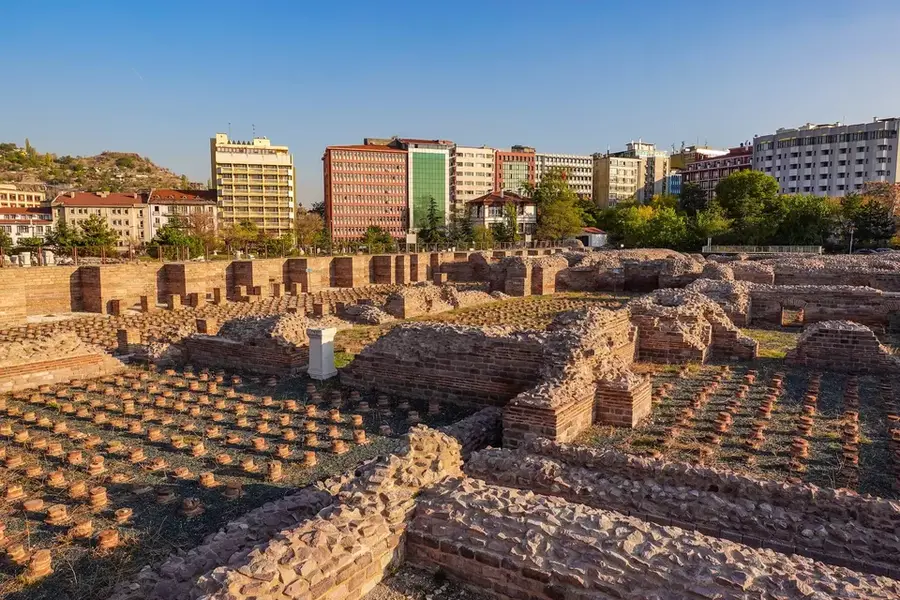
Close by, on Çankırı Avenue, archaeologists have uncovered a large 3rd-century bath complex built under the emperor Caracalla. You can clearly see how a Roman bath worked: hot, warm and cold rooms, the brick pillars that let hot air circulate under the floors, and a large exercise yard now lined with columns, gravestones and inscriptions.
A few minutes' walk further, in a small square outside a government building, rises a fifteen-metre fluted column put up to mark the visit of the emperor Julian in 362. Few Roman monuments in Ankara have survived in such good shape, and it keeps the memory of ancient Ancyra alive among the modern streets.
6. Hamamönü
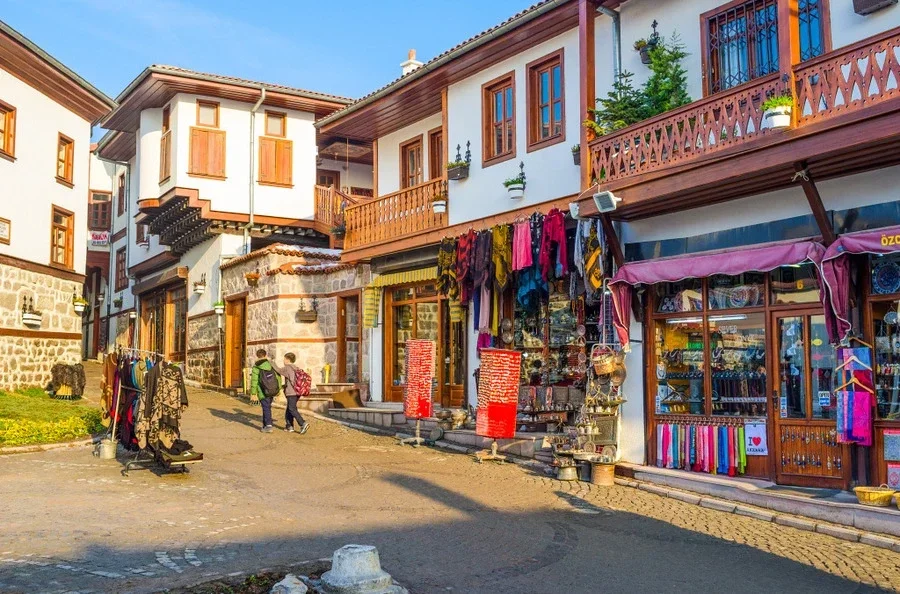
Hamamönü is a handful of streets of restored 19th-century Ottoman houses with timber façades, bay windows and tiled roofs. The name means "in front of the bath", after the 15th-century Karacabey hamam that still stands at the heart of the quarter. A few decades ago these houses were close to collapse; today Hamamönü is one of the places locals like best for a stroll.
The houses are now cafés with floor cushions, home-cooking restaurants, workshops and souvenir shops. People come here for Turkish coffee brewed in hot sand, for gözleme, a thin flatbread filled with cheese or spinach, and for photos against the colourful houses. In the evening lanterns light up the lanes and the quarter feels especially cosy.
7. Kocatepe Mosque
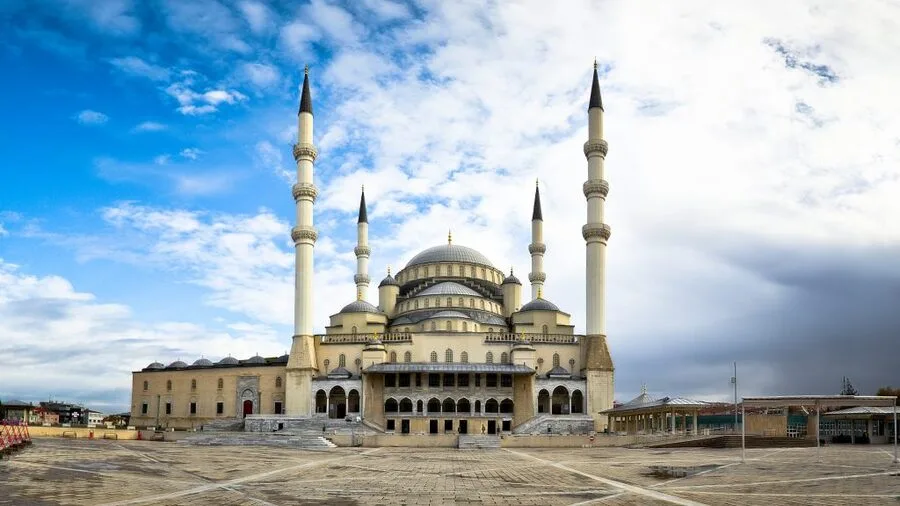
Ankara's largest mosque stands on a hill near Kızılay, and its four 88-metre minarets are visible across a large part of town. It took twenty years to build, from 1967 to 1987, and was modelled on the classical mosques of the great Ottoman architect Sinan, so it recalls the 16th-century mosques of Istanbul even though it is made of concrete.
Inside, a huge prayer hall beneath the central dome, with painted decoration, crystal chandeliers and stained glass, holds more than twenty thousand worshippers. The real surprise is underneath: the mosque sits on top of a shopping centre and a conference hall. Visitors are welcome outside prayer times; women should bring a headscarf, and everyone should cover shoulders and knees.
8. Kızılay and Atakule Tower
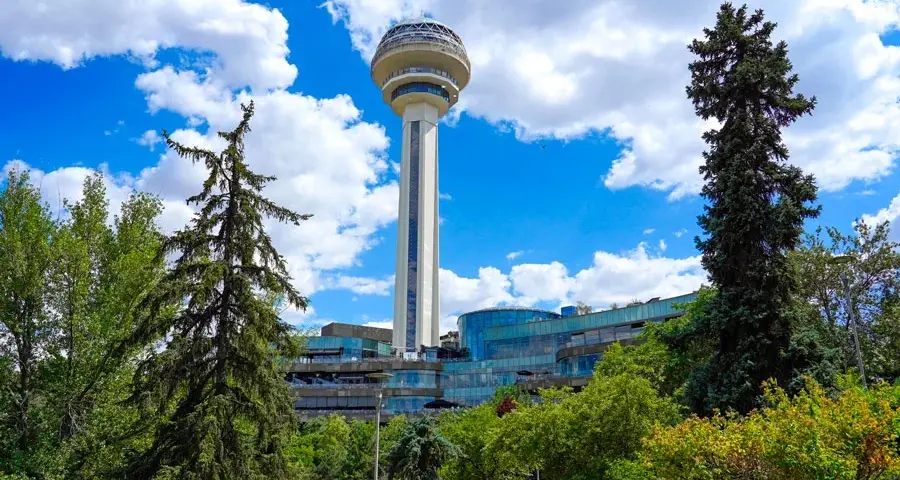
Kızılay Square, named after the Red Crescent building that once stood here, is the heart of modern Ankara. Shopping streets fan out from it, among them pedestrian Sakarya Street with its little fish restaurants and Tunalı Hilmi with its bars, cafés and boutiques, while the Güvenpark gardens next door are where locals arrange to meet.
South of the centre, in the upmarket Çankaya district, rises the 125-metre Atakule tower, opened in 1989. A lift takes you to an observation deck with views across the whole city in its bowl of hills, and at the very top a restaurant slowly revolves. Come in the late afternoon to see Ankara by day and then lit up at night.
9. Gençlik Park
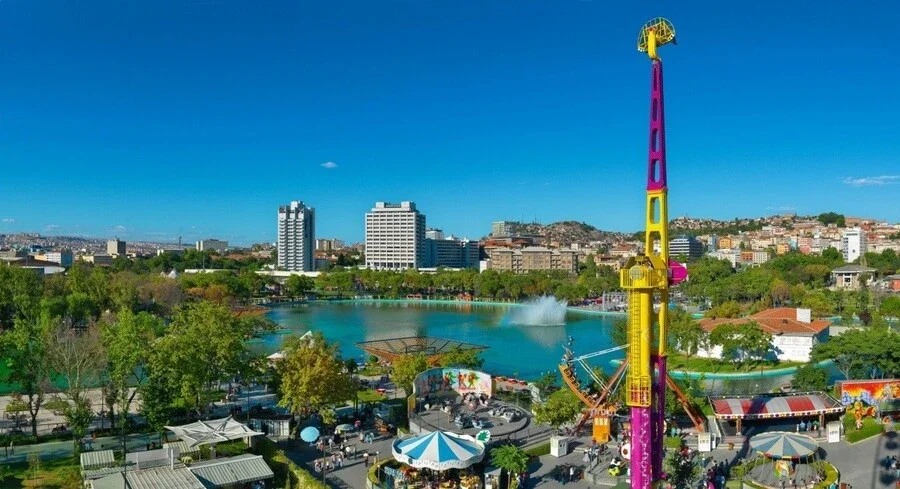
The "Youth Park" was laid out in 1943 between the old town and the railway station to a design by the French planner Théo Leveau, and for a young capital in the middle of the dry steppe it was a small miracle, with a large lake, islands, footbridges and avenues. Today it is Ankara's favourite park, full of families, rowing boats and ducks waiting to be fed.
There is a small funfair with a Ferris wheel, cafés and tea gardens by the water, and on summer evenings the lake hosts fountain shows with lights and music. From here it is an easy walk to the station, the Opera House and the CerModern arts centre, so the park fits neatly into a walk around the old town.
10. Cappadocia
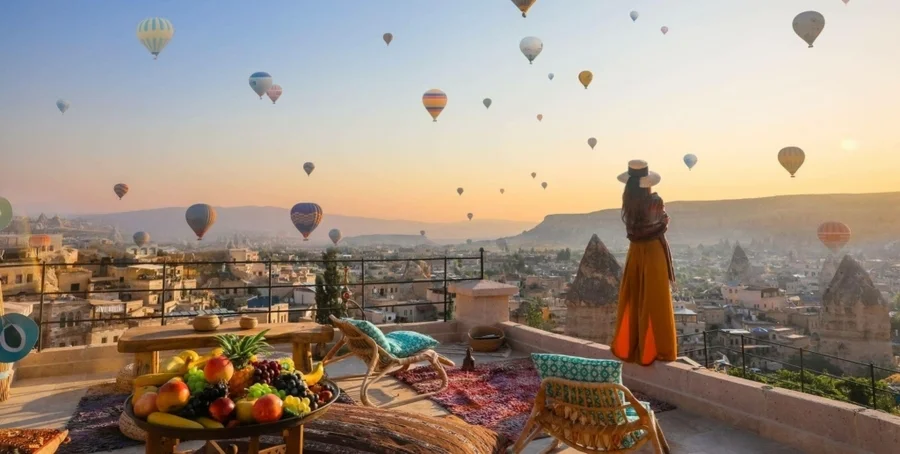
For many travellers Ankara is a handy gateway to Cappadocia: the village of Göreme is about three hundred kilometres away, or three to four hours by bus or car. Waiting there are valleys of stone "fairy chimneys", cave churches with frescoes in the UNESCO-listed Göreme Open-Air Museum, the underground cities of Derinkuyu and Kaymaklı, and the rock fortress of Uçhisar.
Cappadocia's best-known experience is a hot-air balloon flight at dawn, when dozens of colourful balloons lift off over the valleys at once. You can see the region on a long guided day trip, but it is better to spend a night in a cave hotel so you can watch the sunrise over the valleys and walk the trails at your own pace.
Ankara Attractions: What Else to Visit While in the City
- Arslanhane Mosque — a late 13th-century mosque near the citadel with a forest of wooden columns and a carved ceiling, inscribed on the UNESCO list together with other wooden mosques of Anatolia.
- The citadel slopes — the market streets of Samanpazarı and Çıkrıkçılar, with coppersmiths, carpets, dried fruit, spices and goods made of Angora wool.
- Rahmi M. Koç Museum — a museum of technology in a 16th-century caravanserai, with vintage cars, ship models, old toys and scientific instruments that children love.
- Erimtan Museum — a modern archaeology museum by the citadel with Roman pottery, glass, coins and jewellery, plus a café overlooking the old town.
- War of Independence Museum — the first Grand National Assembly building of 1920 in Ulus, where the decisions that created the Turkish Republic were taken.
- Ethnography Museum — a white building of 1930 with folk costumes, carpets and woodcarving, where Atatürk lay temporarily from 1938 to 1953.
- CerModern — a contemporary arts centre in former railway sheds next to Gençlik Park, with exhibitions, film screenings and concerts.
- Atatürk Forest Farm — a large green estate founded in 1925, with a zoo, a brewery and a replica of the house in Thessaloniki where Atatürk was born.
- Gordion — the capital of the Phrygian king Midas, 90 km from Ankara, with a huge burial mound; this is where Alexander the Great cut the Gordian knot.
- Beypazarı — a small town 100 km west with quarters of white Ottoman houses, silver filigree, carrot sweets and mineral water.
What to See in Ankara in 1, 2 or 3 Days
Is Ankara worth a visit, and how long do you need? The highlights fit into one busy day, but two days let you see everything without rushing, and a third is best spent in Cappadocia, Gordion or Beypazarı. With only one day, start the morning at Anıtkabir, then take the metro to Ulus for the Museum of Anatolian Civilisations and the citadel with its lookout tower, have lunch in a restaurant on the walls, then walk on to the Roman temple, the mosque beside it and the baths. In the evening head back to Kızılay and stroll along Tunalı Hilmi. On day two, wander through Hamamönü, look into Kocatepe Mosque, the Rahmi M. Koç Museum and Gençlik Park, and watch the sunset from Atakule.
When is the best time to visit Ankara? The climate is continental, with hot, dry summers and cold winters that often bring snow, so April to June and September to October are the most pleasant months. Is Ankara better than Istanbul? They are very different: Istanbul is a noisy metropolis on two continents, while Ankara is a calm capital with the country's best museums, so the ideal is to combine both in one trip. Beyond Cappadocia, Turkey rewards you with Lake Tuz, a salt lake that turns pink in summer, the ruins of the Hittite capital Hattusa, the UNESCO-listed Ottoman town of Safranbolu, Ephesus and the Mediterranean resorts.
For free, you can visit Anıtkabir, the citadel and its tower, the Kocatepe, Hacı Bayram and Arslanhane mosques, and wander Hamamönü, the market lanes, Gençlik Park and Tunalı Hilmi. Children will enjoy the Rahmi M. Koç Museum, the zoo at Atatürk Forest Farm, the rides in Gençlik Park and the science centres. What to eat in Ankara? Try the local simit, a sesame ring glazed with grape molasses, Ankara tava, a baked dish of meat and rice, lamb from the tandır oven, dry biscuits from Beypazarı and, of course, Turkish tea, drunk from morning till night. In the evening locals head for the bars of Kızılay and Tunalı Hilmi, or to the State Opera and concerts of the Presidential Symphony Orchestra.
Ukraine has no direct flights to Ankara, and the easiest route is via Istanbul: Turkish carriers fly there regularly from Poland, Moldova and Romania, and from Istanbul you can take a domestic flight of about an hour or a high-speed train that reaches Ankara in roughly four and a half hours. Esenboğa Airport lies about 28 km from the centre, and the airport bus reaches Kızılay and the coach station in 45–55 minutes. Turkey lets Ukrainians in without a visa, and you can pay by card or in cash in lira.
In summer, when Ankara is hot and dry, many of its residents head for the sea, and it is just as easy for visitors to add a beach break to a city trip. The TurPoisk travel agency can help with both parts of the journey: book a hotel near Kızılay or in the old town, and for the beach find tours to Turkey — on the Mediterranean in Antalya or Belek, or on the Aegean coast in Bodrum, Marmaris and Fethiye. Use our tour search to see options for your dates, browse last-minute tours, and our managers will help you plan an Istanbul, Ankara, Cappadocia and seaside route.


