
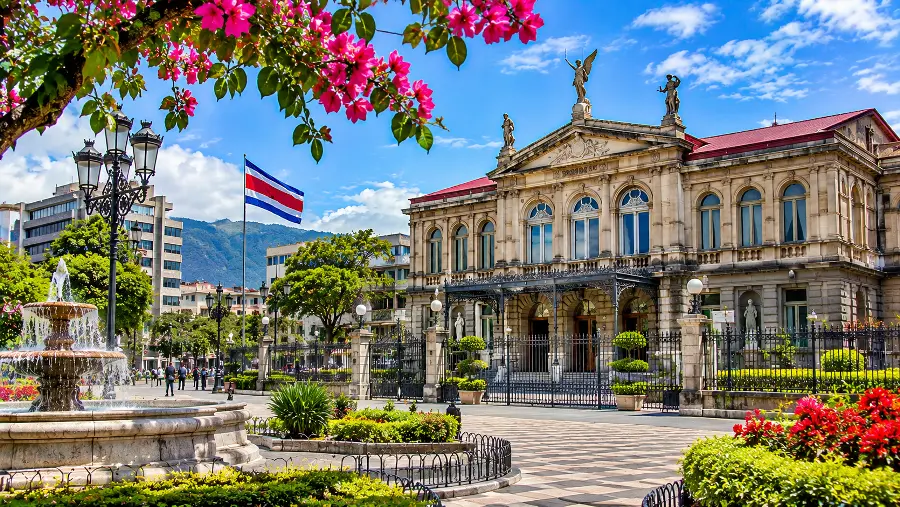
Tucked into a green valley ringed by volcanoes, Costa Rica's capital enjoys mild spring-like weather all year round. San José began in the 18th century as a modest tobacco-growing village and only took over the role of capital from old Cartago in 1823. Coffee made the city rich: the coffee barons paid for an opera house on European lines and Belle Époque mansions, and San José became one of the first places on earth with electric street lighting. In 1948 Costa Rica did away with its army altogether, and the former barracks now house the National Museum. Most visitors only pass through en route to the beaches and rainforests, yet the city has fine museums, a market where locals actually eat, and volcanoes within an easy day trip. Here's a shortlist of twenty spots, a guide to what to see in San José and nearby, from the National Theatre to the craters of Poás and Irazú.
What to See in San José First
Downtown is small, and a day on foot covers most of it. The pedestrian Avenida Central cuts through it, and the main museums, the theatre and the cathedral are all within a few blocks of one another. North of the centre are the old districts of Amón and Otoya with their timber and brick mansions, the foodie quarter of Barrio Escalante lies east, while the big La Sabana park spreads out to the west. Ticos traditionally give directions by landmarks rather than street numbers, along the lines of "a hundred metres north of the church", so search for the name of a place in your map app. App-booked taxis are the simplest way to hop between neighbourhoods, while the volcanoes and coffee farms are best reached on a tour or by hire car.
1. National Theatre
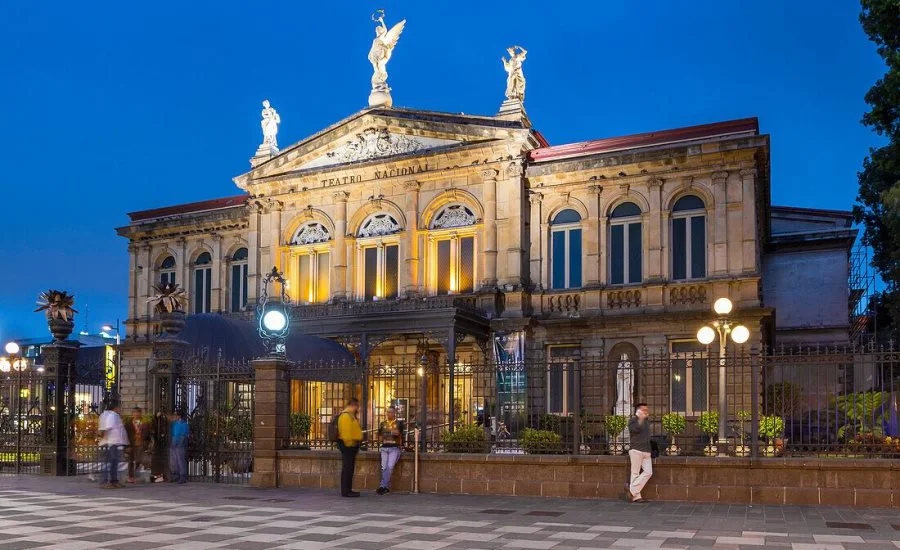
The country's most beautiful building owes its existence, so the story goes, to a snub: in 1890 a famous opera singer declined to perform in San José because the city had no stage worthy of her. The coffee planters then agreed to an extra tax on their exports, and the money paid Italian architects and artists to build the theatre. It opened in October 1897 with a production of Faust, and the auditorium seats well over a thousand.
Inside you will find marble staircases, gilding, painted ceilings and statues shipped from Italy. The best-known mural is an allegory of the coffee and banana trade showing workers bringing in the harvest against a tropical backdrop, and it once appeared on the five-colón banknote. You can join a guided tour by day or return after dark for a concert; the café by the entrance serves local coffee beneath the same painted vault.
2. Pre-Columbian Gold Museum
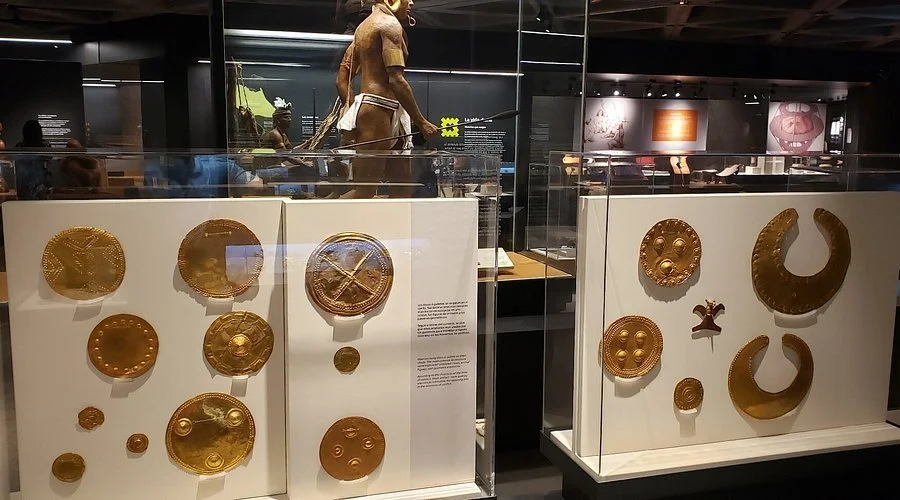
The Central Bank's treasure is kept underground, right under Culture Square (Plaza de la Cultura) beside the theatre. Its windowless, vault-like rooms display more than 1,500 gold pieces made by indigenous peoples long before the Spanish arrived: frogs, birds, crocodiles, shamans and amulet pendants.
The real fascination lies in seeing how the goldsmiths fused animals and humans into a single figure, since every piece carried magical meaning. Some rooms explain how the metal was mined and cast, and the lower floor holds a collection of the country's coins and banknotes. Afterwards, perch on the square's steps and watch downtown life go by.
3. Jade Museum
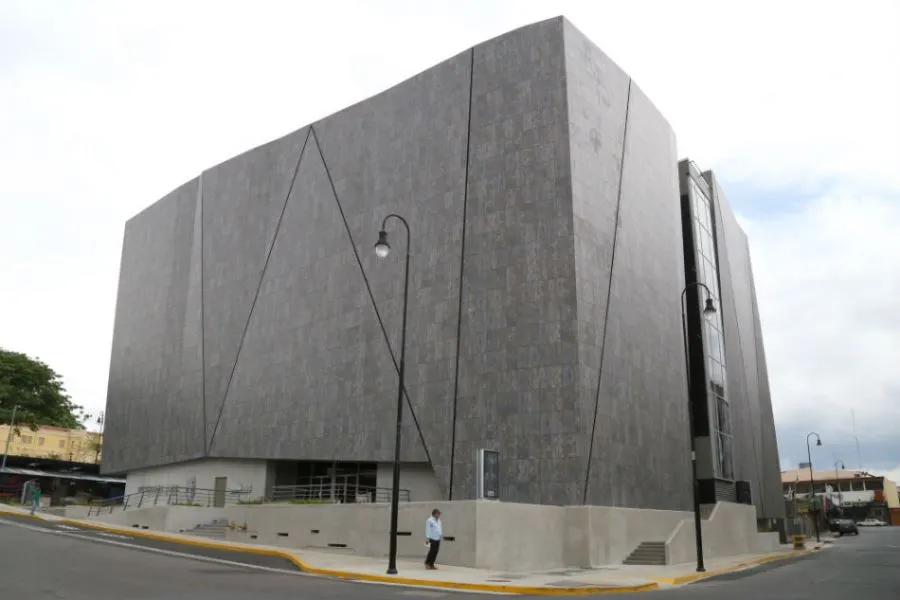
This museum owns the world's biggest hoard of jade from the Americas, and since 2014 it has occupied a modern building opposite the Plaza de la Democracia, designed to resemble a huge block of green stone. For Costa Rica's pre-Columbian peoples jade was worth more than gold: they carved it into pendants, axe heads and figurines that were laid in the graves of chiefs.
Several floors of exhibits cover not only the stone but the daily life of the country's early inhabitants, from pottery and tools to rituals. Backlit cases show light passing through thin slivers of jade, which completely changes the impression of a stone that otherwise looks rather dull.
4. National Museum at Bellavista Fortress
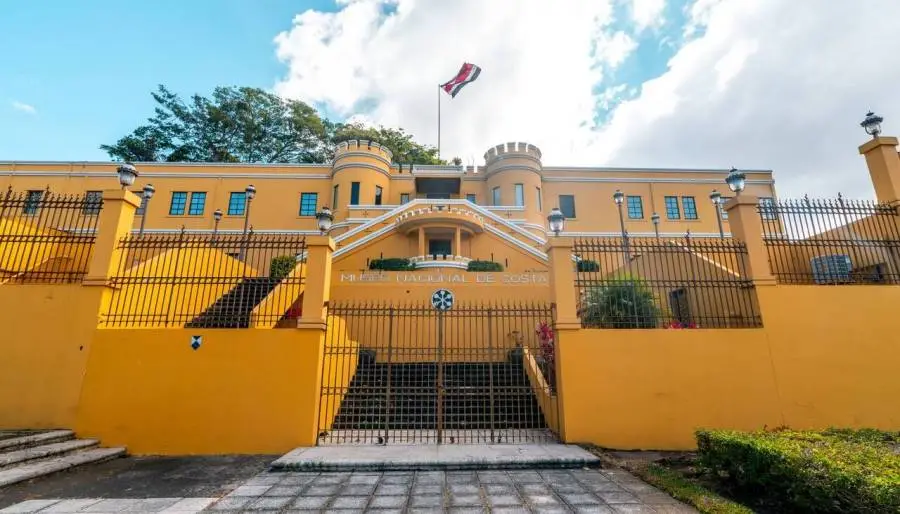
The yellow fortress with its towers went up in 1917 as a barracks, and its walls still bear bullet marks left by fighting in the civil war of 1948. After winning that war, José Figueres announced the end of the armed forces and struck the fortress wall with a sledgehammer as a symbolic gesture; by 1950 the building had become the National Museum.
The halls trace the country's story from pre-Columbian times right up to today, and near the entrance a butterfly garden lets dozens of tropical species flutter right around visitors. The towers look out over the Plaza de la Democracia and the mountains around the valley, and a small craft market trades in the underpass next door.
5. Central Market
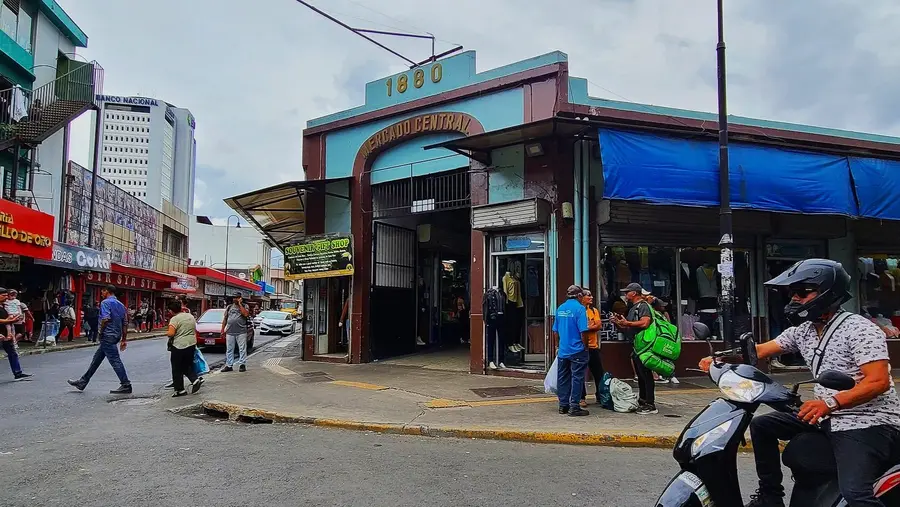
The market opened in 1880 and fills a whole block on Avenida Central. Inside is a warren of narrow aisles with some two hundred stalls selling coffee, spices, medicinal herbs, leather goods, souvenirs and tropical fruit you may never have heard of.
The main reason to come is the sodas, small cheap diners where locals eat lunch perched at the counter. Order a casado, a plate of rice, beans, fried plantain, salad and meat or fish, and finish with a cinnamon-scented sorbetera ice cream. Keep your bag in front of you, as wallets go missing easily in the crowded aisles.
6. Metropolitan Cathedral and Avenida Central
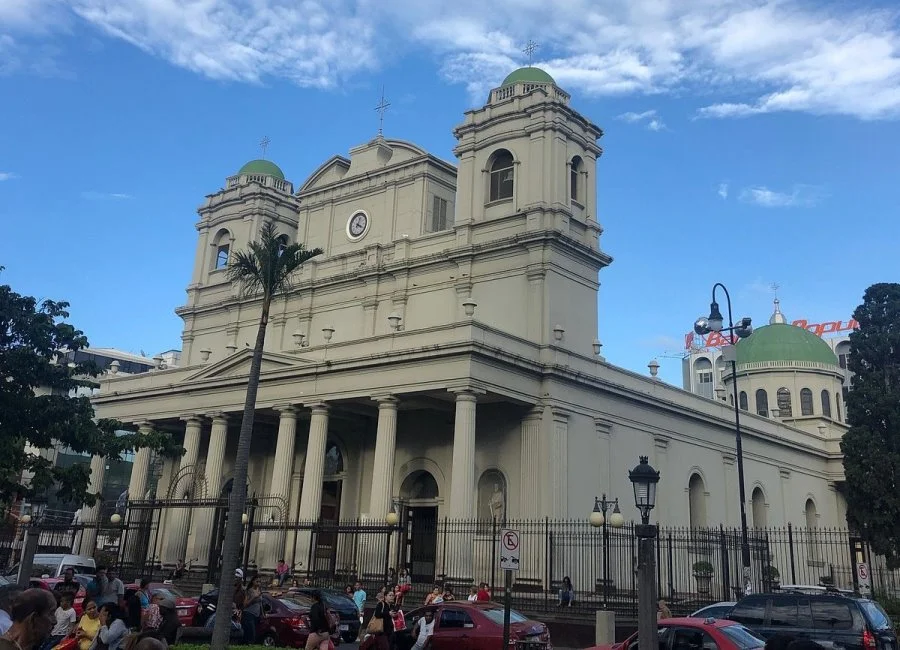
An earthquake brought down the first cathedral on this spot, and the present building with its neoclassical colonnade was raised in the second half of the 19th century. The interior is bright and airy, with stained glass and murals, and Central Park with its bandstand spreads out in front.
The pedestrian Avenida Central starts by the cathedral, a main street of shops, buskers and lottery-ticket sellers. Follow it to Culture Square, then turn north to Morazán Park, whose centrepiece is the Temple of Music, a white colonnaded pavilion modelled on a garden folly at Versailles' Petit Trianon.
7. Barrio Amón and the Metal Building
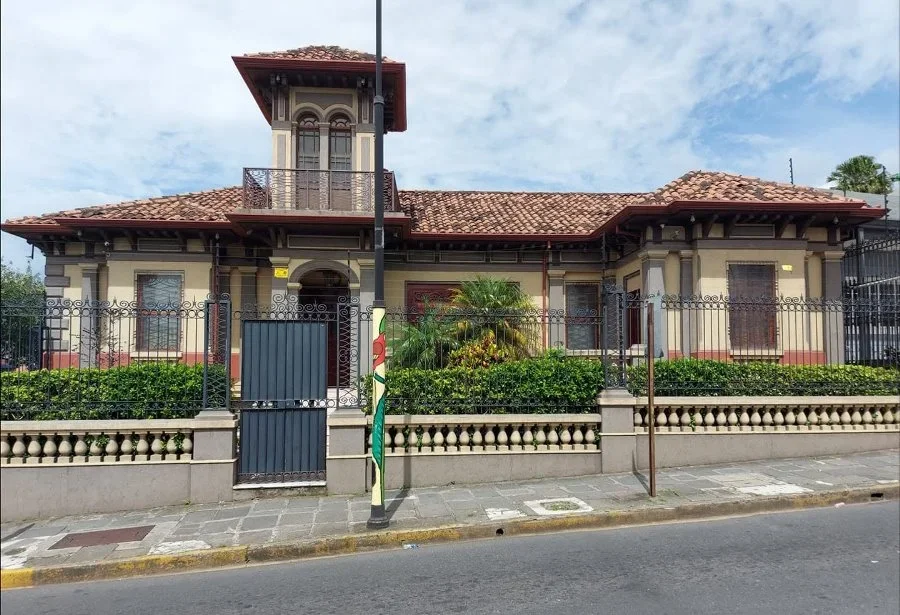
The district takes its name from Amon Fasileau-Duplantier, a French coffee entrepreneur who filled these streets with mansions for wealthy families in the late 1800s. Wooden Victorian houses, villas with Moorish arches and quiet lanes survive, now home to galleries, cafés and small hotels.
On the district's fringe you will spot the Metal Building, a two-storey school assembled from iron panels made in Belgium using engineer Danly's system and shipped across the ocean. Next to it is Parque España with its old trees, and colourful murals brighten the walls of the surrounding houses.
8. La Sabana Park and the Costa Rican Art Museum
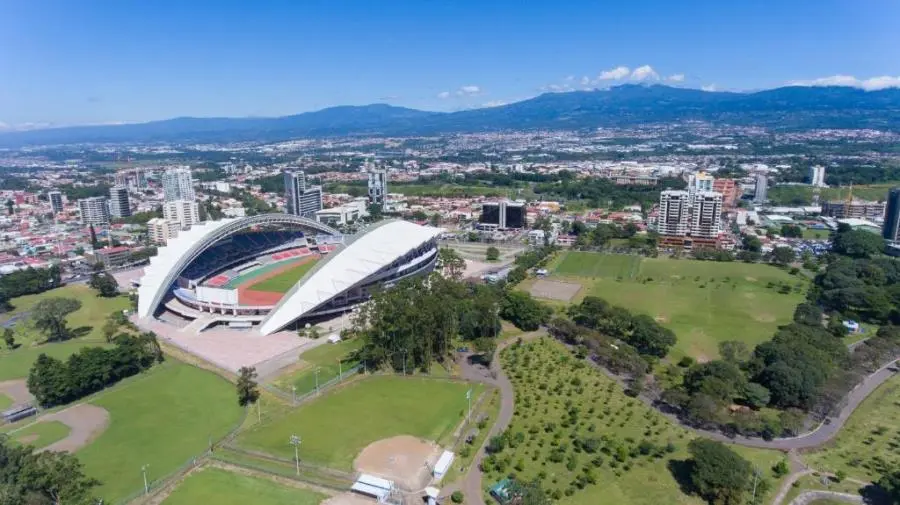
The capital's biggest park was once the nation's original international airfield, with planes taking off right here until a new airport opened outside the city. Today the old airfield is given over to lawns, a lake, running tracks, tennis courts and the National Stadium, and at weekends families come for picnics.
The former terminal, built in colonial style, now houses the Costa Rican Art Museum and its several thousand works. Be sure to head upstairs to the Golden Hall, whose walls are covered with a relief telling the nation's history, then wander through the sculpture garden behind the building.
9. Poás Volcano
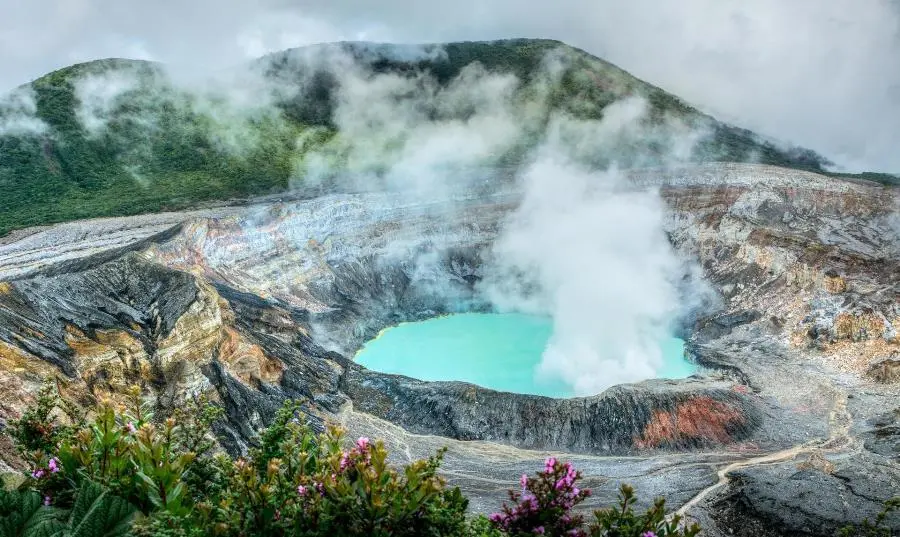
Ninety minutes or so by road north of the city rises one of the country's most restless volcanoes. From the viewing platform you look down into a vast crater where a turquoise acid lake steams and plumes of vapour rise from the cracks. Poás has erupted dozens of times over the last two centuries, so visitor numbers at the rim are limited and tickets need booking in advance.
Set off at first light, because clouds tend to fill the crater by midday. The road climbs past coffee plantations and strawberry fields, and the trip combines nicely with a tour of a coffee farm on the volcano's slopes or with the La Paz waterfalls.
10. Irazú Volcano and Cartago
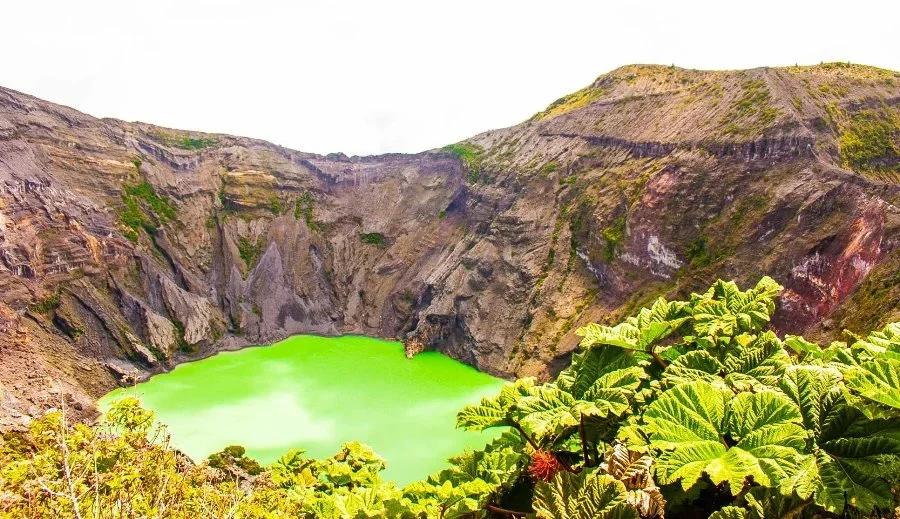
At 3,432 metres, Irazú is Costa Rica's highest active volcano, and the road climbs almost to the craters themselves. One of them sometimes fills with the green Diego de la Haya lake, and locals say that on a clear day you can see both the Pacific and the Atlantic from the top. It is cold and windy up there, so pack a jacket even if the day is hot.
On the way, stop in Cartago, the country's first capital, founded in 1563. The town keeps the ruins of a church that was never rebuilt after an earthquake, and the Basilica of Los Ángeles, home of La Negrita, a small statue carved from dark stone. Every year in early August hundreds of thousands of pilgrims walk here from all over Costa Rica.
San José Landmarks: What Else to See While You're in the City
- Children's Museum — a hands-on museum inside a former prison that looks like a medieval castle, where children may touch everything.
- Barrio Escalante — a district of restaurants, craft breweries and cafés along a boulevard where locals go out for dinner.
- Spirogyra Butterfly Garden — a tropical garden close to the centre with dozens of butterfly species and hummingbirds.
- La Paz Waterfalls — a chain of falls in the forest on the slopes of Poás, around 30 km north of Alajuela, with hummingbird and butterfly gardens.
- Coffee plantations — farms on the volcano slopes around the valley that show how coffee is picked, dried and roasted, and let you taste it fresh.
- Lankester Botanical Garden — a university garden near Cartago with one of Central America's largest orchid collections.
- Sarchí — a craft town where artisans paint the wooden ox carts whose tradition UNESCO recognises as heritage.
- Orosi Valley — a lush valley of coffee terraces with one of the oldest colonial churches still in use in the country.
- Arenal Volcano — a perfect cone about 90 km north-west, with hot springs bubbling up at its foot.
- Manuel Antonio — a small national park on the Pacific coast where monkeys and sloths wander onto the sand.
What to See in San José in 1 Day, 2 Days or 3 Days
Downtown takes a single day: begin with breakfast at a soda in the Central Market, stroll along Avenida Central to the cathedral, take in the National Theatre and the Gold Museum, head across to the Jade Museum and then the National Museum once lunch is done, and have dinner in Barrio Escalante. Devote day two to Poás Volcano with a coffee farm, or the La Paz waterfalls on the way back. Day three belongs to Irazú, Cartago, the Lankester garden and the Orosi Valley. Is San José in Costa Rica worth visiting? For a day or two at the beginning of a longer journey, absolutely: from here you can move on to Arenal and its hot springs, the Monteverde cloud forest, the beaches of Manuel Antonio or the turtles of Tortuguero, so the city makes a natural first stop.
Visit between December and April, during the dry season, when skies are sunny and the volcanoes hide in cloud less often. From May to November comes the green season, with clear mornings and frequent afternoon downpours, but also lush forests and fewer tourists. At almost 1,200 metres above sea level, San José never gets stiflingly hot, and the evenings are cool enough for a light jacket. Late December brings festive parades, and on 15 September the country celebrates Independence Day with lanterns and school bands. What to beware of in Costa Rica? Mostly petty theft: leave nothing in a parked car, skip flashy jewellery and take a taxi after dark. Locals greet each other with "pura vida", roughly "pure life", and speak Spanish, with English mainly heard in tourist spots.
Free things to do in San José include walking Avenida Central, the Morazán, España and La Sabana parks, popping into the cathedral, and admiring the Metal Building and the murals of Barrio Amón. Kids enjoy the Children's Museum, the Spirogyra garden, the butterflies at the National Museum and the volcano craters. The national dish is gallo pinto, rice cooked with black beans, garlic and onion, eaten for breakfast with eggs, cheese and fried plantain. Try a casado too, chifrijo, beans topped with crunchy pork crackling served in bars, and fresh tropical fruit juices. Good souvenirs are coffee from local farms, Lizano sauce, chocolate and miniature painted ox carts from Sarchí. After dark, locals head for Barrio Escalante, to concerts at the National Theatre and to the bars of San Pedro near the university.
You can't fly nonstop from Ukraine or Poland; instead, change planes in Madrid, Amsterdam, Frankfurt or London, each with direct services to San José. The main gateway, Juan Santamaría International, is in Alajuela, roughly 20 km from downtown towards the north-west. Holders of Ukrainian passports need no visa for trips lasting as long as 90 days, and a departure tax is charged when leaving the country; it is usually included in the ticket, but it is worth checking.
After volcanoes and rainforest, many people want a slow beach holiday in the Caribbean as well. Specialists from the TurPoisk online travel agency can line up tours to the Dominican Republic: the white sands of Punta Cana, all-inclusive hotels and warm Caribbean water. Need somewhere to sleep after landing? We'll gladly book a hotel for your first few nights in San José. Browse the tour search to compare options for any dates, then message us and we'll plan a journey linking Costa Rica's volcanoes with the Dominican sea.


