
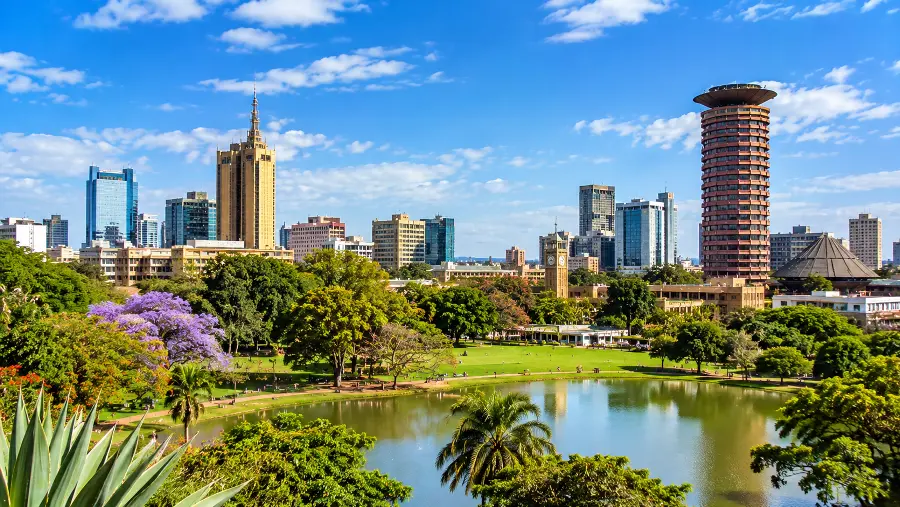
Kenya's capital, Nairobi, sits almost 1,800 metres up, and a short drive from its office towers giraffes and zebras graze. The Maasai gave the place its name: Enkare Nyirobi, roughly "the water that is cold", after a chilly stream that once ran across the plain. In 1899 a depot for the Uganda Railway, then being pushed from the Indian Ocean towards Lake Victoria, went up on this swampy flat ground, and by 1905 the British had moved their colonial capital here from Mombasa. Since independence in 1963 it has grown into the biggest city in East Africa, and its nickname is Green City in the Sun. No other capital has a national park inside its city limits, so lions here are photographed with high-rises behind them. Most visitors stay a single night before heading off on safari, yet Nairobi deserves two or three days of its own. This guide lists what to see in Nairobi and the country around it: twenty places, from an orphanage for baby elephants to the Ngong Hills.
What to See in Nairobi First
The business district, with its convention centre, parliament and old mosques, fills a compact grid of streets, while Westlands, to the north-west, is where the restaurants, malls and nightlife are. Almost everything to do with wildlife lies to the south-west, in the leafy suburbs of Karen and Langata near the national park gates. Distances are long and the traffic jams are notorious across the continent, so plan each day around one part of town. The gaudy matatu minibuses, painted with portraits of celebrities and pumping out music, are a sight in themselves, but visitors are better off with app-based taxis.
1. Nairobi National Park
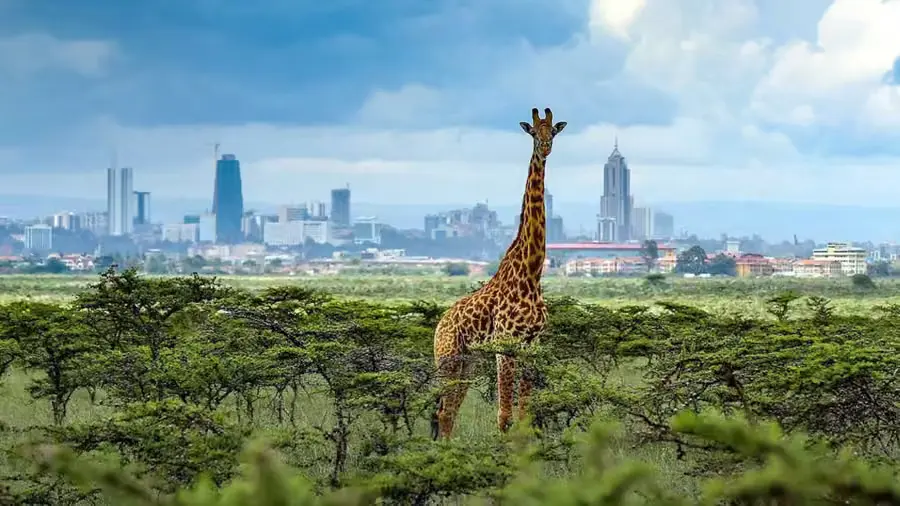
Kenya's oldest national park was set up in 1946 just seven kilometres from the centre. A fence runs along three of its sides, but the southern edge is left open, so wildebeest and zebras wander out onto the Kitengela plains and back again. The grassland is home to lions, cheetahs, buffalo, giraffes, hippos and ostriches, and the park ranks among the country's most successful refuges for the black rhino. This is where the famous shots of a giraffe with skyscrapers rising behind it are taken.
Game drives leave at dawn, while the animals are lively and the day is still cool, and three or four hours in a pop-top 4x4 are usually enough to meet most of the residents. In 1989 Daniel arap Moi, then president, set fire to twelve tonnes of ivory in a clearing here to show the world that Kenya meant business against poachers, and a memorial marks the spot. By the main gate, the Safari Walk boardwalk runs above animal enclosures and makes an easy stroll with children.
2. Sheldrick Elephant Orphanage
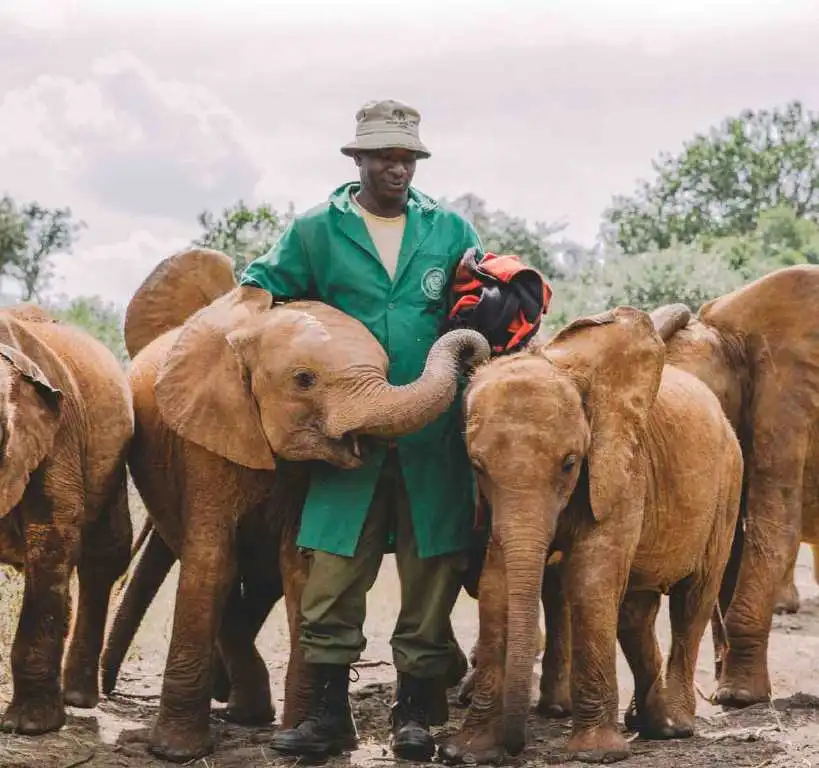
Daphne Sheldrick started the trust in 1977 after losing her husband David, who had been the first warden of Tsavo East. Elephant and rhino calves orphaned by poaching, drought or clashes with farmers are brought here to be raised. The keepers bottle-feed them, and once they are older the youngsters move to reserves where they are slowly eased back into the wild.
Visitors are let in to watch feeding time: keepers in green coats lead a whole troop of little elephants up to a rope barrier, where they gulp milk from enormous bottles and then roll about in the red mud. While the calves play, a keeper tells the story of each one. You can symbolically adopt any of them, and the trust will send you regular updates on how your elephant is doing.
3. Giraffe Centre
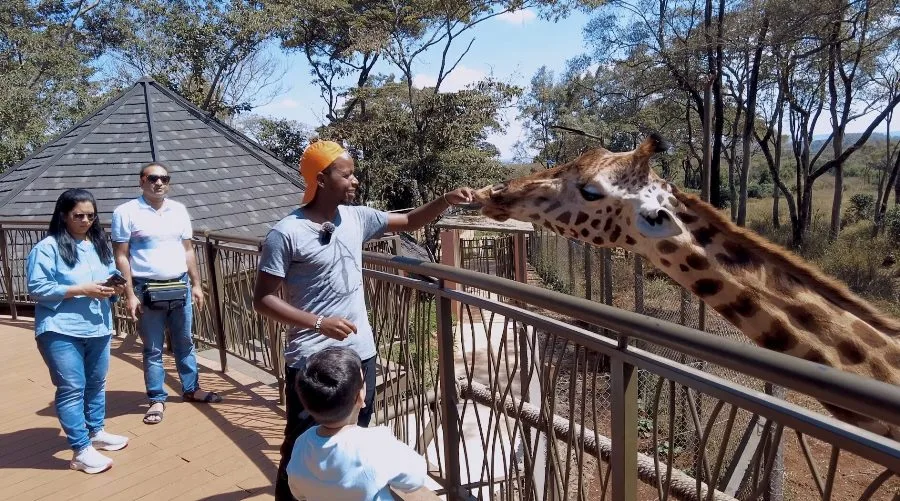
In 1979 Betty and Jock Leslie-Melville took two young giraffes onto their land in Langata, hoping to save a rare subspecies, the Rothschild's giraffe, found nowhere but the East African savannah. The breeding programme worked, and animals raised here have since been released into a number of Kenyan parks.
Today the place is an education centre for school groups and tourists alike. From a tall wooden platform you hand the giraffes food pellets, and they reach over with their long necks and rough blue tongues. Next door stands Giraffe Manor, a country house turned hotel where giraffes poke their heads through the windows at breakfast, and a nature trail leads from the centre into the woods.
4. Karen Blixen Museum
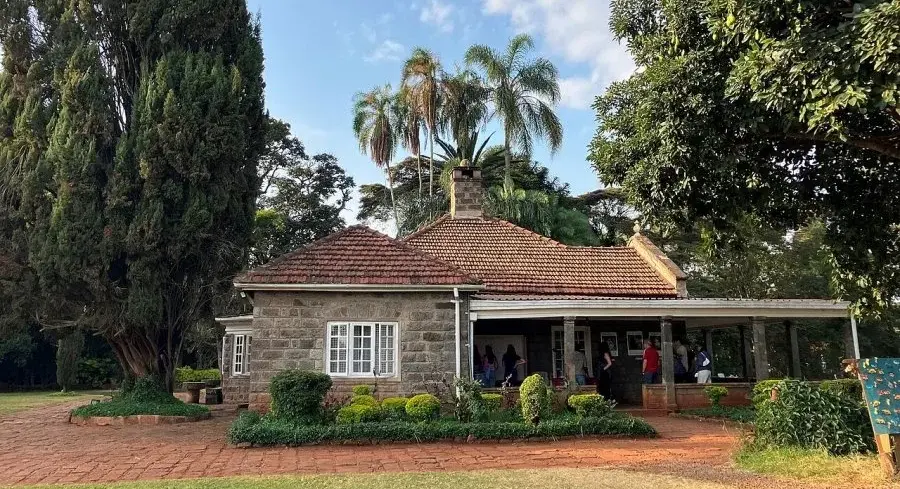
The Danish writer lived in this stone house with its broad veranda from 1917 to 1931, struggling to keep a coffee farm going below the Ngong Hills. The farm failed, Blixen went home to Denmark and wrote Out of Africa about those years, her Kikuyu neighbours and her love for the hunter Denys Finch Hatton.
Sydney Pollack turned the book into a film in 1985, with Robert Redford and Meryl Streep in the lead roles, it collected seven Oscars, and the house became a museum. Her furniture, books and belongings are still inside, and old coffee-processing machinery stands in the garden. The surrounding suburb of Karen, a quiet area of estates and restaurants, is said to take its name from her.
5. Nairobi National Museum
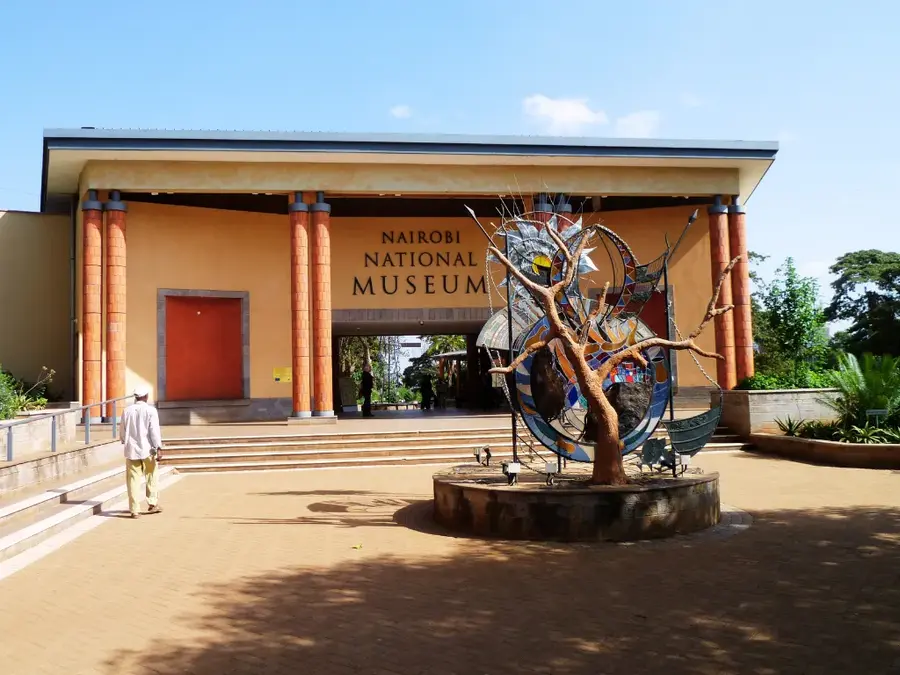
A society of naturalists studying East African wildlife started the museum in 1910, and its collections are still among the richest in the region. Galleries cover the birds and mammals of Kenya, its many peoples and the road to independence. One section is devoted to human origins, fitting for a country where the Leakey family of palaeontologists hunted for traces of our earliest ancestors.
A highlight is the gallery of portraits by Joy Adamson, the artist and naturalist who painted members of Kenya's different communities in traditional dress. The grounds also hold a snake park with reptiles and crocodiles and a botanic garden with a walking trail, so give the whole complex half a day.
6. Kenyatta International Convention Centre
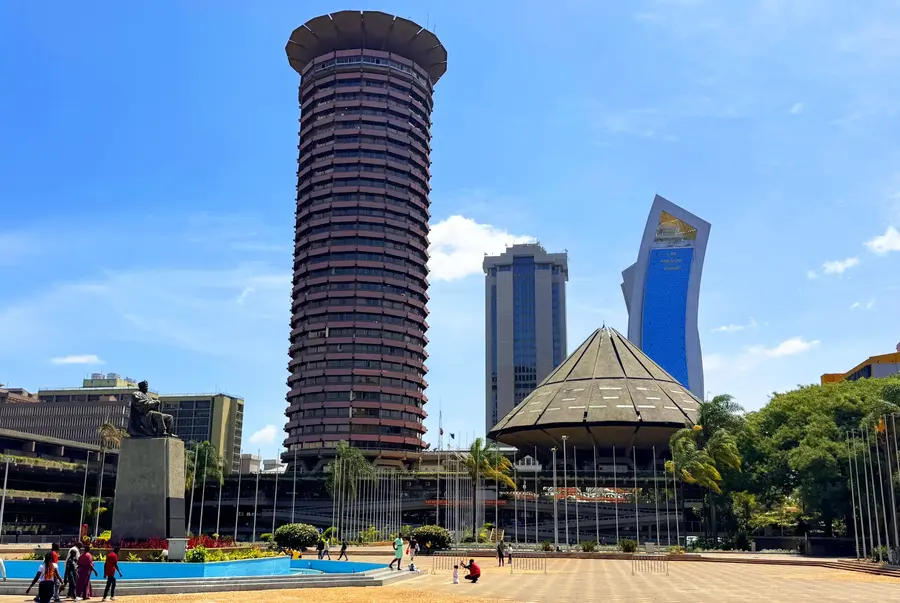
The Norwegian Karl Henrik Nøstvik designed this terracotta-coloured cylindrical tower together with Kenyan David Mutiso, and President Jomo Kenyatta opened it in 1973. Its plain geometric shapes nod to traditional African building, and both the amphitheatre and the helipad on top are shaped like cones.
Visitors are taken up to the roof, where the helipad gives you a view in every direction: the business district, Uhuru Park and, in clear weather, the savannah of the national park. Close by stands the parliament, whose clock tower was modelled on London's Big Ben, and a statue of Kenyatta looks over the forecourt below the tower.
7. Nairobi Railway Museum
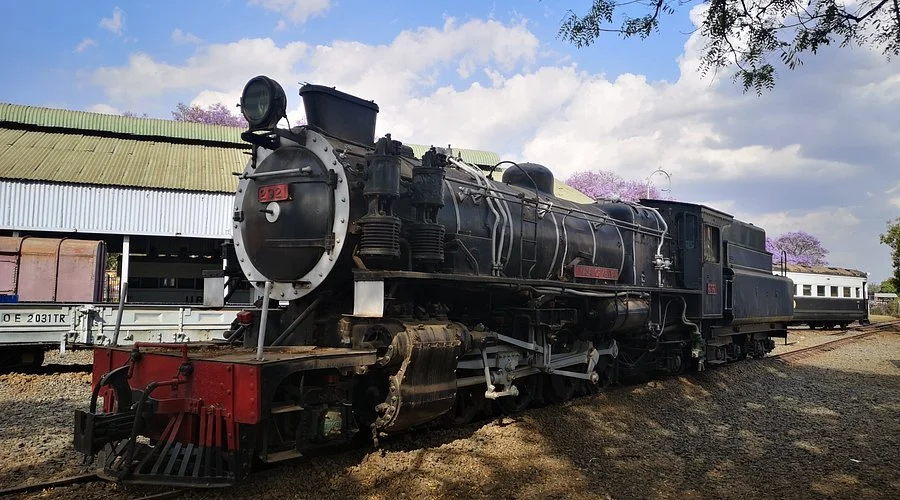
The city owes its existence to the railway, so this museum by the station tells the story of how Nairobi began. It opened in 1971, and outdoors you will find steam engines, carriages and inspection trolleys from the old East African Railways, while the halls display tickets, uniforms, maps and photographs of the line being laid across the savannah.
The best part is climbing into the old carriages and locomotive cabs, which children adore. One of the engines had a part in Pollack's Out of Africa, and the guides are happy to retell the tales of the man-eating lions that attacked the railway workers near the Tsavo River.
8. Bomas of Kenya
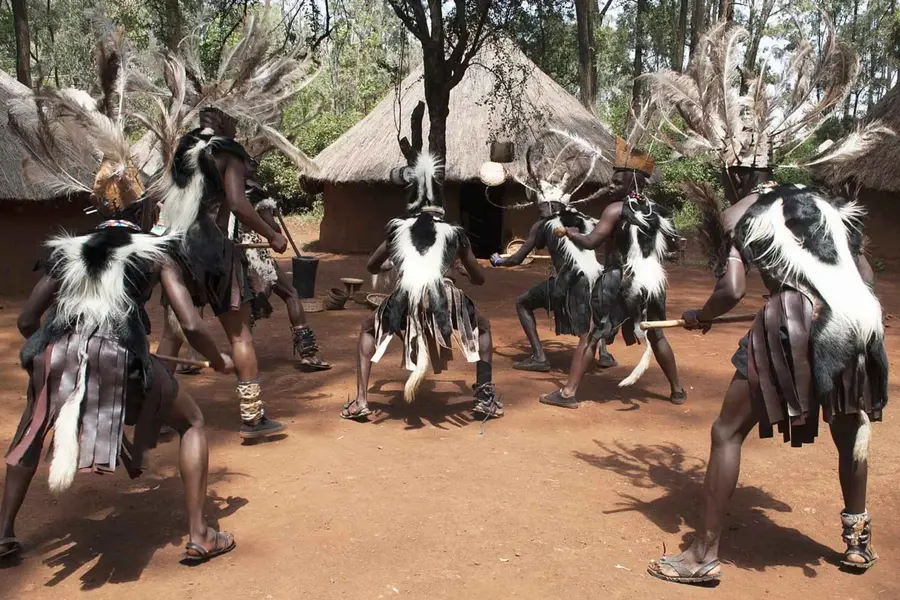
Bomas means "homesteads", and this open-air museum of traditional dwellings from Kenya's many peoples opened in 1971. You can step inside round huts of mud and thatch, see how Maasai herders, coastal fishermen and highland farmers lived, and look over their household tools and jewellery.
The main event is a show by the Bomas Harambee Dancers, a troupe formed in 1973 and named after harambee, the call to "pull together". To drums and horns, the dancers perform songs and dances from different communities, from the leaps of Maasai warriors to circle dances from the coast, in one of Africa's largest auditoriums.
9. Karura Forest
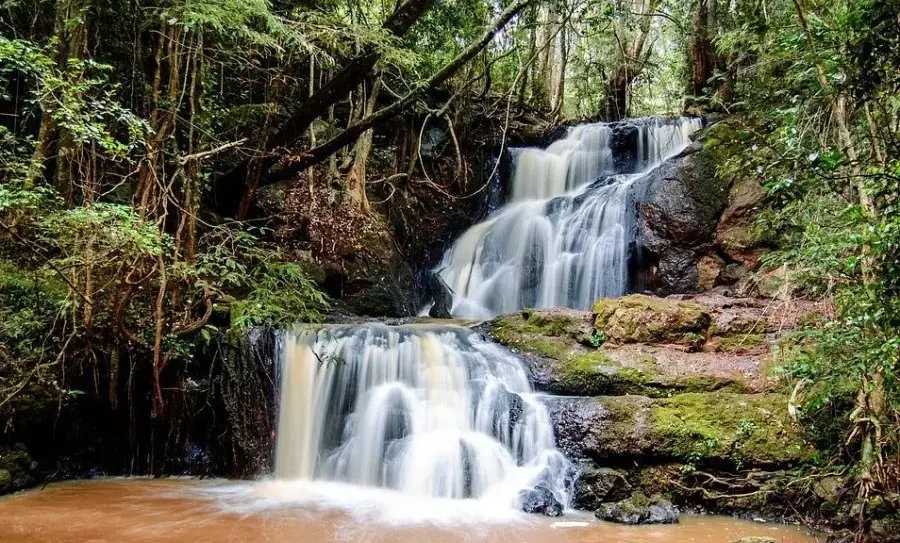
More than a thousand hectares of woodland on the city's northern side are said to make up the world's second-biggest urban forest, after Tijuca in Brazil. Developers once had their eye on it, but a campaign headed by Wangari Maathai, later awarded the Nobel Peace Prize, ran such a loud campaign that the trees were saved.
People come to walk, run and cycle along the trails while monkeys leap through the branches overhead. Paths lead to a waterfall on the river and to caves where, according to local accounts, Mau Mau rebels hid during their fight against British rule. Shade keeps it fresh at noon, which makes the forest a welcome break from the noisy centre.
10. Ngong Hills
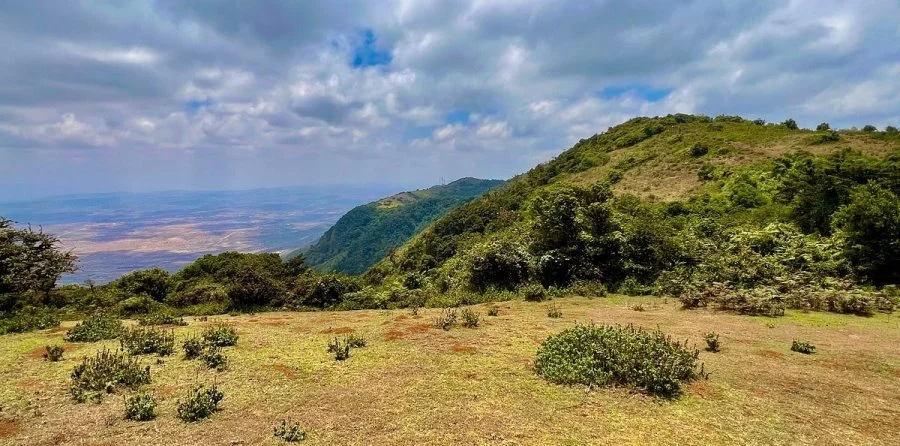
This ridge south-west of the city follows the rim of the Rift Valley, and from a distance its summits look like the knuckles of a clenched fist. Its name is taken from a Maasai phrase meaning "rhino spring". On the western side the slopes fall away by more than a kilometre to the floor of the rift, with views over savannah dotted with Maasai villages.
A walk along the ridge fills a morning and needs no climbing skills, though it is best done with a local guide or ranger. Denys Finch Hatton is buried on one of the slopes, and Karen Blixen mentions the hills on the very first page of her book. Wind turbines turn along the crests, because the breeze up here almost never drops.
Nairobi Landmarks: What Else to See While You're in the City
- Uhuru Park — a green park with a boating lake beside the centre, opened in 1969 and saved from a skyscraper project by Wangari Maathai's protest in 1989.
- Jamia Mosque — the city's main mosque, with silver domes and minarets, built between 1925 and 1933 and for a while the city's highest building.
- Kenya National Archives — a former bank building downtown holding the nation's records and Joseph Murumbi's collection of African art.
- Kazuri Beads — a workshop where single mothers have been making hand-shaped ceramic beads since 1975; kazuri is Swahili for "small and beautiful".
- Maasai Market — a travelling craft market selling beadwork, kikoi cloth, carvings and baskets, where haggling is part of the fun.
- Kibera — Africa's largest urban slum, best visited only on a tour run by people who live there.
- Lake Naivasha and Hell's Gate — a freshwater lake full of hippos in the Rift Valley, next to a gorge you can cycle through among zebras, and the crater of Mount Longonot.
- Lake Nakuru — a national park around a soda lake, known for its rhinos and pink flamingos.
- Amboseli — savannah close to the Tanzanian border, where elephants graze in front of snow-capped Kilimanjaro.
- Maasai Mara — the country's best-known reserve, an extension of Tanzania's Serengeti that hosts the great wildebeest migration every summer.
What to See in Nairobi in 1 Day, 2 Days or 3 Days
It makes sense to start with the wildlife. On day one, take a dawn game drive in the national park, then visit the Sheldrick orphanage, give the afternoon to the Giraffe Centre and Karen Blixen's house, and have dinner in Karen. Give day two to the centre: the National Museum and its snake park, the KICC rooftop, Jamia Mosque, the archives, the Railway Museum and Uhuru Park, ending the day in Westlands. On day three, walk in Karura Forest in the morning and catch the dancers at Bomas after lunch, or head out to Lake Naivasha and cycle through Hell's Gate. Is 3 days in Nairobi enough? For the city and its surroundings, yes, though a safari in Amboseli or the Maasai Mara needs another two or three days. If you would rather reach the ocean, the Madaraka Express train gets you to Mombasa in a matter of hours.
Thanks to the altitude, the climate is mild all year and never punishingly hot. The driest months are from late June to October and again in January and February, ideal for the parks, and the migration reaches the Maasai Mara in that first window. The long rains come between March and May, the short ones in November and December. June and July evenings are chilly, dropping to around 9 °C, so pack a sweater. Kenya celebrates Jamhuri Day, marking independence, on 12 December and Madaraka Day, for self-rule, on 1 June. Can you walk around Nairobi safely? Downtown is fine by day if you keep your phone tucked away and leave jewellery at the hotel, but after dark take a taxi and avoid empty streets. Plastic bags are banned, you should not photograph people without asking or point a camera at police and government buildings, and wild animals in the parks must never be fed. Swahili and English are both official languages, so getting by is easy.
Places to visit in Nairobi for free include Uhuru Park and neighbouring Central Park, a downtown walk past Jamia Mosque, the parliament clock tower and the convention centre, and a wander through the Maasai Market. Children love the Giraffe Centre, the Sheldrick elephants, the Safari Walk, the snake park, the Railway Museum's steam engines and the Bomas dancers. The national dish is nyama choma, goat or beef grilled over charcoal and served with ugali, a stiff maize porridge, and sukuma wiki, greens stewed with onion. Try chapati and mandazi doughnuts too, along with strong Kenyan tea brewed with milk and the local coffee. Meat lovers should book dinner at Carnivore, where cuts are roasted on Maasai swords. Popular souvenirs are Kazuri beads, kikoi cloth, soapstone carvings, coffee and tea. Evenings revolve around Westlands, with its bars and rooftop terraces.
Nothing flies nonstop to Nairobi from Ukraine or Poland, so travellers connect in Istanbul, Doha, Dubai or Amsterdam. The main gateway, Jomo Kenyatta International Airport, lies in the Embakasi district, about 18 km south-east of the centre, and a toll expressway carries you from there to Westlands above the traffic. Before the trip, Ukrainian citizens must apply in advance for an electronic travel authorisation (eTA) on the official portal, and anyone arriving from a country where yellow fever occurs also needs a vaccination certificate.
A Kenyan safari followed by the beaches of Zanzibar is the classic East African pairing: first the savannah, then white sand and a turquoise ocean. The people at the TurPoisk travel agency are ready to put together tours to Tanzania with beach hotels on Zanzibar to suit every taste. Our managers will gladly book a hotel in Nairobi as well, so a few days in the city and its parks become the first half of the route. The dry months are the busiest on the savannah, so early planning is wise. The tour search lists options for any dates you choose. Get in touch, and together we will map out a journey from the Kenyan bush to the Zanzibar shore.


