
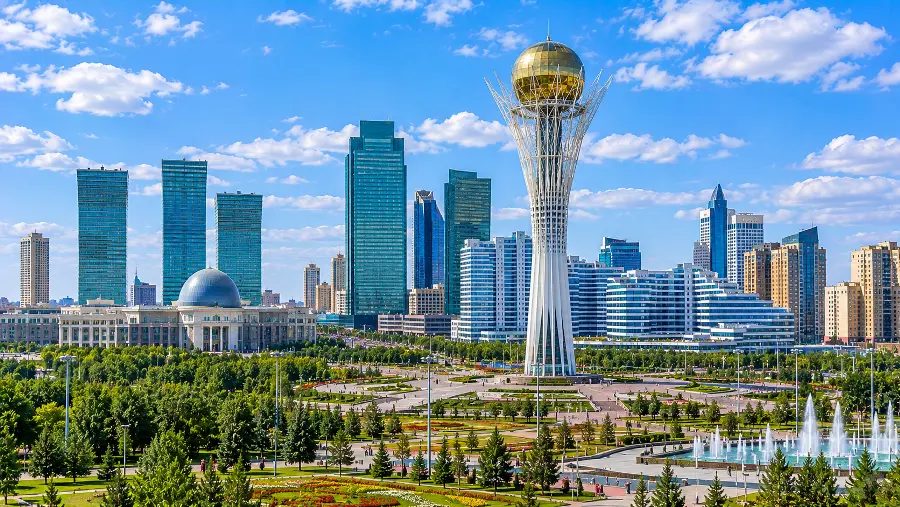
Kazakhstan's capital, Astana, grew in just a few decades out of the northern steppe beside the Ishim. A Cossack outpost called Akmolinsk once stood here, later the Soviet town of Tselinograd, and in 1997 the government moved over from Almaty and began building a capital almost from scratch. The name has changed several times since, while the left bank filled up with work by some of the world's best-known architects: a glass pyramid, a transparent tent, a golden ball on a tower and an opera house with a grand portico. Winters bring bitter frosts and summers can be hot, yet the city keeps surprising visitors who expected nothing more than ministries. Read on to find out what to see in Astana and its surroundings: 20 places, from Bayterek to the pine-fringed lakes of Burabay.
What to See in Astana First
The Ishim divides Astana into two halves. The right bank is the old centre, with Soviet-era blocks, the railway station and quiet squares where a few 1970s mosaics still decorate the facades, while the left bank is the new capital of government palaces and towers built over recent decades. Most of the landmarks sit on one straight axis: the pedestrian Nurzhol Boulevard runs from the Akorda presidential palace to Khan Shatyr, with Bayterek in the middle. Distances on the left bank are long and the steppe wind bites, so taxis booked through an app or city buses save a lot of walking between distant sights.
1. Bayterek Tower
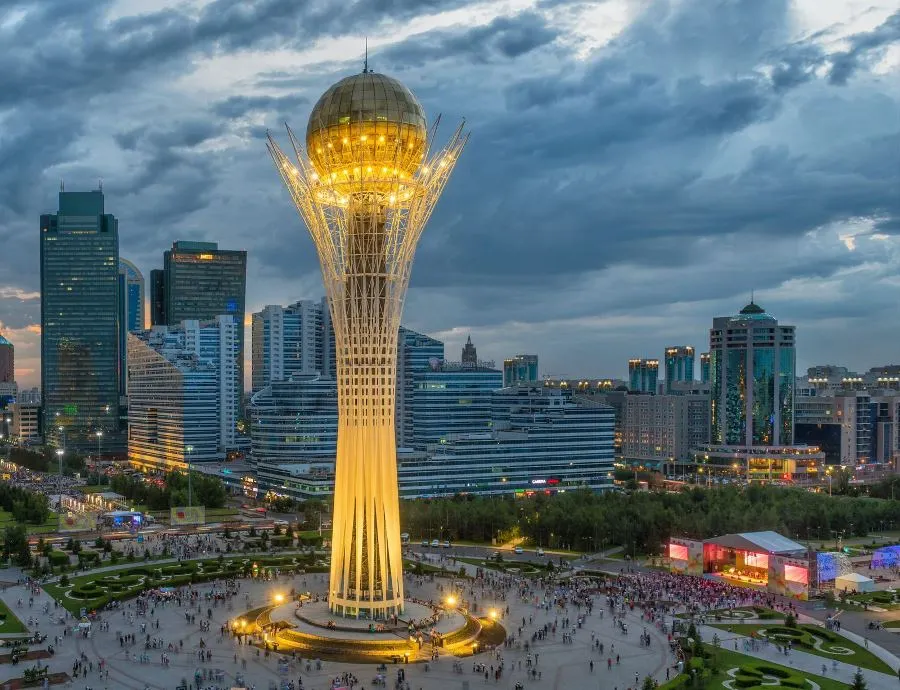
This white tower crowned by a golden ball has become the emblem of the new capital. Its shape retells an old legend in which the magic bird Samruk laid a golden egg in the crown of a sacred poplar, and "bayterek" itself means "tall poplar". Inside the glass sphere is an observation deck set 97 metres up, a nod to the year the capital moved here.
At the top, a metal block bears the handprint of the country's first president, and visitors press their palm into it while making a wish. From the deck you can read the layout of the whole left bank: transparent Khan Shatyr to the west, the blue dome of Akorda to the east and the fountain-lined boulevard in between. After dark the tower is lit in changing colours.
2. Khan Shatyr
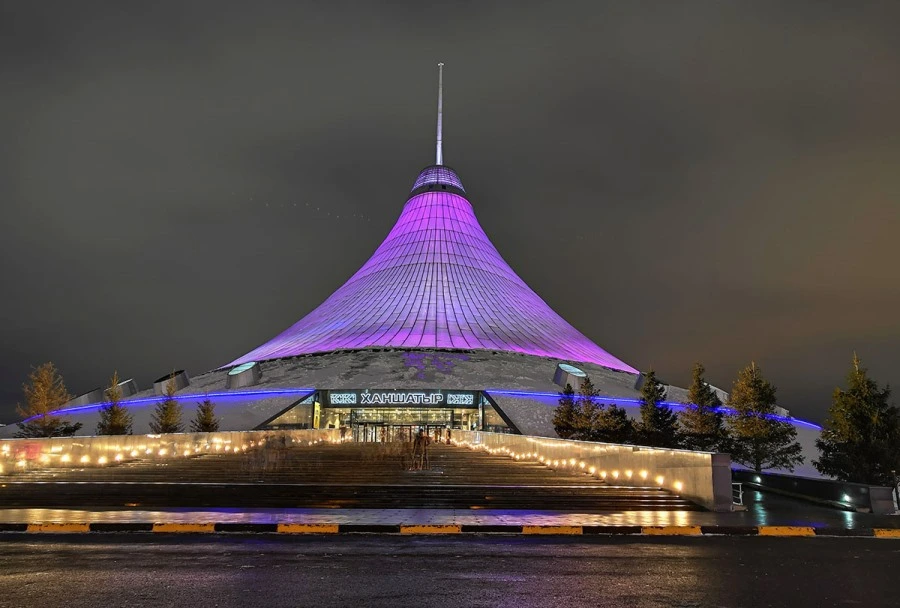
The "Khan's Tent" is another Norman Foster design: a see-through canopy 150 metres high including its spire, stretched from a steel mast and shaped like a yurt leaning slightly in the wind. Under its polymer skin lies an area bigger than ten football pitches, and even when it is bitterly cold outside, inside feels like summer.
There are shopping streets, a cinema, rides, a little river you can float along by boat and, on the top level, a beach resort with pools, palm trees and sand that the owners say was shipped in from the Maldives. Come in the early evening, when the tent glows from within and is visible right across town.
3. Palace of Peace and Reconciliation
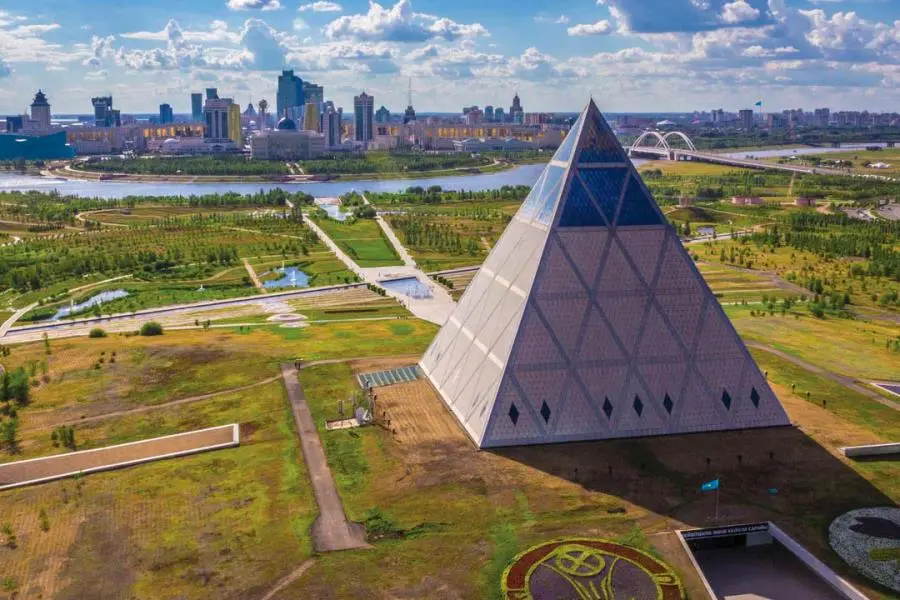
Foster and Partners also designed this 62-metre glass pyramid. It was completed in 2006 as the venue for a gathering of world and traditional religious leaders held every three years. The building was conceived as a shared home for all faiths, and it holds a concert hall, exhibition spaces and a winter garden.
The finest spot is the apex, where glass panels by British artist Brian Clarke show white doves of peace flying across a blue background. Tours run inside, and the park around the pyramid becomes a popular evening promenade.
4. Hazrat Sultan Mosque
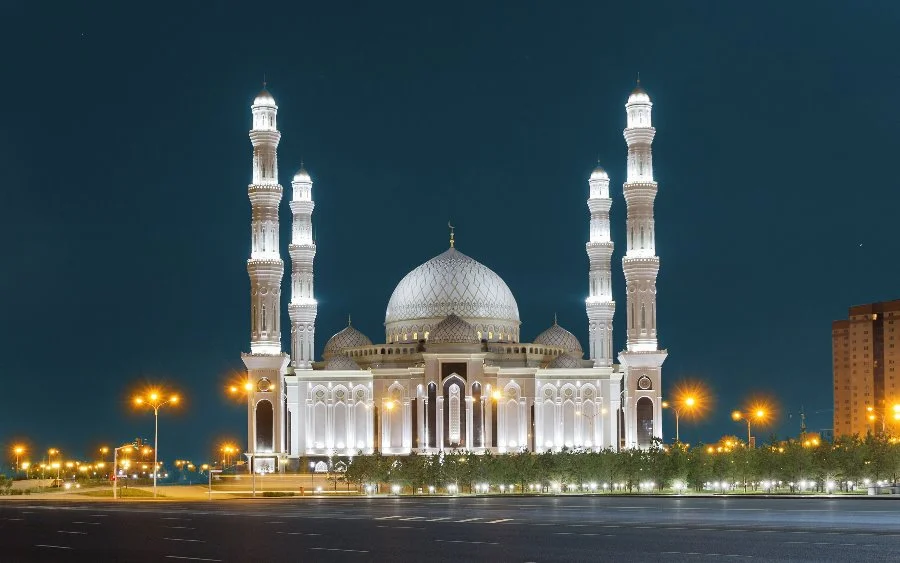
Kazakhstan's largest mosque opened in summer 2012 a short walk from the pyramid. Gleaming white walls, four minarets and a main dome rising 51 metres, higher than any other in Kazakhstan, give it the air of a palace from an Eastern fairy tale. Eight smaller domes ring the central one, and after sunset the whole building is softly lit.
Traditional Kazakh ornament covers the interior, and huge chandeliers hang above the prayer hall. Tourists may enter between prayers; women need a headscarf and covered arms and legs, men need full-length trousers, and everyone removes their shoes at the entrance.
5. Independence Square and the Kazakh Eli Monument
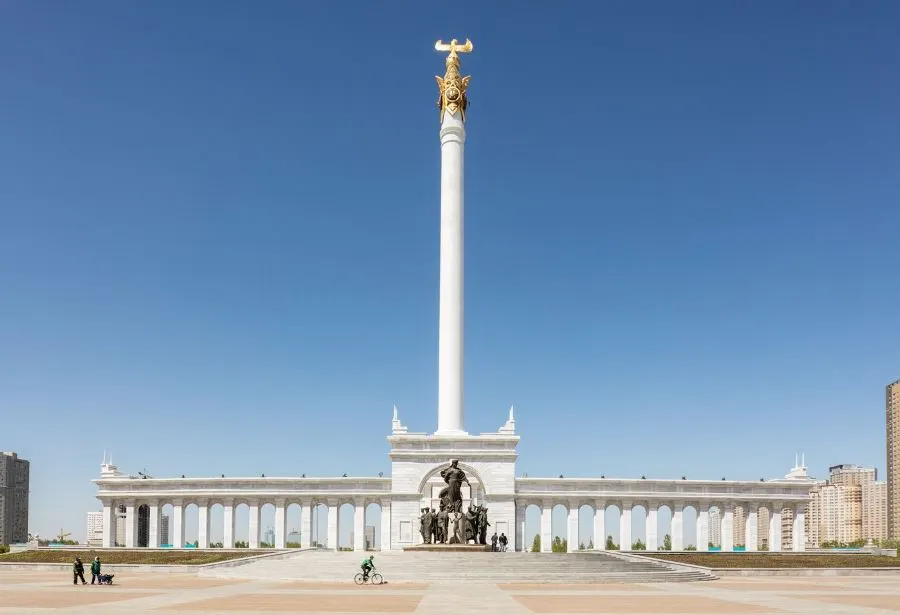
The country's main square stretches between Hazrat Sultan Mosque and the Palace of Independence. At its centre rises the white Kazakh Eli column, meaning "Land of the Kazakhs", topped by a gilded Samruk bird, with reliefs of national history around its base. From here you can also see the pyramid and the blue cylinder of the Shabyt Palace of Arts.
Official ceremonies take place in the Palace of Independence, and its lobby displays a large model of the city showing what Astana is meant to become. The square is broad and exposed to every wind, so in winter few people linger, but in summer children play and newlyweds pose for photos.
6. National Museum of Kazakhstan
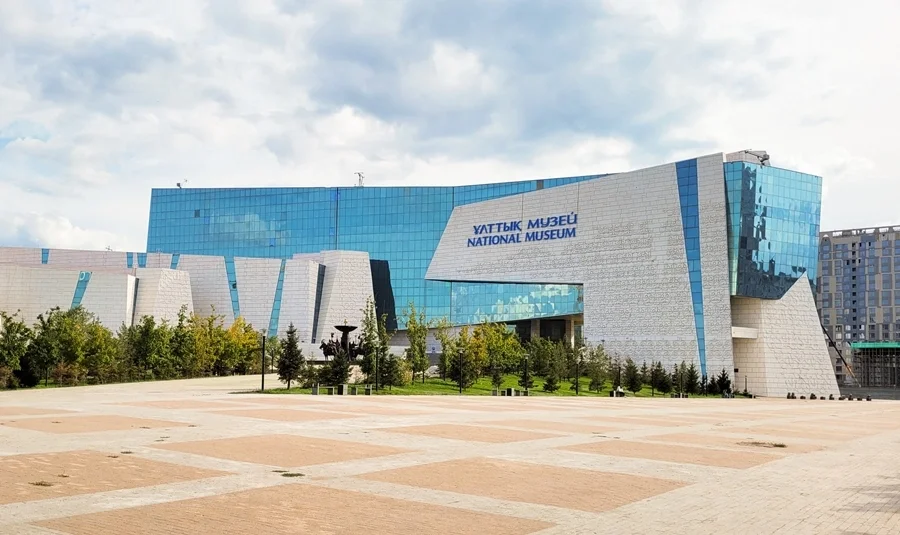
When it opened in 2014, this was the biggest museum in Central Asia. Eleven halls trace the story of steppe nomads, the Silk Road, the Kazakh Khanate and the Soviet period, and one gallery is devoted to the new capital itself.
The treasure is the Gold Hall, filled with jewellery of Saka and Hunnic chieftains. It displays a reconstruction of the "Golden Man", a Saka warrior dressed in thousands of gold plaques whom archaeologists unearthed in a burial mound not far from Almaty. The ethnography rooms include a fully furnished yurt, embroidered felts and horse harness.
7. Nur Alem and the Expo District
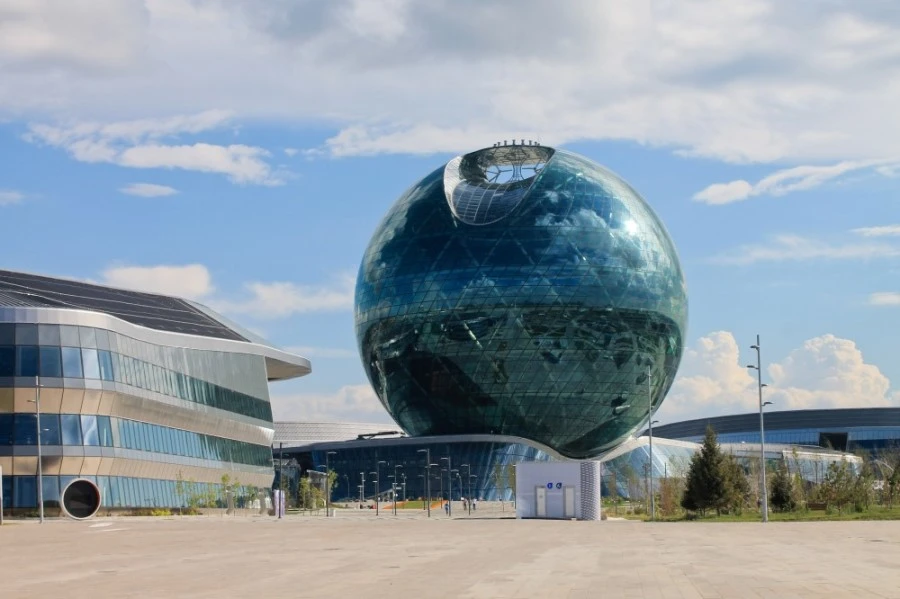
For Expo 2017 the city built a district of pavilions in the south, centred on Nur Alem, a giant glass sphere whose name means "bright world". The surrounding buildings now house an international financial centre, a university and a congress hall, while the sphere itself houses the Museum of Future Energy, which explores solar, wind and water power, space and the transport of tomorrow floor by floor.
The displays are hands-on, so children enjoy them as much as adults: many exhibits can be touched, switched on and tested. In winter a big ice rink is flooded next to the pavilions.
8. The Ishim Embankment
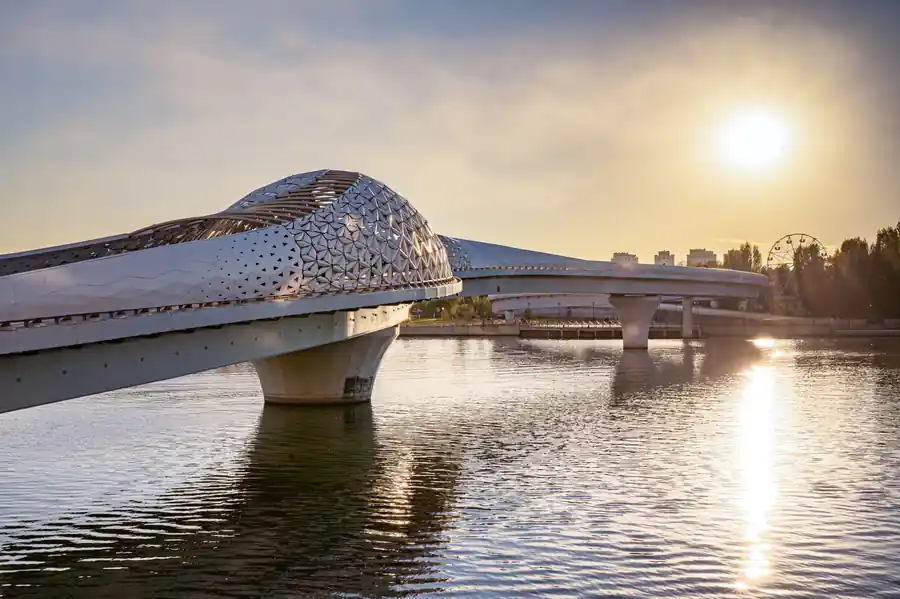
The Ishim divides the old city from the new, and both banks have been turned into long promenades with cycle lanes, benches and outdoor gyms. Several bridges cross the river, including the covered Atyrau footbridge, which gives views of both banks.
In summer, pleasure boats ply the river, and by evening the waterfront fills with strollers, buskers and ice-cream sellers. From the central park on the right bank you can walk across to the left and see both the Soviet-era centre and the new capital within an hour.
9. Astana Opera
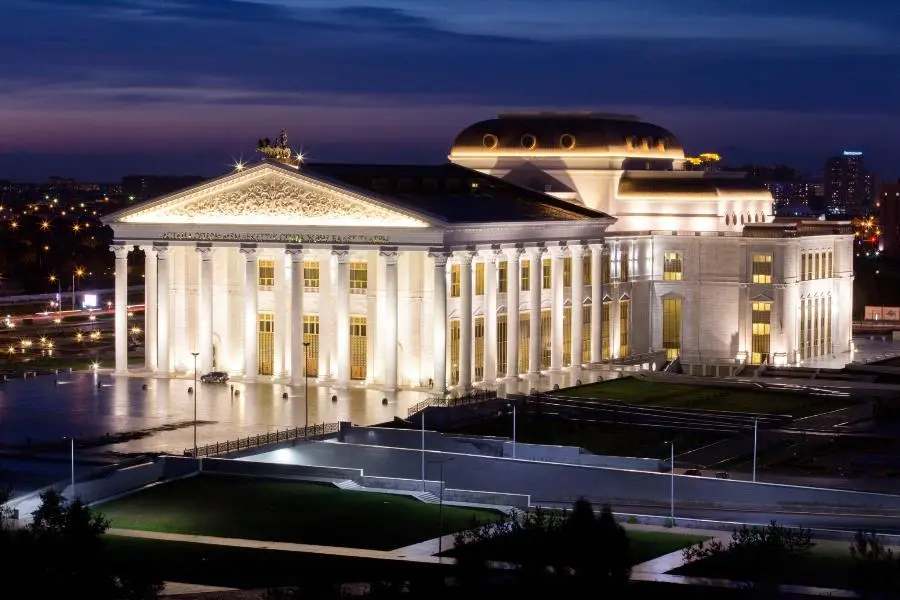
The colonnaded opera house, adorned with sculpture groups, opened in 2013 with a performance of "Birzhan and Sara", a Kazakh opera. The neoclassical building sits on nine hectares, and Italian craftsmen helped design it, so the interior gleams with marble, gold leaf and ceiling frescoes.
Its acoustics are rated among the best anywhere, and the repertoire mixes classic operas, ballet and Kazakh productions. Book tickets in advance; if you can't make a performance, a guided tour still lets you see the auditorium.
10. Burabay National Park
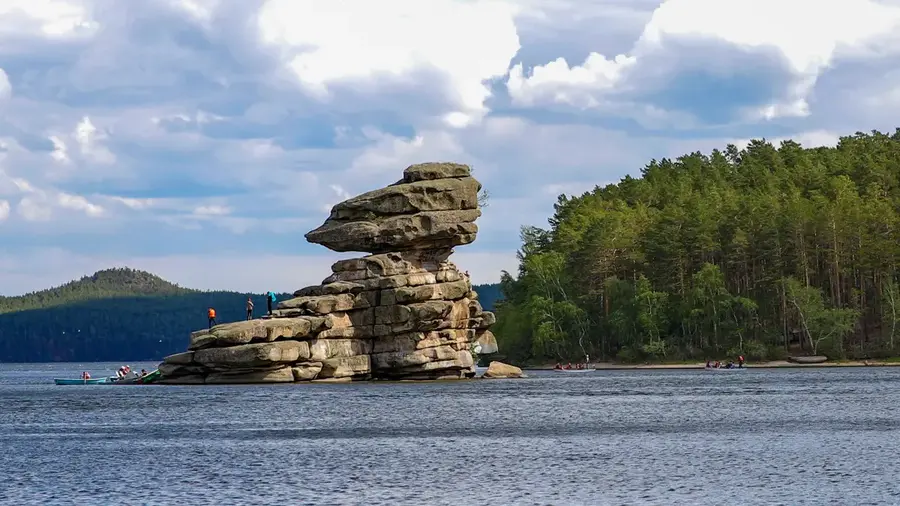
Around 250 kilometres north of Astana, the flat steppe suddenly gives way to rocky hills, pine and birch forest and clear lakes. People call this corner Kazakhstan's Switzerland, and the forests of Burabay National Park shelter deer, wild boar, lynx and a wealth of birds. Its signature view is Zhumbaktas, a rock rising from Lake Burabay like a sphinx.
In summer, people from the capital come to swim, hike and stay in sanatoriums, and in winter to ski. Trains run to Shchuchinsk or Burabay station, or you can drive the highway towards Kokshetau; plan on at least two days with an overnight stay.
Astana Landmarks: What Else to See While You're in the City
- Nurzhol Boulevard — the left bank's pedestrian spine of fountains and flowerbeds, linking Akorda, Bayterek and Khan Shatyr.
- Akorda — the presidential palace, opened in 2004 and crowned by a gold-and-blue dome and spire, best admired from the embankment.
- Nur-Astana Mosque — one of the new capital's first large mosques, with a tall minaret, close to Bayterek.
- Kazakhstan Central Concert Hall — Manfredi Nicoletti's petal-shaped building, whose main hall seats 3,500.
- Atameken — a map-shaped park of Kazakhstan with miniatures of the country's sights, stretching from the Caspian shore to the Altai mountains.
- Duman Oceanarium — an underwater tunnel of sharks and rays out in the steppe, thousands of kilometres from any ocean.
- Botanical Garden — a young garden of thousands of trees, ponds and a greenhouse, opened for Capital City Day.
- Astana Arena — a 30,000-seat football stadium with a sliding roof, so matches go ahead even in the deep freeze.
- ALZhIR Memorial — a museum on the site of a Stalin-era camp for the wives of so-called traitors of the motherland, where thousands of women were held, about 35 kilometres from the city.
- Korgalzhyn Nature Reserve — steppe and salt lakes with pink flamingos, part of the Saryarka UNESCO site, a few hours' drive from the capital.
What to See in Astana in 1 Day, 2 Days or 3 Days
You can cover Astana's highlights in a day or two and give a third to Burabay or Korgalzhyn. With only one day, head first for Bayterek, walk Nurzhol Boulevard to Khan Shatyr, then see the pyramid, Hazrat Sultan Mosque and Independence Square in the afternoon, and return to the embankment at dusk. On day two, visit the National Museum and Nur Alem, then spend the evening at the opera. Day three is a trip to the Burabay lakes or, in the warm months, to the flamingos of Korgalzhyn.
When to go? The kindest weather comes between the last days of May and the first days of September, bringing warmth, long days and busy promenades. Only Mongolia's Ulaanbaatar is a colder capital than Astana, and in the depth of winter, roughly from the middle of December into March, −30 °C is nothing unusual, with the wind making it feel worse. Winter still has its appeal, with ice rinks, ice sculptures and cosy cafés, as long as you pack your warmest coat. The liveliest festivals are Nauryz in late March, when yurts go up in the centre and a festive seven-ingredient soup is served, and Capital City Day in early July with concerts and fireworks. People speak Kazakh and Russian, and English is used in hotels and museums. On a longer trip, Almaty and the Trans-Ili Alatau mountains are worth the journey, although they lie almost a thousand kilometres away.
Free things to do in Astana include walking Nurzhol Boulevard, the Ishim embankments, Independence Square and the park around the pyramid, and stepping inside Hazrat Sultan Mosque. Fans of street art can hunt for the large murals on buildings across the right bank. Kids love Khan Shatyr with its rides and beach, the Duman oceanarium, the Atameken map park and the interactive museum inside Nur Alem. The signature Kazakh dish is beshbarmak, boiled meat over wide noodles with an onion broth; the name means "five fingers", as it was traditionally eaten by hand. Also try kazy, a horsemeat sausage, plov, puffy fried baursak and kumis, a fermented drink made from mare's milk. In the evening the city gathers on the embankments, in boulevard cafés and at the opera.
The simplest connection runs through Poland, since LOT operates direct flights from Warsaw to Astana, taking about six hours. The airport sits 12 km from the centre, to the south-east, so hotels on the left bank are around half an hour away. Holders of Ukrainian passports may spend up to 90 days out of every 180 in Kazakhstan without a visa, and need a biometric passport valid for six more months or longer.
For a beach holiday, Kazakhstanis most often fly to Turkey, and in recent years more and more of them choose Vietnam. The consultants at our TurPoisk online travel agency will gladly plan tours to Turkey, to the beaches of Antalya and Alanya, or a quieter holiday on Phu Quoc in Vietnam. Our managers can also find you a place to stay in Astana, so the futuristic capital and the sea fit into one trip; it pays to book a hotel on the left bank early, as rooms go fast during big exhibitions and holidays. The tour search shows options for your own dates. And if you are not sure where to start, write to us and we will plan a route from the steppe to the sea together.


