
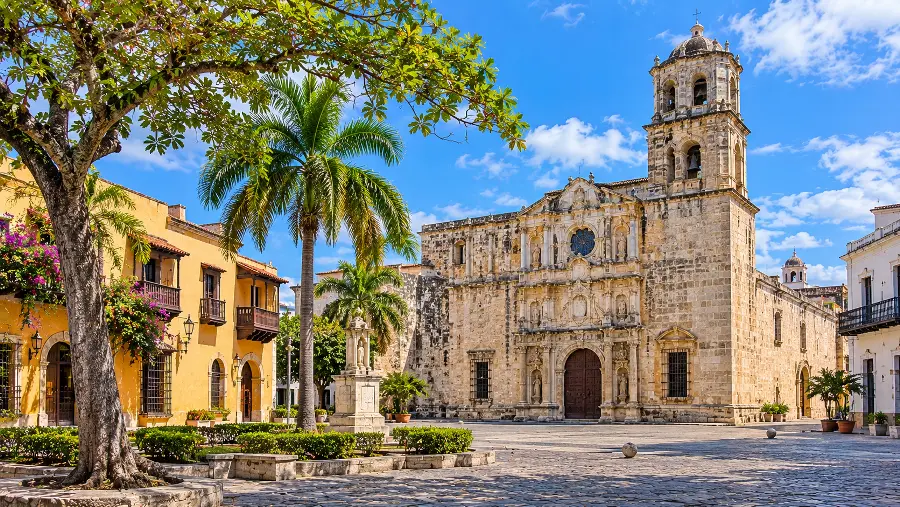
Santo Domingo, capital of the Dominican Republic, sits on the south coast of Hispaniola where the Ozama River meets the Caribbean. What is Santo Domingo famous for? Age, above all: Bartholomew Columbus, the admiral's younger brother, founded it in 1496, and no European town in the Americas has been lived in without a break for longer. Spain launched its conquest of the mainland from here, so the New World's first cathedral, fortress and paved street all stand within a few blocks, and its first university followed in 1538. Around that stone quarter spreads a loud, traffic-jammed metropolis of several million people with merengue pouring from every parked car. Is Santo Domingo worth visiting on a beach holiday? Most holidaymakers come for a single day from Punta Cana, and they often leave wanting another night. This guide picks 20 places, from Diego Columbus's palace and the Ozama Fortress to the underground lakes of Los Tres Ojos and the Boca Chica lagoon.
What to See in Santo Domingo First
What not to miss in Santo Domingo? Start with the Colonial City, just west of the Ozama, a little over one square kilometre and easily covered on foot. Across the bridges to the east are the Columbus Lighthouse and the caves, while the seafront, business districts and museums run west of the old centre. City traffic is chaotic, so skip the rental car: ride-hailing taxis and the metro will move you between neighbourhoods faster.
1. The Colonial City and Calle Las Damas
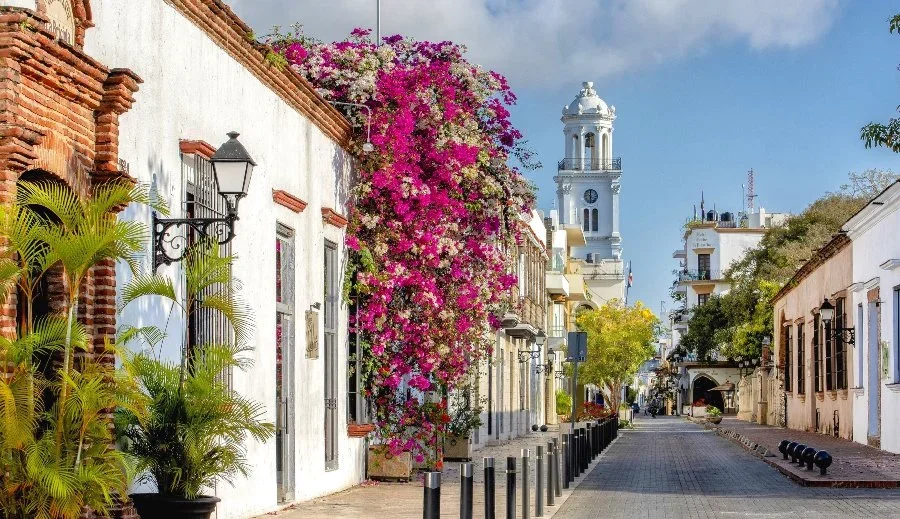
UNESCO listed this district in 1990, and old facades are only part of the reason. The original settlement stood on the opposite bank until a hurricane flattened it in 1502. Governor Nicolás de Ovando rebuilt on this side using a regular street grid, a layout that colonial towns across the Americas would go on to copy. Come early or late in the day, when the stone underfoot isn't throwing back the sun.
Calle Las Damas, laid out that same year, is regarded as the New World's earliest paved street. Legend credits the name to the ladies attending María de Toledo, Diego Columbus's wife, who liked to take their evening stroll here. Sixteenth-century stone mansions line both sides, and Ovando's own house now serves as a hotel with a shady patio. The street is short, but peek through every open gateway.
2. Cathedral of Santa María la Menor
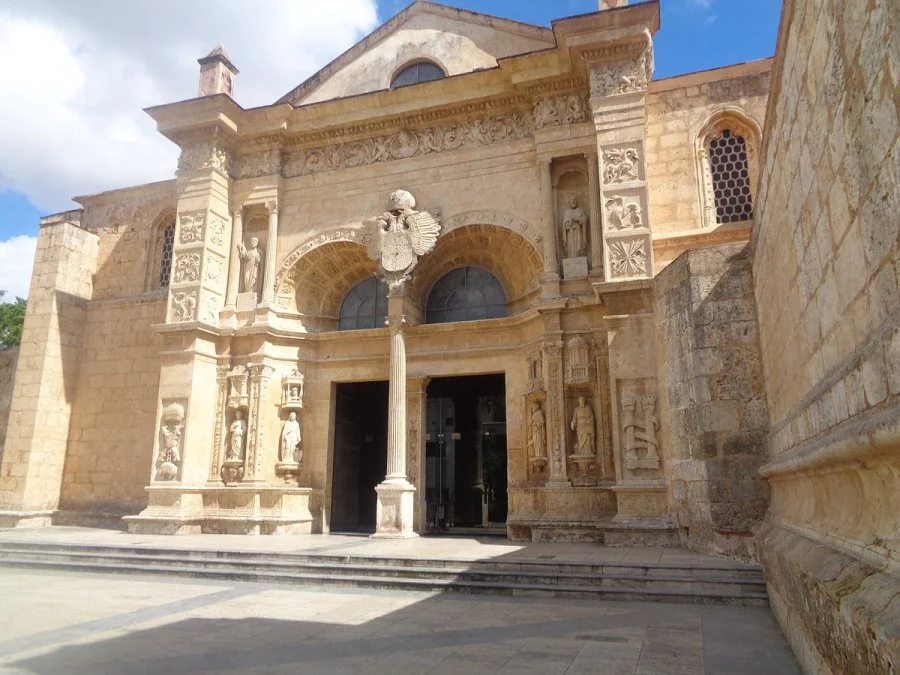
Work on the oldest surviving cathedral in the Americas took almost three decades, ending with its consecration in 1541. Golden coral limestone gives the walls a warm glow toward evening, and Gothic rib vaults sit alongside a lavishly carved Plateresque doorway. Dominicans simply call it the Primada de América, and the pride is hard to begrudge.
Remains the country identifies as those of Columbus lay inside until 1992, and a bronze admiral still points north from the middle of Parque Colón next door. The square works as the neighbourhood's living room, full of guides waiting for clients, pigeons and street guitarists. This is a working church, so bring something to cover your shoulders and knees.
3. Alcázar de Colón and Plaza de España
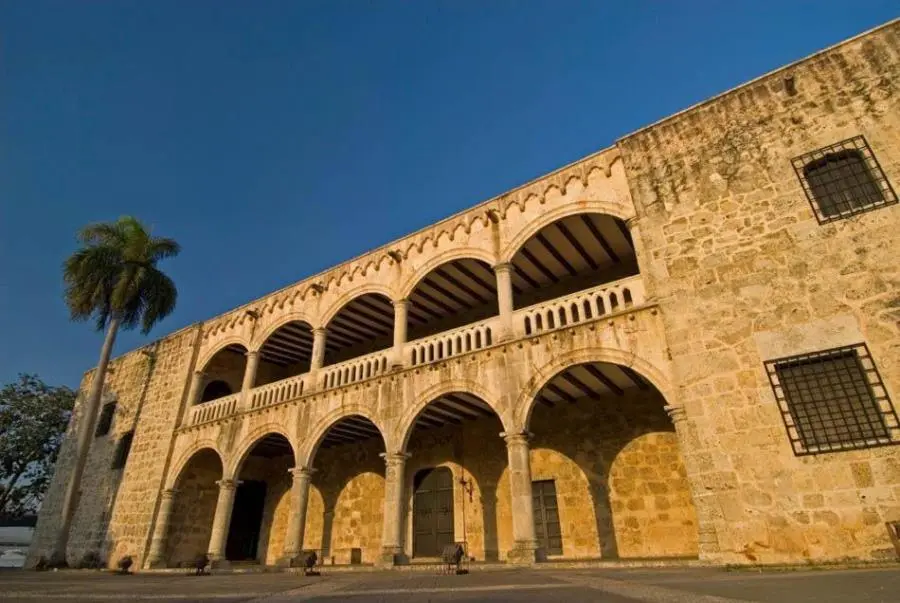
Diego Columbus, the navigator's eldest son, arrived to govern for the Spanish crown and by 1514 had raised this riverside residence, the first fortified palace Europeans built in the New World. Three generations of the family lived behind its double arcades. It later decayed into a ruin, and the look you see today dates from a restoration completed in the 1950s.
Now a museum, it is worth touring for a sense of daily life at the earliest colonial court. Plaza de España, the widest open space in the old town, spreads out from the entrance, flanked by the Atarazanas, a row of former port warehouses. These now hold restaurants and bars whose tables take over the paving at dusk, which makes this the obvious place to book dinner.
4. Ozama Fortress
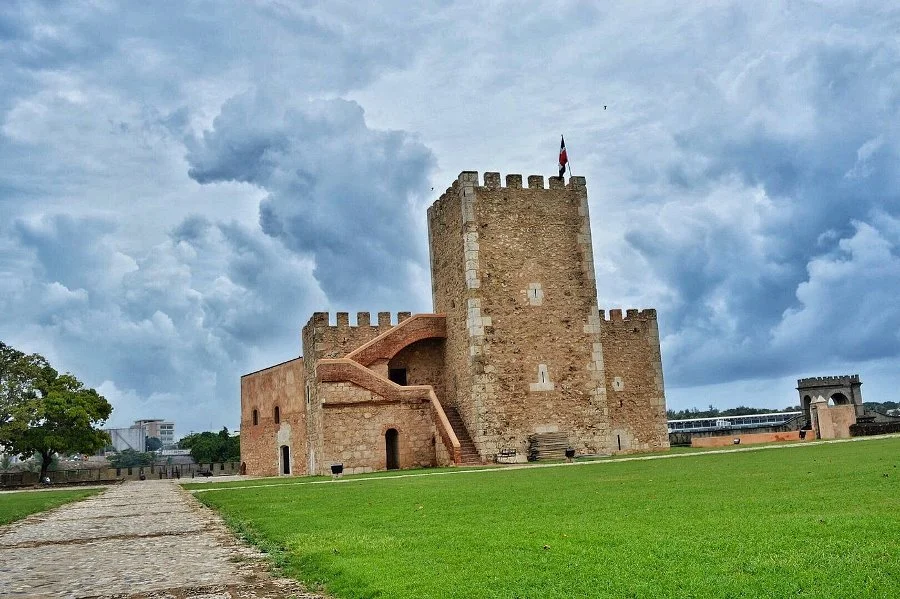
UNESCO describes this citadel as the oldest European military construction in the Americas. Built between 1502 and 1508 on a bank commanding the mouth of the port, it let the garrison track every incoming ship. At 18 metres, its Tower of Homage was the tallest structure the newcomers had put up anywhere on this side of the Atlantic during the 16th century.
Pass under the carved gate, cross the broad yard with its old cannons and climb the narrow stairs for views over the river, the docks and the tiled roofs. The fort doubled as a prison for a long time, so cramped cells still lurk below. There is hardly any shade in the courtyard, which is reason enough to save this one for late afternoon.
5. Ruins of the San Francisco Monastery
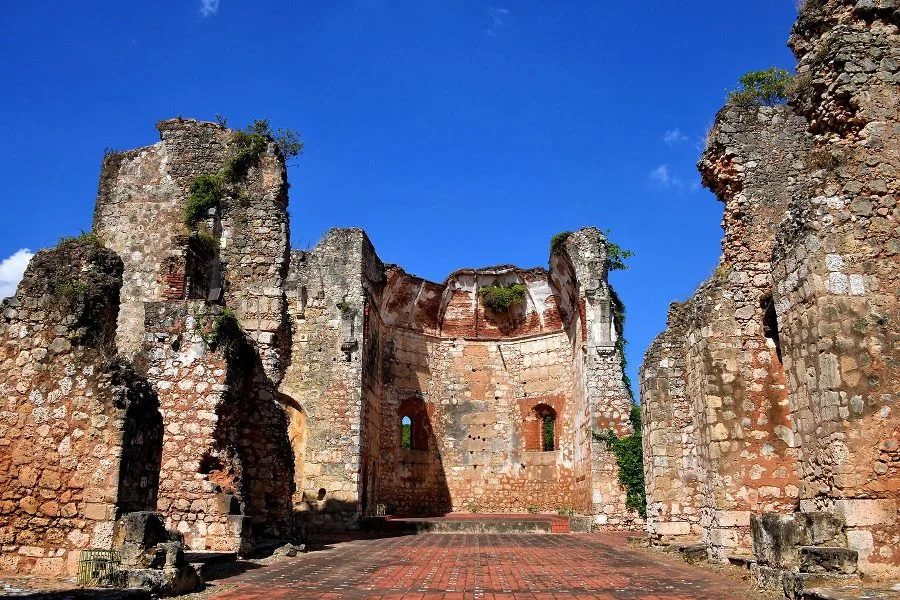
Franciscan friars began the New World's first monastery on this rise in the early 1500s. Francis Drake's men wrecked it in 1586, earthquakes finished the job, and today only massive roofless walls remain. They photograph beautifully against the sky, especially as the sun drops and the stone turns almost pink.
Sunday is the day to come. Grupo Bonyé plays in the open air beside the ruins in the evening, and the whole barrio dances to son and merengue, schoolkids and elderly couples alike. A few blocks away on Calle Hostos stand the stone arches of the Hospital San Nicolás de Bari, founded by Ovando in 1503. It too was a first for the Americas, though pigeons are its only residents now.
6. Calle El Conde and Puerta del Conde
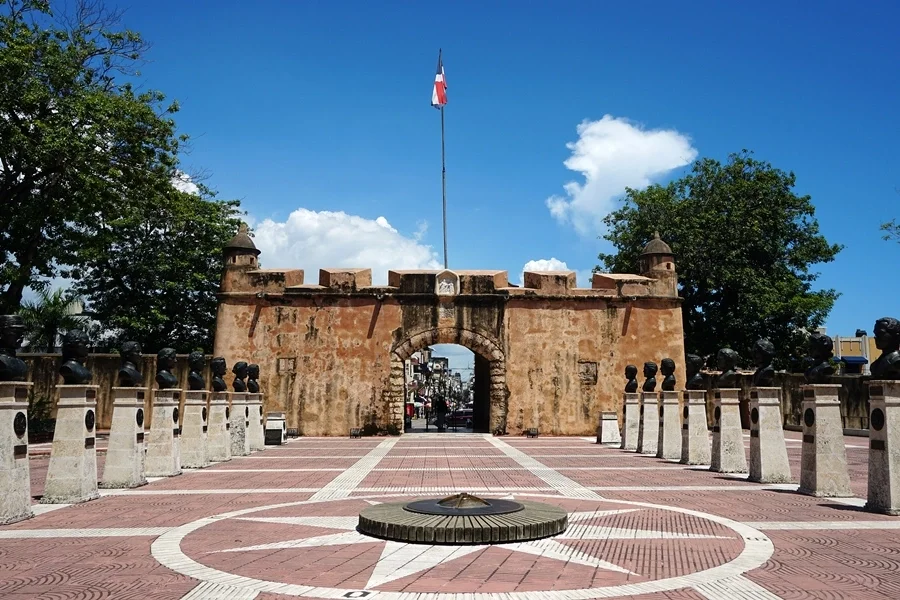
Pedestrianised El Conde runs west across the old town from Parque Colón, and you should walk it at least once. Vendors sell cigars, coffee and blue-stone bracelets, buskers set up on the corners, and the cafe tables fill with tourists and office workers on a break. For souvenirs, try the side streets, where the sales pitch is far gentler.
The walk ends at an old city gate. On this bastion, the Puerta del Conde, independence from Haiti was proclaimed on 27 February 1844 and the Dominican flag flew for the first time. Beyond it lies Parque Independencia and a mausoleum, the Altar de la Patria, where founding fathers Duarte, Sánchez and Mella rest. Dress modestly, because people come here to pay their respects, not just for a photo.
7. Columbus Lighthouse
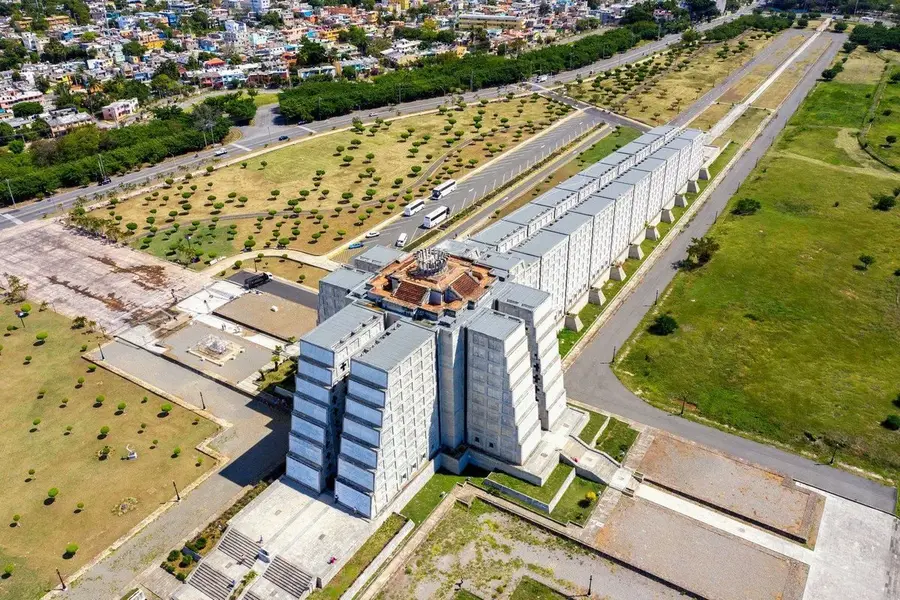
Nothing about this concrete hulk on the east bank resembles a lighthouse. From above it forms a colossal cross, and from the side it looks like a stepped pyramid 33 metres high. Scottish architect J. L. Gleave won the design competition back in 1931, yet the monument opened only in 1992, marking five centuries since Columbus first sailed west.
At its heart is a marble mausoleum said by Dominican authorities to hold the admiral's remains, a claim Seville firmly disputes. Side galleries house exhibits from various countries, and the 157 roof-mounted beams can project a cross onto the night sky, although they are seldom switched on. The Los Tres Ojos caves are close by, so pair the two.
8. Los Tres Ojos National Park
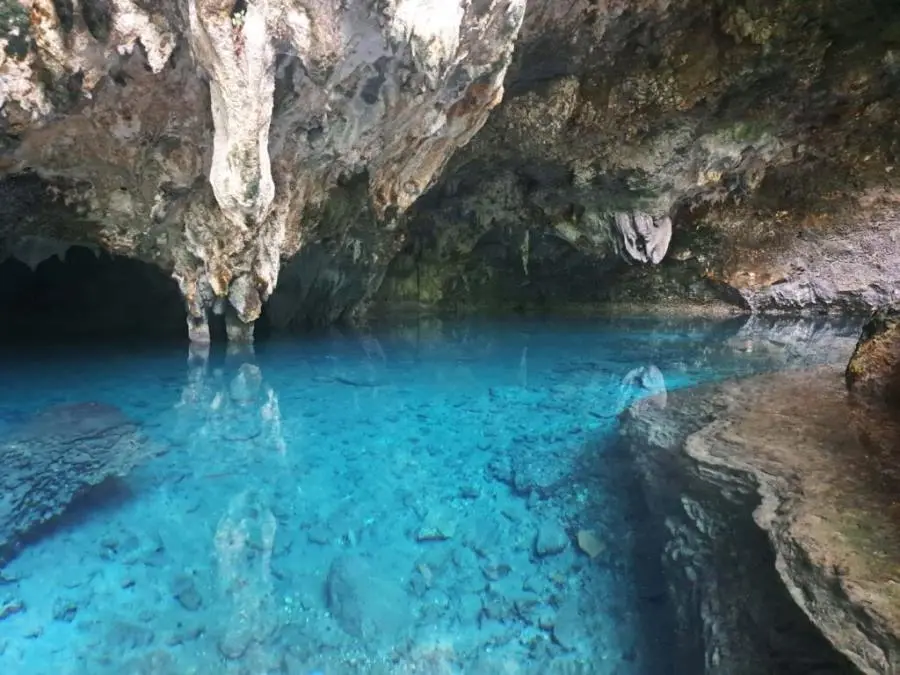
The "Three Eyes" formed when limestone cavern roofs collapsed and water filled the hollows. A staircase cut into the rock takes you down among the stalactites, where the air suddenly turns cool and still. First comes the glassy Sulphur Lake, then La Nevera and the Lake of the Ladies, once a favourite bathing spot for women and children. The Taíno held rituals in these grottoes long before any of it had a ticket booth.
There are actually four bodies of water. A small boat ferries you toward the last, Los Zaramagullones, which lies open to the sky in a green crater where tropical plants hang straight off the cliffs. The steps can get slippery, so wear proper shoes and come on a weekday ahead of the tour buses. An hour covers the whole visit.
9. The Malecón
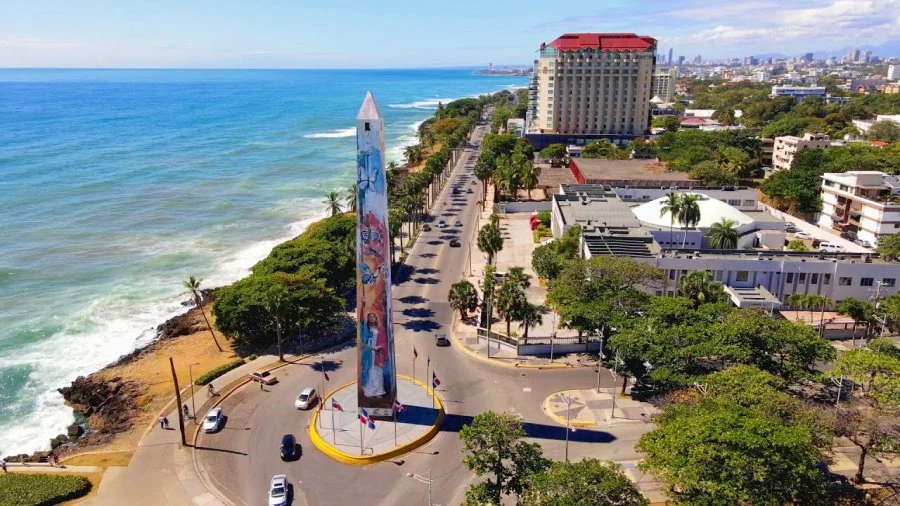
George Washington Avenue follows the Caribbean westward from the old town, and it is where residents come for some air. There is no beach along here, only waves smashing against rock, so leave your swimsuit behind. An evening stroll is another matter, with the sea breeze taking the edge off the heat and a blazing sunset over the water.
The landmark to look for is a 1937 obelisk that Trujillo raised when he renamed the capital after himself. Sixty years later it was first painted in honour of the Mirabal sisters, murdered on the dictator's orders in 1960, and the mural has been redone from time to time since. The date of their deaths, 25 November, became the UN's International Day for the Elimination of Violence against Women. After dark, parked cars thump out bachata while the roadside parks sell ice cream and cold beer.
10. Boca Chica Beach
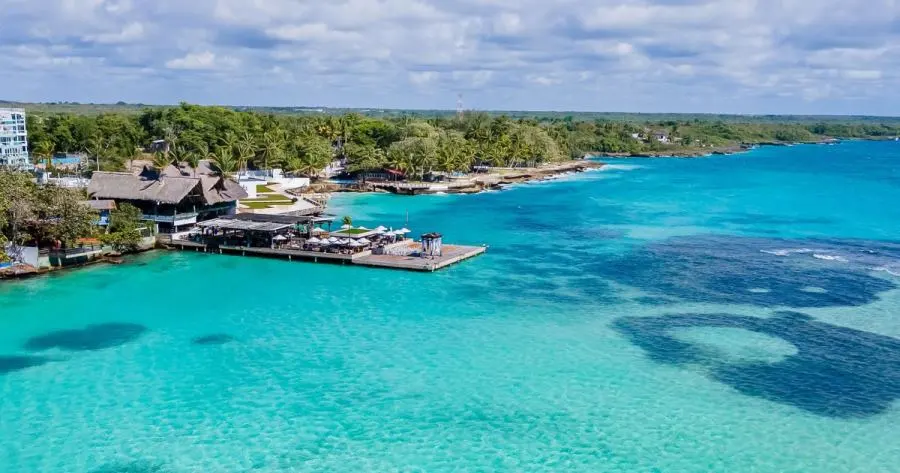
The nearest good sea is roughly 30 km from downtown, heading east. A coral reef shelters a calm lagoon with warm water so shallow that you can wade a long way out and stay waist-deep. It suits families with small children perfectly, and the drive takes under an hour unless the highway clogs up.
Half the capital descends on weekends with speakers and barbecues, so aim for a weekday if you want peace. Lunch happens right on the sand: fried fish with tostones, which are slices of green plantain. Anyone after more quiet carries on to Juan Dolio, while snorkellers can stop on the way at the La Caleta underwater park.
Santo Domingo Landmarks: What Else to See While You're in the City
- National Pantheon — an 18th-century Jesuit church on Calle Las Damas that now holds the nation's heroes, with an honour guard beside the eternal flame.
- Museo de las Casas Reales — the early 16th-century seat of Spanish power and home of the New World's first high court. An old sundial stands out front.
- Plaza de la Cultura — a leafy museum campus with the Museum of the Dominican Man and its Taíno finds, the Museum of Modern Art and the National Theatre.
- National Botanical Garden — huge grounds on the city's north side with a Japanese garden, a flower clock and a sightseeing train.
- National Palace — a neoclassical pile in pink marble from the Trujillo years, used by the presidential administration. Tours need advance booking.
- Parque Mirador del Sur — a green strip among limestone cliffs, popular with joggers and cyclists. It even has a restaurant, Mesón de la Cava, inside a real cave.
- Larimar and amber museums — collections of two local gems. Blue larimar is mined only in the country's southwest, and Dominican amber often traps insects.
- Estadio Quisqueya — the temple of the national obsession. From October to January, the Licey Tigers and Escogido Lions play here to roaring stands.
- Metro and cable car — a guide-free look at everyday Santo Domingo. The gondolas glide over neighbourhoods along the Ozama that tourists rarely enter.
- Altos de Chavón — a stone village in Mediterranean style above the Chavón River near La Romana, begun in 1976, with an amphitheatre, church and craft workshops.
What to See in Santo Domingo in 1 Day, 2 Days or 3 Days
One day is enough for the Colonial City highlights: Parque Colón and the cathedral, Las Damas, the Pantheon, the fortress and the Alcázar, finishing at sunset by the San Francisco ruins or on the Malecón. What to see in Santo Domingo in 2 days? Give the second to the east bank, meaning the lighthouse and Los Tres Ojos, then head to the Plaza de la Cultura or the botanical garden after lunch. Spend a third day out of town, in the Boca Chica lagoon or at Altos de Chavón.
Temperatures barely shift through the year, usually 24 to 31 °C, so rain decides the timing. December to April is driest, while hurricane season peaks from August to October. Is Santo Domingo safe for tourists? Police are out in force around the old centre, but beyond it keep expensive phones out of sight and order a taxi after dark. Further afield, the classic trips are Saona Island, the winter whales of Samaná Bay and the Cueva de las Maravillas with its ancient Taíno paintings.
For free, you can walk Las Damas and El Conde, sit in Parque Colón, step into the Pantheon, catch the Sunday concert and stroll the Malecón. With kids, try the boat at Los Tres Ojos, the fortress cannons, the botanical garden train and the Boca Chica shallows. Food to try includes la bandera, a lunch of rice, beans and stewed meat, mangú for breakfast, thick sancocho soup and morir soñando, an orange and milk drink. At night the city belongs to merengue and bachata, the bars around Plaza de España and, in season, baseball.
Coming from Ukraine, the simplest connection is through Madrid, where Iberia and Air Europa fly nonstop to Santo Domingo in about nine hours. Las Américas Airport sits on the coast 20 to 30 km from the old centre, on the east side. A visa isn't required for Ukrainian tourists staying up to 30 days. Passports should have at least six months left, and before departure you must fill in the free E-Ticket online form and show its QR code at the border.
A day or two in the capital pairs nicely with the white sand of the east coast, as Punta Cana is under three hours away by bus. Ask the TurPoisk travel agency to stitch the two into a single route. Our managers can book a hotel by the cathedral and then arrange tours to the Dominican Republic that end on the ocean. Our tour search shows prices for exact dates, and last-minute deals suit anyone ready to fly soon. A consultant will suggest how many nights to save for the city, so the cathedral doesn't end up as a rushed stop between two beach days.


