
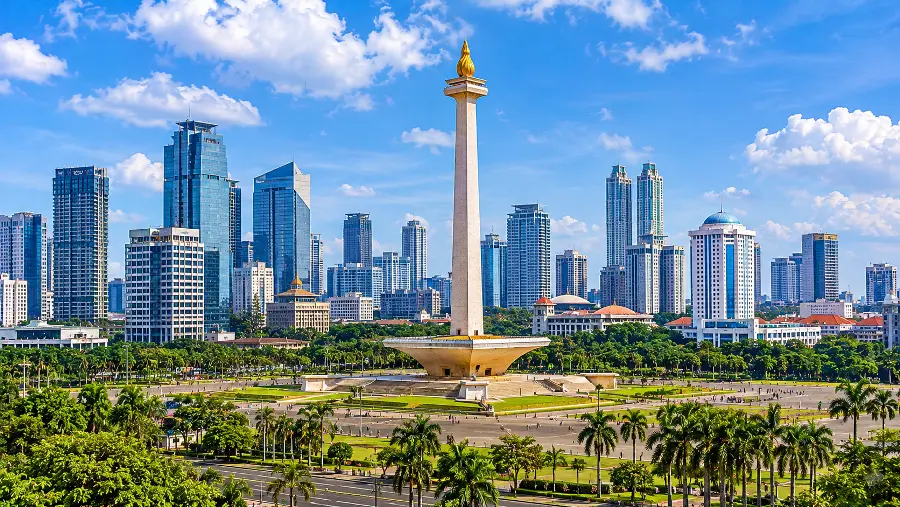
Jakarta, Indonesia's capital and biggest city, is a sprawling megacity on the northern shore of Java. Its story begins with the pepper port of Sunda Kelapa, which the commander Fatahillah seized in 1527 and renamed Jayakarta, "victorious city"; from 1619 the VOC, the Dutch trading company, raised its own Batavia on the same ground. That is why colonial canals and warehouses, incense-filled Chinese temples in Glodok, Southeast Asia's biggest mosque and a forest of glass towers all share one skyline. Plenty of travellers only see the city as a stopover on the way to Bali, yet a few days here show a side of Indonesia that never makes it onto beach posters. Below you'll find what to see in Jakarta, plus trips beyond it: 20 places, from Old Batavia to coral islets offshore.
What to See in Jakarta First
The main sights line up along a north–south axis. By the sea you find Kota Tua, the old core of Batavia, the Sunda Kelapa harbour and the Glodok Chinatown; the centre holds Merdeka Square with Monas, Istiqlal, the national mosque, and the cathedral. Further south, the Thamrin and Sudirman avenues are lined with malls and skyscrapers. Jakarta's traffic is famous for all the wrong reasons, and at rush hour a taxi can sit still longer than your sightseeing walk lasts. The MRT line from the southern suburbs to the centre and the TransJakarta buses with their own lanes are the way out, and for short hops locals grab a motorbike taxi through the Gojek or Grab apps.
1. Merdeka Square and Monas
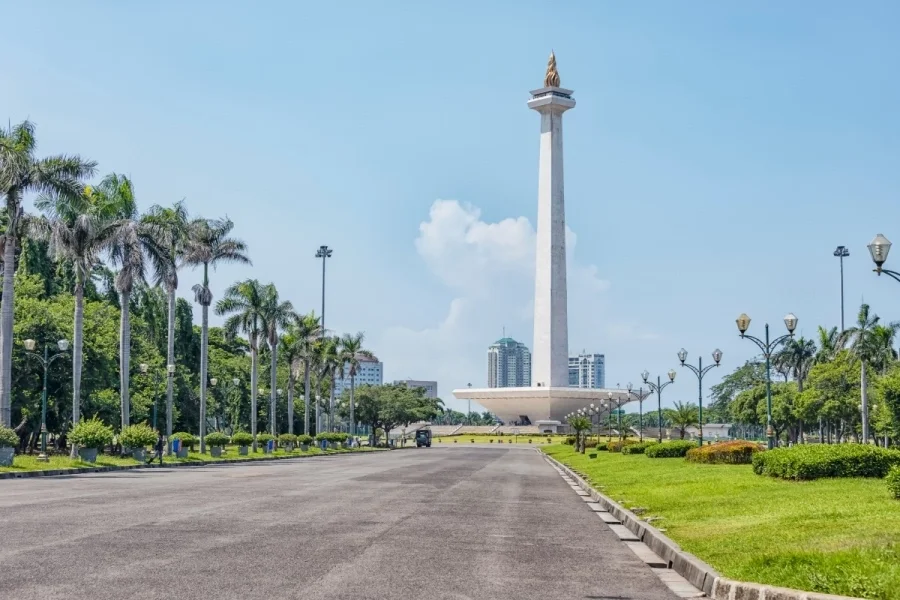
The National Monument, known to everyone simply as Monas, is a 132-metre obelisk rising from the vast Merdeka, or Freedom, Square. President Sukarno dreamed it up; work began in 1961 and the public was let in from 1975. A bronze flame wrapped in gold leaf crowns the tip, standing for the fire of the independence struggle.
A marble hall in the base holds dioramas that walk you through Indonesian history, from prehistory to the proclamation of the republic. An elevator whisks you up to the observation deck near the top, where the port, the business district and, when the haze lifts, the volcanoes to the south come into view. The park around the obelisk fills up at dawn with joggers and families, who head home before the paving stones get too hot.
2. Kota Tua and Fatahillah Square
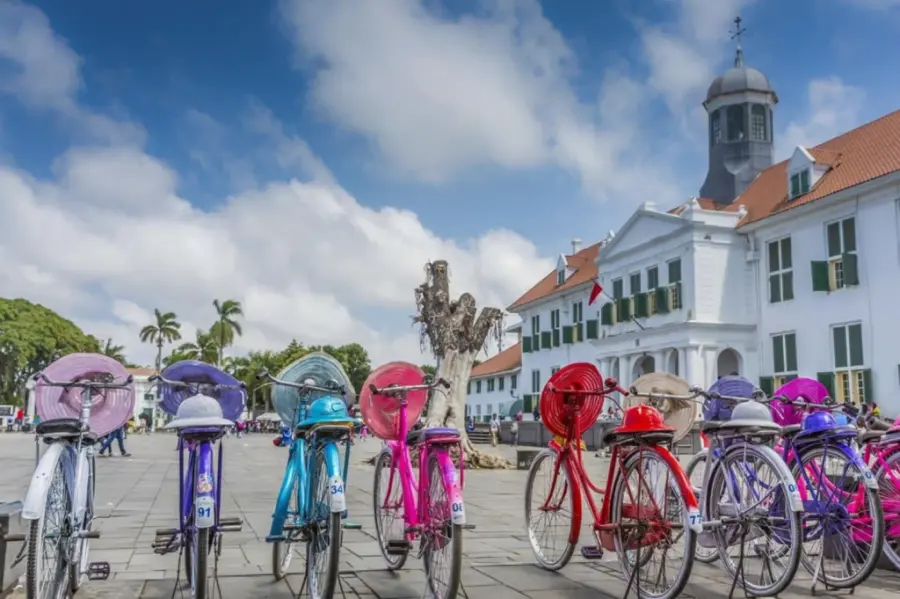
The heart of old Batavia is Fatahillah Square. On its south side stands the white former town hall, finished in 1710 and topped by a small tower, which is home to the city's history museum today. Prince Diponegoro, the Javanese rebel leader, spent part of 1830 in the cells beneath its portico, and was then sent into exile. Neighbouring buildings house the wayang puppet museum and a ceramics museum, and a short walk away the old colonial bank has become the Bank Indonesia Museum.
The square buzzes from morning till late. Vendors rent out candy-coloured bicycles with matching straw hats, street performers freeze as living statues, and cooks fan charcoal under kerak telor, a Betawi omelette made with sticky rice. After sunset the facades are lit, which is the best moment for photos. The Kali Besar canal and the old port are a short stroll or pedicab ride away.
3. Istiqlal Mosque and Jakarta Cathedral
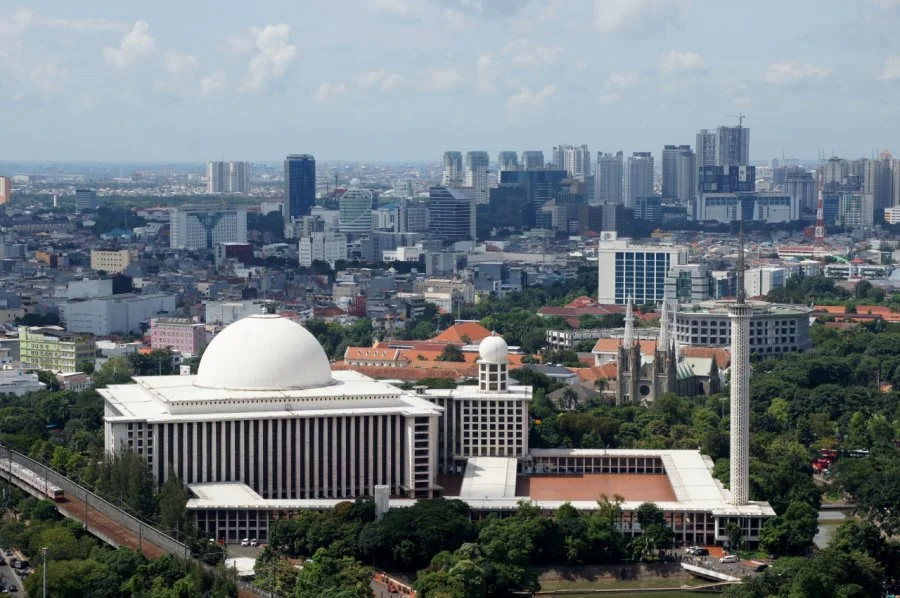
Istiqlal means "independence", and the mosque opened in 1978 as a monument to the nation's freedom. No mosque in Southeast Asia is bigger: its white dome sits on columns sheathed in stainless steel, and the prayer galleries are open to the breeze, so the interior stays cool even at midday. Curiously, the design competition was won by a Christian architect, Friedrich Silaban. Visitors are shown around in guided groups; cover your arms and legs and leave your shoes at the door.
Across the street rises the neo-Gothic Catholic cathedral, dedicated to the Assumption of Mary and consecrated in 1901, with wrought-iron spires and a small museum in the choir loft. The pairing is deliberate. An underground "Tunnel of Friendship" links the two, and on major holidays the mosque opens its car parks to Catholic worshippers while the cathedral returns the favour at Eid. In a country with several official religions, the two neighbours now stand for religious harmony.
4. National Museum
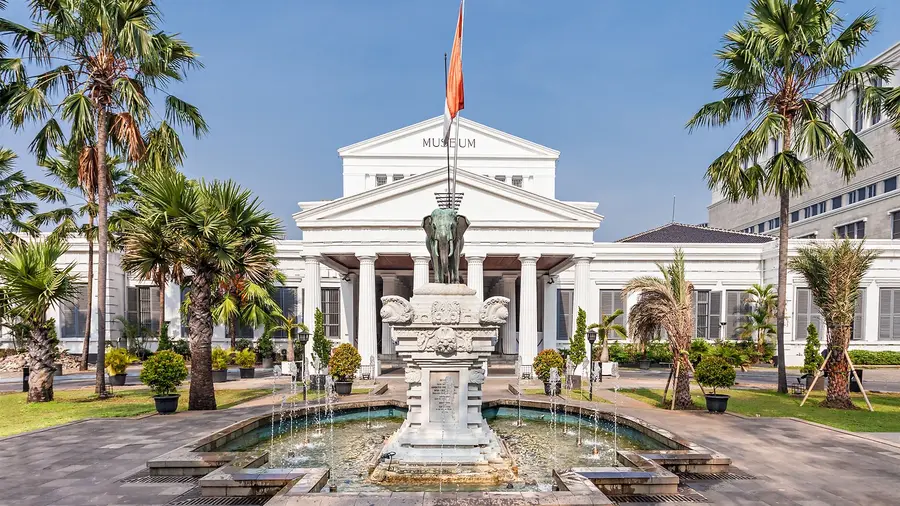
Jakartans call it Museum Gajah, the Elephant Museum, after the bronze elephant at the entrance, a gift sent in 1871 by Siam's King Chulalongkorn. Behind the classical colonnade lie some 141,000 objects from across the archipelago: prehistoric tools, coins, ceramics, weapons and the costumes of hundreds of ethnic groups.
The stone sculpture is the real highlight. Gods, bodhisattvas and fierce guardian demons from the Hindu and Buddhist kingdoms of Java and Sumatra were carved centuries before Islam reached the islands, and standing among them explains a lot about Borobudur and Prambanan, which many visitors later travel to see near Yogyakarta. Allow at least two hours, and treat the air-conditioned halls as a welcome refuge from the heat.
5. Sunda Kelapa Harbour
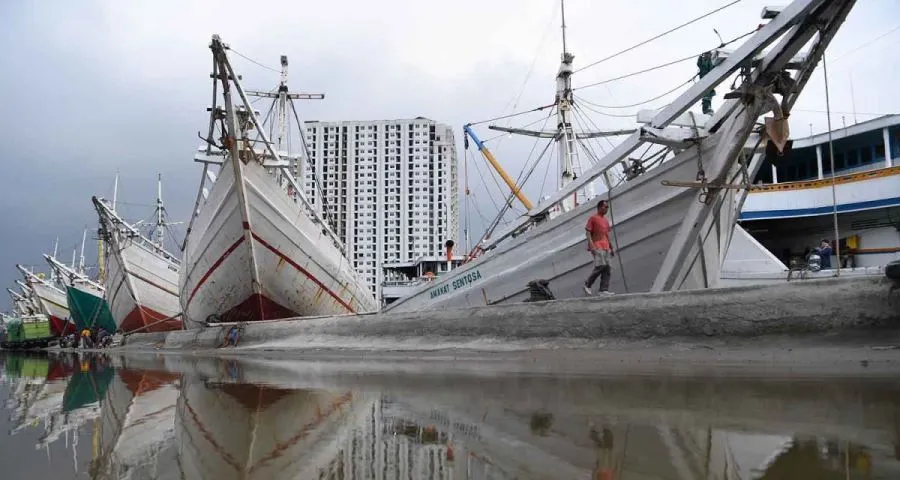
Jakarta's oldest harbour is still at work, but only pinisi moor here now: wooden two-masted schooners that carry freight between the islands. Their hulls are daubed in reds, greens and blues, their bows curve upward like ships in an old engraving, and porters balance on narrow planks as they carry sacks of cement and rice aboard. Go early in the morning, when the light is soft and the loading is in full swing.
Next door, the Maritime Museum fills former East India Company warehouses where spices and coffee were once stored, and its halls display boats from many islands. Nearby leans the Syahbandar watchtower, from which harbour masters kept an eye on ships at anchor. This is a working, unpolished quarter, so expect the smell of the fish market and puddles after rain.
6. Glodok, Jakarta's Chinatown
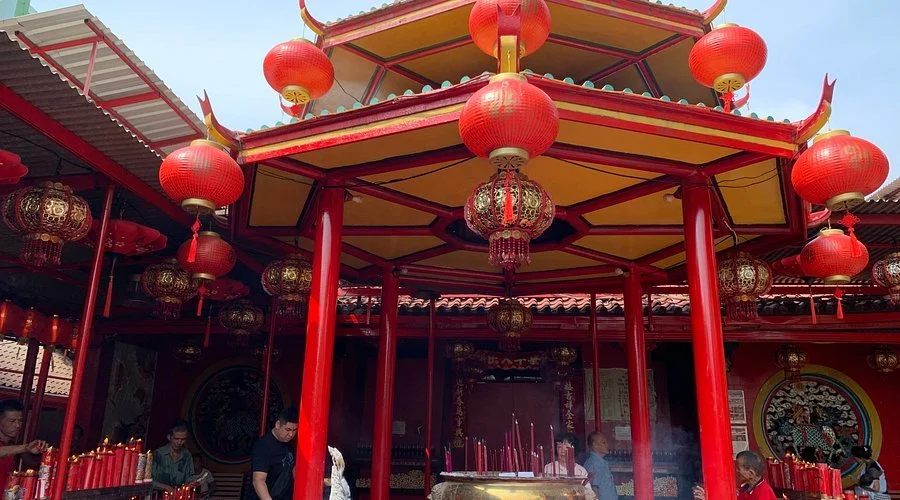
Indonesia's biggest Chinatown took shape outside Batavia's walls in 1740, when the Dutch authorities confined Chinese residents to a separate district after a bloody massacre. Today it is a maze of markets selling electronics, herbal remedies, dried seafood, red lanterns and paper offerings for the ancestors. The Petak Sembilan market street is busiest in the run-up to Chinese New Year.
Tucked among the shops is the Dharma Bhakti temple, founded in 1650; no Chinese temple in Jakarta is older. Its smoky halls glow with thick red candles and joss sticks, and worshippers shake cups of bamboo fortune sticks before the altars. Glodok is also a place to eat your way around: noodles, dumplings, grilled pork and tropical fruit on every corner.
7. Taman Mini Indonesia Indah
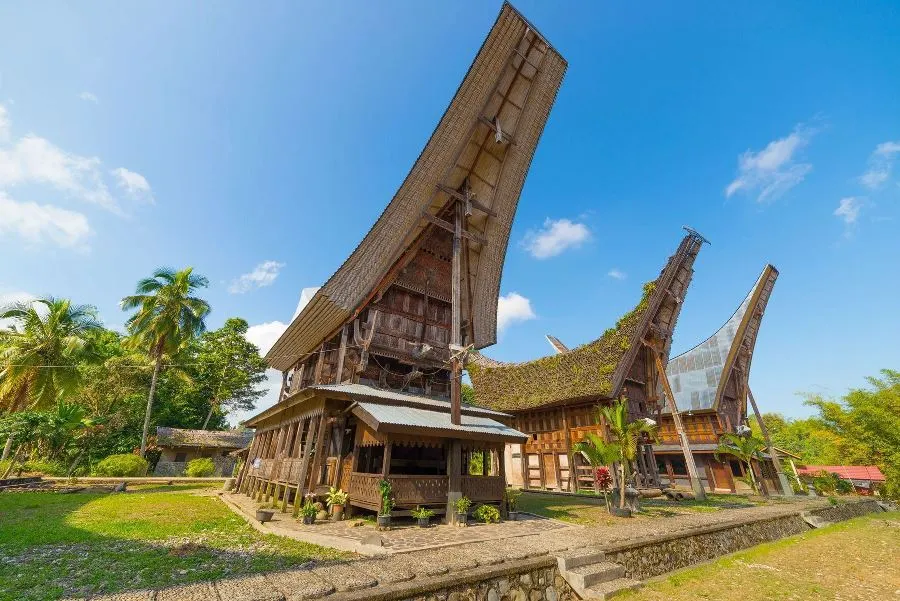
The park's name translates as "Beautiful Indonesia in Miniature", and it covers 147 hectares in the city's south-east. Every province has its own pavilion, shaped like one of its traditional houses: Toraja homes from Sulawesi with boat-shaped roofs, Minangkabau houses with horn-like gables, round honai huts from Papua. Inside are costumes, weapons, musical instruments and crafts, and dance shows are common at weekends.
A cable car glides over a lake where the whole archipelago is laid out in miniature, so you can cross the country in a few minutes. The grounds also hold around a dozen museums, an orchid garden, a giant-screen cinema and a bird park. Distances are long, so renting a bicycle or an e-scooter makes sense.
8. Ancol and Dufan Theme Park
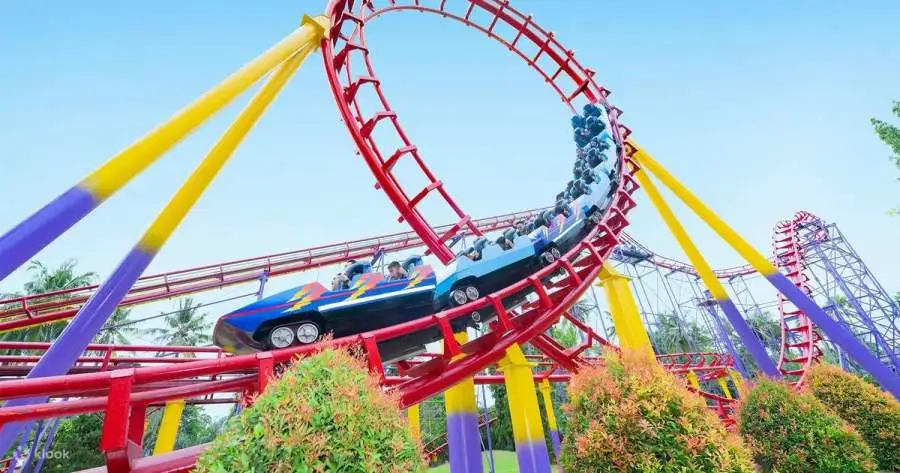
Sukarno first proposed turning this marshy stretch of coast into a leisure district in the early 1960s, and today Ancol is Southeast Asia's largest urban recreation zone. It has beaches, a promenade, an oceanarium, a water park, a golf course and hotels. Don't come for clear water, since the bay is murky, but the waterfront draws huge evening crowds.
The star attraction is Dunia Fantasi, known as Dufan, open since 1985 and divided into themed zones with roller coasters, water rides and a Ferris wheel. Arrive on a weekday before the gates open, because weekend queues can stretch for hours.
9. Thousand Islands
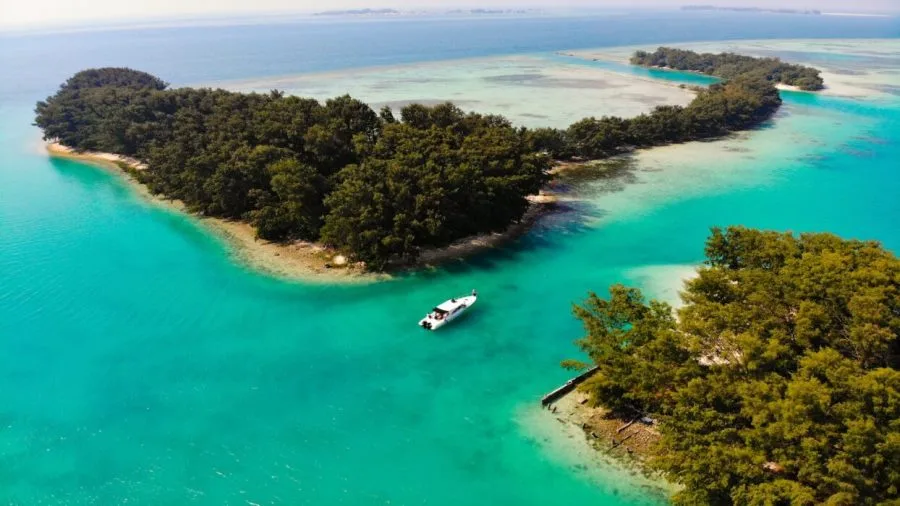
The name exaggerates: there are 342 islands, strung out for 45 kilometres north of the city into the Java Sea. Speedboats leave from the marina at Ancol, and the further you go, the clearer the water becomes. The outer islets offer white sand, snorkelling reefs, mangroves and simple guesthouses, while eleven islands are given over to resorts.
Part of the chain is a marine national park where hawksbill and green turtles nest. Jakartans love the inhabited islands of Pramuka and Tidung for weekend breaks. With only a day to spare, pick the nearer islands with their Dutch fort ruins; for an overnight stay, head further out, beyond the glow of the city.
10. Bogor: Botanical Gardens and Palace
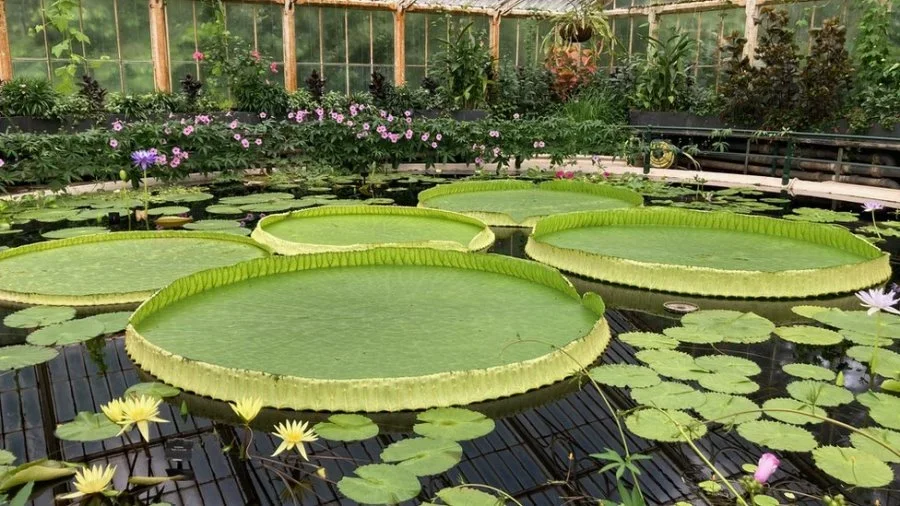
Sixty kilometres south, below the volcanoes, lies Bogor, once Buitenzorg, "Carefree", where Dutch governors-general escaped the coastal heat. Its botanical garden was founded in 1817, and its 87 hectares hold nearly 14,000 plant species and varieties: giant fig trees, bamboo groves, lotus ponds and collections of palms and orchids. Bogor is nicknamed the "City of Rain" for good reason, so keep an umbrella handy in any season.
Beside the garden stands a white colonial palace that is now one of the presidential residences, and spotted deer brought in during Dutch rule still graze on its lawns. KRL commuter trains run here from Jakarta, which spares you the road jams. South of Bogor the Puncak highlands begin, covered in tea plantations, though at weekends the road up gets completely gridlocked.
Jakarta Landmarks: What Else to See While You're in the City
- Museum MACAN — Indonesia's first museum devoted to modern and recent art, where local painters hang beside international names such as Yayoi Kusama.
- Ragunan Zoo — the city's largest park, spread over 140 hectares, with orangutans, gorillas, Sumatran tigers and tapirs in roomy enclosures.
- Setu Babakan — a lakeside village devoted to Betawi culture, keeping alive the houses, dances, music and cooking of Jakarta's native people.
- Menteng — Batavia's first garden suburb, with 1910s villas, leafy streets and Suropati Park; Barack Obama spent part of his childhood here.
- Pasar Baru — a shopping street dating from 1820, still crammed with fabric shops, shoe stores, jewellers and Indian eateries.
- Bundaran HI — the roundabout with a fountain and the Welcome Monument raised for the Asian Games; on Sunday mornings the avenues around it are closed to cars.
- Taman Ismail Marzuki — an arts centre with theatres, cinemas, a gallery, a library and a planetarium, named after one of Indonesia's best-loved composers.
- Gelora Bung Karno — the stadium and sports park built for the Asian Games that Jakarta staged in 1962, where thousands of residents run laps after work.
- Puncak — cool hills on the road towards Bandung, with tea estates, Telaga Warna, a lake known for its shifting colours, and paragliding.
- Pantai Indah Kapuk — a newer bayside district of promenades, street food and night markets where Jakartans come for sunset views over the bay.
What to See in Jakarta in 1 Day, 2 Days or 3 Days
Two days cover the essentials, and a third is worth spending on the islands or in Bogor. Short on time? In one day, start at Kota Tua and the old harbour while the air is still cool, have lunch in Glodok, visit Istiqlal and the cathedral in the afternoon, and ride up Monas for sunset. On day two, spend the morning at the National Museum, move on to Taman Mini, and finish at Ancol or along the Pantai Indah Kapuk waterfront. Day three is either a speedboat to the Thousand Islands or a train to Bogor's garden and palace.
What is the weather like? It is warm all year, with daytime highs around 30 °C, and the seasons differ mostly in how much it rains. June to September is the driest stretch and the best time for both the city and the islands. From December to March the downpours are heavier and low-lying districts often flood. During Ramadan some cafés close in daylight hours, and once the fast ends the city empties as millions travel home to their villages. On a longer trip, domestic flights from Jakarta reach Bali, about a thousand kilometres and under two hours away, Yogyakarta with Borobudur and Prambanan, the Bromo volcano and the Komodo islands.
Free things to do in Jakarta include walking Merdeka and Fatahillah squares, Glodok, the harbour and the parks of Menteng, stepping into the cathedral and Istiqlal, and strolling car-free Sudirman Avenue on a Sunday. Kids love Dufan, the oceanarium and water park at Ancol, the cable car and museums of Taman Mini, Ragunan Zoo and any boat trip to the islands. On the food side, try nasi goreng, fried rice topped with an egg; satay on bamboo skewers with peanut sauce; gado-gado salad; soto Betawi, a fragrant beef soup with coconut milk; kerak telor; and sweet martabak. Iced coconut desserts beat the heat, and fruit such as durian and mangosteen tastes its best here. Drink bottled water and buy street food where the locals queue. Popular souvenirs include batik, wayang puppets, island coffees and spices. Evenings mean rooftop bars above the business district, live music in the bars of Blok M and a stroll around floodlit Fatahillah Square.
No airline flies from Ukraine to Indonesia directly. The usual routes connect in Doha, Istanbul or Dubai, and with the layover the journey takes twelve hours or more. Soekarno–Hatta, the country's largest airport, lies 20 kilometres from the centre, out towards Tangerang, with an airport train and buses running into town. Ukrainian citizens receive a visa on arrival that is valid for up to 30 days and can be extended once for the same period. Your passport must have six months or more left on it, you will need a return or onward ticket, and before landing you must complete the All Indonesia electronic arrival card and keep its QR code handy.
Tropical beaches are not far away either: Phuket faces Sumatra across the Andaman Sea, and Koh Samui sits in the Gulf of Thailand. Holiday planners from our TurPoisk online travel agency are glad to arrange tours to Thailand with beaches, reefs and hotels for every taste, or a stay on Vietnam's Phu Quoc island. If you would like a few days in Jakarta before the sea, our team can book a hotel there as part of the same package, and a stop in Bangkok fits in easily on the way. To check prices for your own dates, use the tour search. Send us the number of days you have, and we will suggest how to split them between the megacity and the beach.


