
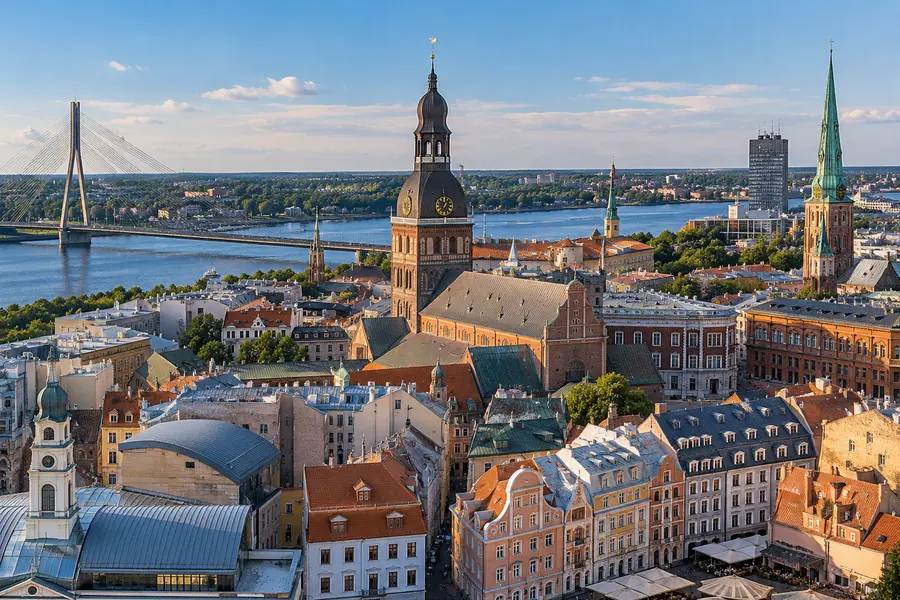
Riga, Latvia's capital and the biggest city in the Baltics, stands on the Daugava River a few kilometres from the Gulf of Riga. Bishop Albert founded it in 1201, and centuries of trade within the Hanseatic League turned it into a wealthy merchant town of Gothic churches, guild halls and crooked lanes, now protected by UNESCO together with the later districts around them. A building boom at the start of the 20th century then gave Riga hundreds of Art Nouveau apartment blocks, one of the largest collections of the style anywhere in the world. About 600,000 people live here, the Old Town is easy to explore on foot, and the sandy beaches of Jūrmala are only half an hour away by train. If you are planning a weekend or a longer trip and wondering what to see in Riga, here are 20 places, from the House of the Blackheads and Riga Cathedral to a Stalin-era tower with a viewing terrace and a seaside resort.
What to see in Riga first
Old Riga, or Vecrīga in Latvian, fills a compact patch of the right bank of the Daugava, bounded by the river on one side and by a city canal lined with parks on the other, where the old bastions once stood. Most of the places in the first half of this list are ten to fifteen minutes' walk from one another, the Art Nouveau district begins just beyond the canal, and the Central Market sits next to the railway station. The Stone Bridge and the cable-stayed Vanšu Bridge lead across to the left bank and the National Library, which is also a pleasant fifteen-minute walk from the Old Town.
1. Town Hall Square and the House of the Blackheads
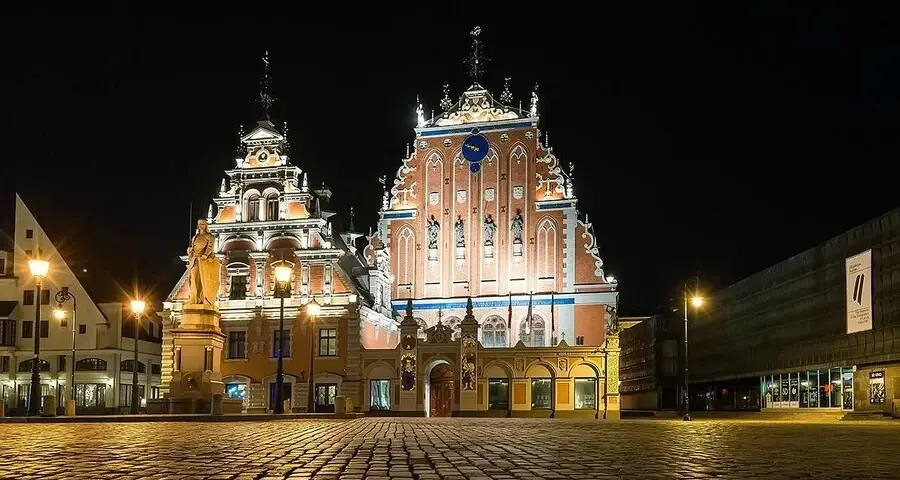
Riga's showpiece has stood on Town Hall Square since the 14th century. Merchant associations first used it for feasts and celebrations, and over time it was taken over entirely by the Brotherhood of Blackheads, an association of unmarried foreign merchants who chose the African saint Maurice as their patron. The red-brick façade with its stepped gable, gilded ornament, astronomical clock and statues of Neptune and Mercury took its present form in the 17th century.
The building burned in the summer of 1941, and after the war the Soviet authorities cleared the ruins, so what you see today is a careful reconstruction finished in time for the city's 800th anniversary. The rebuilt Town Hall stands opposite, and in the middle of the square is a statue of Roland, the knight who symbolised the town's rights. Look for a round plaque in the paving: according to local tradition, the Blackheads put up and decorated a festive tree here in 1510, which is why Riga calls itself the birthplace of the Christmas tree, a claim Tallinn firmly disputes.
2. Riga Cathedral
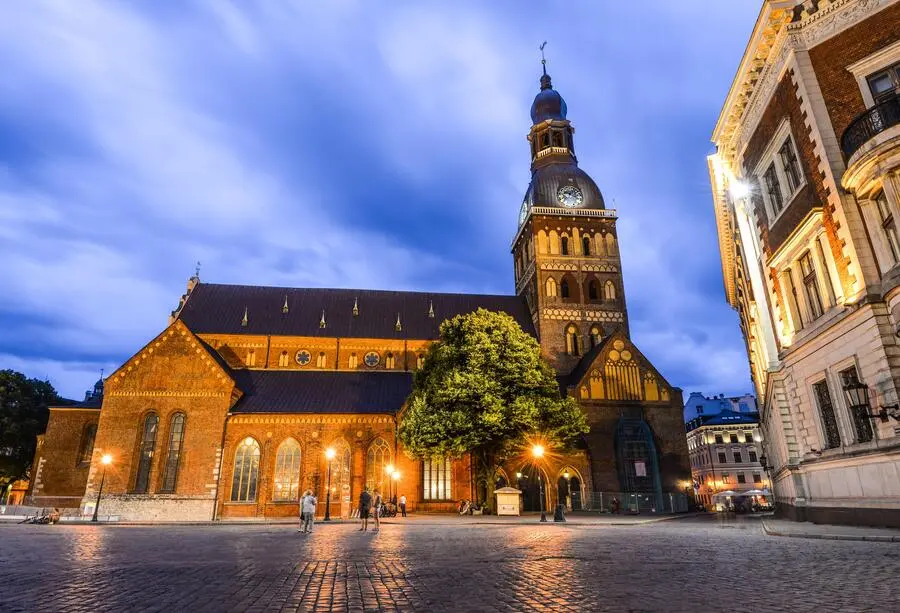
The cathedral, known locally as the Doms, was founded by the same Bishop Albert in 1211. Eight centuries of additions have left Romanesque walls beside Gothic vaults, a Baroque tower and stained glass from the late 19th century. No medieval church in the Baltics is bigger, and the square in front of it is the most spacious in the Old Town, filled with café terraces in summer and a Christmas market in December.
Its greatest treasure is the organ built by the German firm Walcker in 1884. At the time it was the largest in the world, and Franz Liszt composed a chorale for its consecration. Today it has more than 6,700 pipes, and organ concerts are held here regularly; even if classical music is not your thing, one concert is worth it for the sound alone. Afterwards, step into the cloister, a quiet courtyard where old tombstones and carved stones from the church are kept.
3. St Peter's Church
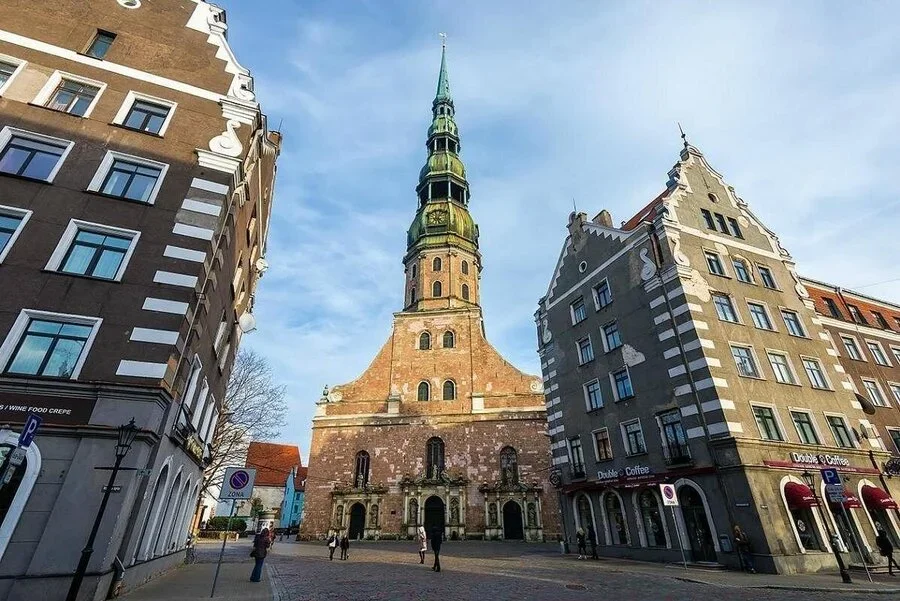
The tallest spire in Old Riga, 123 metres high, belongs to the Lutheran Church of St Peter, first mentioned in 1209. The tower has burned more than once: in 1721 it was struck by lightning, and legend has it that Peter the Great himself helped to fight the fire, while in 1941 it was destroyed in the fighting. The present steel spire was raised in 1973 to the old designs, and like many church towers in Riga it is crowned by a gilded weathercock.
Most visitors come for the lift to the viewing platform at 72 metres. From up there the Old Town looks like a model: tiled roofs, the spires of the cathedral and St James's, the curve of the Daugava with its bridges, the port cranes and, beyond them, a thin line of the gulf. On a clear day the best time to go up is just before sunset, when the roofs turn copper-red and the lights come on below.
4. The Three Brothers and the Swedish Gate
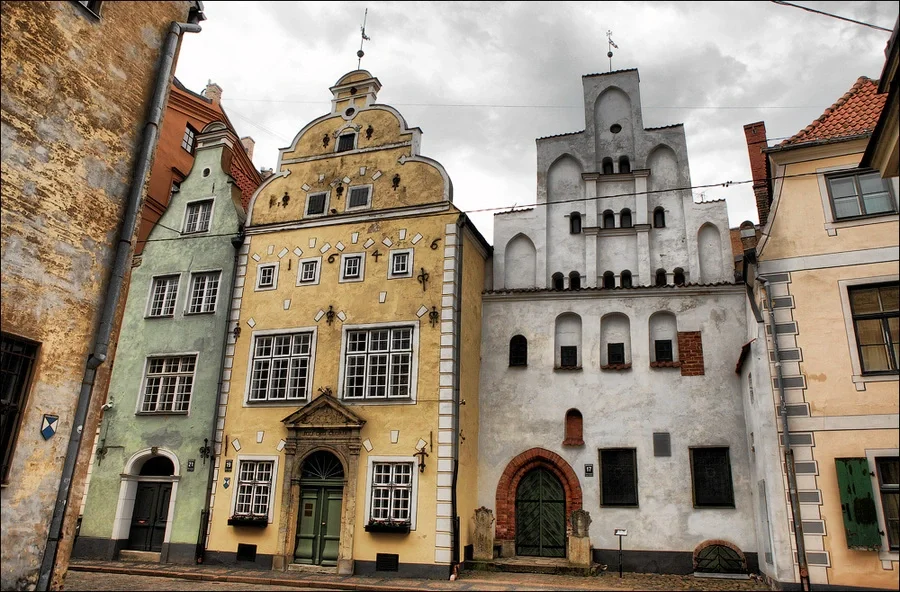
On Mazā Pils iela, three old houses stand shoulder to shoulder and are known as the Three Brothers. The eldest, the white one, went up at the end of the 15th century and counts as the oldest stone dwelling in Riga; the yellow middle brother is from the 17th century, and the youngest and narrowest, the green one, came last. Guides like to say the houses grew narrower because of a tax charged on the width of the façade, though historians are sceptical. The middle house is home to the Museum of Architecture.
A few minutes away is the Swedish Gate of 1698, the only surviving gate in the city wall, built straight into a residential house. Along Torņa iela run the yellow Jacob's Barracks and a rebuilt stretch of medieval wall, and on the corner rises the round Powder Tower, whose walls are said to hold cannonballs from old sieges. The tower now houses the Latvian War Museum.
5. The Freedom Monument and Bastion Hill
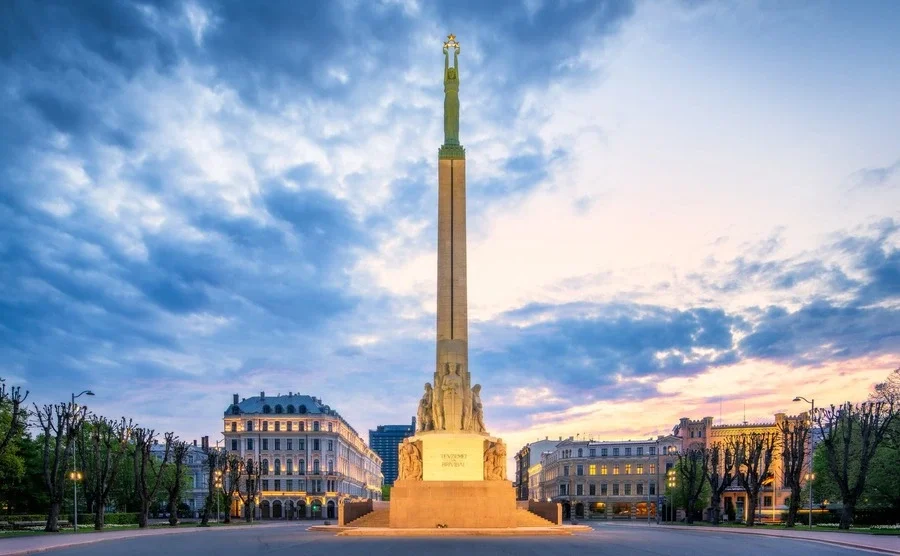
Between the Old Town and the newer centre rises the 42-metre Freedom Monument, unveiled in 1935 and paid for by donations collected across the country. At the top of the column stands a copper female figure holding up three gold stars that represent Latvia's historical regions; locals affectionately call her Milda. An honour guard stands at the base and changes every hour during the day, and in 1987 this was the site of one of the first open protests against Soviet rule.
On both sides of the monument a green belt follows the city canal, dug along the line of the old moats. Bastion Hill, or Bastejkalns, is an artificial mound on the remains of a bastion, with a small cascade, footbridges and benches, and couples cover the bridge railings with padlocks. In the warmer months small sightseeing boats run along the canal and out onto the Daugava, so in an hour you can see the city from the water.
6. The Art Nouveau district
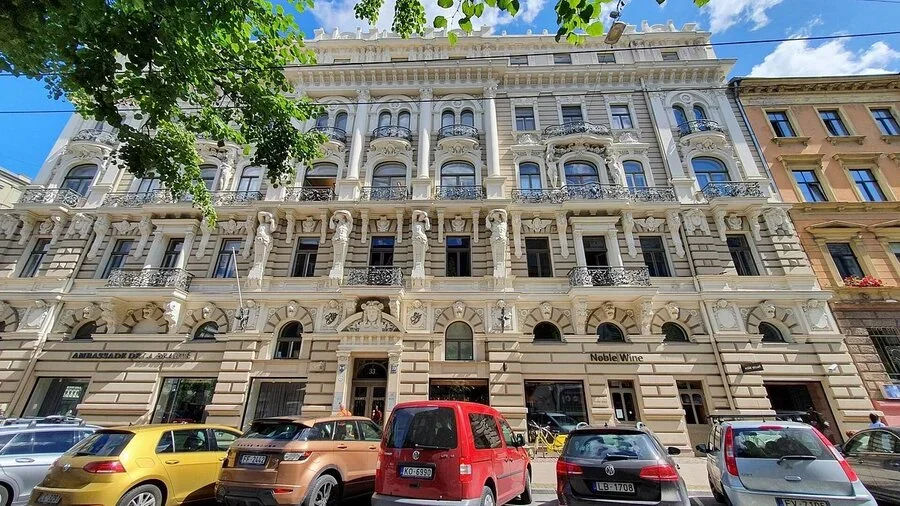
In the early 20th century Riga grew so fast that hundreds of Art Nouveau apartment buildings went up in a couple of decades, and they now make up roughly a third of the city centre. The most striking street is Alberta iela, where the façades, crowded with masks, lions, peacocks and women's faces, were designed by the engineer Mikhail Eisenstein, father of the film director Sergei Eisenstein. Look up as you walk: the most extravagant details are often tucked away just below the roofline.
On the corner of Alberta and Strēlnieku streets, in the former flat of architect Konstantīns Pēkšēns, is the Riga Art Nouveau Centre. It recreates the home of a well-to-do family of the 1900s, with furniture, tableware and tiled stoves, and its pride is a painted spiral staircase that every visitor photographs. Continue along Elizabetes and Strēlnieku streets, where the style becomes more restrained and turns into National Romanticism, decorated with folk patterns.
7. Riga Central Market
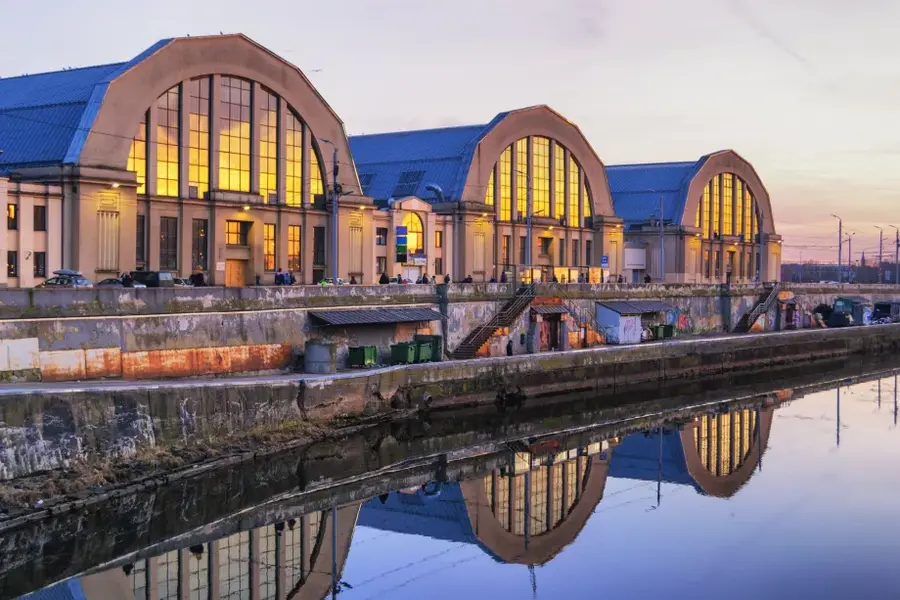
Next to the station, on the bank of the Daugava, stand five huge arched pavilions that were once hangars for German Zeppelin airships during the First World War. They were dismantled at a military airfield in Courland, brought to the capital and opened as a market in 1930, and it is still counted among the largest markets in Europe. The pavilions are part of the UNESCO-protected area too.
Each pavilion has its own speciality: meat, fish, dairy and vegetables, while the gastronomy hall has a food court. Try smoked sprats and eel, dark rye bread, homemade caraway cheese and seasonal berries, and in summer open-air rows of flowers and mushrooms spill out around the halls. Beside the market stand the red-brick Spīķeri warehouses, now filled with cafés, workshops and galleries.
8. The Academy of Sciences and the Moscow Suburb
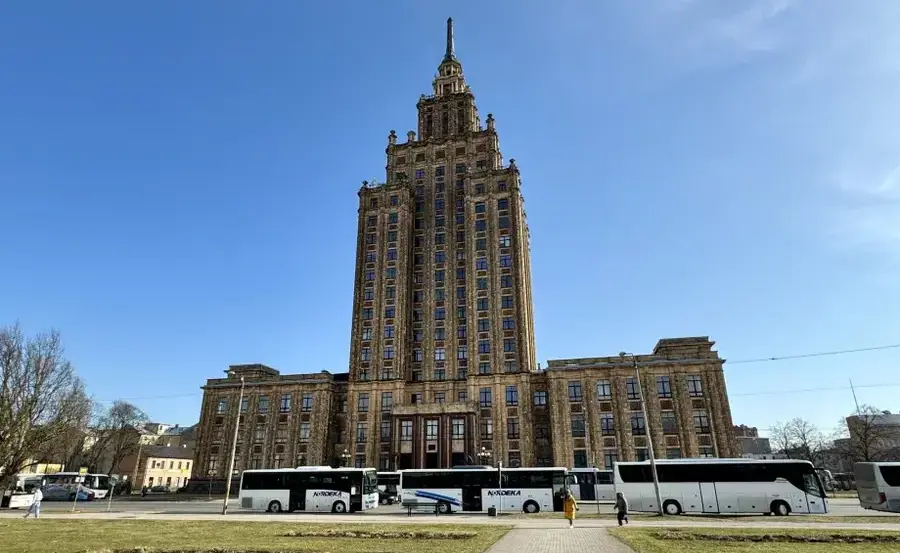
The Latvian Academy of Sciences occupies a 1950s tower modelled on Moscow's Stalinist skyscrapers, and locals jokingly call it Stalin's birthday cake. Take a closer look at the façade: hammers and sickles are hidden among the Latvian folk ornaments, and after independence was restored it was decided to leave them in place as a record of the era.
In the warmer season a viewing terrace opens on the 17th floor, where you see the Old Town side-on, its spires lined up in a row, with the market roofs right below. Around the tower lies the Moscow Suburb, an old district of wooden houses where Old Believer merchants, craftsmen and Jewish families lived for centuries. Few tourists come here, and a walk through its streets shows a completely different Riga.
9. National Library of Latvia
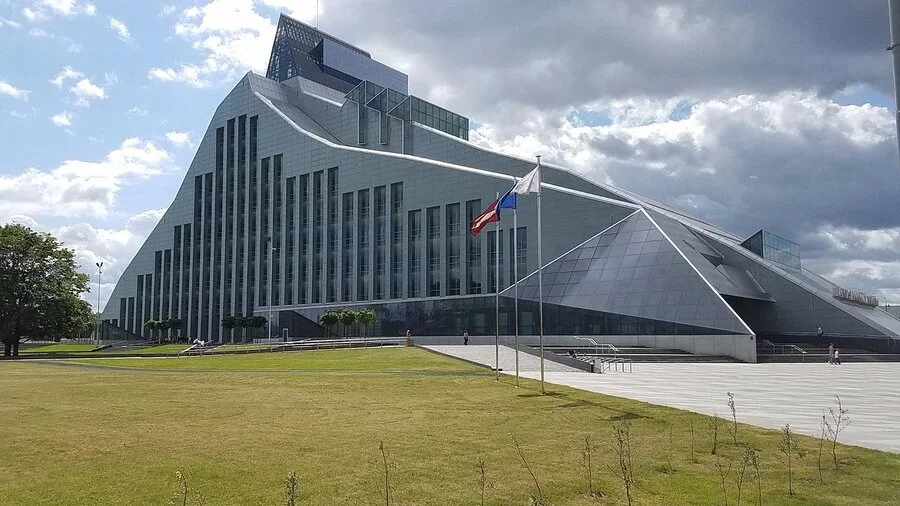
Across the river from the Old Town, a glass building shaped like a mountain or a wave rises above the river: the National Library of Latvia. It was designed by Gunnar Birkerts, an architect born in Riga who made his career in the United States, and he took the image from a poem by Auseklis about a Castle of Light that sank beneath the water and will one day rise again. The library opened in 2014, when Riga was a European Capital of Culture.
The move of the collections became a celebration, with thousands of people forming a human chain across the Stone Bridge to pass books by hand from the old building to the new one. Entry to the building is free: look up at the tall atrium and the People's Bookshelf, several storeys high and filled with books donated by ordinary people. The embankment outside offers one of the finest panoramas of Old Riga.
10. Jūrmala
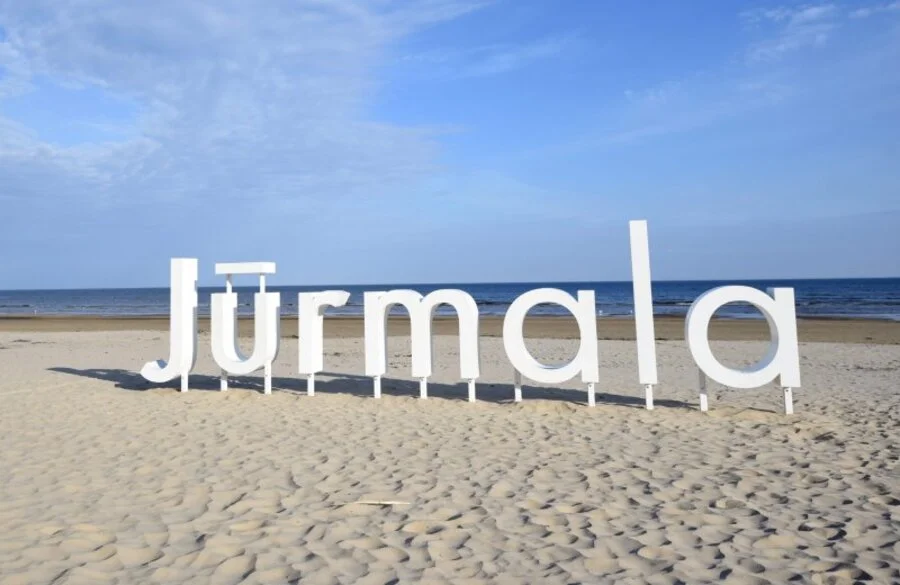
Twenty-five kilometres west of Riga, squeezed between the sea and the Lielupe River, stretches Jūrmala, the largest resort town in the Baltics, with a beach more than twenty kilometres long. It has fine pale sand, shallow water and pine forest right behind the dunes, while Majori and Dzintari still have hundreds of wooden summer villas from the late 19th and early 20th centuries, with carved verandas and little turrets.
Trains from Riga Central Station reach Majori in about half an hour. Stroll down Jomas iela, the pedestrian street lined with cafés and shops, then head to the sea: people sunbathe and swim here in summer and walk along the snowy shore in winter. Nature lovers should continue to Ķemeri, where a wooden boardwalk crosses a great bog dotted with dark pools to an observation tower.
Riga Attractions: What Else to Visit While in the City
- Cat House — a 1909 building on Līvu Square with black cats on its turrets. Legend says the owner was refused entry to the Great Guild opposite and turned the cats' tails towards it, and they were turned round again once the quarrel was settled.
- Riga Castle — a 14th-century fortress of the Livonian Order on the Daugava, now the seat of Latvia's head of state. Its white towers are best seen from the embankment and the Vanšu Bridge.
- Nativity of Christ Cathedral — an Orthodox cathedral of the 1880s in Neo-Byzantine style, with gilded domes in the middle of Esplanade Park. In Soviet times it housed a planetarium.
- Latvian National Museum of Art — a 1905 palace on the edge of the Esplanade with Latvian painting of the 19th and 20th centuries and a modern underground exhibition hall.
- Museum of the History of Riga and Navigation — the oldest museum in the Baltics, founded in 1773, in historic halls beside the cathedral, with ship models, old maps and the belongings of Hanseatic merchants.
- Latvian National Opera — a white Neoclassical building from the 19th century on the canal, where an evening of opera or ballet makes a fine end to the day.
- Latvian Ethnographic Open-Air Museum — one of Europe's oldest museums of its kind, on the shore of Lake Jugla, with more than a hundred farmhouses, windmills, granaries and wooden churches brought from all over Latvia.
- Kalnciems Quarter — restored wooden houses on the left bank, where a Saturday farmers' market brings street food, crafts and live music.
- Mežaparks — an early 20th-century garden suburb of villas among the pines on Lake Ķīšezers, home to the great Song Festival stage and Riga Zoo.
- Riga Motor Museum — the largest collection of vintage cars and motorcycles in the Baltics, including vehicles that belonged to Soviet leaders and the first cars made in Latvia.
What to See in Riga in 1, 2 or 3 Days
Is 2 days enough to see Riga? The Old Town can be covered in a day, but two days let you explore the Art Nouveau district and the left bank without rushing, and a third is best spent in Jūrmala or on a trip into the countryside. If you only have one day, start at Town Hall Square and the House of the Blackheads, ride up the tower of St Peter's, walk on to the cathedral, the Three Brothers and Riga Castle, then cross Līvu Square to the Swedish Gate and the Powder Tower. Have lunch at the Central Market, and in the evening walk from the Freedom Monument along the canal to Alberta iela. On day two, cross the Stone Bridge to the National Library and the Kalnciems Quarter, and in the afternoon go up to the Academy of Sciences terrace and wander through the Moscow Suburb. Day three is for Jūrmala or the Ethnographic Open-Air Museum.
When is the best time to visit Riga? May to September is the most pleasant period: July days are usually 20–23°C and the evenings are long and light. On 23–24 June Latvia celebrates Līgo, the midsummer festival, when the city empties as everyone heads to the countryside to light bonfires, weave wreaths and sing until dawn. In December, Christmas markets with mulled wine and gingerbread fill Cathedral Square and the Esplanade. Beyond the capital, Latvia is worth exploring for Rundāle Palace by Rastrelli, 80 km to the south, Sigulda with the Gauja valley and the red-brick Turaida Castle, and Kuldīga with the widest waterfall in Europe.
For free, you can wander the Old Town and the Daugava embankment, admire the Cat House, the Three Brothers and the Swedish Gate, watch the changing of the guard at the Freedom Monument, relax on Bastion Hill, study the façades of Alberta iela, and drop into the Central Market and the National Library. Children will enjoy Riga Zoo in Mežaparks, the Motor Museum, the open-air museum, a boat trip along the canal and the large indoor water park in Jūrmala. As for food, try grey peas with bacon, rye bread, a dessert made of rye bread and whipped cream, and Riga Black Balsam, a herbal liqueur made since the 18th century. In the evening, catch an organ concert in the cathedral or a performance at the Opera, then move on to the bars of the Old Town or the panoramic bar at the top of the Radisson Blu Latvija hotel.
Is Riga worth visiting, and which is prettier, Riga or Tallinn? Tallinn has the more intact medieval walls, while Riga is bigger, livelier and unmatched for Art Nouveau, so the best answer is to see both. Ukraine has no direct flights to Riga, so the easiest route is via Poland: Ryanair flies direct from Kraków, and airBaltic and LOT from Warsaw, with a flight time of about an hour and a half. The airport is about 10 km from the centre, and city bus No. 22 reaches the Old Town in around half an hour. You can also travel overland: a direct train runs from Vilnius to Riga in about four hours, and regular buses connect Riga with Tallinn, so the three Baltic capitals fit easily into a single trip.
In summer, Riga's residents head for the beaches of Jūrmala, but for truly warm water in winter they fly far south: the head of the Latvian Association of Travel Agents and Tour Operators names Egypt, the Emirates and Tenerife among Latvians' main winter destinations, and the national airline airBaltic flies direct from Riga to Hurghada and Sharm El-Sheikh in the cold season. The team at the TurPoisk online travel agency can help with both parts of the journey: book a hotel in Old Riga or near the Art Nouveau streets, and for the colder months find tours to Egypt, whether to Hurghada with its coral reefs, Sharm El-Sheikh with its sheltered bays or quiet Marsa Alam. Use our tour search to see options for your dates, and our managers will suggest the best way to pair the cool Baltic with the warm Red Sea.


