
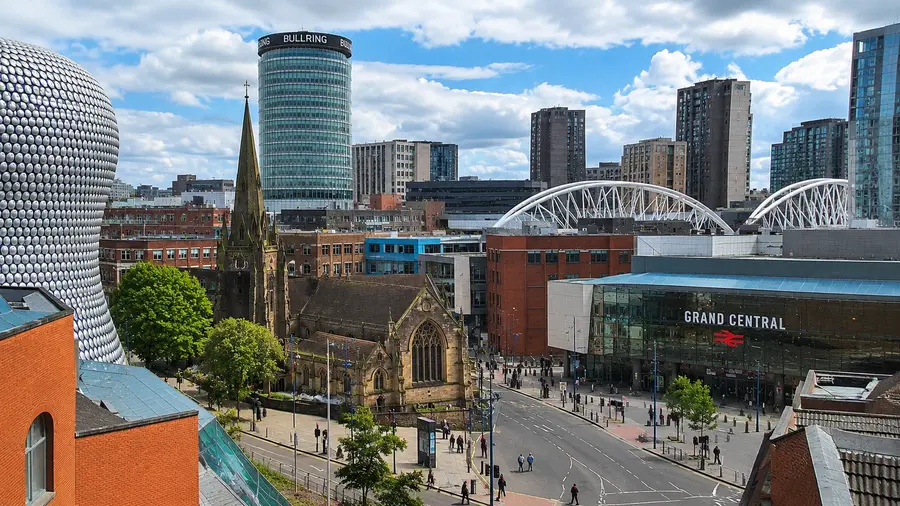
Birmingham is the UK's second-largest city and the capital of the West Midlands, right in the middle of England. Two centuries ago it was at the heart of the Industrial Revolution: James Watt and Matthew Boulton built steam engines here, and thousands of workshops turned out buttons, guns, steel pen nibs and jewellery, earning Birmingham its nicknames "workshop of the world" and "city of a thousand trades". A web of canals was dug between the factories, and locals still like to boast that they have more canals than Venice. Today more than a million people from all over the world call the city home, old factories have become galleries and restaurants, and the TV series Peaky Blinders, about a gang from Small Heath, has turned Birmingham into a pilgrimage site for its fans. If you are wondering what to see in Birmingham, here are 20 places, from a futuristic library and the Jewellery Quarter to the Cadbury chocolate works and the open-air museum where Tommy Shelby's adventures were filmed.
What to see in Birmingham first
Central Birmingham is compact, and most of its sights are linked by pedestrian streets. To the west are Centenary and Chamberlain squares with the library, the Town Hall and the museum; a few minutes from there are the canals of Gas Street Basin and Brindleyplace. The Jewellery Quarter lies to the north, and beyond the Bullring shopping centre to the south-east begins creative Digbeth. Nothing is more than 15 minutes' walk from New Street station, while Bournville's chocolate works and the Black Country museum in Dudley are an easy suburban train ride away.
1. Library of Birmingham
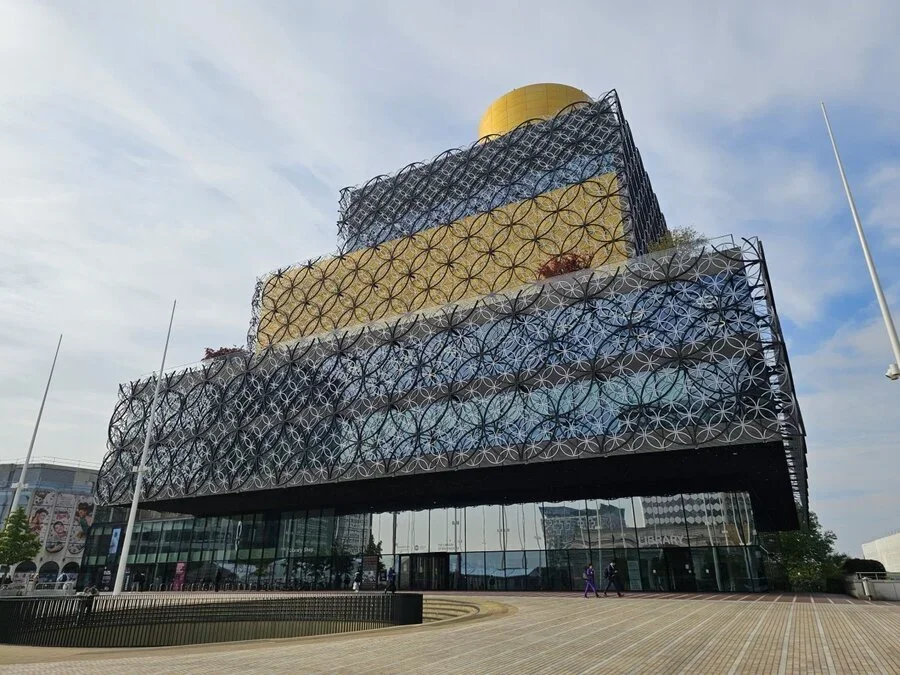
The city's most eye-catching modern building stands on Centenary Square: the glass floors of the library, opened in 2013, are wrapped in a lattice of gold and silver metal rings. The Dutch architects at Mecanoo meant the pattern as a nod to the city's jewellery workshops and its old cast-iron structures. Few public libraries in Europe are bigger, and anyone can walk in for free.
Inside, escalators climb through circular halls lined with books from floor to ceiling, and two terraces have been planted as gardens with flowers, herbs and benches overlooking the rooftops. At the very top, inside a golden rotunda, sits the Shakespeare Memorial Room, a Victorian panelled study that houses one of the world's finest collections of Shakespeare editions.
2. Victoria Square and the Town Hall
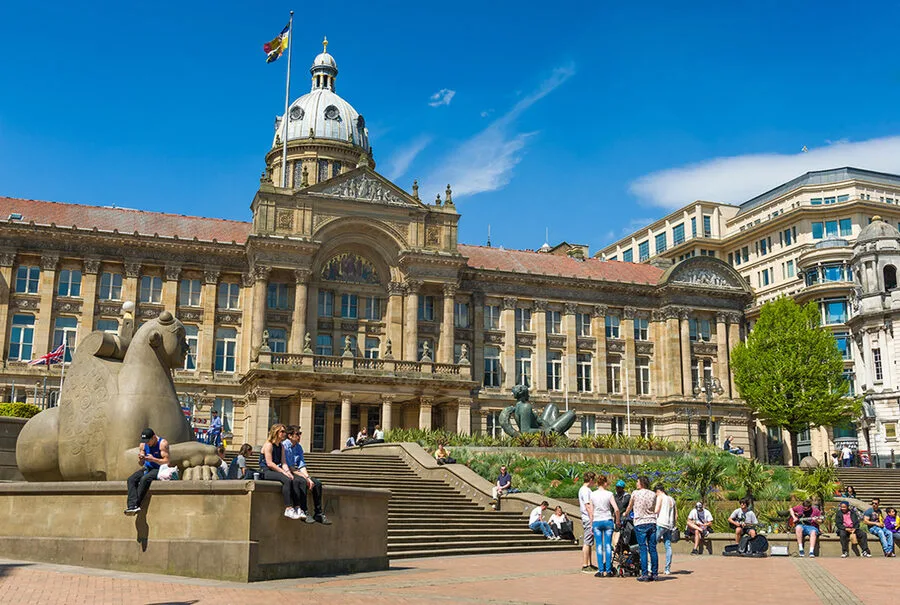
Victorian Birmingham shows its grandest face on Victoria Square, with its statue of the queen. Above it rises the Council House, seat of the city government, with a clock tower and a mosaic in its pediment, and next door stands the Town Hall of 1834, modelled on a classical temple with a colonnade. Mendelssohn and Charles Dickens both performed here, and it still hosts concerts and shows.
Behind the Council House opens Chamberlain Square, where the city's museum and art gallery fills one wing of the same palatial building. The squares are linked by pedestrian streets, and in December they fill with the Frankfurt Christmas Market, among the largest German Christmas markets outside Germany and Austria, with wooden chalets, sausages, mulled wine and carousels.
3. St Philip's Cathedral
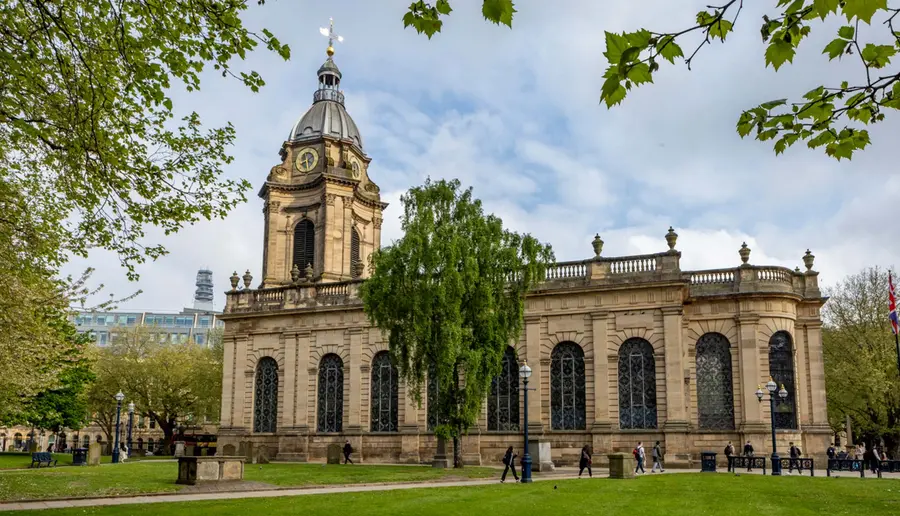
In a leafy churchyard in the business district stands a Baroque church of 1715 with a tall tower and a dome, designed by Thomas Archer. It only became a cathedral in 1905, when Birmingham got its own diocese, and few English cathedrals are smaller, yet it feels bright and welcoming.
The main reason to step inside is the four huge stained-glass windows designed by Edward Burne-Jones, the Pre-Raphaelite painter who was born in Birmingham. Their deep reds and blues and their scenes of the Ascension, the Nativity and the Last Judgement impress even visitors with no interest in religious art. At lunchtime office workers stretch out on the lawns around the cathedral, so it is a good place to rest between museums.
4. The Bullring and Selfridges
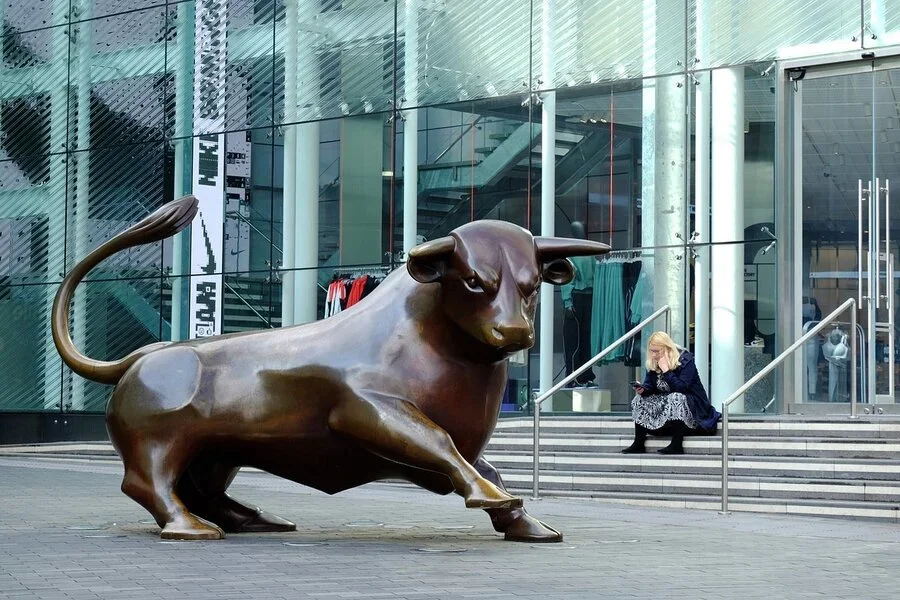
There has been a market on this spot since the 12th century, and the name Bullring recalls the days of bull-baiting. Today it is one of Britain's biggest shopping centres, and its mascot is the giant bronze bull by the entrance that every visitor photographs. Next to it, Selfridges occupies a curving building clad in thousands of shiny aluminium discs, often called the most photogenic structure in the city.
Below the shopping centre, in sharp contrast with all the glass and metal, rises the Gothic parish church of St Martin, whose interior also has a Burne-Jones window. Behind it are the indoor market and the Rag Market, selling fish, fruit, fabrics and everything else: here Birmingham is at its least touristy and most authentic.
5. The canals: Gas Street Basin and Brindleyplace
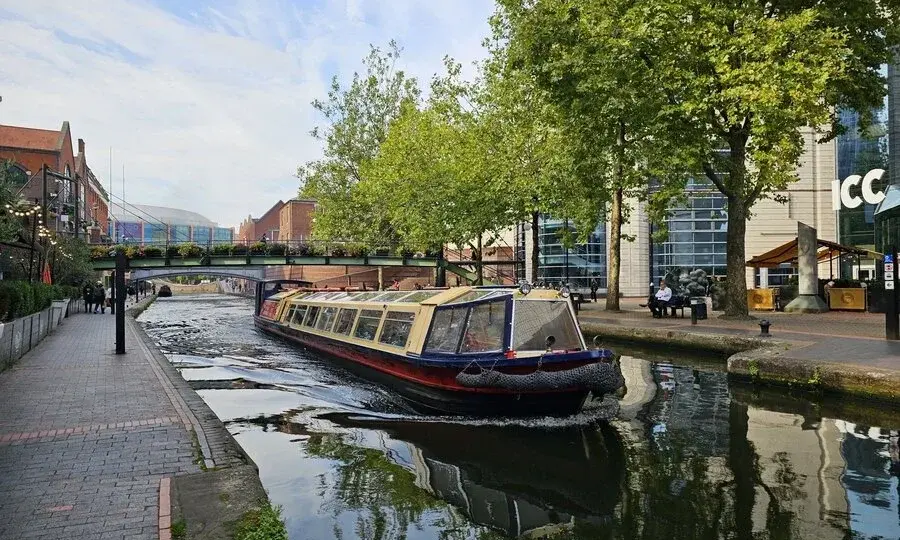
The canals that once carried coal, iron and finished goods are now the city's favourite place for a stroll. Gas Street Basin is the heart of the network: narrowboats painted red, green and blue are moored beside old brick warehouses and pubs, and some of them are still lived in.
Following the water from the basin brings you to Brindleyplace, with restaurants and cafés along the quay, and to the Mailbox shopping centre, while the towpath leads on for miles out of the city. In summer, sightseeing boats run along the canals, and some visitors rent a narrowboat for a few days to drift slowly through the locks to neighbouring towns.
6. The Jewellery Quarter
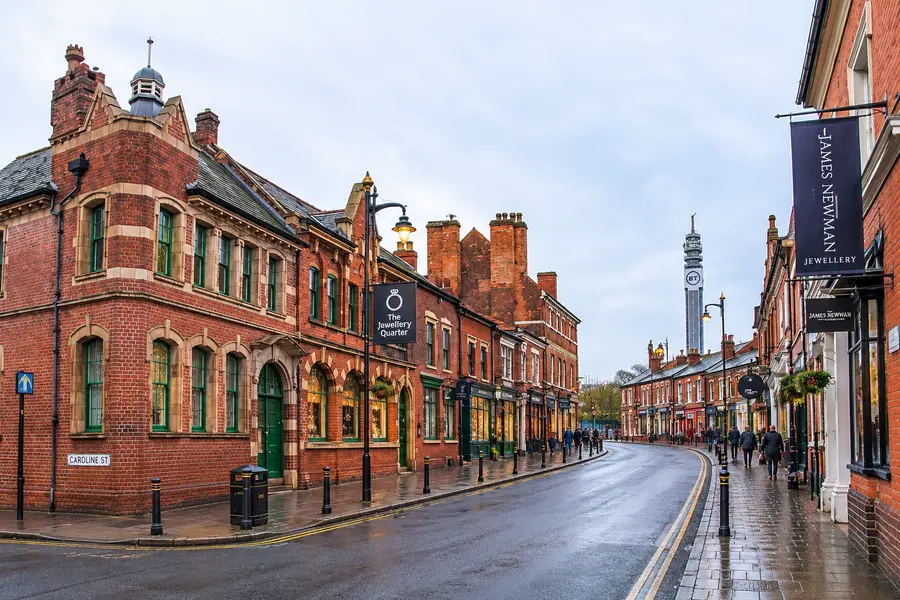
North of the centre lies a district where jewellery has been made for over 250 years: hundreds of jewellers still work here, and a large share of the UK's jewellery comes from these streets. The cast-iron Chamberlain Clock stands at the main crossroads, and the streets are lined with workshops, wedding-ring shops, cafés and the Assay Office, whose anchor mark is stamped on Birmingham silver and gold.
Do visit the Museum of the Jewellery Quarter: when the Smith & Pepper factory closed in 1981, the owners simply locked the door, leaving tools, teacups and calendars where they were, so time seems to have stopped inside, and guides show how jewellery was made a century ago. Nearby is Georgian St Paul's Square, and many of the quarter's craftsmen rest in the old Warstone Lane Cemetery.
7. Digbeth and the Custard Factory
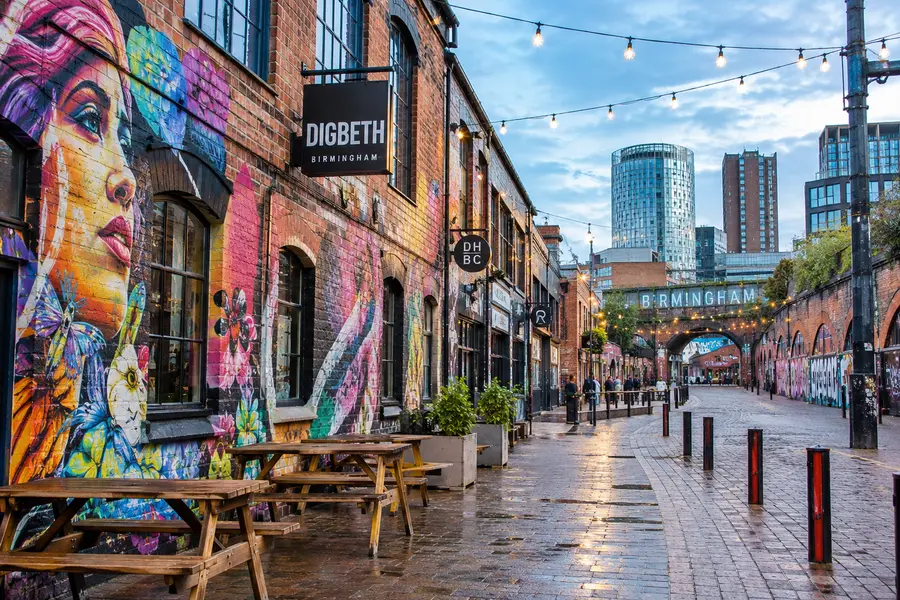
The former industrial district beyond Moor Street station has become the city's creative quarter. Brick factories and warehouses under the railway arches are now filled with studios, bars, clubs and street-food markets, and the walls are covered in huge murals, many of them devoted to Peaky Blinders and Tommy Shelby.
At its heart is the Custard Factory, once the home of Bird's custard and now a cluster of design shops, vintage stores, galleries and courtyard cafés. It gets busy at weekends, live music plays in the evenings, and street-food festivals take over the yards of old warehouses nearby. Come here to see what twenty-first-century Birmingham is becoming.
8. The Back to Backs
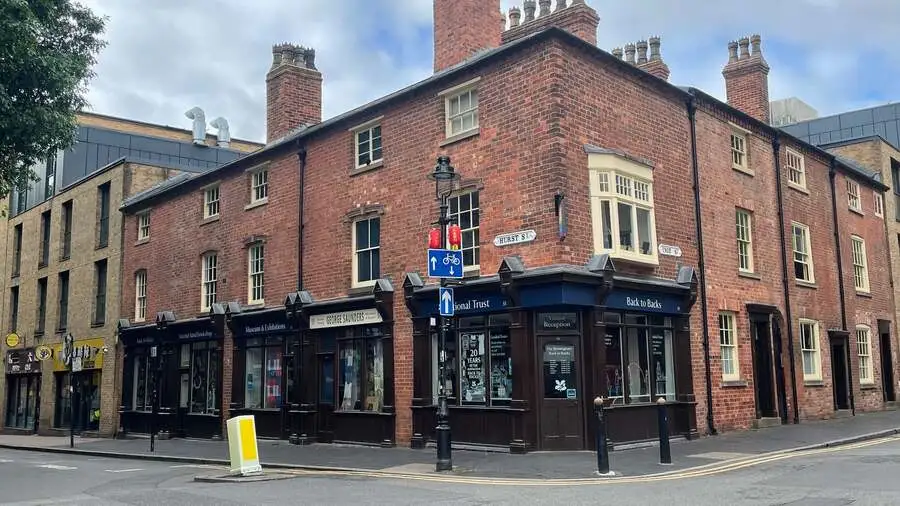
In the 19th century most of Birmingham's workers lived in cramped brick houses built against each other's rear walls, hence the name "back to back". Each family had one room per floor, while the toilet, washhouse and water pump were shared by the whole courtyard. The city once had thousands of these courts, but only one survives, on the corner of Hurst Street and Inge Street.
It is now run by the National Trust and can only be seen on a guided tour, which is best booked ahead. The four houses are furnished as they looked at different times, from the 1840s to the 1970s, and guides tell the stories of real families who lived here, from button makers and locksmiths to a tailor. The characters of Peaky Blinders lived in courtyards just like this one.
9. Cadbury World and Bournville
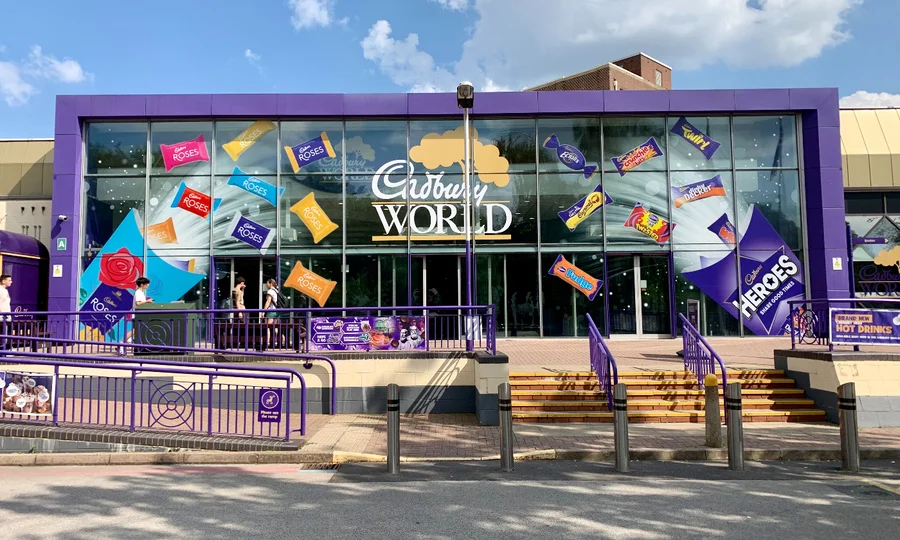
Ten minutes south of the centre by suburban train is Bournville, the village the Cadbury brothers built in the late 1800s for the workers at their chocolate factory. It has neat cottages with gardens, parks, a pond and a village green, and for a long time there was not a single pub, because the Quaker Cadburys were against alcohol.
Next to the factory, Cadbury World is an interactive exhibition on the history of chocolate, from the Aztecs to modern production lines. You can watch chocolate being tempered and piped into lettering, taste warm liquid chocolate with toppings and stock up in the huge Cadbury shop. Children love the 4D cinema and the rides, and adults will enjoy a walk around Bournville itself.
10. Black Country Living Museum
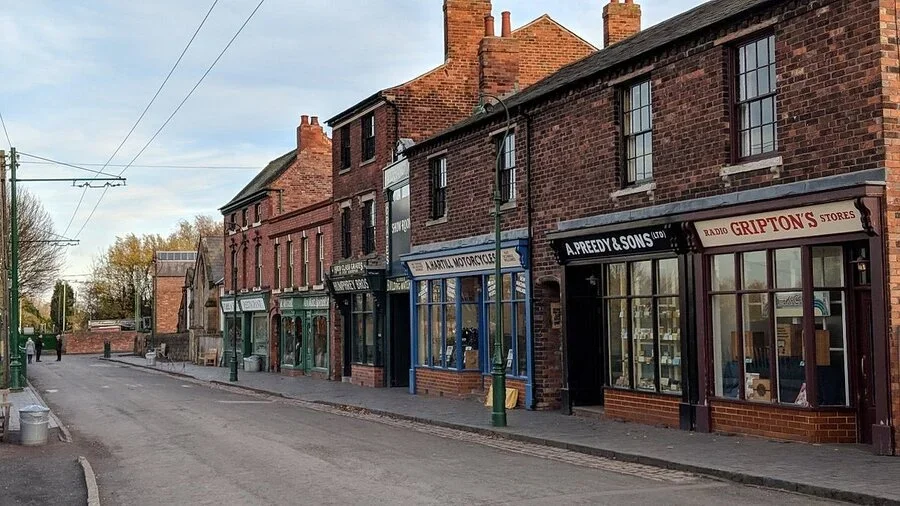
The industrial area west of Birmingham became known as the Black Country because of the smoke from hundreds of pits and foundries. In Dudley, half an hour from the centre, an entire canal-side village of the late 19th to mid-20th century has been recreated, with shops, a forge, a school, a bakery, a pub and homes moved here brick by brick, and vintage trams and trolleybuses running between them.
Costumed staff demonstrate chain-making, baking and Victorian lessons, you can go down a mine, and next door boats take you into the underground Dudley Canal Tunnel. Fans will recognise the place as a Peaky Blinders filming location, and before you leave, buy fish and chips from the chip shop that fries them in beef dripping to 1930s recipes.
Birmingham Attractions: What Else to Visit While in the City
- Birmingham Museum and Art Gallery — the city museum in the palace on Chamberlain Square, famous for one of the largest Pre-Raphaelite collections and the Anglo-Saxon gold of the Staffordshire Hoard.
- Thinktank Science Museum — a hands-on science museum with steam engines, a planetarium and the world's oldest working steam engine, built to a design by James Watt.
- National Sea Life Centre — an aquarium on the canal by Brindleyplace, with sea otters, sharks and a tunnel where fish swim over your head.
- Barber Institute of Fine Arts — a small but first-rate gallery on the university campus with works by Rubens, Turner, Monet and Van Gogh. Admission is free.
- Birmingham Botanical Gardens — Victorian gardens of 1832 in Edgbaston with tropical, subtropical and arid glasshouses, a rose garden and a bandstand.
- Winterbourne House and Garden — an Edwardian villa and garden near the university that shows how a well-off Birmingham family lived in the early 20th century.
- Aston Hall — a 17th-century Jacobean mansion with a long gallery, a carved staircase and a park, next to Aston Villa's football ground.
- Sarehole Mill — an old watermill near which J. R. R. Tolkien grew up; he later said the countryside around it inspired the Shire in The Lord of the Rings.
- Symphony Hall — a concert hall with superb acoustics, home of the City of Birmingham Symphony Orchestra, which rose to fame under Simon Rattle.
- The Balti Triangle — a cluster of South Asian restaurants in the south of the city where, local legend has it, the balti was invented in the 1970s, a curry cooked and served in a steel bowl.
What to See in Birmingham in 1, 2 or 3 Days
How to spend one day in Birmingham? Start at the library on Centenary Square and its rooftop terraces, walk through Chamberlain and Victoria squares to St Philip's Cathedral, then head down to the Bullring, the bronze bull and Selfridges. Have lunch in Digbeth, and in the late afternoon walk the canals from Gas Street Basin to Brindleyplace. Two days give you time for the museums, Bournville and the Black Country: on the second morning explore the Jewellery Quarter and the Back to Backs, and in the afternoon visit Cadbury World or the Black Country Living Museum. A third day is perfect for Stratford-upon-Avon or Warwick.
When is the best time to visit Birmingham? The weather is typically English, mild but changeable, so pack an umbrella in any season. May to September is the most pleasant time, with daytime temperatures around 20°C, canal-side terraces open and festivals in full swing, while in November and December the Christmas market lights up the centre. What is Birmingham best known for? Its industrial past, its canals, Cadbury chocolate and Peaky Blinders, and nearby you will find Stratford-upon-Avon with Shakespeare's birthplace, medieval Warwick Castle, the UNESCO-listed Ironbridge Gorge, where the Industrial Revolution began, and the honey-stone villages of the Cotswolds.
Places to visit in Birmingham for free include the library and its gardens, St Philip's Cathedral, the Museum and Art Gallery, the Barber Institute, the canals, the Jewellery Quarter, Digbeth and the Bullring markets. Children will enjoy Cadbury World, Thinktank, Sea Life, the Black Country museum and a boat trip on the canals. As for food, try a balti in the Balti Triangle, fish and chips, Cadbury chocolate straight from the factory and beer from local breweries. In the evening Brummies head for the canal-side pubs and Digbeth, concerts at Symphony Hall, ballet at the Hippodrome or the football, with several famous clubs in and around the city, Aston Villa among them.
Ukraine has no direct flights to Birmingham, so the most convenient route is via Poland: Ryanair, easyJet and Jet2 fly direct from Kraków, and Ryanair also flies from Warsaw Modlin, with a flight time of about two and a half hours. The airport is 13 km from the centre, and trains from Birmingham International reach New Street in 10–15 minutes. The UK is not part of the Schengen Area, so Ukrainians need a British visa. Birmingham is also a good base for travelling on: trains reach London in about an hour and a half, and Manchester and Liverpool in one and a half to two hours.
For real summer sun, Brummies most often fly to Spain: according to Birmingham Airport, its most popular beach destination is Palma de Mallorca, followed by Alicante on the Costa Blanca. The TurPoisk travel agency can help you combine both parts of the trip: book a hotel by the canals at Brindleyplace or in the Jewellery Quarter, and for a seaside break find tours to Spain, whether to Mallorca with its turquoise coves, the Costa Blanca with its long beaches or the Costa Dorada near Barcelona. Use our tour search to see options for your dates, browse last-minute deals, and our managers will help you pair industrial England with Spanish sunshine.


