
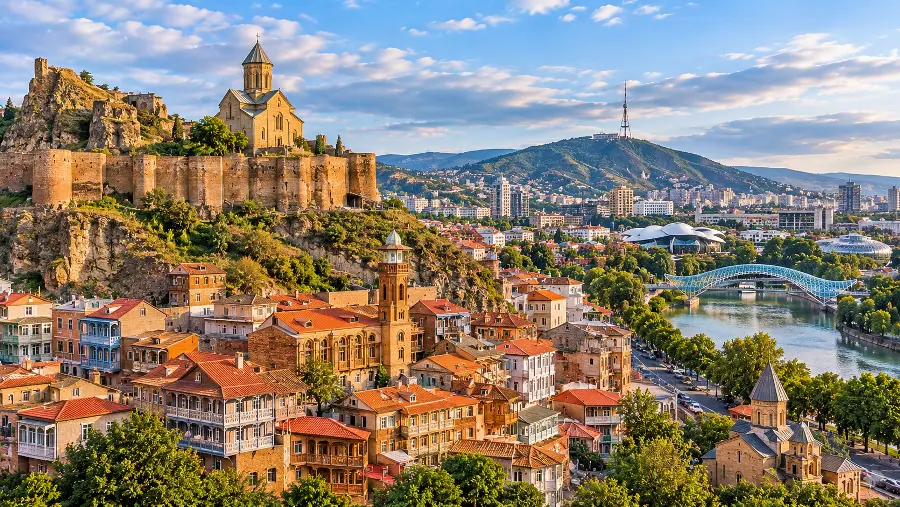
Georgia's capital, Tbilisi, winds along the Kura River gorge beneath hills crowned by a fortress and a TV tower. An old tale tells how, in the 5th century, King Vakhtang Gorgasali was out hunting here when his falcon fell with its prey into a hot spring; struck by the warm water, the king ordered a town built on the spot, and the city's name grew out of the Georgian «tbili», meaning «warm». Persians, Arabs, Mongols and the Russian Empire all passed through later, and each left its mark on the streets. Carved wooden balconies stand next to bathhouses, a mosque, a synagogue and a glass bridge, and at a laden table a chance guest is treated as family within the hour. Is Tbilisi worth visiting? Without a doubt, and here we have gathered 20 places to prove it, from the sulphur baths and Narikala Fortress to ancient Mtskheta and mountainous Kazbegi.
What to See in Tbilisi First
Most of the highlights cluster on the Kura's right bank: the Old Town with its baths and churches, the cable car rising to the fortress and, a little further north, Rustaveli Avenue. Don't skip the left bank either, home to Metekhi, Sameba Cathedral and the old Avlabari district. Expect steep cobbled streets and wear comfortable shoes, and use the metro or an app taxi to cover the longer distances.
1. Old Town and Shardeni Street
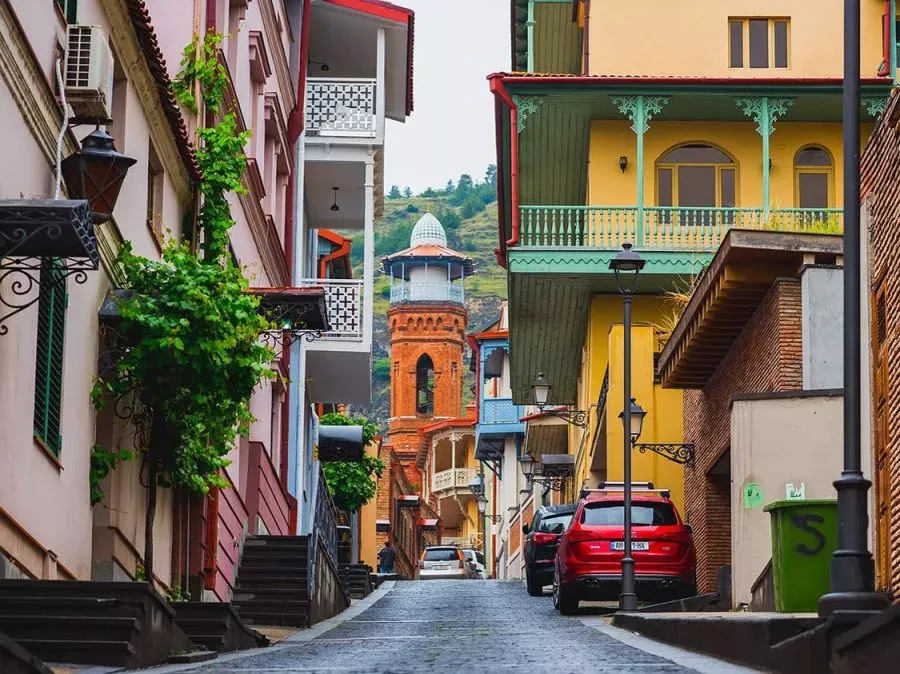
The narrow lanes below Narikala hill keep the feel of an old merchant city: two-storey houses with carved balconies, courtyards shaded by vines and laundry hanging on lines. After restoration, Shardeni Street turned into a strip of cafés and wine bars where music plays until late. A short stroll away is Sioni Cathedral, keeper of Saint Nino's cross made of grapevine and bound, so tradition says, with her own hair.
Close by hides Anchiskhati, the city's oldest church still standing, built as early as the 6th century. Its brick and stone have darkened with age, and the resident choir often sings the polyphony that UNESCO lists as a masterpiece of intangible heritage. Wander without a map and peek through archways into courtyards: that is how the Old Town reveals itself best.
2. Narikala Fortress and Mother of Georgia
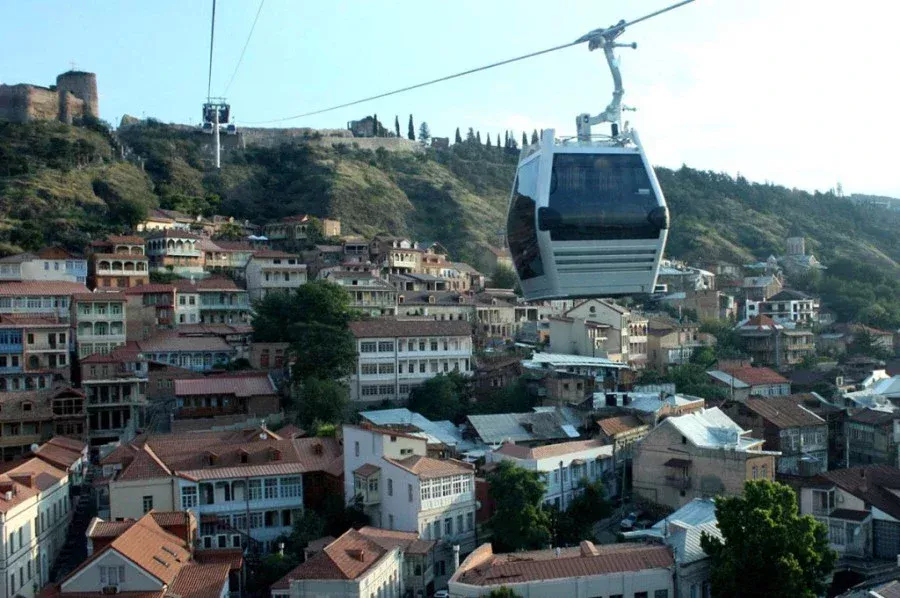
The walls of this 4th-century citadel run along the ridge above the Kura, and from up here the whole city lies spread out before you: tiled roofs, bathhouse domes, the glass bridge and Sameba Cathedral across the river. Riding up is easiest by the Rike Park cable car, its cabins gliding over the water in a few minutes. In the lower courtyard stands the restored Church of St Nicholas, its walls painted with scenes from the Bible and Georgian history.
Further along the ridge rises Kartlis Deda, the twenty-metre aluminium Mother of Georgia. She raises a bowl of wine for friends in her left hand and grips a sword for enemies in her right, a pairing that sums up the Georgian character rather well. The Botanical Garden's main gate is just below the fortress, while the Leghvtakhevi gorge further down leads to a waterfall hidden among the bathhouses.
3. Abanotubani Sulphur Baths
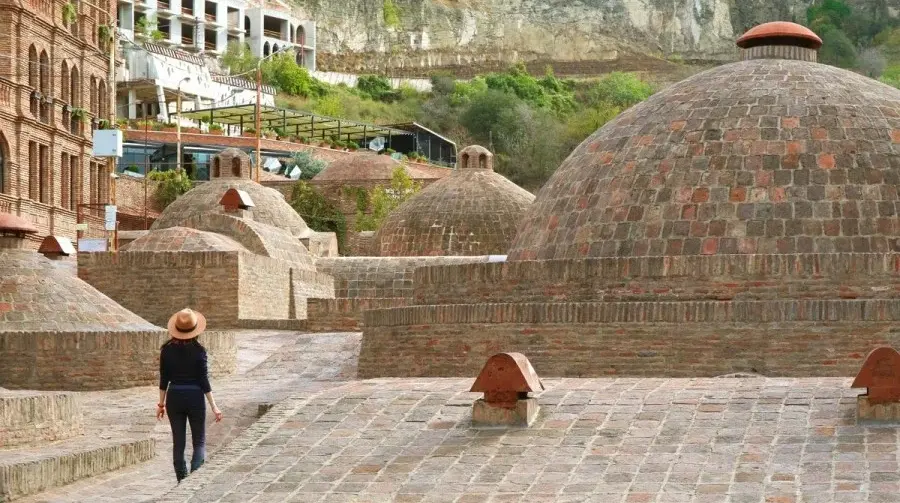
Hot sulphur springs still rise from the ground here, the very ones that, according to legend, decided where the city would stand. The baths themselves lie underground, with only low brick domes showing above the surface, so the quarter looks like a field of brick mounds with steam drifting over them. The most photogenic is the Orbeliani bath, whose blue mosaic façade resembles a Persian mosque.
Private rooms with their own pool are rented by the hour, and a traditional Georgian scrub with a coarse mitt leaves your skin feeling brand new. The smell of sulphur is off-putting at first, yet within minutes you stop noticing it. A brick mosque stands nearby, and a wooden footbridge crosses the gorge towards the waterfall.
4. Metekhi Church Above the Kura
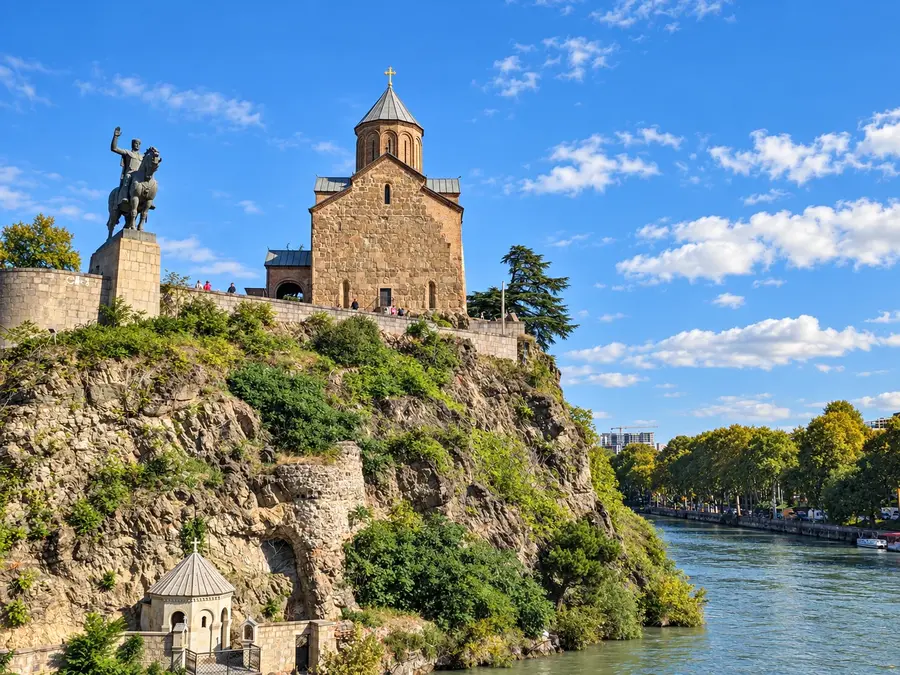
Metekhi Church sits on the very edge of a cliff, and its silhouette has long been an emblem of Tbilisi. Today's church went up in the 13th century and replaced a royal residence, which is where the name, meaning «around the palace», comes from. Over the centuries it has lived through sieges and been used as a prison and then a theatre. Beside it, Vakhtang Gorgasali, who founded the city, rides a stone horse.
The best view here is not of the church but from it: across the river you see balconies hanging over the water and the bath domes below the fortress. Behind Metekhi stretches Avlabari, the old Armenian quarter of narrow lanes, with fewer tourists and more of everyday city life.
5. Bridge of Peace and Rike Park
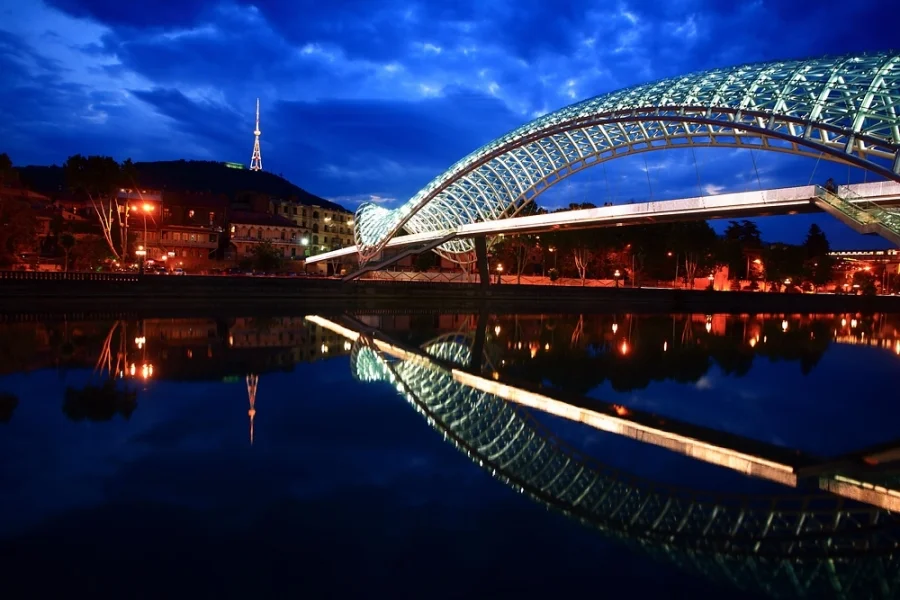
This pedestrian bridge of glass and steel arches over the Kura like a wave, linking the Old Town with Rike Park. Its Italian designer, Michele De Lucchi, created a structure that still divides opinion: some find it brash, others are proud of its boldness. In the evening thousands of LEDs light up in its canopy, forming shimmering patterns.
In the park on the far bank lie the two giant tubes of a concert hall, and the cable car to the fortress sets off right beside them. Children play, couples stroll and a musical fountain comes to life in the evening. Take a bench by the water and the finest panorama of the Old Town opens up in front of you.
6. Holy Trinity Cathedral (Sameba)
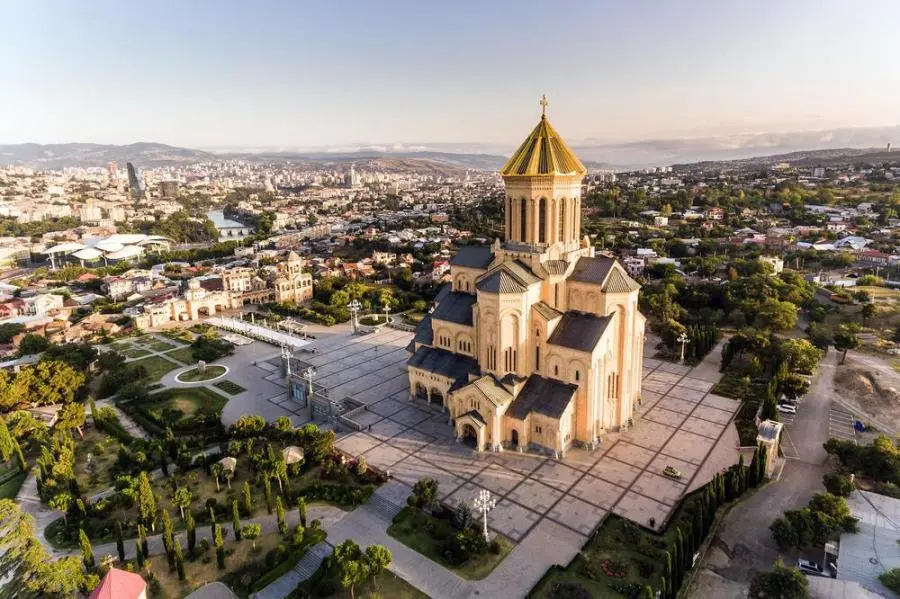
Sameba, the principal cathedral of Georgia's Orthodox Church, was consecrated in 2004, and its golden cross is visible from nearly every corner of Tbilisi. It ranks among the three tallest Orthodox cathedrals on the planet and crowns Elia Hill above the left bank. New as it is, its architects followed classic Georgian forms, with a tall drum and slender façades.
Inside, the vast hall feels even taller thanks to the light falling from narrow windows. Gardens with ponds and swans surround it, a favourite place for locals to unwind. Women should cover their heads and wear a long skirt, and men should not enter in shorts, though scarves are usually handed out at the door.
7. Rustaveli Avenue and the National Museum
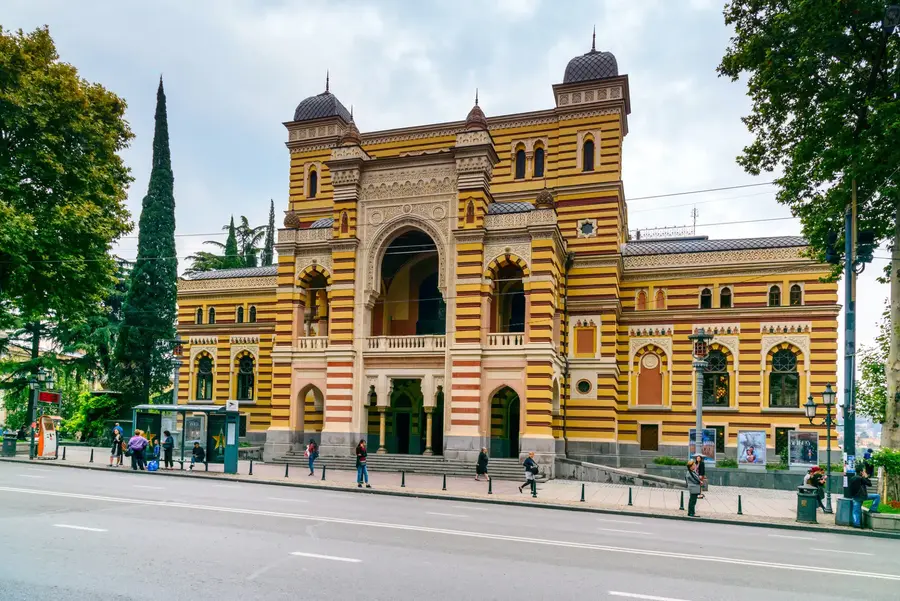
The city's main street is named after the poet Shota Rustaveli and runs north from Freedom Square with its column of St George. Along it stand the Parliament building, the Moorish-style opera house, Kashveti Church and grand old hotels. Rallies often gather outside Parliament, so check the local news before heading out.
Don't miss the Georgian National Museum where the avenue begins. Its greatest treasures are the golden jewellery of ancient Colchis, which brings the myth of the Golden Fleece to mind, and the skulls from Dmanisi, among the oldest human remains ever found outside Africa. Allow a couple of hours, as rushing does this place no favours.
8. Mount Mtatsminda and the Funicular
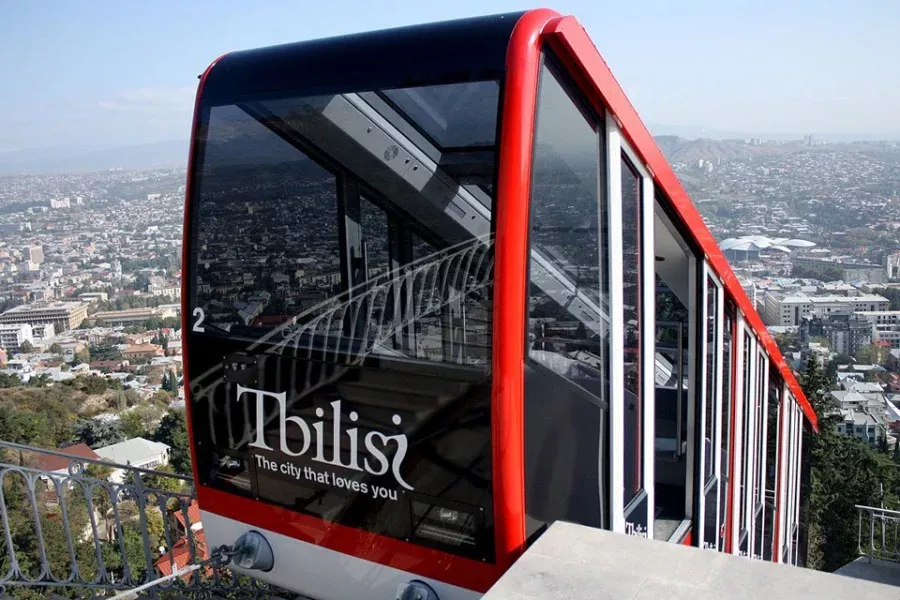
The highest point above the centre is Mtatsminda, the «Holy Mountain», served by a funicular since 1905. Halfway up it stops at St David's Church and the pantheon where Georgian writers and public figures are buried. At the top you'll find an amusement park, a Ferris wheel and a restaurant with a terrace overlooking the city.
Time your visit for the late afternoon and you'll catch both the daytime view and the lights slowly coming on below. From here you can see how Tbilisi stretches along its valley for dozens of kilometres. Families with kids will probably find this the most fun stop on the route, while grown-ups appreciate the breeze on sticky August days.
9. Gabriadze Marionette Theatre
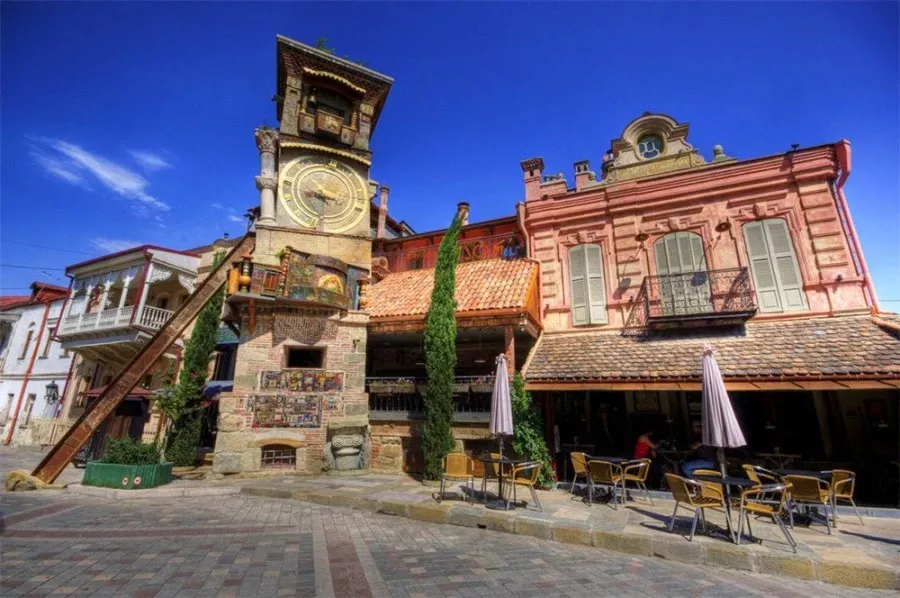
The leaning clock tower beside Rezo Gabriadze's theatre was put together by the artist himself from bricks, tiles and salvage from old houses, and it looks like a toy from a fairy tale. Every hour the shutters at the top open and a golden angel strikes the bell with a little hammer, while at midday and 7 pm a short puppet show named «The Circle of Life» joins in.
The theatre itself is tiny, and tickets for its touching marionette performances sell out early, so book them before you travel. Next door is a café decorated in Gabriadze's style. Even if the shows don't appeal, come to see the tower anyway: this corner of the Old Town feels like the cosiest of all.
10. Mtskheta
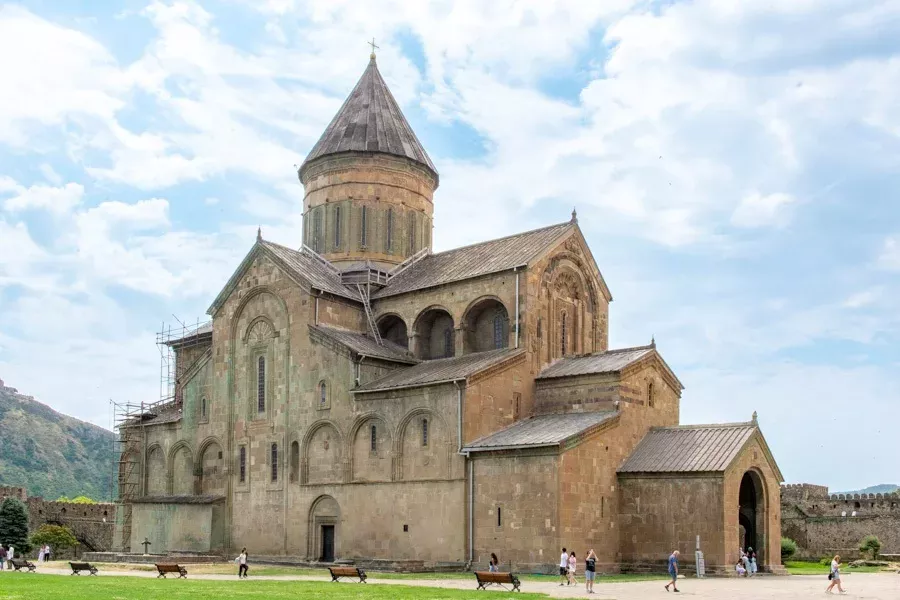
The ancient capital where Georgia adopted Christianity lies just 20 km north of Tbilisi. Svetitskhoveli Cathedral, built in the 11th century over the place where, it is said, the robe of Christ was buried, dominates the town centre. Fortress walls ring the cathedral, and inside are frescoes and the tombs of kings.
On the hill opposite rises the 6th-century Jvari Monastery, where you can watch the Aragvi flow into the Kura. Both churches are UNESCO World Heritage Sites, and a taxi or minibus gets you there in under an hour. Before leaving, pick up churchkhela or homemade wine from the stalls along the main street.
Tbilisi Landmarks: What Else to See While You're in the City
- Dry Bridge — an open-air flea market selling Soviet badges, paintings, vintage cameras, wine horns and carpets.
- Fabrika — a former sewing factory turned into a courtyard of bars, cafés, small shops and graffiti, buzzing with young crowds.
- Chronicle of Georgia — Zurab Tsereteli's giant pillars with bronze reliefs above the Tbilisi Sea, telling the story of the country and the Bible.
- Open Air Museum of Ethnography — real wooden and stone houses from every region of Georgia on a slope above Turtle Lake.
- Botanical Garden — shady paths in the gorge below the fortress, with a waterfall beyond a little bridge and cool air even in summer.
- Sighnaghi — a hilltop town with walls, towers and views over the Alazani Valley, a handy base for visiting Kakheti wineries.
- Kazbegi and Gergeti Trinity Church — along the Georgian Military Road to the foot of Mount Kazbek, where a 14th-century church stands against the snowy peak.
- David Gareja — cave monasteries in semi-desert on the border with Azerbaijan, with frescoes in the rock and pink hills all around.
- Uplistsikhe — a cave town cut into the rock above the Kura long before our era, near Gori.
- Ananuri Fortress — a castle with two churches above the turquoise Zhinvali Reservoir, a convenient stop on the way to Kazbegi.
What to See in Tbilisi in 1 Day, 2 Days or 3 Days
Are 3 days enough in Tbilisi? Yes: a single day covers the essentials, and three let you add an excursion beyond the city. With 1 day, walk the Old Town with Sioni and Anchiskhati, ride the cable car to Narikala, drop down to the baths, cross the Bridge of Peace, then end the day at Metekhi. Give the second day to Sameba, Rustaveli Avenue with the museum, the Dry Bridge market and an evening on Mtatsminda. Spend the third in Mtskheta and Jvari, and with extra time, stay a night in Kazbegi or Sighnaghi.
The best weather comes in May, June, September and October: warm and sunny, and in autumn Kakheti celebrates the grape harvest. July and August can be stifling, above 35 °C, which is a good time to escape to the mountains. Winters are mild but damp and windy. What is Tbilisi most famous for? Its sulphur baths, its wine and its hospitality, and the best way to respect the last is not to argue with your host at the table, not to refuse a toast without a reason and not to start talking politics with strangers. Beyond the trips above, Georgia rewards you with the Black Sea coast in Batumi, caves near Kutaisi and the towers of Svaneti.
Plenty costs nothing: wandering the Old Town, stepping inside Sioni, Anchiskhati and Sameba, crossing the Bridge of Peace, strolling Rike Park and following the gorge to the waterfall. Children will love the cable car, the park on Mtatsminda, the angel on the Gabriadze tower and the little houses of the ethnographic museum. What to eat? Adjarian khachapuri with an egg in a boat of dough, khinkali eaten by hand while holding the little knot on top, aubergine rolls with walnut paste, churchkhela and wine from qvevri clay jars. In the evening Georgians gather for a supra feast led by a tamada, while the bars on Shardeni and at Fabrika stay loud until dawn.
The easiest connection runs via Poland, where LOT's nonstop flight from Warsaw to Tbilisi takes just over three hours, and Wizz Air runs low-cost flights to Kutaisi, about 230 km from the capital by bus. Tbilisi airport is a 17 km ride from downtown, with a city bus running to Freedom Square. Ukrainian citizens can spend up to a year in Georgia visa-free, but border officers require medical and accident insurance covering at least 30,000 lari for the whole stay.
For a warm sea, why not follow the locals? According to Georgian statistics, Turkey is where the country's residents travel abroad most often. Travel advisers at the TurPoisk online travel agency can pick tours to Turkey for every taste, from the beaches of Antalya to lively Alanya, and are happy to book a hotel for you both in Tbilisi and on the coast, so the journey has two halves. Prices for your dates are a click away in our tour search, and spur-of-the-moment plans are covered by last-minute deals. Tell our managers how many days you have, and they will suggest how to divide them between Georgian peaks and Turkish beaches.


