
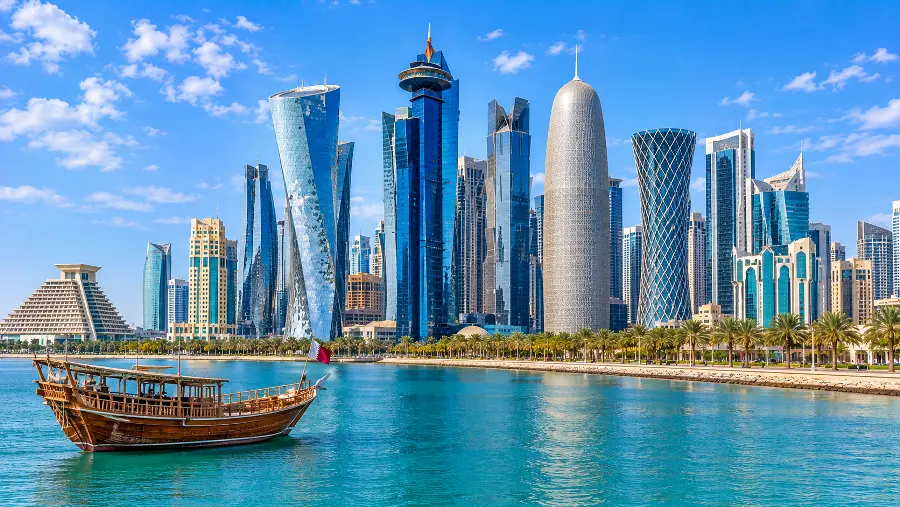
Qatar's capital, Doha, sits on the Persian Gulf, and in fifty years it has turned from a fishing village into a city of glass towers. People here once lived off the sea, netting fish and diving for pearls in a settlement called Al Bidda at the time; the present name is usually traced to the Arabic word dohat, "roundness", after the curving bays of this stretch of coast. Independence in 1971 made it a capital, and gas money later turned it into a showcase of daring architecture: I. M. Pei's museum on its own island, Jean Nouvel's "desert rose", man-made islands laced with canals and the stadiums of the 2022 football World Cup. Plenty of travellers only ever see Doha from the transfer halls of Hamad airport, yet the city repays even a single day outside the terminal. The list below sets out what to see in Doha and its surroundings, twenty places in all, opening with the Museum of Islamic Art and closing among the dunes of Khor Al Adaid.
What to See in Doha First
Central Doha curls around a half-moon bay, with the Corniche running along the water's edge. Its southern end holds the old quarters, with Souq Waqif, the fort and the main museums; at the northern end rise the glittering high-rises of the West Bay business district, and further up the coast come Katara, The Pearl and the new city of Lusail. A three-line metro and app-based taxis link the districts, while walking is most pleasant in the evening, once the heat eases off.
1. Museum of Islamic Art
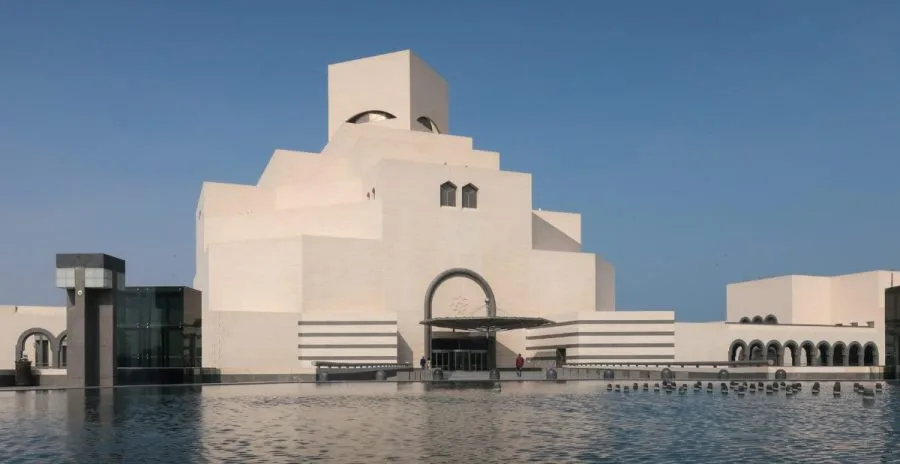
Clad in cream limestone, the building is the work of I. M. Pei, the architect of the Louvre's glass pyramid, who was coaxed out of semi-retirement for the project when he was already in his eighties. He insisted that nothing should ever be built around it, so a small island was raised for the museum next to the old dhow harbour. Its stacked geometric blocks recall early mosques, and the finest view of them is from the Corniche, when the late sun turns the stone golden.
Inside, fourteen centuries of art from across the Islamic world are on display: Qurans copied by hand, Iranian ceramics, carpets, armour, Indian jewellery and Syrian glass. The central atrium, with a vast window looking over the bay, is worth the visit on its own. Around the museum spreads MIA Park, with lawns, cafés and skyline views, and at the far tip of its spit stands Richard Serra's steel sculpture 7, rising 24 metres.
2. National Museum of Qatar
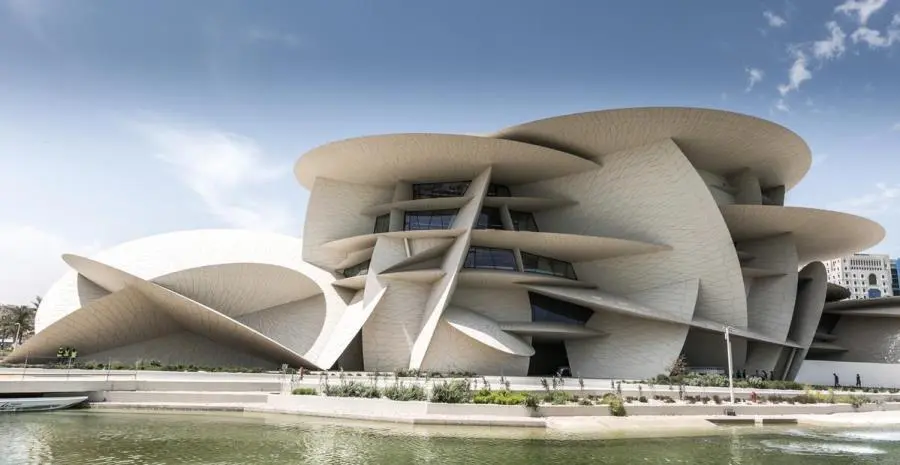
Jean Nouvel took his cue from the desert rose, a cluster of gypsum and sand crystals that forms in Qatar's salty ground. The building is made of hundreds of interlocking discs of different sizes, tilted at angles as if pushing up out of the earth, and it looks like nothing else on the planet. The new complex opened in 2019 and wraps around the former residence of the ruler Abdullah bin Jassim, where the country's modern story began.
The galleries follow Qatar from its geology and Bedouin camps to the pearling trade and the discovery of oil. Real objects are paired with huge projections across the walls, so even people who usually avoid museums tend to stay longer than planned. Look out for the Pearl Carpet of Baroda, covered in pearls from edge to edge, then step into the courtyard to see the sheikh's palace.
3. Souq Waqif
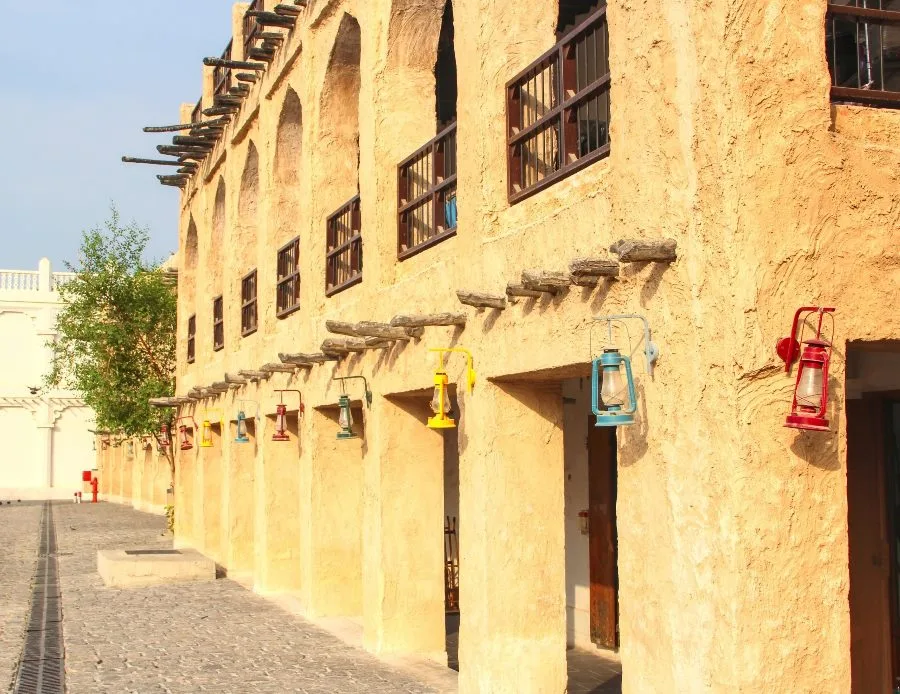
The market's name means roughly "the souq where people stood": according to local lore, traders once did business on their feet along the banks of a seasonal stream that ran down to the sea. The mud-walled buildings with their wooden beams were restored long ago, yet the maze of alleys still feels like old Doha. Stalls sell spices, frankincense and oud perfume oils, dried fruit, fabrics, abayas and kanduras, copper pots and souvenirs.
One section is given over to the falcon souq, where hooded birds sit on perches and shopkeepers let you hold one on a leather glove. A falcon hospital is close by, as are stables of Arabian horses and a pen of camels. The souq is at its liveliest from sunset until well after midnight, when the cafés push their tables out into the lanes and people settle in over shisha and tea.
4. The Corniche and Dhow Cruises
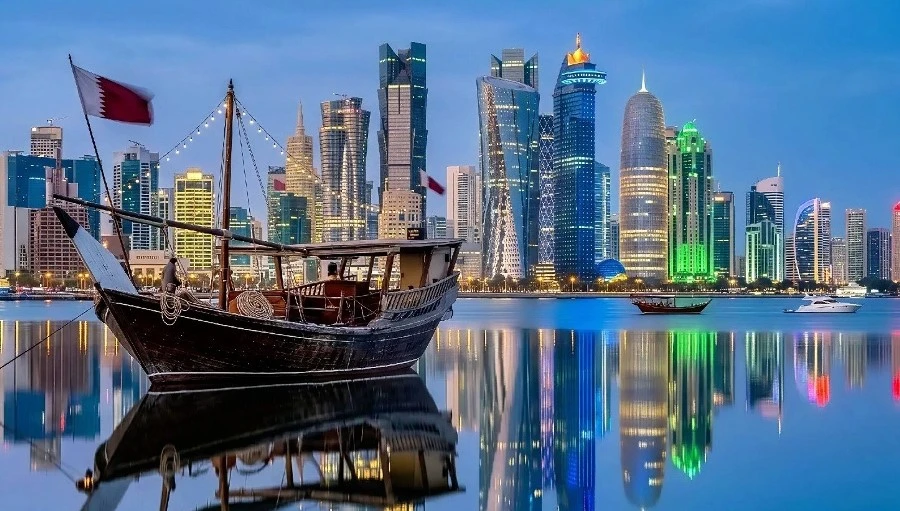
The Corniche follows the bay for seven kilometres, from the Museum of Islamic Art to the towers of West Bay, and this is where Doha comes out to promenade. On one side are palms, lawns and cycle paths; on the other, the water and a skyline that glows in shifting colours after dark. Midway you will spot a sculpture of a pearl in an open oyster shell, a reminder of the trade that kept Doha alive before oil.
Wooden dhows wait at the jetties, the same kind of sailing boat that once carried pearl divers and cargo to India. Today they take visitors out on the bay, and an hour on the water before sunset shows you the whole panorama from the sea. In winter the promenade fills with joggers and cyclists, while in summer it only comes alive once night falls.
5. Katara Cultural Village
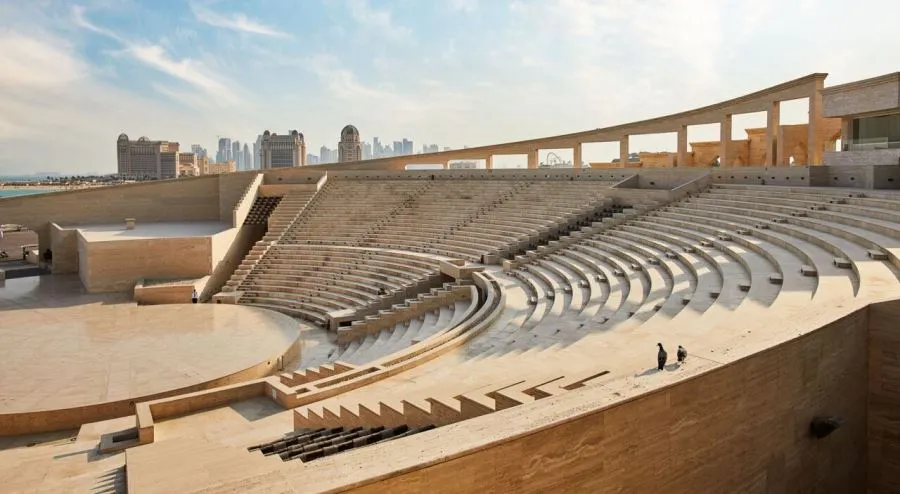
This district for festivals, concerts and exhibitions was created in 2010 on land won from the sea, between the West Bay towers and the island of The Pearl. Its lanes are designed to look like an old Arab town, hiding galleries, a theatre, an opera stage and restaurants with the cuisines of many countries. The showpiece is a marble amphitheatre for five thousand people that blends a classical layout with Eastern arches, with the sea opening up behind it.
Two mosques stand nearby: the Golden Mosque, faced with gilded tiles in an Ottoman manner, and a turquoise one decorated with mosaics by a Turkish designer. Do not miss the pigeon towers, 15 metres tall and built of clay and brick, which look like giant perforated jars. There is a managed beach on the shore, and in the evenings families wander between the buildings while photographers wait for the light.
6. The Pearl and Qanat Quartier
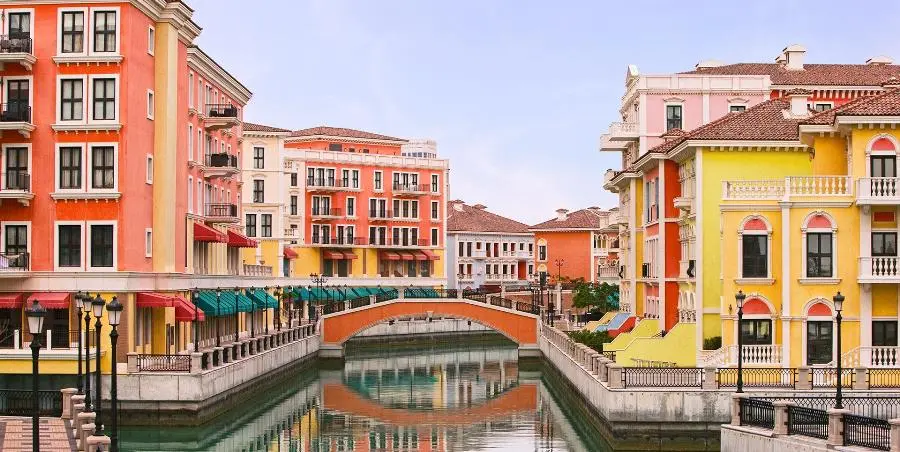
This man-made island of roughly four square kilometres was built over an old pearling bank, and it became the first place in Qatar where foreigners were allowed to buy property outright. Yachts crowd the marina at Porto Arabia, and the waterfront is lined with designer boutiques, cafés and restaurants.
The most photogenic corner is Qanat Quartier, which locals call Qatar's Venice: pastel houses with balconies, arched footbridges and canals plied by water taxis. It is a lovely place to wander and snap pictures against the coloured façades before lunch overlooking the water. A bridge joins the island to the mainland, and from downtown you are best off taking a taxi.
7. Msheireb Downtown and Its Museums
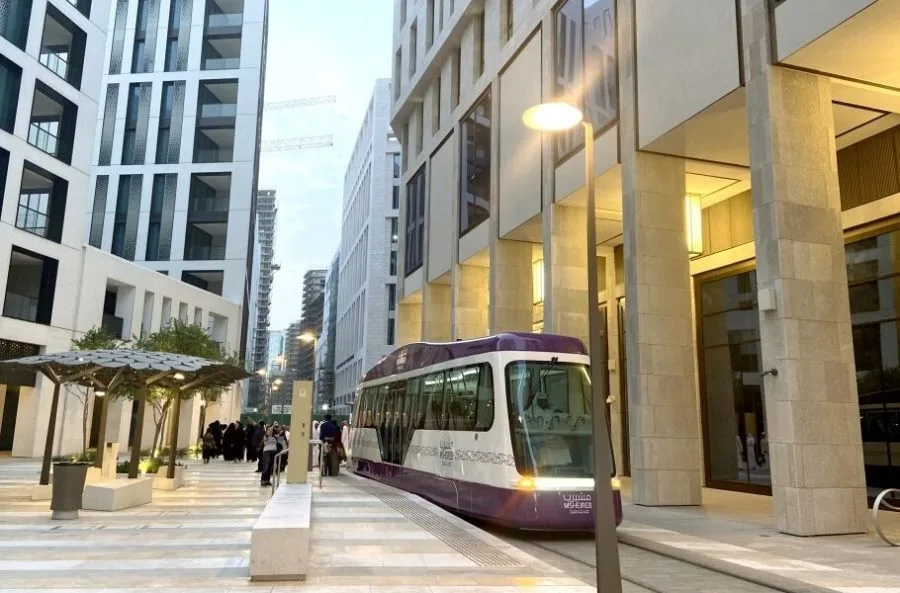
The old neighbourhood between Souq Waqif and the business streets was cleared and rebuilt from the ground up, but along the lines of traditional Qatari building: pale façades, narrow shaded lanes and inner courtyards. It was planned as a showcase of sustainable design, so the buildings stay cool, and a small tram loops through the streets.
Four restored houses now form the Msheireb Museums, each with its own subject. Bin Jelmood House speaks frankly about slavery around the Gulf, Company House follows the first Qataris who went to work in the oil fields, and Radwani House shows the everyday life of an ordinary family in the mid-twentieth century. Cafés fill the gaps between the houses, so the quarter easily fills half a day.
8. State Grand Mosque
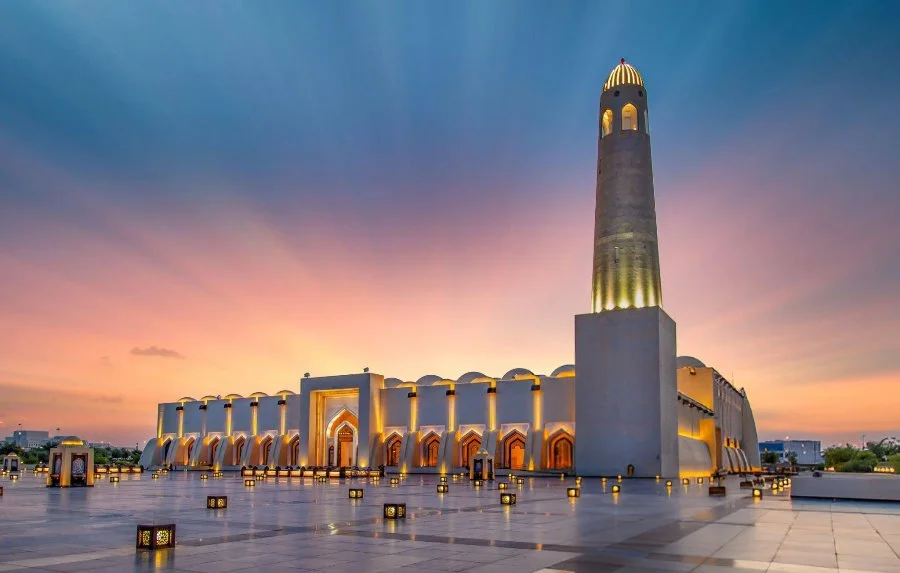
The country's main mosque honours the eighteenth-century religious scholar Ibn Abd al-Wahhab and opened in 2011. The sand-coloured building keeps to a restrained traditional style: 28 large domes crown the prayer hall, and another 65 smaller ones run around the broad courtyard. It holds tens of thousands of worshippers, and on the big religious holidays the courtyard fills completely.
Visitors of other faiths may come in between prayers, and the interior is calm and cool. Women should bring a scarf for their hair and wear loose clothes down to the wrists and ankles, men should wear long trousers, and everyone leaves their shoes outside. The mosque looks loveliest late in the afternoon, when the domes take on a pinkish tint, and soon after that soft lighting comes on.
9. Qatar National Library and Education City
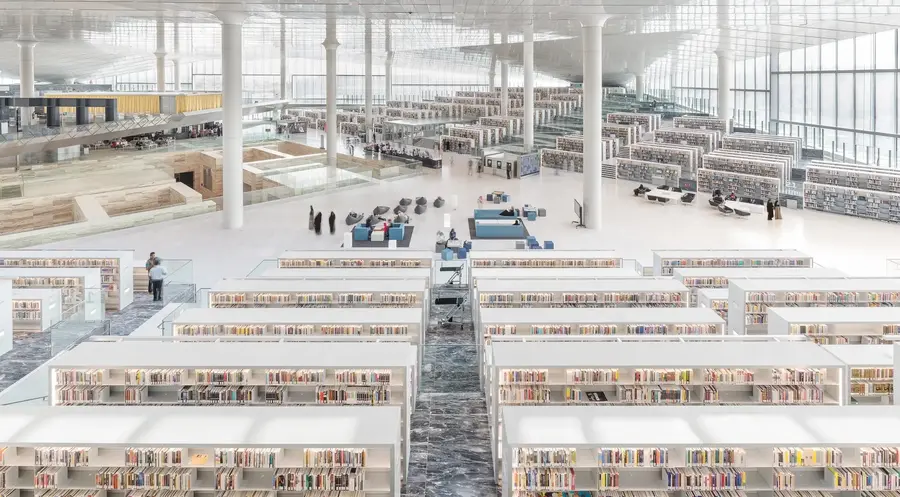
Dutch architect Rem Koolhaas designed the library to look like a huge sheet of paper folded up at the corners. There are no internal walls: white marble shelving steps down in terraces like seats in an amphitheatre, and in a sunken space below floor level lies the Heritage Library, with rare manuscripts, maps and engravings of Arabia. People come here not only for books but simply to sit quietly among the stacks.
The library stands in Education City, a campus of branch schools of foreign universities that is easiest to reach on the metro's Green Line. Nearby, have a look at the mosque that rests on five columns, one for each pillar of the faith, and sends two minarets soaring skyward. And Mathaf, Doha's museum of modern Arab art, keeps the biggest collection of its kind anywhere.
10. The Desert and Khor Al Adaid
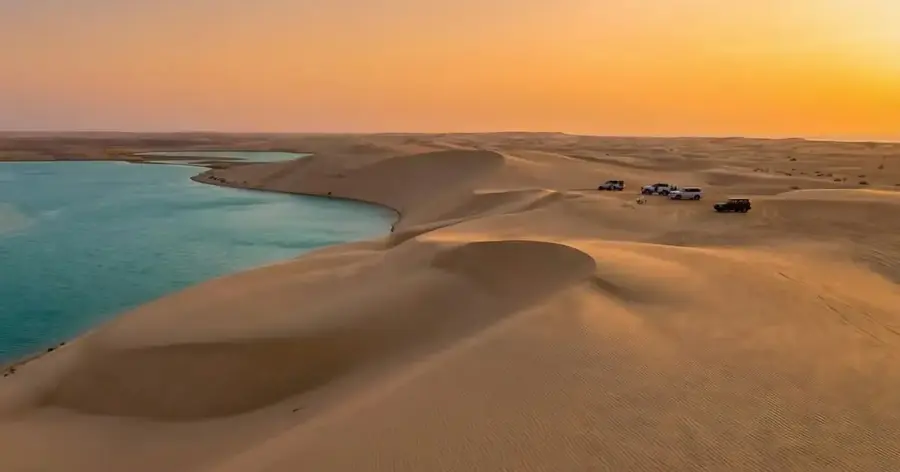
Down near the Saudi border, in the country's south-eastern corner, the Gulf pushes deep into the land and forms what is called the Inland Sea. High sand dunes rise all around it, so here the sea quite literally meets the desert. Since it became a protected reserve in 2007, Qatar has been campaigning for UNESCO to recognise it as World Heritage.
Nobody drives here on their own: the tarmac ends near Mesaieed, the rest of the way crosses the dunes, and an inexperienced driver gets stuck in no time. Visitors book a 4x4 tour with a driver who takes on the dunes at speed, swooping up and down the sandy slopes, then stops by the water for a swim. The trip takes half a day and often ends with dinner at a desert camp and a camel ride.
Doha Landmarks: What Else to See While You're in the City
- Mina District at Old Doha Port — once a cargo harbour beside the Corniche and now filled with brightly painted buildings, cafés, galleries and a cruise terminal.
- Al Koot Fort — a white fortress with corner towers next to Souq Waqif, built as a police post in 1880 and rebuilt in 1927.
- 3-2-1 Olympic Museum — an interactive sports museum by Khalifa International Stadium, where you can test yourself at a range of sports.
- Lusail — a new city to the north with a boulevard, a marina and the stadium where Argentina and France played the 2022 World Cup final.
- Aspire Park and the Torch — the capital's biggest park, home to Qatar's only lake, beside a 300-metre tower shaped like a flame raised when Doha hosted the Asian Games in 2006.
- Al Wakrah — a former fishing town south of Doha with a restored souq and a beach, reached on the metro's Red Line.
- Banana Island — a crescent-shaped resort island reached by boat, good for a day of pools, beach and water sports.
- Al Zubarah — the ruins of an 18th- and 19th-century trading and pearling town in the north-west, with a fort, listed by UNESCO.
- East-West/West-East — four steel plates by Richard Serra lined up across more than a kilometre of desert in western Qatar, not far from the mushroom-shaped rocks.
- Purple Island — an islet among the mangroves near Al Khor, where purple dye was once extracted from sea snails and where people now paddle kayaks.
What to See in Doha in 1 Day, 2 Days or 3 Days
Twenty-four hours is plenty for the highlights of the centre. Spend the morning in the Museum of Islamic Art, then stroll through its park, walk along the Corniche or take a dhow out on the bay, move on to the National Museum after lunch and spend the evening at Souq Waqif, with the falcon souq and dinner. Day two belongs to Msheireb and its museums, the National Library at Education City and the State Grand Mosque; watch the sunset at Katara and end the evening wandering the canals of Qanat Quartier. On day three, head out on a desert safari to Khor Al Adaid or drive north to Al Zubarah and the mangroves around Al Khor. Is 3 days enough in Doha? For the city and one trip into the desert, yes. If you are in Doha on a layover with five or six hours between flights, take the Red Line from the airport to Msheireb, from where Souq Waqif, the museum and the waterfront are a short walk away. A night layover works too, as the souq and the Corniche stay busy until late. And inside the airport itself, look for Urs Fischer's giant bronze teddy bear with a lamp over its head.
Doha is most pleasant from November to the end of March, when the days are warm rather than scorching, the evenings are fresh and the festival season is in full swing. From May to September daytime temperatures climb above 38 °C and often reach 45 °C, and the humidity makes the heat feel even worse, so sightseeing is limited to early mornings and after dark. On 18 December the country celebrates National Day with a parade along the Corniche and fireworks. The dates of Ramadan move every year, and during that month nobody eats or drinks in public during daylight hours. Dress modestly: shoulders and knees should be covered in museums, souqs and malls, swimwear belongs on beaches and by pools, and you should not photograph local women without asking. Alcohol is sold only in licensed hotel bars, and drinking in the street is against the law. The state language is Arabic, but you will get by in English almost everywhere.
Doha has plenty to enjoy for free: walking the Corniche, Souq Waqif, Katara, MIA Park and the canals of Qanat Quartier, visiting the State Grand Mosque and the National Library, or riding the Msheireb tram. With kids, head to the 3-2-1 Olympic museum, Aspire Park, Banana Island and the desert, where even small children love bouncing over the dunes. The national dish is machboos, spiced rice with dried lime, slow-cooked with chicken, lamb or fish. Also try karak, strong milky tea with cardamom poured in every café, and luqaimat, little fried dough balls drizzled with date syrup. Good things to bring home are dates, saffron, frankincense, oud perfume, and pearls or gold from the Gold Souq. After dark the city heads for Souq Waqif, the Corniche and Lusail Boulevard, and the most romantic way to end the day is on the deck of a dhow.
From Ukraine, the simplest way in is via Poland: Qatar Airways flies nonstop from Warsaw to Doha, and the flight takes about six hours. Hamad International Airport lies on the eastern edge of town, and the metro's Red Line runs from there to the centre in around twenty minutes. Ukrainian citizens enter Qatar on a biometric passport with six months or more of validity left, and it is wise to carry a return ticket.
Doha and the nearby United Arab Emirates share the same stretch of Gulf coast, which is why many travellers pair a few days in Qatar's capital with time on a beach next door. The staff of the TurPoisk travel company will be happy to find tours to the UAE, whether to Dubai with its beaches and malls, quieter Abu Dhabi or Ras Al Khaimah, where mountains rise above the sea. Our consultants will happily book a hotel in Doha as well, so the museums, souqs and desert become the first part of the journey. Rooms for the winter months, when the Gulf weather is at its best, go quickly, so it pays to sort out accommodation early. Use the tour search to see what is available on your dates. Drop us a line and we will put together a trip that runs from Qatar's dunes to the Emirates' beaches.


