
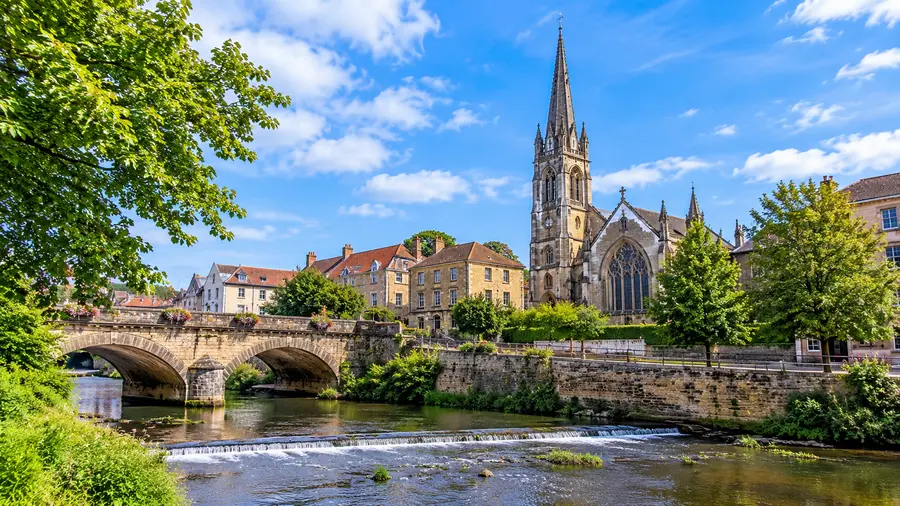
Glasgow, Scotland's biggest city, stands on the River Clyde about 70 km west of Edinburgh. Legend says St Mungo founded it in the 6th century, but its fortune came later, from the tobacco lords of the 1700s and the Clyde shipyards that launched great ocean liners; Victorian Britain ranked it just behind London. When heavy industry faded, the city reinvented itself through art and music, taking the title of Europe's cultural capital in 1990 and later earning UNESCO's recognition for its music. The population tops 600,000, most of the big museums are free, and the locals are known for their humour and love of a chat, hence the slogan "People Make Glasgow". So what to see in Glasgow on a first visit? This list of 20 addresses runs from a medieval cathedral and a Victorian necropolis to museums with a Dalí masterpiece and a Spitfire hanging from the ceiling, and it closes with a trip to Loch Lomond.
What to see in Glasgow first
Central Glasgow is laid out on a grid of straight streets like an American city, and most places are an easy walk from Central and Queen Street stations. The oldest quarters, with the cathedral and the Necropolis, lie to the east next to the Merchant City, Buchanan Street runs through the middle, and beyond the motorway to the west is the leafy West End with the university, Kelvingrove and the Botanic Gardens. The tiny circular Subway gets you there quickly, while suburban trains serve the Burrell Collection and Loch Lomond.
1. Glasgow Cathedral
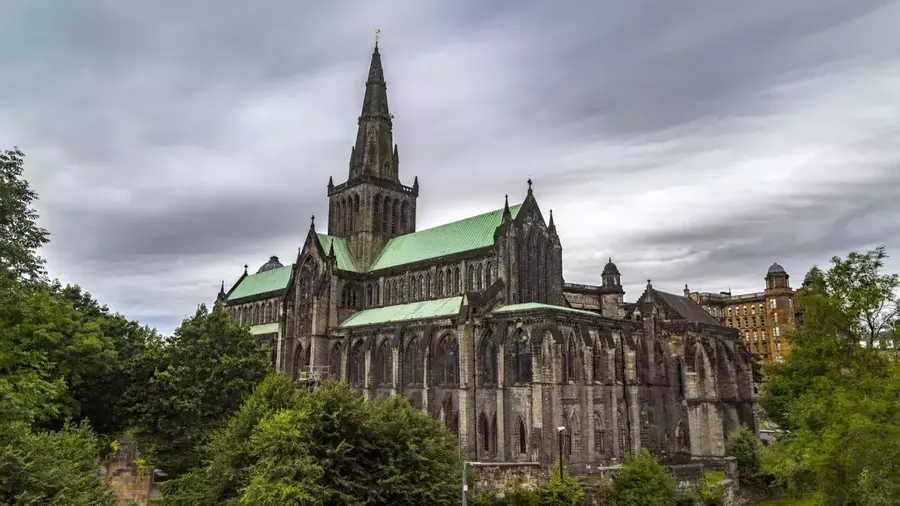
This brooding Gothic church of soot-blackened stone stands where St Mungo, by tradition, built the first chapel. The present building went up between the 12th and 15th centuries, and it is the only medieval cathedral on the Scottish mainland to come through the Reformation almost intact, because the townspeople themselves defended it from the wreckers.
Head down to the lower church, where St Mungo's tomb lies in a forest of stone columns, a place of pilgrimage for centuries. His miracles still decorate the city's coat of arms, a bird, a tree, a bell and a fish with a ring in its mouth, and you will spot these symbols all over town. You pay nothing to enter the cathedral.
2. The Necropolis
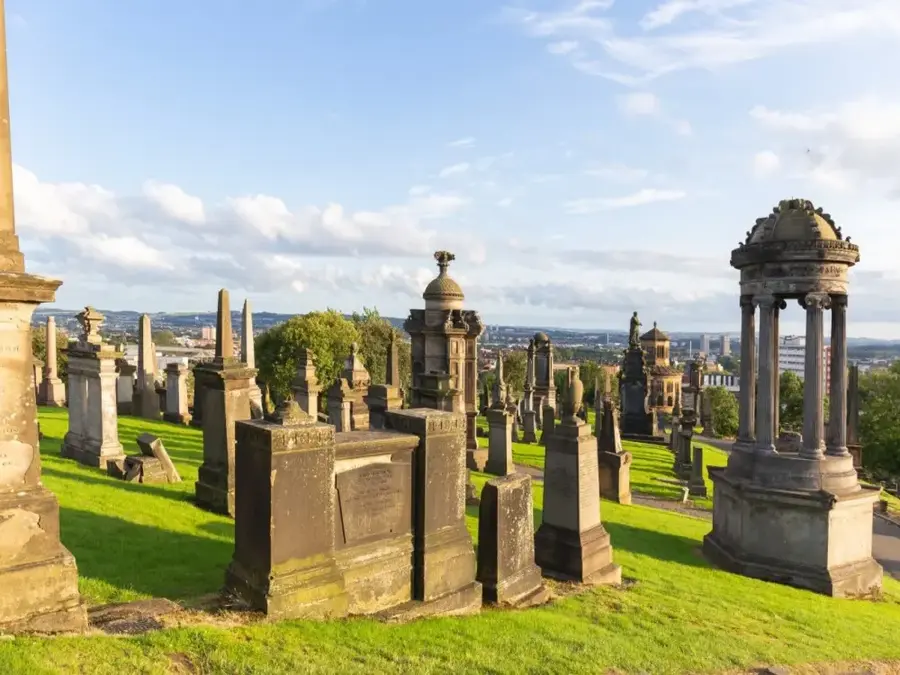
Behind the cathedral, on a green hill, spreads a Victorian city of the dead, opened in 1833 and modelled on Père Lachaise in Paris. You reach it across the Bridge of Sighs, and thousands of tombs, vaults and obelisks climb the slope, because wealthy merchants and industrialists competed to put up the tallest memorial.
On the summit a column to the preacher John Knox looks down on the cathedral his followers wanted to pull down. You will hardly find a better view of the city, especially at sunset. Entry is free, the paths are open to all, and volunteers lead tours about the people buried here.
3. Kelvingrove Art Gallery and Museum
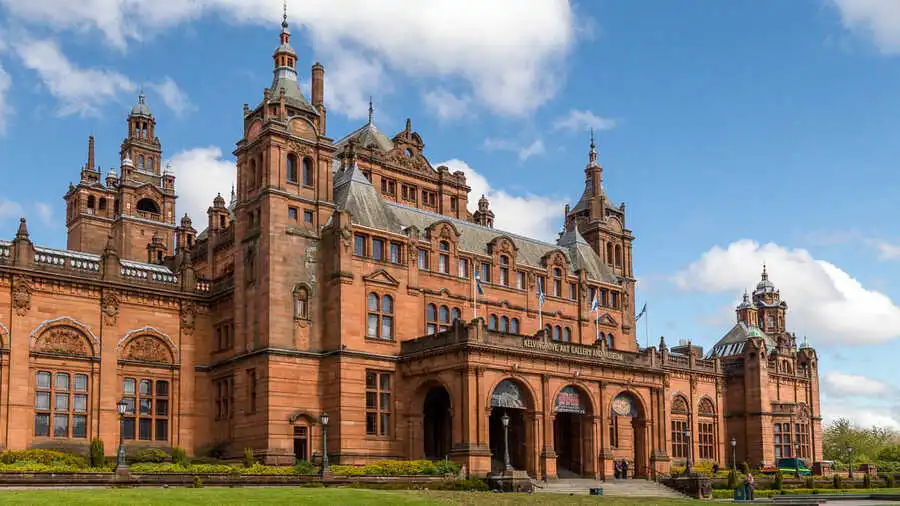
Few museums in Scotland draw more visitors than this red sandstone palace, opened in 1901. An urban myth claims it was built the wrong way round and that the architect jumped from a tower in despair, but the main door simply faces the park. Under one roof you will find a Spitfire hanging from the ceiling, stuffed animals, Egyptian mummies, armour and paintings.
The star is Salvador Dalí's Christ of Saint John of the Cross, which the city bought in 1952, along with the Impressionists and the Glasgow Boys. Try to catch an organ recital: nearly every day the huge instrument fills the main hall while visitors listen from the stairs. In the great hall, dozens of suspended heads pulling different faces make a favourite photo stop.
4. University of Glasgow
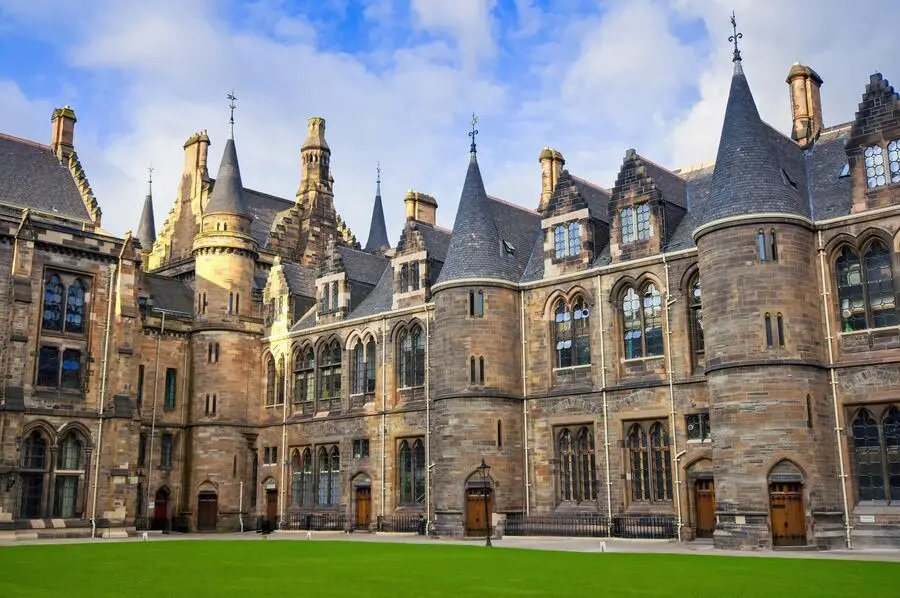
Dating back to 1451, this is one of the oldest universities anywhere in the anglophone world: Adam Smith studied here and James Watt worked as its instrument maker. The Gothic Revival main building on Gilmorehill, with its sharp tower, was designed by George Gilbert Scott in 1870, and its vaulted cloisters look so much like Hogwarts that students and tourists are forever taking pictures among the columns.
The main building houses the Hunterian, Scotland's oldest public museum, with Roman stones from the Antonine Wall, Lord Kelvin's instruments and anatomical collections. Across the road, the Hunterian Art Gallery shows Whistler and a reassembled interior of Charles Rennie Mackintosh's home. The main galleries charge no admission.
5. Riverside Museum and the Tall Ship
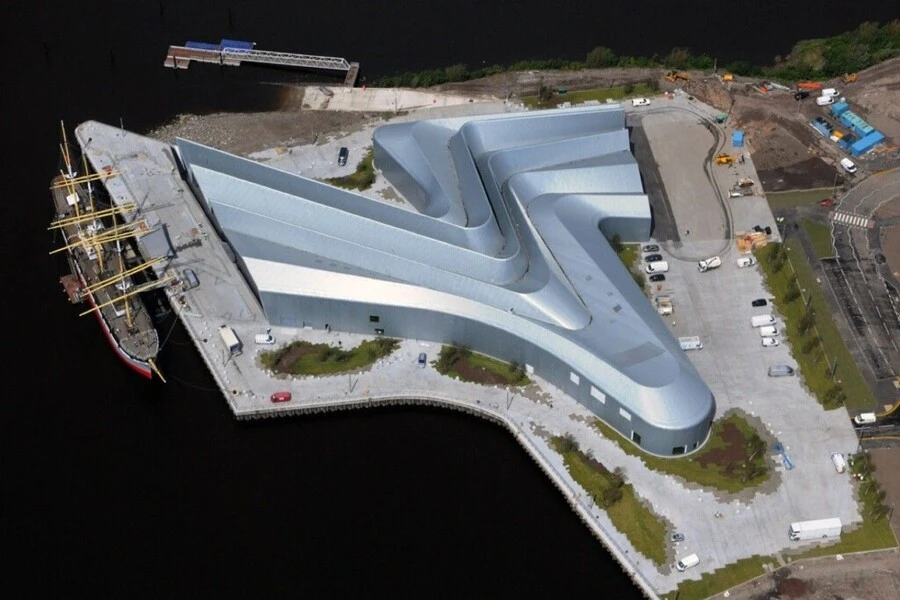
A zigzag building with a wavy roof by Zaha Hadid stands on the Clyde and took the European Museum of the Year award in 2013. Inside are steam locomotives, trams, vintage cars, bicycles gliding on a conveyor overhead and models of the liners built in local yards, and you can stroll down a recreated street of old Glasgow with its shops. Entry is free.
Moored outside is the three-masted Glenlee of 1896, one of the few Clyde-built ships still afloat, where you can go down into the hold and peek into the captain's cabin and the galley. Looking along the river you can see the Finnieston Crane, once used to load locomotives onto ships, and the Armadillo concert hall, named for its armour-like shell.
6. The Burrell Collection and Pollok Country Park
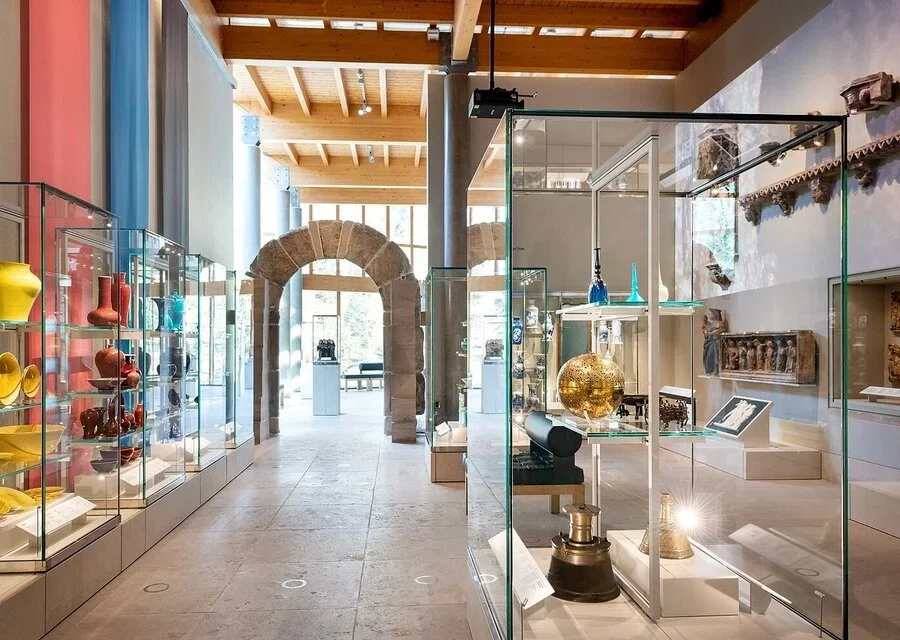
The shipping magnate William Burrell spent his life buying art, and in 1944 he gave the city around nine thousand objects: Chinese ceramics, medieval tapestries, Egyptian statues, paintings by Degas and Cézanne. A bright glass museum was built for them in the park, so the woods are visible through the walls, and after a major refurbishment it is once again one of Glasgow's great prides. Admission is free.
All around stretches Pollok Country Park, once voted Europe's best park, with woods, trails and a fold of shaggy Highland cattle everybody wants to photograph. Nearby, the Pollok House mansion holds a collection of Spanish painting including El Greco and Goya. A suburban train gets you here from central Glasgow in about 10 minutes.
7. Charles Rennie Mackintosh: the Willow and the House for an Art Lover
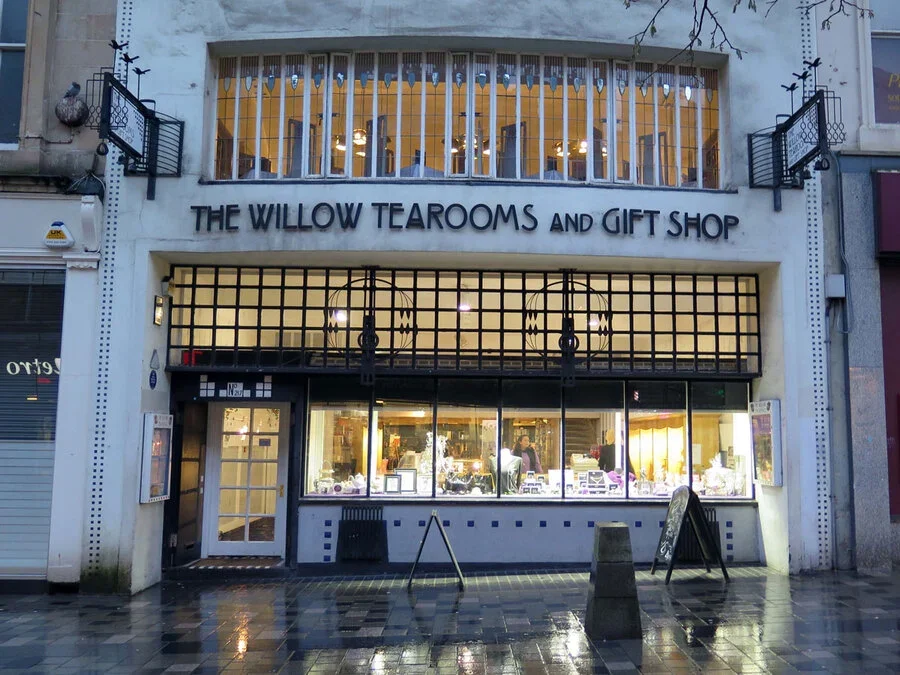
The architect and designer Charles Rennie Mackintosh is the great hero of Glasgow Art Nouveau, and his tall chairs and stylised roses have become symbols of the city. His most famous building, the School of Art, has been badly damaged by fire twice, so the best place to see his style is the tea room on Sauchiehall Street that he designed for the businesswoman Kate Cranston in 1903.
Mackintosh at the Willow once again serves tea and scones among the original silver panels and leaded glass. Another address is the House for an Art Lover in Bellahouston Park, built only in the 1990s from drawings he made for a German competition in 1901, where every room is a complete work of art from the walls to the tableware.
8. The Merchant City and GoMA
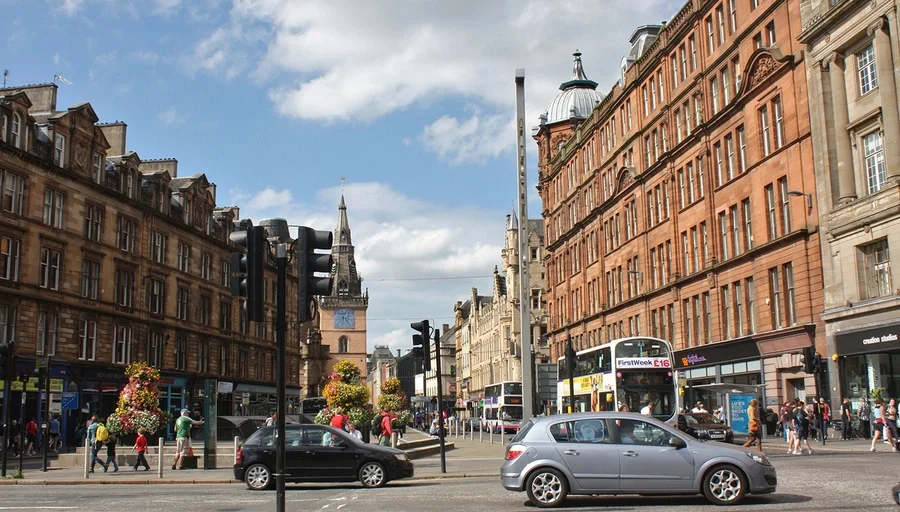
The Merchant City owes its 18th-century streets to tobacco lords enriched by the Virginia trade, and street names still recall them and that grim chapter tied to slave labour. Today its warehouses and bank buildings are home to bars, restaurants, boutiques and theatres, and in summer it hosts a street festival.
Nearby, in the Neoclassical mansion of a tobacco baron, is the free Gallery of Modern Art. In front of it stands the city's most famous statue, the mounted Duke of Wellington wearing a traffic cone on his head. Passers-by have been replacing it for decades, and when the council tried to put a stop to it, the public protested in force. Pedestrianised Buchanan Street, Scotland's main shopping thoroughfare, runs close by.
9. Glasgow Botanic Gardens and the West End
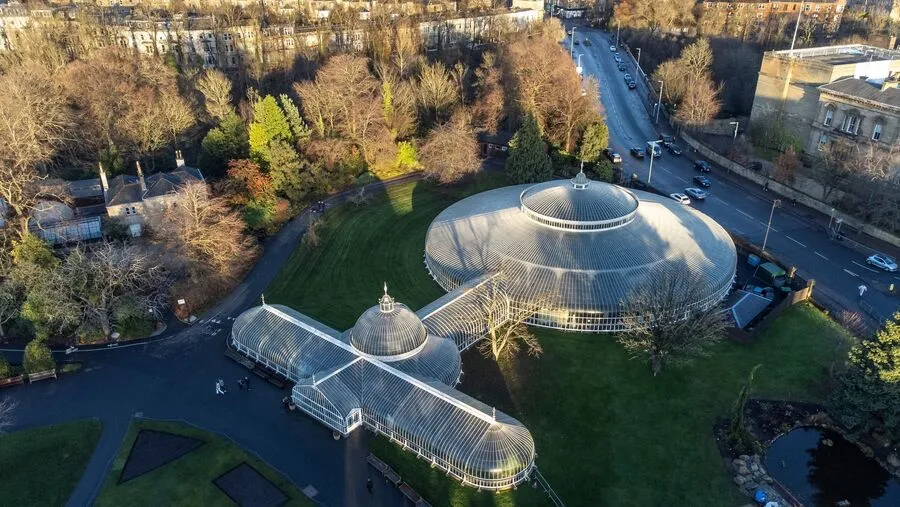
Where Great Western Road meets Byres Road you will find gardens founded in 1817, with old trees and paths along the River Kelvin. Their jewel is the Kibble Palace of 1873, a huge cast-iron and glass house full of tree ferns, subtropical plants and marble statues. You can walk in for free, and on rainy days even locals come in to warm up.
Step outside into the city's most bohemian quarter, the West End, with red and honey-coloured sandstone terraces, coffee shops, vintage stores and cosy Ashton Lane, where fairy lights hang over the cobbles beside an old cinema and bars. This is also where a pretty walk along the Kelvin begins, leading to Kelvingrove.
10. Loch Lomond
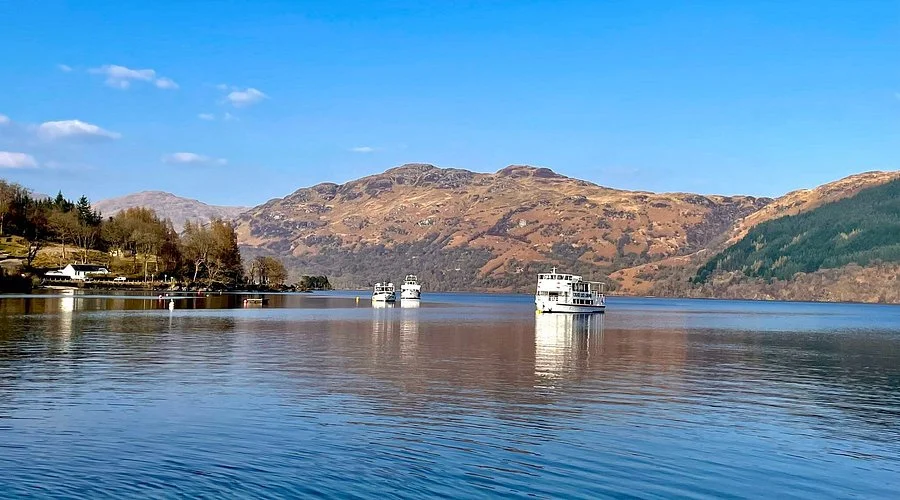
What is the prettiest place near Glasgow? Most people would say Loch Lomond, Britain's largest lake by surface area and under an hour away: trains run to Balloch on the southern shore. Sung about in the folk song of its "bonnie banks", it marks the start of Scotland's first national park, with mountains, forests and dozens of islands, and sightseeing boats sail from here up to the wilder northern end.
The loveliest spot on the shore is the village of Luss, with stone cottages and roses and fine views of Ben Lomond. If you want more of Scotland, continue on one of the world's great railway journeys, the West Highland Line, through the glens as far as the Glenfinnan Viaduct, famous from the Harry Potter films.
Glasgow Attractions: What Else to Visit While in the City
- Provand's Lordship — the city's oldest house, built in 1471 opposite the cathedral, with rooms of antique furniture and a garden of medicinal herbs.
- St Mungo Museum of Religious Life and Art — a free museum beside the cathedral covering all the world's faiths, with statues, stained glass and Britain's first permanent Zen garden.
- The Tenement House — a flat in a typical Glasgow block where Agnes Toward kept her gas lamps, furniture and even a jar of jam from the early 20th century.
- City Centre Mural Trail — a walk past giant wall paintings, the best known of which shows a modern St Mungo with a robin on his finger.
- Glasgow Subway — opened in 1896, when only London and Budapest had an underground, with a single loop, tiny carriages and the nickname "Clockwork Orange" for its bright trains.
- Glasgow Green — the city's oldest park, beside the Clyde, with Templeton's carpet factory, a brick copy of Venice's Doge's Palace.
- The Barras — a famous weekend flea market in the streets behind the Barrowland Ballroom, a venue where countless British rock stars have played.
- Glasgow Science Centre — a big hands-on exhibition with a planetarium and a cinema on the Clyde beside a tower that turns with the wind. Children can spend all day here.
- The Clydeside Distillery — a city distillery in a former pump house on the Clyde that shows the whole journey from barley to whisky and offers a tasting of several drams.
- Celtic Park and Ibrox — home to Celtic and Rangers, the fiercest rivalry in British football. Both offer stadium tours, and a match is worth seeing at least once.
What to See in Glasgow in 1, 2 or 3 Days
How to spend 3 days in Glasgow? One day covers the essentials, a second spares you from rushing the museums, and a third suits Loch Lomond or Edinburgh. A one-day route could run: the cathedral and the Necropolis in the morning, then Provand's Lordship, the Merchant City with GoMA and the cone-topped Duke, Buchanan Street up to the Willow tea rooms and finally the Subway to the West End for Kelvingrove, the university and dinner on Ashton Lane. Day two pairs the Riverside Museum and the Tall Ship before lunch with the Burrell Collection and Pollok's Highland cows after it.
Expect mild, wet weather and pack a jacket all year: summers usually reach 15–20°C and winters rarely freeze, though it gets dark early. The best time to visit Glasgow runs from May to September, when the West End and Merchant City host their festivals, and in January folk musicians gather for Celtic Connections. Which is nicer, Edinburgh or Glasgow? Edinburgh is the prettier postcard, Glasgow the livelier and friendlier city, and they are close enough to see both. Further afield are Stirling Castle, 30 minutes by rail, New Lanark, a mill village on the UNESCO list, the valley of Glencoe and the lochs of the Highlands.
Places to visit in Glasgow for free include the cathedral, the Necropolis, Kelvingrove, the Riverside Museum, the Burrell Collection, the Hunterian, GoMA, the Botanic Gardens and the parks, as well as the mural trail. Children will love the Science Centre, the Spitfire at Kelvingrove, the Tall Ship, the cattle at Pollok and a ride on the circular Subway. As for food, try haggis with neeps and tatties, a Scottish breakfast with square sausage, chicken tikka masala, which local legend says was invented in Glasgow, Tunnock's tea cakes, Irn-Bru and of course whisky. At night Glasgow is all about music, with famous venues such as King Tut's, where Oasis were discovered, and the Barrowland Ballroom.
From Ukraine the way to Scotland leads through Poland: Ryanair and Jet2 connect Kraków and Glasgow nonstop in about three hours. Just 13 km separate the terminal from the city, and the Airport Express bus 500 gets to Buchanan Bus Station in 20–25 minutes. A Schengen visa won't help here, so arrange a British one in advance. Onward trains are quick too: Edinburgh is about 50 minutes away, Manchester a little over three hours and London around four and a half.
Scots like to escape the rain for the sun too: according to Glasgow Airport, its most popular destinations are Tenerife, Alicante and Majorca, and in summer the islands of Greece rank among the favourites. The TurPoisk travel agency suggests doing the same: reserve a room in the Merchant City or the West End for the Scottish half of your holiday, then pick tours to Greece for the rest, with long beaches on Crete or medieval Rhodes, or head to Tenerife, mild even in winter. Dates and prices are all in the search form, the best bargains turn up among last-minute deals, and our consultants will work out the right order for Scottish lochs and a warm sea.


