
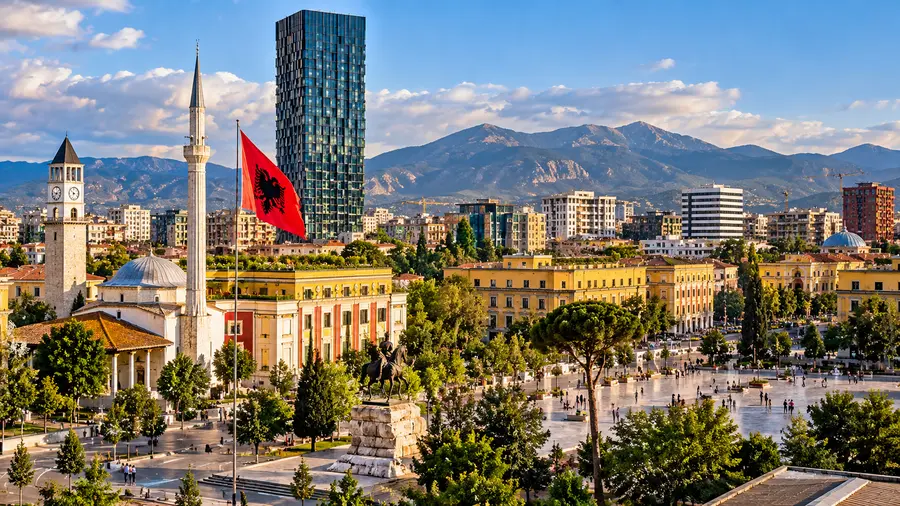
Albania's capital, Tirana, is one of Europe's most surprising cities, a place where Ottoman mosques share the skyline with 1930s Italian ministries and Cold War bunkers have been reborn as museums. It has held capital status only since 1920, and for almost half a century after the Second World War it lived behind the iron curtain of Enver Hoxha's regime, which cut the country off even from its socialist neighbours. When communism fell, the city literally repainted itself: grey apartment blocks were covered in bold stripes and patterns that visitors now photograph. What is Tirana famous for today? Strong espresso on every corner, an easy-going street life and a sea less than an hour away. Is Tirana worth visiting? For anyone curious about Europe's recent history, very much so, so here is our selection of what to see in Tirana, twenty places that explain how this unusual capital ticks.
What to see in Tirana first
Almost every major sight lies around Skanderbeg Square or along Dëshmorët e Kombit Boulevard, which runs south towards the university. You can cover the centre on foot in a day, while the Dajti cable car and the bunker on the outskirts are an easy taxi or city bus ride away. Start your walk early, before the heat builds, and keep the evening free for the Blloku district.
1. Skanderbeg Square
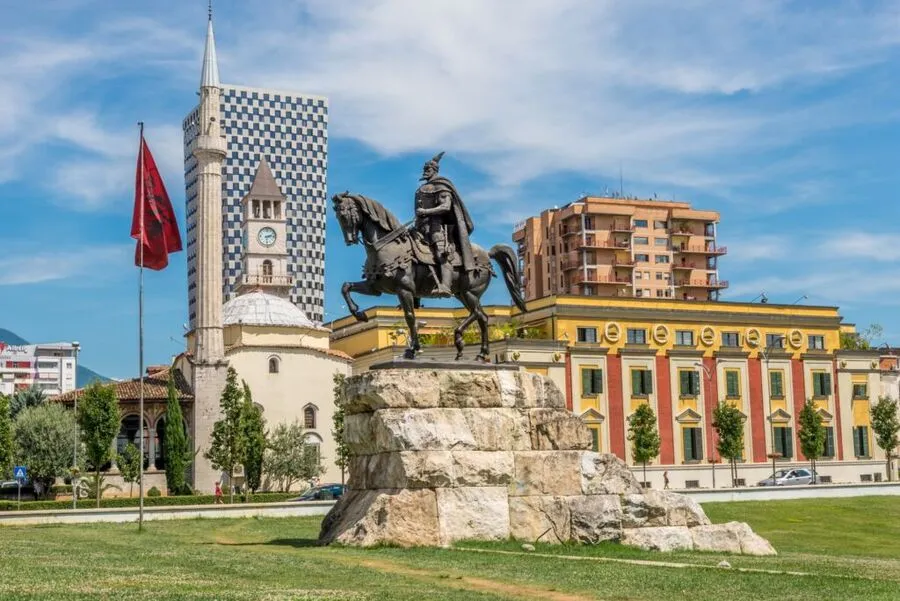
Albania's main square is vast and almost entirely car-free. It was paved with stone brought from every corner of the country, so crossing it means walking over the whole of Albania. At its heart rides an equestrian statue of Skanderbeg, the national hero who held back the Ottomans for a quarter of a century in the 1400s and remains the symbol of Albanian independence.
Buildings from several eras frame the square: the Et'hem Bey Mosque and the Clock Tower, the Palace of Culture with the opera house, the National History Museum, whose facade carries a giant mosaic, and the yellow ministries that Italian architects designed between the wars. In the evening little fountains spring straight out of the paving and children dash between the jets.
2. Et'hem Bey Mosque and the Clock Tower
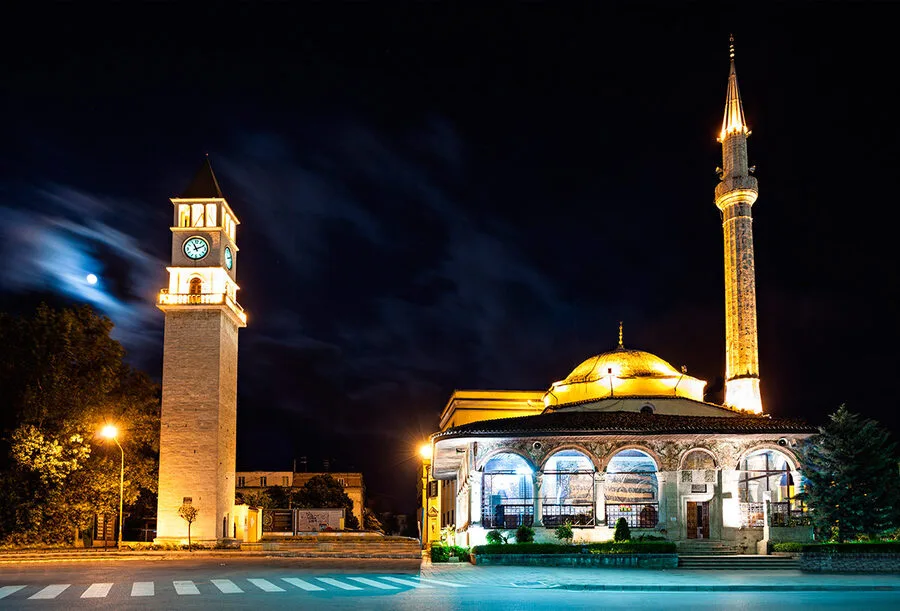
Work on this small mosque began in 1789 and was completed in 1823 by Et'hem Bey, who gave it his name. Its real treasure is the painted decoration on the walls and under the portico, showing trees, waterfalls, bridges and little houses, rare subjects in Islamic art. In 1967 Albania proclaimed state atheism, a world first, and most places of worship were demolished, but the mosque survived as an architectural monument.
In January 1991 thousands of people came here to pray in defiance of the ban, a day now seen as the symbolic end of the dictatorship. Beside it stands the 35-metre Clock Tower of 1822, one of the oldest structures in the city. Narrow stairs lead to a viewing platform with a fine outlook over the square.
3. Bunk'Art 2
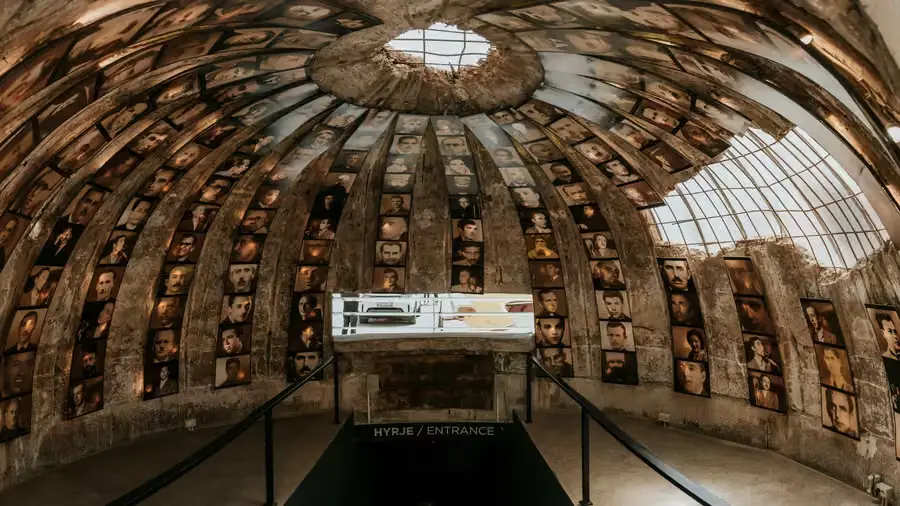
A few steps from Skanderbeg Square, a concrete dome peeps out of the ground. It marks the entrance to an anti-nuclear bunker built for the interior ministry. Enver Hoxha feared invasion from both West and East, so the country was dotted with some 170,000 bunkers, and several were hidden beneath the capital.
Its damp corridors and rooms now house a museum about the police and the Sigurimi secret service, with interrogation cells, surveillance equipment and the stories of people the regime persecuted. The mood is heavy, but nowhere explains better what Albania lived through. Allow an hour or so.
4. The Pyramid of Tirana
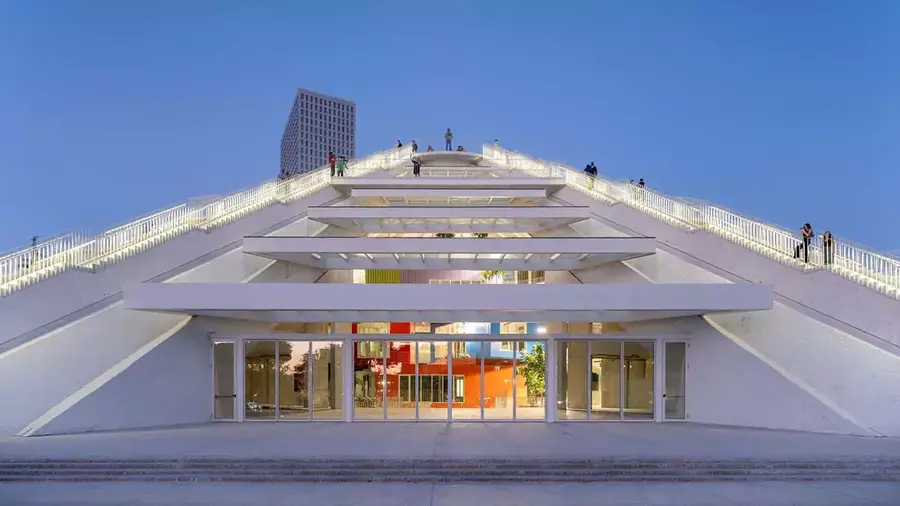
This odd concrete pyramid was unveiled in the late 1980s as a memorial museum to Enver Hoxha, designed by the dictator's daughter and her husband. After the regime collapsed it served as a conference centre, a NATO base during the Kosovo war and a television studio, while local teenagers spent years sliding down its sloping sides.
A makeover turned it into a technology centre for young people and added staircases up its flanks, so you can now climb right up to the summit for views over the boulevard, the rooftops and the mountains. By the entrance hangs the Peace Bell, made from bullet casings that children picked up in the streets after the unrest of 1997.
5. Blloku
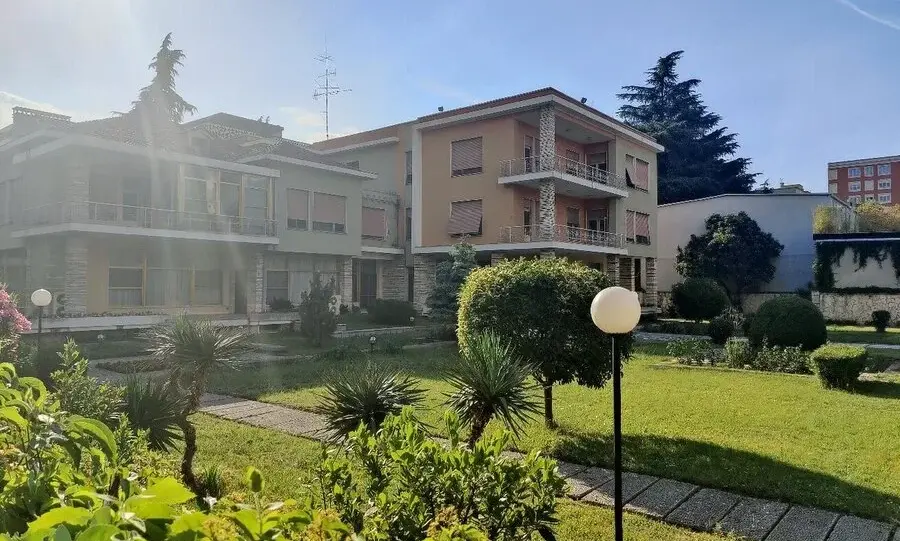
Under communism this neighbourhood was a closed enclave, home to members of the Politburo and off-limits to ordinary Albanians until 1991. Enver Hoxha's villa still stands on one of its streets, a surprisingly modest house where the dictator lived for decades.
Today Blloku is Tirana's liveliest district, packed with cafés, cocktail bars, restaurants and boutiques run by young designers. By day people sip espresso, which Albanians take every bit as seriously as Italians, and by night the streets fill with a young crowd until the small hours. At the corner of the district stands the Postbllok memorial, covered further down this list.
6. National History Museum
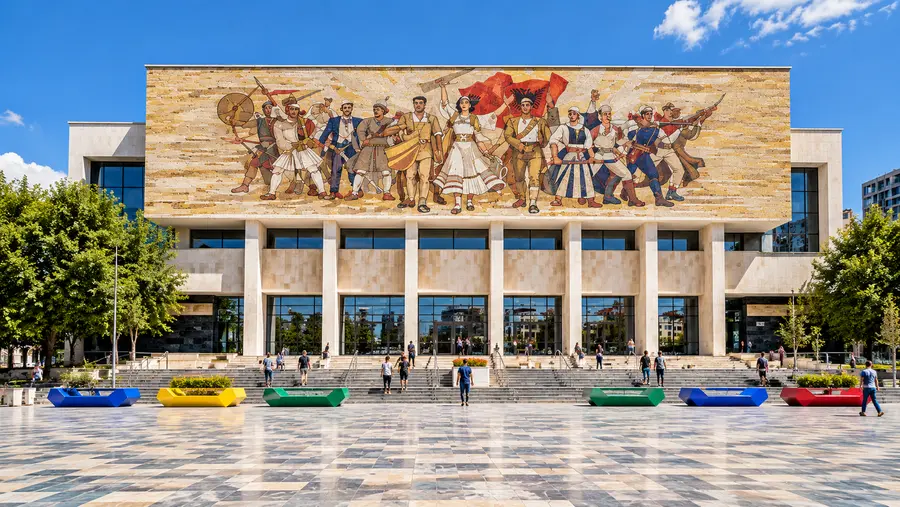
Albania's largest museum is easy to spot thanks to the mosaic "The Albanians" above the entrance, in which heroes from many ages, from an Illyrian warrior to a partisan woman of the Second World War, march forward beneath a red flag. It was made under the dictatorship but kept as a piece of history.
The galleries lead from prehistoric finds and Illyrian treasures through ancient cities, the Middle Ages and the Ottoman period to independence. One pavilion honours the victims of communist terror, with photographs, documents and personal belongings of political prisoners. It ties together everything you will see on Tirana's streets.
7. House of Leaves
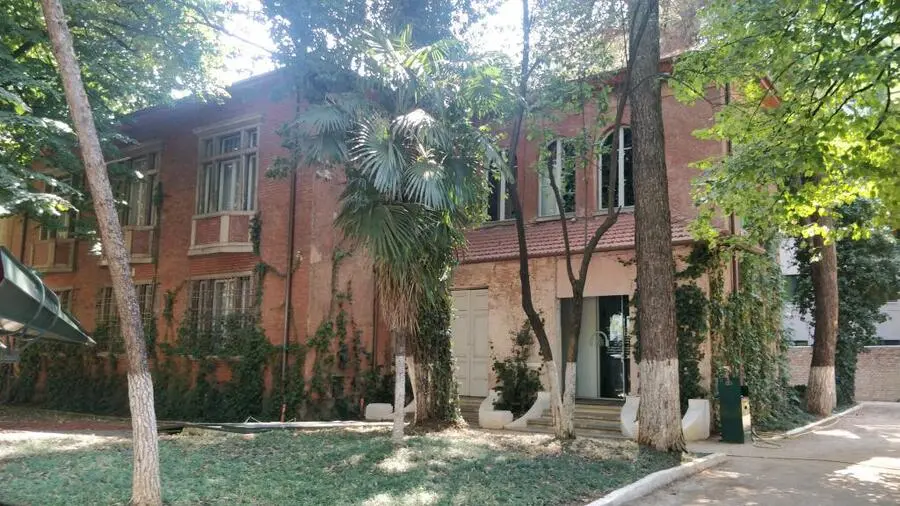
This modest ivy-clad villa takes its name from the leaves on its walls, but they hide a grim past. In wartime the Gestapo used it, and afterwards it passed to the Sigurimi, which spent decades spying on Albania's own citizens.
It is now a museum of secret surveillance and has won the Council of Europe Museum Prize. The rooms display listening devices, hidden cameras, case files and recorded conversations, while multimedia screens show how the regime turned neighbours into informers. Together with Bunk'Art 2, it completes the story of the Hoxha era.
8. Dajti Ekspres Cable Car
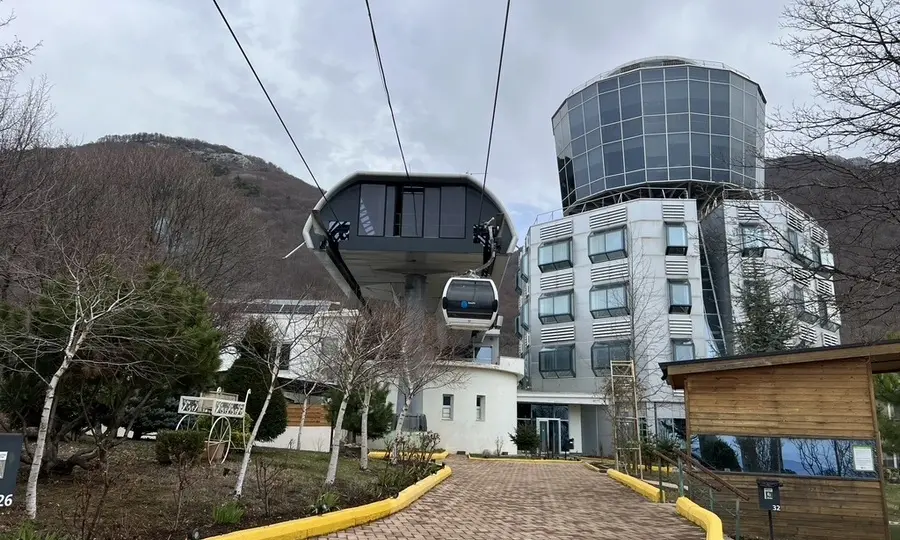
Mount Dajti rises 1,613 metres above Tirana and a cable car among the longest in the Balkans climbs to it. The gondolas glide over pastures and forest for roughly fifteen minutes as the city spread across the valley shrinks below. The lower station sits on the eastern edge of the capital, close to the Bunk'Art 1 bunker.
At the top you will find a national park with pine forest, walking trails, a rope adventure park and restaurants serving lamb grilled over charcoal and mountain tea. On a clear day the viewpoints take in the whole of Tirana and sometimes even the sea on the horizon. Come up in the afternoon and stay for sunset.
9. New Bazaar
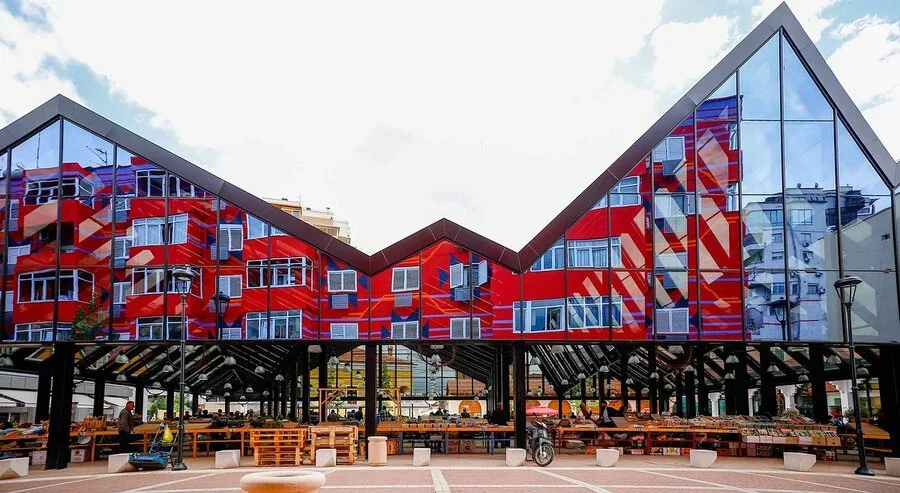
Despite its name, Pazari i Ri has been trading since the 1930s, and a revamp gave it a covered hall and a square ringed by colourful buildings. Stalls sell dozens of kinds of olives, cheeses, honey, figs, spices and home-made raki in plastic bottles, and vendors are happy to let you taste before you buy.
Some of the city's best traditional restaurants cluster around the market. Try tavë kosi, baked lamb with rice and yoghurt, fërgesë with peppers and cheese, and a flaky byrek. It is also a handy spot for souvenirs: olive oil, mountain tea, Skanderbeg brandy and silver filigree.
10. Grand Park and the Artificial Lake
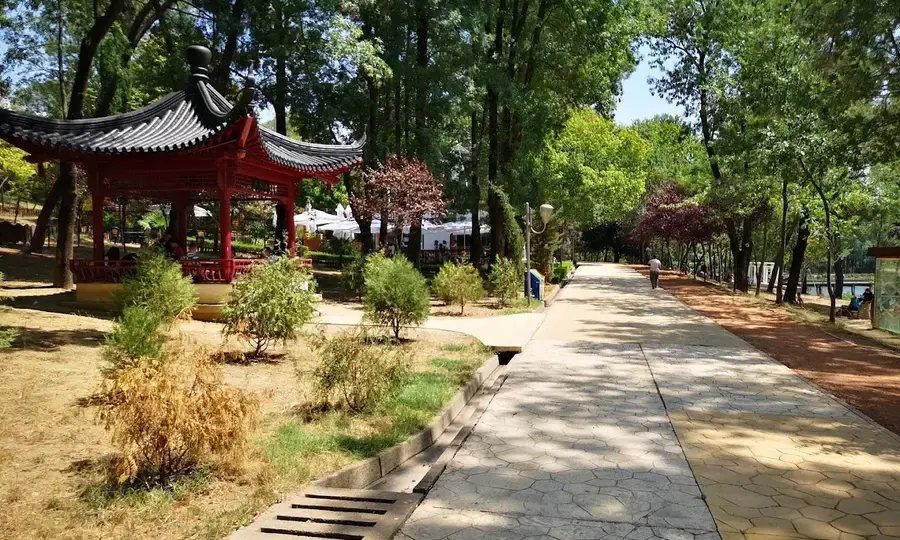
On the southern edge of the centre spreads Tirana's largest park, wrapped around an Artificial Lake created in the 1950s. The paths along the water are the city's favourite place for morning runs, strolls with children and evening dates, and pensioners play chess and dominoes on the lakeside benches.
Tucked away in the park are the little Church of St Procopius, memorials to famous Albanians and cafés with terraces over the water. The best time to come is just before sunset, when the heat eases and the city lights start to glow across the lake. It is a twenty-minute walk down the boulevard from Skanderbeg Square.
Tirana Attractions: What Else to Visit While in the City
- Bunk'Art 1 — Enver Hoxha's own bunker on the city's edge: five underground floors, more than a hundred rooms and an assembly hall, with exhibitions on Albania's military history and life in a country braced for war.
- Tirana Castle — remnants of walls that go back to the Byzantine emperor Justinian. Inside runs pedestrian Murat Toptani Street, lined with restaurants, craft shops and summer terraces.
- Resurrection Cathedral — among the biggest Orthodox churches in the region, with a tall bell tower and golden domes, built after Albania regained religious freedom.
- Great Mosque of Tirana — a four-minaret mosque, the biggest in the Balkans, rising near the parliament as a symbol of faith reborn after decades of prohibition.
- Tanners' Bridge — a small eighteenth-century stone bridge that once carried the road to the mountains. Leather workers had their workshops nearby, and today it makes one of the prettiest photo spots in town.
- National Gallery of Arts — paintings from medieval icons to socialist realism. In the yard behind the building stand statues of Lenin and Stalin that were once pulled from their pedestals.
- Postbllok — a memorial built from a section of the Berlin Wall, a bunker and concrete supports from the Spaç labour camp, where political prisoners mined ore. It honours those who suffered under the regime.
- Mother Teresa Square — a broad square in front of the Polytechnic University, named after the world's best-known Albanian, with the Archaeological Museum close by.
- Krujë — a hill town about an hour's drive from Tirana with Skanderbeg's castle, a museum devoted to the national hero and an old covered bazaar selling carpets and woollen crafts.
- Durrës — the nearest seaside city to the capital, with a second-century Roman amphitheatre, one of the largest in the Balkans, and a long promenade backed by sandy beaches.
What to See in Tirana in 1, 2 or 3 Days
Is 2 days in Tirana enough? One day covers the highlights, two let you dig into the city's history, and a third gives you time for a trip out. If you only have one day, begin at Skanderbeg Square, the Et'hem Bey Mosque and the Clock Tower, head underground into Bunk'Art 2, climb the Pyramid, have lunch near the New Bazaar and spend the evening in Blloku. On day two see the House of Leaves and the National History Museum, then ride the cable car up Dajti in the afternoon, stopping at Bunk'Art 1 on the way. Use day three for Krujë, Durrës or Bovilla Lake, a turquoise reservoir in the hills about 15 km from the city. Further south, roughly two hours away, lies Berat, the UNESCO-listed "city of a thousand windows".
The most comfortable seasons are spring and autumn, from April to June and in September and October, when it is warm without being exhausting. Summer temperatures can top 35 degrees, so the capital pairs well with a beach stay, while winters are mild and rainy, often with snow on the surrounding peaks. Beyond Tirana, Albania's highlights include Berat and Gjirokastër, both on UNESCO's list, Lake Ohrid on the border with North Macedonia and the mountain valley of Theth.
Many free things to do in Tirana simply involve walking: Skanderbeg Square, the Pyramid, the Et'hem Bey Mosque, Postbllok, Tanners' Bridge, the Grand Park and Tirana Castle. Children love the fountains on the square, the Pyramid's stairs, the rope park on Dajti and the zoo next to the Grand Park. In the evening, join the locals on the "xhiro", an unhurried stroll along the central streets, before heading to the bars of Blloku.
From Poland there are direct low-cost flights to Tirana from Kraków, Katowice and Warsaw, taking about two hours. Mother Teresa Airport lies 17 km from the centre, and the airport bus reaches the city in roughly half an hour. The sea is close: Durrës takes less than an hour to reach and Vlorë about two hours by road.
Heading to Albania? TurPoisk online travel agency can plan the whole trip, reserve a room in central Tirana or in Blloku and suggest where to go next. The country's greatest asset is its coastline, so we recommend tours to Albania on the Adriatic and Ionian shores, from Durrës with its sandy beaches to the coves of the Albanian Riviera further south. Our tour search will find options for your dates, and the last-minute deals are worth checking for bargains. The TurPoisk.ua team can help you balance days in the capital with time by the sea.


