
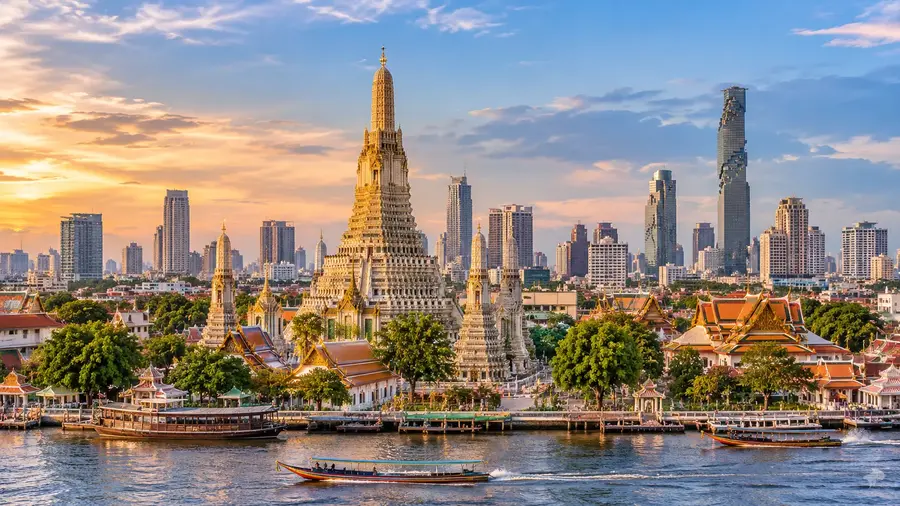
Bangkok, the capital of Thailand and by far its largest city, lies on the Chao Phraya River a short way inland from the sea. Thais call it Krung Thep, "the city of angels", and its full ceremonial name holds the Guinness World Record as the longest of any place on earth. Capital status came in 1782, when the first Chakri ruler, Rama I, shifted his court to the east bank, and a modest trading town has since swollen into a metropolis of around ten million. Gilded temples stand beside glass towers here, and street food competes with Michelin-starred tables. Plenty of travellers give it only a few hours en route to the islands, which is a shame. What to see in Bangkok before the beach, then? Our 20 picks range from the royal palace and Wat Pho's giant Buddha to floating markets and the ruins of Ayutthaya.
What to See in Bangkok First
What should I not miss in Bangkok, and how do I get around? The old town of Rattanakosin, with the palace and chief temples, hugs the river, so it's easiest to arrive by boat. Malls and high-rise hotels gather around Siam and along Sukhumvit Road on the BTS Skytrain, with Chinatown in between. The city's traffic is notorious, so during the day stick to trains and river boats and save taxis for short hops.
1. The Grand Palace and the Emerald Buddha
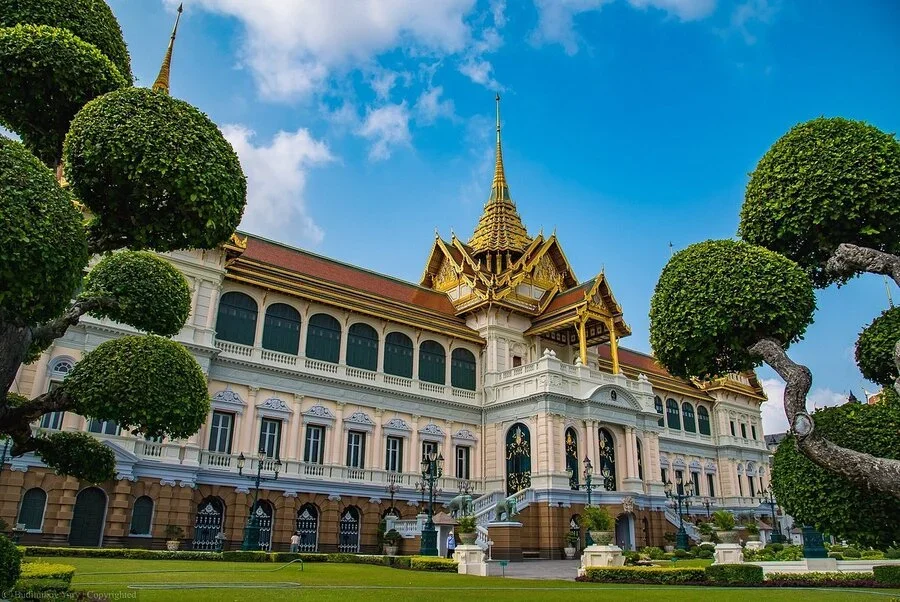
Behind long white walls lies the most visited place in Bangkok, a small city of pavilions dressed in gold, mirrored mosaic and colourful roof tiles. Rama I started it in 1782, kings lived here for well over a century, and it still serves for state ceremonies. Murals from the Ramakien epic run around the cloister walls, and you could lose half an hour following them alone.
Within the grounds is Wat Phra Kaew, Thailand's holiest temple. Its Emerald Buddha stands just 66 cm tall and is carved from a single green stone rather than emerald, and the king himself changes its robes thrice yearly to suit the season. Shorts and vests won't get you through the gate, so cover up. Arrive at opening time, and ignore friendly strangers at the gates who insist the place is shut today: it's a ploy to steer you towards shops.
2. Wat Pho and the Reclining Buddha
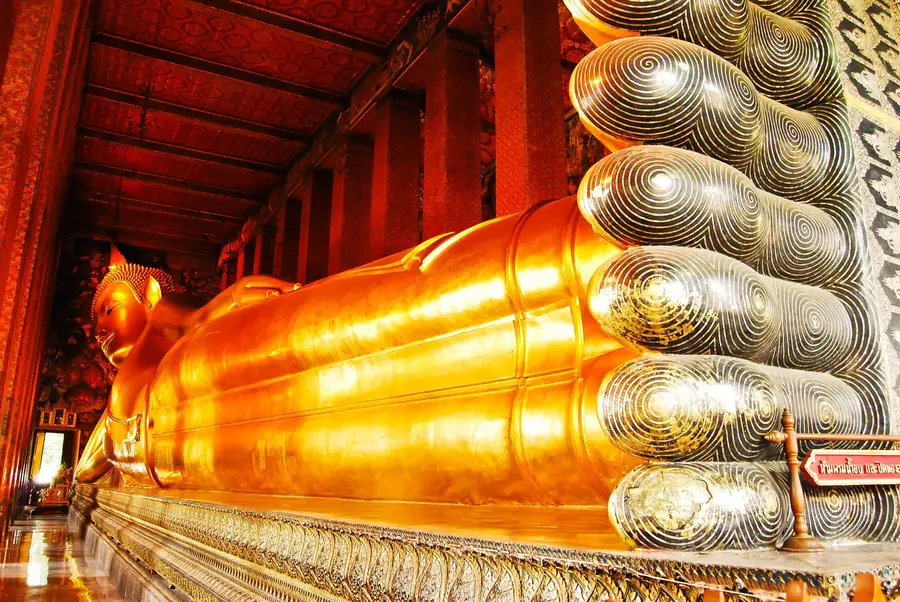
A ten-minute stroll from the palace brings you to a 46-metre Buddha covered in gold leaf, lying on its side. The figure depicts the passing into nirvana and barely fits its hall, so no single spot takes it all in. The feet are the real marvel: three metres high and set with mother-of-pearl showing the 108 marks of the Buddha.
Pilgrims drop coins into 108 bronze bowls along the wall, which keeps the hall ringing softly. Wat Pho also counts as the home of Thai massage, with a school on site that still trains practitioners and pavilions where you can book a session. Don't rush off after the main hall, since the courtyards hide hundreds of gilded statues and four tiled royal stupas.
3. Wat Arun
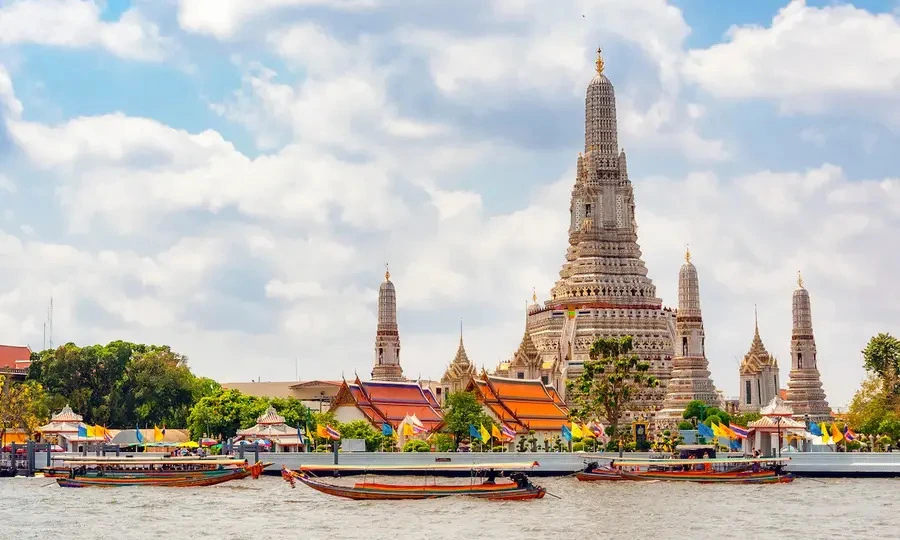
The Temple of Dawn rises on the west bank, a few minutes by ferry from Tha Tien pier. Its central prang, 70 to 80 metres high, is clad in broken Chinese porcelain and seashells arranged into flowers. From afar it looks grey, but close up it glitters with thousands of coloured shards.
Steep stairs climb to the lower terraces for a look along the river. For the postcard view, cross back to the east bank before sunset: the bars and cafes around Tha Tien look straight at the temple, whose outline soon lights up against the dark.
4. The River and the Canals
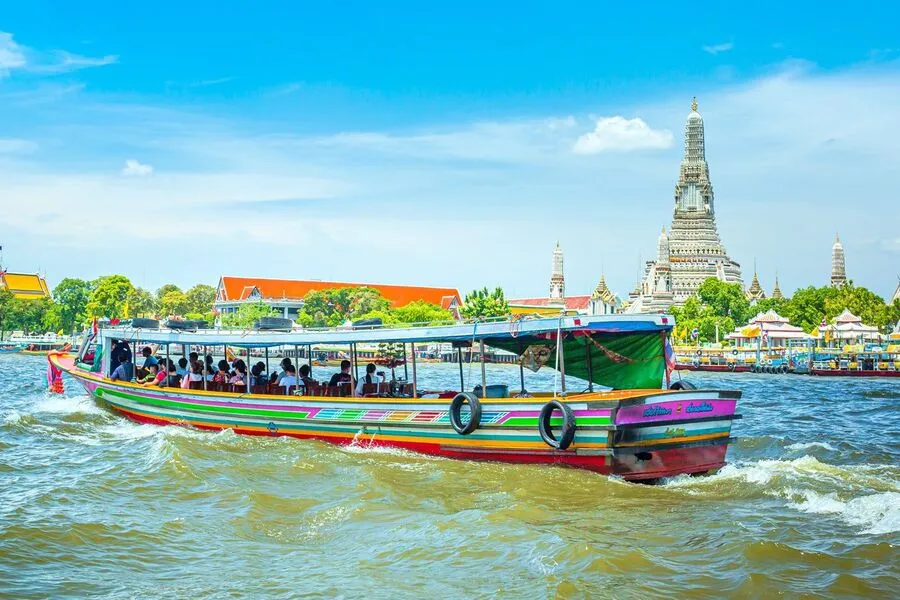
The finest tour of old Bangkok doubles as ordinary public transport. Orange-flag Chao Phraya Express boats call near almost all the major sights, and from the deck you see temples, wooden stilt houses and shiny hotel towers. You also avoid sitting in hot traffic.
Over on the west bank, Thonburi keeps the web of khlongs that once earned the city the label Venice of the East. A narrow long-tail boat will carry you past family shrines, gardens and monitor lizards on the banks, offering a glimpse of life before the roads came. Agree the route and duration at the pier before boarding.
5. Chinatown and the Golden Buddha
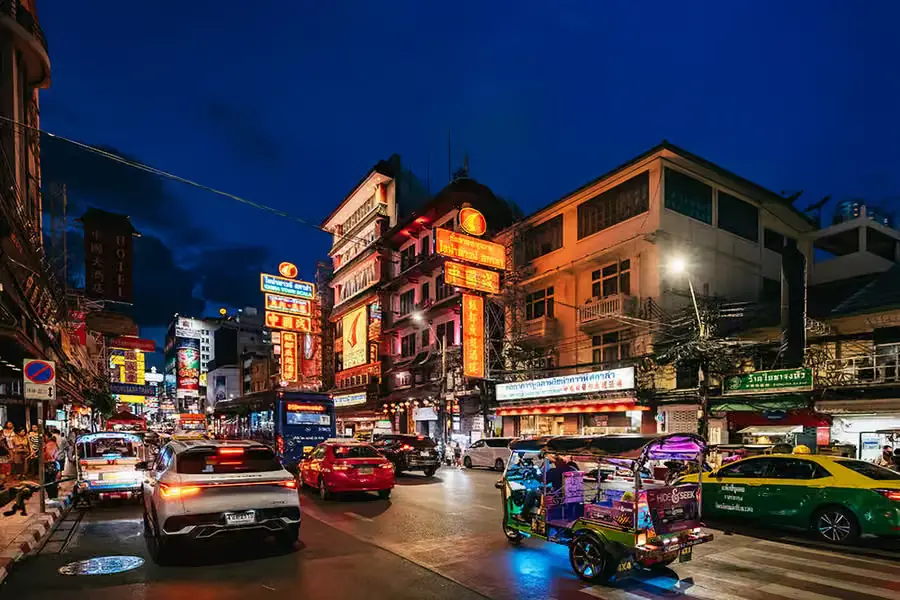
Yaowarat Road, laid out in the late 1800s, is now a canyon of neon characters and goldsmiths. By day it trades in gold, dried mushrooms and tea; after dark, tables spill across the pavement for the capital's best-known evening of eating, with fried noodles, charcoal-grilled seafood and sweet buns.
On the district's fringe, Wat Traimit guards a solid-gold statue weighing around 5.5 tonnes. For centuries it hid under plaster, and only in the 1950s, when the casing cracked during a move, did anyone realise what lay inside. Talat Noi is a short walk away, with cafes and street art tucked between car-parts workshops and old Chinese houses.
6. The Golden Mount
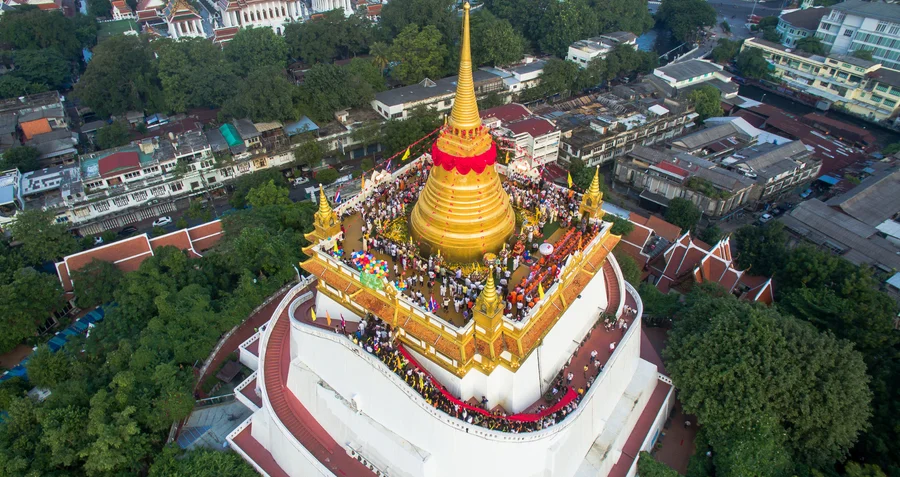
The man-made hill of Wat Saket was long the highest point in the city. A spiral stairway passes little waterfalls, bells and gongs that anyone may strike before reaching a golden stupa holding relics. The panorama stretches from palace rooftops to distant skyscrapers and is loveliest late in the day.
It's easily reached on foot from the old quarter, and on the way you can drop into Wat Ratchanadda, whose tiered Loha Prasat with 37 metal spires looks like nothing else in Bangkok. In November the area around the mount hosts a big temple fair with a candlelit procession.
7. Jim Thompson House
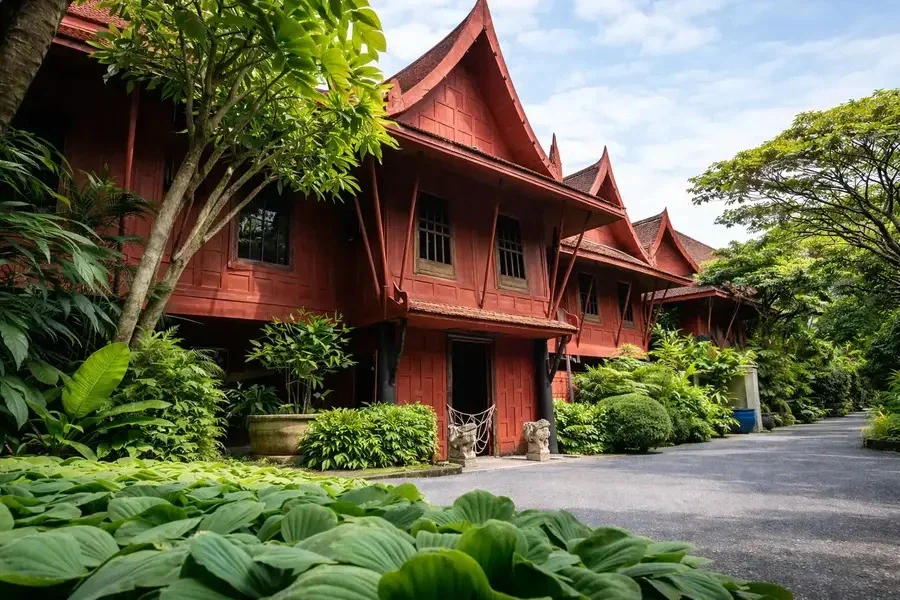
The American Jim Thompson settled in Bangkok once the war ended, put Thai silk back on the world market and became a local legend. In 1967 he went for a walk in the Malaysian highlands and was never seen again, a mystery that still feeds rumours and books. His home in a leafy lane by a canal is now a museum.
He pieced it together from six old teak houses brought from around the country, then filled it with Buddhist sculpture, porcelain and paintings. Rooms can only be seen with a guide, and it's one of the calmest corners of the city. The garden has a restaurant and a silk shop, and National Stadium BTS station is right there.
8. Chatuchak Market
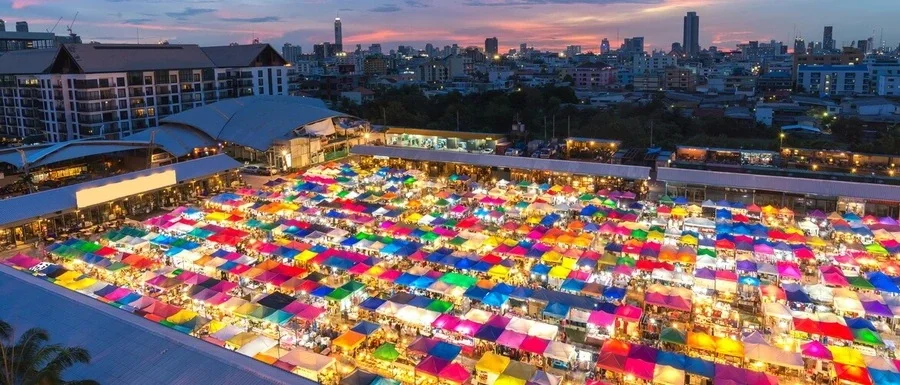
This weekend market ranks among the world's largest, with some 15,000 stalls of clothes, ceramics, antiques, plants and pets. Getting lost takes about five minutes, so photograph the map at the entrance and note the section number if you plan to come back for something. Haggling is fine here, though with less theatre than in tourist districts.
Come early, before the air under the roofs turns stifling: by lunchtime the heat and crowds wear out even locals. Snack between the rows on coconut ice cream and fried rice. Both the BTS and the underground MRT stop close by, and the adjoining park offers somewhere to recover.
9. Floating Markets and the Railway Market
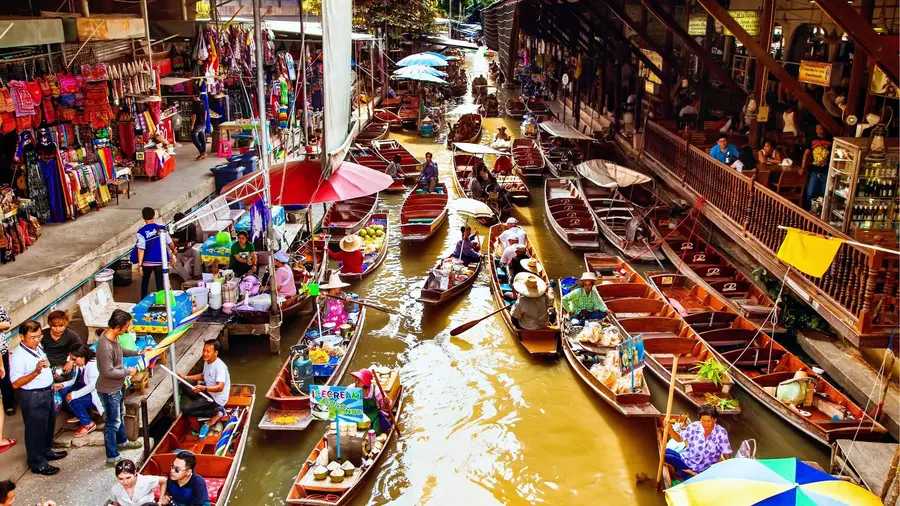
Damnoen Saduak is around 100 km from the centre, so expect to leave before dawn. Vendors in straw hats paddle narrow boats along the canals, selling fruit and noodles fried on the spot. It's long been a tourist spectacle, yet this is the scene everyone comes for, and by noon it grows too crowded.
Most tours add Maeklong, where the market occupies the railway line itself. Whenever a signal sounds, traders fold their awnings within seconds, a train squeezes through, and the stalls roll straight back. If you're around at the weekend, stay for the evening market at Amphawa.
10. Ayutthaya
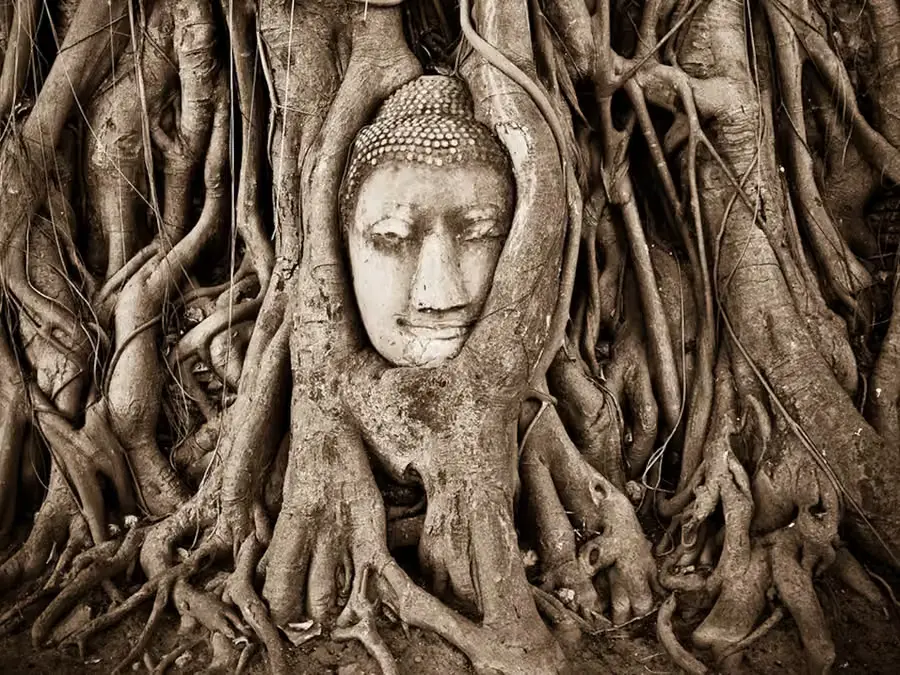
For more than four centuries the capital of Siam was Ayutthaya, less than 100 km north. It grew into one of the world's largest cities and a great trading hub before a Burmese army burned it to the ground in 1767. The ruins are on the UNESCO list, and trains from Bangkok cover the distance in roughly two hours.
A bicycle or tuk-tuk suits the brick towers scattered across an island between three rivers. At Wat Mahathat, seek out the stone Buddha head wrapped in tree roots, then reach the riverbank by sunset for the stately prangs of Wat Chaiwatthanaram. One day is plenty.
Bangkok Attractions: What Else to Visit While in the City
- Khao San Road — a backpacker strip of hostels, bars and street food where the party runs until morning. Quieter Rambuttri lies a street away.
- Marble Temple — Wat Benchamabophit, built of white Carrara marble in the late 1800s and pictured on the 5-baht coin.
- Giant Swing and Wat Suthat — a red teak frame over 20 metres tall, once used in a dangerous ritual, beside a temple with a huge bronze statue.
- National Museum — Thailand's biggest haul of art and history, notably the awe-inspiring royal funeral chariots in their own pavilion.
- Lumphini Park — a green oasis with lakes and pedal boats. Tai chi fills the mornings, and enormous monitor lizards amble along the water.
- King Power Mahanakhon — a 314-metre tower whose observation deck lets you step onto a glass floor high above the city.
- Siam and the Erawan Shrine — the giant Siam Paragon and MBK malls, plus a Hindu shrine on a busy junction where temple dancers perform.
- Bang Krachao — a green peninsula in a bend of the river, nicknamed the city's lungs, reached by ferry and best explored by bike.
- Asiatique — an evening shopping quarter in old dock warehouses, with a Ferris wheel and restaurants, served by a free shuttle boat.
- Kanchanaburi — home to the famous bridge over the River Kwai and memorials to the wartime Death Railway, and an easy day out.
What to See in Bangkok in 1, 2 or 3 Days
Is 3 days enough to see Bangkok? For a first visit it's ideal. With one day and an early start, take in the Grand Palace, Wat Pho and the ferry to Wat Arun, ending in Chinatown. Spend the second on Jim Thompson House, the Golden Mount and Lumphini Park, and greet nightfall on a skyscraper roof or at Asiatique. Pick the third by mood: Chatuchak at the weekend, floating markets or Ayutthaya on weekdays.
Try to avoid April, when the heat peaks, and September and October, when a downpour can wipe out half a day. November to February is the most comfortable stretch, sunny and dry without the draining humidity. The city has no beach of its own, so plan the seaside separately. Beyond the trips above, Thailand also offers the northern temples of Chiang Mai, the ruins of Sukhothai and Khao Yai National Park.
Top places to visit in Bangkok for free include Chinatown and Talat Noi, Lumphini Park, the Erawan Shrine and the Art and Culture Centre by National Stadium station. Children will enjoy the aquarium in Siam Paragon, Safari World, the Lumphini boats and any river ride. For food, order pad thai, spicy tom yum soup, som tam papaya salad and mango with sticky rice, followed by coconut ice cream. Evenings divide between rooftop cocktails, muay thai bouts at Rajadamnern Stadium and the nightlife around Khao San Road.
The easiest route from Ukraine is through Poland: LOT flies nonstop from Warsaw in about 10 hours 20 minutes, while other options involve changing in Istanbul, Dubai or Doha. International flights use Suvarnabhumi Airport, 25 to 30 km east of downtown; the Airport Rail Link express reaches Phaya Thai station in just under half an hour. Ukrainian citizens need no visa for a tourist stay of up to 30 days, only a passport valid for at least six months and the free TDAC digital arrival card, completed within the 72 hours before landing.
Few people make Bangkok their final stop: a few days of heat and temples and the water starts calling. Luckily the sea is close, with Pattaya 2.5 to 3 hours away by coach and Phuket and Samui a short flight off. Managers from the TurPoisk travel agency plan both stages, helping you pick a hotel near the river or a BTS station and then arranging tours to Thailand for an island or the coast. Current departures show up in the search form, and reduced prices for nearby dates appear under last-minute offers. Our consultants will advise how many nights to give the capital and how many the beach.


