
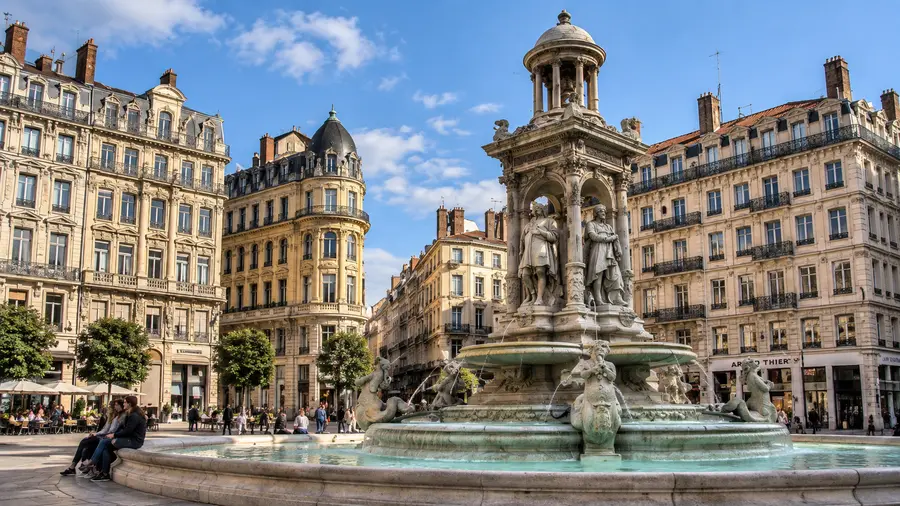
Lyon is one of the most important cities in France, its heart beats with the rhythm of business activity and industrial development, ranking third in terms of population. Situated in the central-eastern part of the country, on the banks of two rugged and picturesque rivers, the Rhone and the Saône, Lyon is famous for its textiles and silks produced by excellent craftsmen. This city is the birthplace of such significant personalities as the Roman emperors Tiberius, Claudius and Caracalla, the filmmakers the Lumière brothers, and the author of The Little Prince, Antoine de Saint-Exupéry. Every street, every house in Lyon is imbued with history, and it is not surprising that in 1998 its historical center was included in the list of UNESCO World Heritage Sites. The city is also famous for its fine cuisine and is considered the culinary capital of France.
France is a country with a rich history, the personification of cultural heritage. Lyon's landmarks play an important role in this cultural mosaic. This third most populous city promises to be a unique experience for all its visitors.
What is the first thing to see in Lyon?
The amazing geographical location of the city makes it especially attractive for tourists. Surrounded by the Alps and the European Massif Central, Lyon enjoys an exceptionally warm climate.
Lyon Cathedral
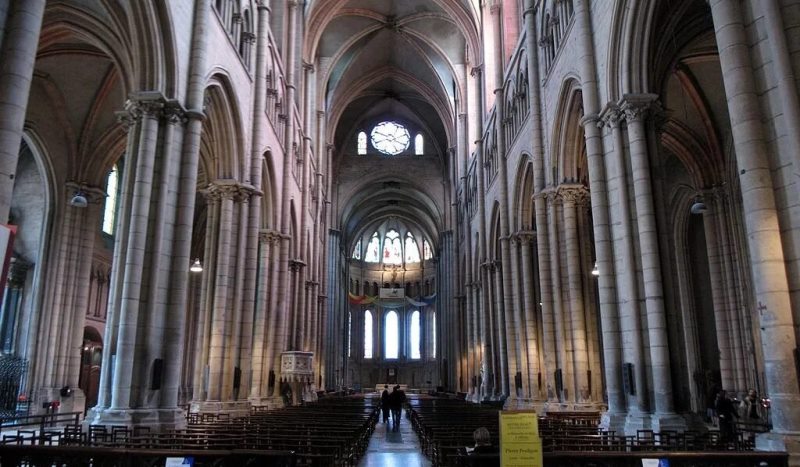
The Saint-Jean Cathedral, also known as the Lyon Cathedral of St. John the Baptist, is one of Lyon's most important landmarks, closely linked to its religious heritage. This cathedral, located in the medieval area of the city, is not only an architectural masterpiece with a rich history, but also the primate cathedral, where services are held under the direction of the Archbishop of Lyon. This place is also known as the home of the oldest astronomical clock in the world. There is an archaeological garden around the cathedral, which gives it a special historical charm. Tourists wishing to visit this attraction should plan their day in advance, taking into account that visiting times for the cathedral may be limited.
Museum of Fusion
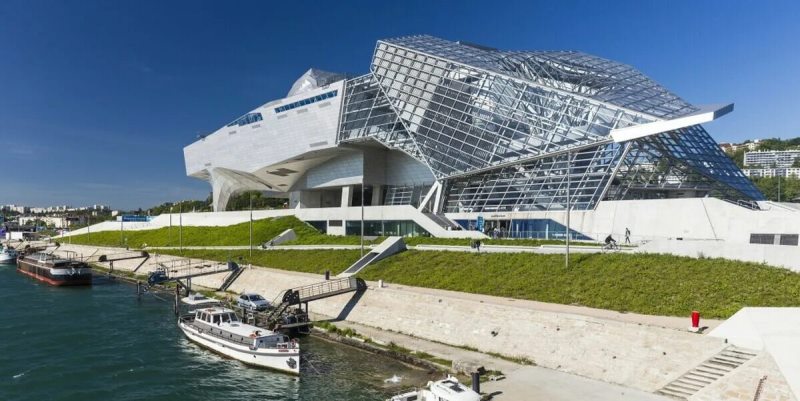
When planning a day trip to Lyon, you should pay attention to the Confluence Museum. Its futuristic shape, reminiscent of a spaceship, has become a symbol of the city and corresponds to the most advanced trends in architecture. This unique structure, combining various shapes, glass and concrete, was built in 2014 and has already gained popularity among tourists. Local residents nicknamed it "Crystal" or "Hole". A special feature of the museum is its narrow specialization on anthropological topics. Visitors have the opportunity to enjoy unique exhibits that testify to the long journey of humanity.
Lyon Museum of Fine Arts
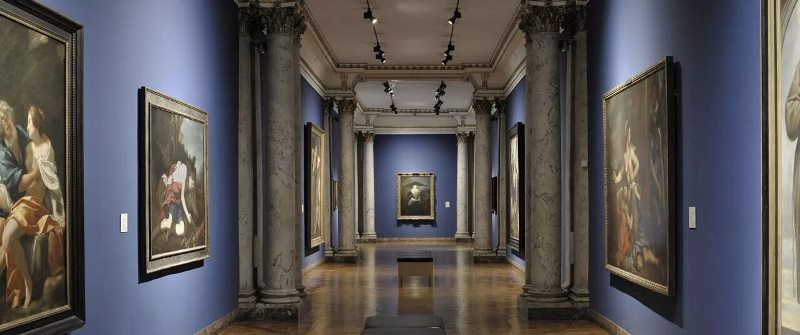
The Historical Museum of Fine Arts in Lyon is a true treasure of the cultural heritage of France. Located in a former monastery, the building, which survived the French Revolution, still amazes with its baroque architecture. The museum's exposition presents an extensive collection of works of art from various eras and peoples. It includes valuable coins, outstanding sculptures, painting masterpieces and much more. This museum rightly occupies a high place among the cultural institutions of Europe, and its visit is worthwhile for all lovers of art and history.
Belcourya Square
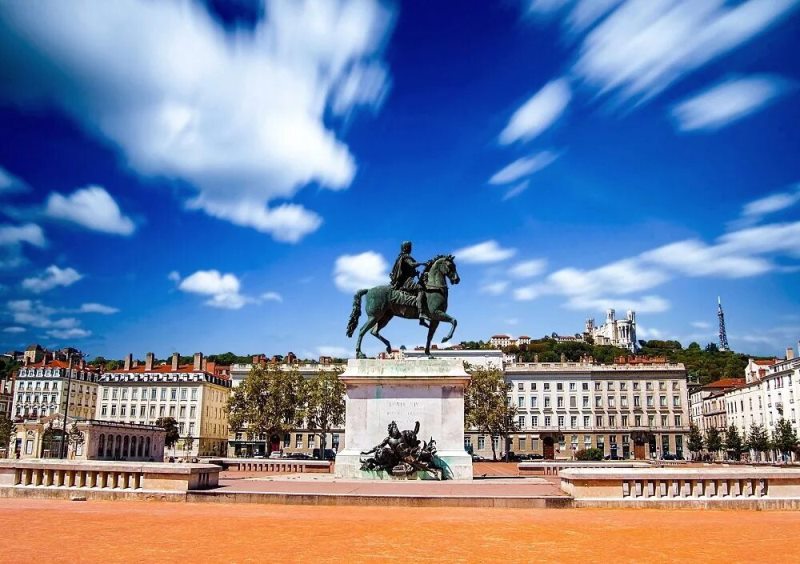
Bellecour Square in Lyon is one of France's many landmarks, combining majestic architectural masterpieces with vast open spaces. The name "Belcourt", translated as "Beautiful Garden", reflects its attractiveness. This area, which is statistically the third largest in France in size, has historical roots: in the distant past there was an extensive grape plantation, also called “Bellecourt”. A visit to Place Bellecour is a must on Lyon excursions conducted by local guides.
Ancient theater on Fourvière hill
Theater antique de Fourviere is one of the main attractions of Lyon, France. This unique architectural monument, created back in the era of the Roman Empire under Octavian Augustus, attracts thousands of tourists every year. It is especially famous for its seasonal festival, Nights at the Fourvière. Along with the ancient theater, there is also an ancient settlement and an odeon. Thanks to the special acoustics, concerts and musical events are held here with great success.
Museum of Gallo-Roman Civilization

The Museum of Gallo-Roman Civilization on the Fourvier Hill is one of the main attractions of Lyon, France. Thanks to the country's rich historical heritage, there are many interesting places to visit. Situated on Fourvier Hill, the theater also serves as home to this amazing museum. This place, where the ancient Roman settlement of Lugduno previously stood, today attracts tourists from all over the world. The museum was opened at the end of the 20th century thanks to unique archaeological finds associated with the Roman period. It is known for its rare exhibits reflecting the culture and life of the Romans. The exhibits in the museum are maintained in amazing condition thanks to the careful work of historians and archaeologists.
Blandan Park
Blandan City Park in Lyon is an unforgettable place that is worth visiting for every tourist who wants to enjoy the wonderful atmosphere of this city. The modern park offers a huge area for recreation and entertainment, as well as a specially equipped skate park that will delight lovers of active pastime. In addition, the park has many playgrounds for children, which allows you to diversify your walk around the city and add vivid impressions to it.
Jacobins Square
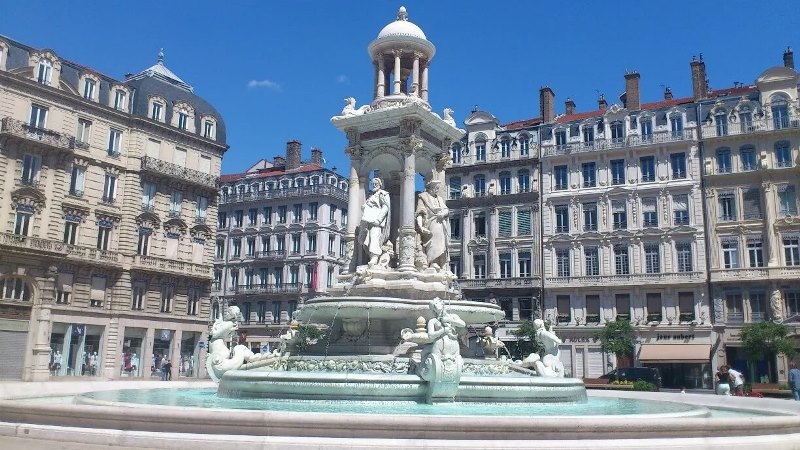
Place des Jacobins in Lyon is one of the city's outstanding architectural landmarks, connecting its main streets. Here you can enjoy the magnificent fountain and easily plan your trip, thanks to its close location to the main attractions of the city.
Basilica of Notre-Dame de Fourviere
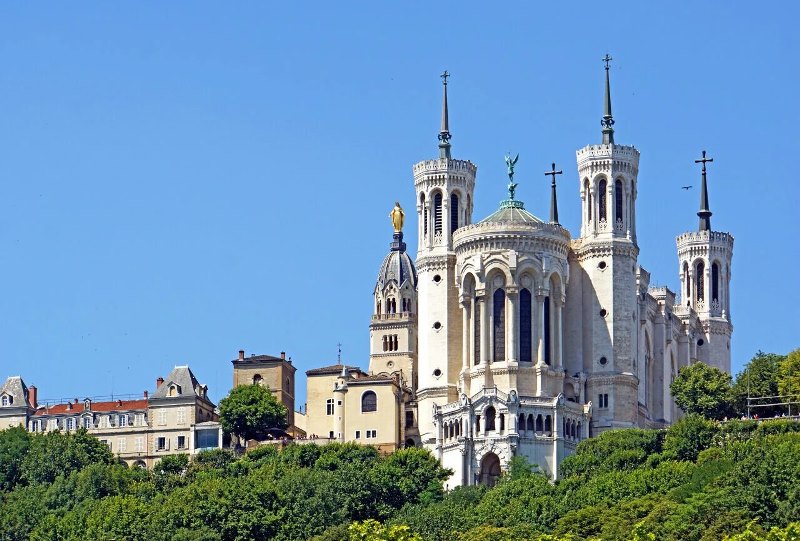
In Lyon, one of the most beautiful cities in France, you cannot miss the Basilica of Notre-Dame de Fourviere. This majestic structure, combining elements of neo-Gothic and neo-Byzantine styles, is located on the top of a hill and towers monumentally above the city. The uniqueness of this temple lies in its two-part design, consisting of an upper and lower part. A visit to this basilica should definitely be included in your Lyon itinerary.
Wall of Canuts (Mur des Canuts)
The "Wall of Kanoutz" or "Wall of the Lyon Weavers" in Lyon, France, is one of the main attractions of this city. Walking around Lyon, you are sure to come across streets decorated with realistic frescoes that give the buildings a unique charm. The fresco entitled "Le Mur Des Canuts" on the Boulevard des Canuts is one of the most famous. It describes the daily life of the residents of the quarter, depicting stairs, people relaxing on the terraces, and passers-by. This work of art, created on the wall of house No. 36, has changed over time, becoming more complex and voluminous. The further you move away from the mural, the more realistic it will seem. It may take some effort to get up to it, but the views from the top are worth the effort.
Old Lyon
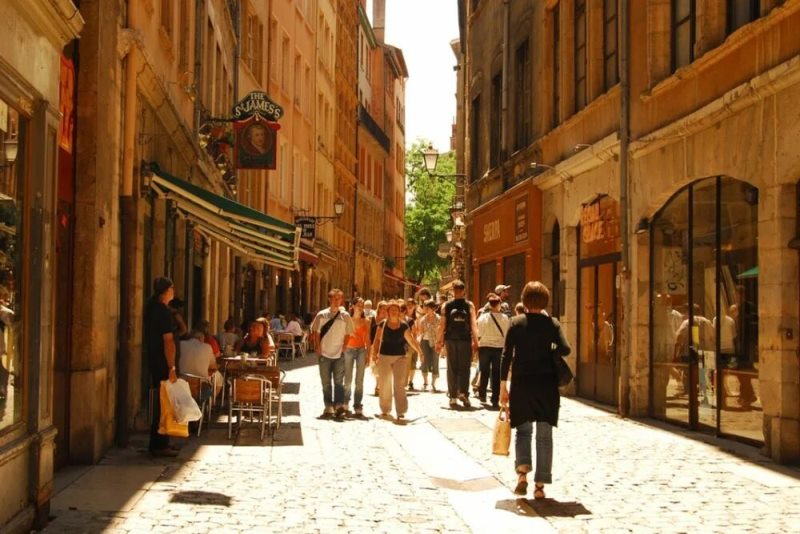
The historic quarters in western Lyon, France, provide unique attractions from the medieval era. Old Lyon, one of the oldest Renaissance cities in France, located at the foot of the Fourvier hill, impresses with its historical significance. This area, covering more than 400 hectares, is one of the largest in Europe. Since the 60s of the last century, the city authorities have been actively restoring historical areas, which today allows every visitor to Lyon to enjoy the atmosphere of the Middle Ages. Among the main places worth visiting are the Saint-Paul quarter with an ancient church from the 6th century, the Bondy Palace, which regularly holds exhibitions and vernissages, the Saint-Georges quarter with historical weaving manufactories, the Jewish quarter of Juivery and the Gothic Cathedral of St. John the Baptist with its adjacent archaeological garden.
Lumiere Institute
The Lumiere Museum-Institute in Lyon attracts the attention of art historians and fans of world cinema. This place does not leave indifferent those who are interested in the history of the film industry. In this institute-museum you can see the kinetoscope - an invention that revolutionized the world and laid the foundation for cinema.
Lyon Town Hall
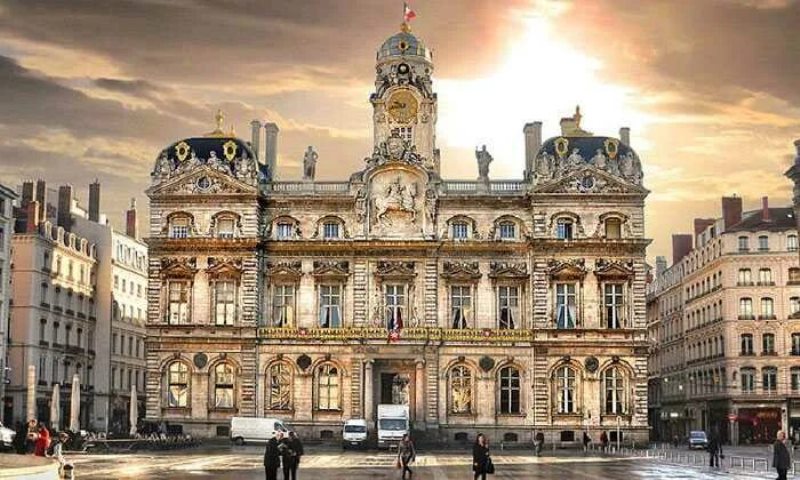
In the heart of Lyon's Presquiville quarter stands the Lyon Town Hall, an exquisite and imposing architectural structure in which features of different eras are intertwined. Built in the 17th century, the original town hall graced the Place des Terreaux, but just two years later it was completely destroyed by a massive fire. Rising again on this site, the building has been recreated in a magnificent Baroque style, decorated with numerous sculptures, including figures symbolizing the Rhine and Saone rivers. The Town Hall tower houses one of the largest carillons in Europe, consisting of 65 bells. The patio is decorated with bas-reliefs and sculptures of Roman gods, while the interior is majestically decorated with baroque patterns, gold accents and luxurious wood carvings. The premises of the Town Hall today house the city municipality, maintaining its historical significance and attractiveness.
Trabouli
The historical center of Lyon, in addition to its architectural monuments, attracts tourists with its unique ancient streets, known as traboules. This term, native to Lyon, refers to a narrow passage that cuts through several buildings and connects several streets. Traboules can be covered galleries or open alleys. In each of them, Lyon reveals his ancient mysteries, leading along mystical corridors to unknown places. Some of these traboules have existed since the 4th century, when they were used to access the water of the Saône River. They vary in complexity, from simple connections of two streets to multi-unit mazes. Thanks to these labyrinths, many residents of Lyon were able to take refuge and escape persecution during revolutions and wars.
Bartholdi Fountain
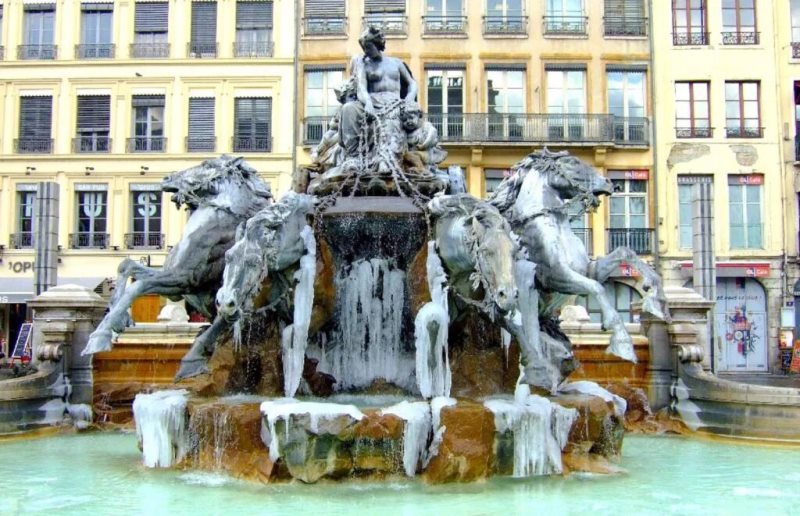
In Lyon's Place du Terreaux you can admire the majestic Bartholdi Fountain, which is impressive both day and night. During the day, its cool water provides a pleasant refreshment from the heat, and after dusk it turns into a charming light spectacle. However, it is not only its appearance that is of interest, but also the history of its creation. Initially, this fountain was supposed to decorate one of the squares in Bordeaux. However, the cost of the project proposed by the sculptor Bartholdi seemed too high, and the city authorities refused to implement it. As a result, the master sold his creation to Lyon, where it adorns Place des Terreaux. The fountain is a sculptural composition, the main character of which is a woman driving a chariot with four horses. This figure symbolizes France, and the horses represent the four great rivers of the country: Seine, Rhone, Garonne and Loire.
Church of Saint-Georges
On the southern outskirts of Old Lyon, where there were once port facilities of antiquity, and artisans worked in the Middle Ages, there is the Saint-Georges quarter. This area got its name from the oldest temple in the city - the Church of St. George, founded in the 6th century. This majestic Gothic building, towering over the banks of the Saone River, has existed for one and a half millennia, but it acquired its current appearance only in the 16th-17th centuries, and in the 19th century restoration returned the temple to its original medieval appearance. The history of the Church of St. George is complex - it was destroyed more than once, then restored, and at some period was even used as a hayloft. Currently, the restored building adorns the city embankment; its neo-Gothic architectural style is a unique embodiment of the spirit of the early Middle Ages. Inside you will see antique furniture and a 16th-century altar depicting the coronation of the Virgin Mary.
Church of Saint-Nizier
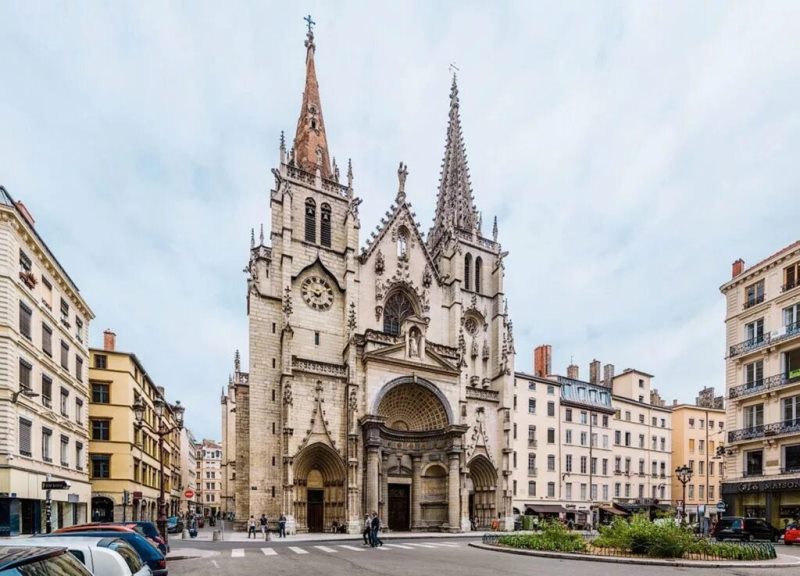
The Church of Saint-Nizier in the Presquil region is dedicated to Saint Niketios, who is rightfully considered a hereditary saint: his grandfather was a revered saint, and his sons and grandson occupied the places of bishops. After the death of Nicetios, his body was buried in the Basilica of Peter and Paul, and this place became famous for its numerous miracles. The basilica was originally built in the 5th century on the site where the remains of martyrs who were executed here in the 2nd century BC were located. Over time, after the glorification of Saint Niketios, the church was renamed Saint-Nizier. At different historical periods, this ancient temple has undergone large-scale reconstructions, the most recent of which was carried out in the 20th century, as a result of which some of its parts were completely rebuilt. Currently, the facade of the temple is distinguished by an eclectic style and some asymmetry, this is especially noticeable by two different towers, erected at different times. An astronomical clock is installed on one of the towers, and the facade is decorated with sculptures and stucco decoration. One of the main treasures inside the temple is the white marble altar with images of Christ and the apostles.
Museum of Cinema and Miniatures
The museums of Lyon are real storehouses of the city's cultural wealth. One of the unique aspects of contemporary art in France is the creation of miniatures, and Lyon is no exception. It houses one of the most famous collections of miniatures. This collection was founded by Dan Oldman, who spent his entire life traveling the world collecting film props. The first part of the collection consists of miniature copies of famous Lyon buildings - hotels, bars, temples and workshops. The second part is devoted to scenery and props for famous films such as “Star Wars”, “The X-Files”, “The Da Vinci Code”, “Harry Potter” and others. The props for the film “Perfume” stand out especially, creating the eerie atmosphere of this amazing film.
Opera de Lyon
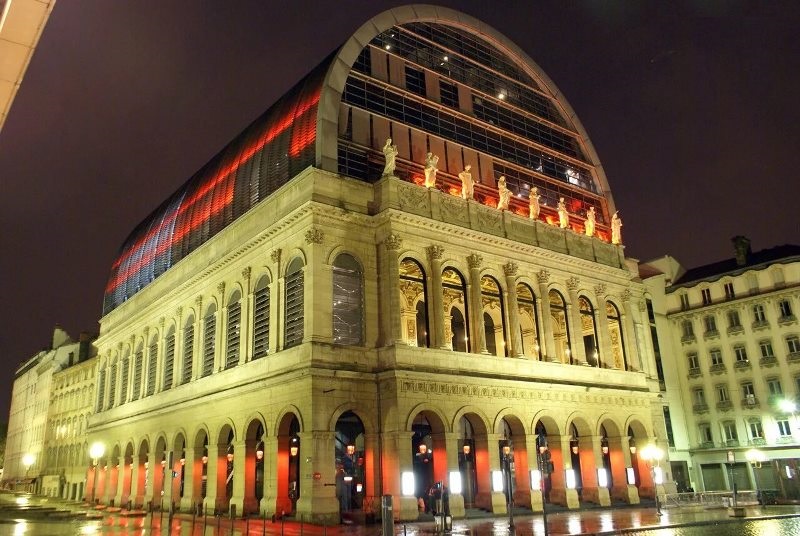
If we speak in allegorical terms, the Lyon Opera can be compared to the living soul of Leo, affable and hospitable. Ballet dancers, opera divas, a choir and a symphony orchestra merged in her arms. The current theater bears the name of its creator, Jacques Nouvel, whose splendor is embodied in the architecture of this building. The opera house first opened its doors in the mid-18th century, but by the beginning of the next century it became too crowded for its ever-growing audience. In 1831 the old building was demolished to make way for a new one, which was inaugurated by a production of The White Lady. During the 19th and early 20th centuries, many French and international premieres took place here. In 1985, it was decided to erect a new building, which took its place of honor after four years of construction. Externally, the new opera house retained only its historical shell, but inside it underwent a complete reconstruction, acquired additional floors and increased its height. Now this luxurious Baroque theater with its colonnade and marble sculptures has become a real decoration of Lyon.
Amphitheater of the Three Gauls
The ancient ruins of the amphitheater of the Three Gauls are located in the northern part of the historical center, on the slope of Croix-Rousse hill. The foundation of the amphitheater dates back to approximately the 1st century BC. It received its name in honor of the three Roman provinces that stretched across the territory of modern France. This place served for meetings of representatives of the Gallic provinces, resolution of various issues and oath of legionnaires. In the 2nd century, the amphitheater was used for the execution and torture of early Christian martyrs, including Saint Blandina. Her memory is honored in a monument erected in the south-eastern part of the amphitheater. In the surrounding area there are remains of an aqueduct, a temple, an odeon, as well as a museum of Gallo-Roman civilization, which presents other artifacts of the Roman era.
Hotel-Dieu
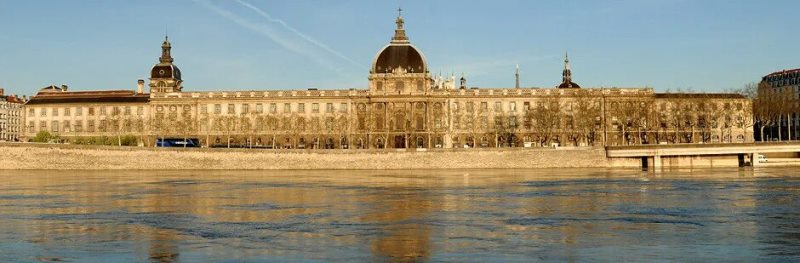
In the heart of Lyon is a unique complex known as the "House of God" or Hotel Dieu. This medieval hospital is famous thanks to the stay here in the 16th century of the Benedictine monk Francois Rabelais, author of the famous work "Gargantua and Pantagruel". The building was originally built as a hospital, which served as a meeting place for pontiffs and a shelter for travelers. However, with the arrival of the first doctor, the Hotel-Dieu became a full-fledged hospital. Over the centuries, the hospital building was rebuilt several times, adding new extensions and courtyards. Subsequently, the building housed the Civil Hospice Museum, which tells about the history of medicine. Also on the territory of the Hotel-Dieu there is a chapel, restored and open to the public. This beautiful baroque building impresses with its rich decoration with elements of relief and gilding. Here you can also see the font, in which at least 40 thousand citizens were baptized between the 40s and 70s of the last century.
Bourse Palace
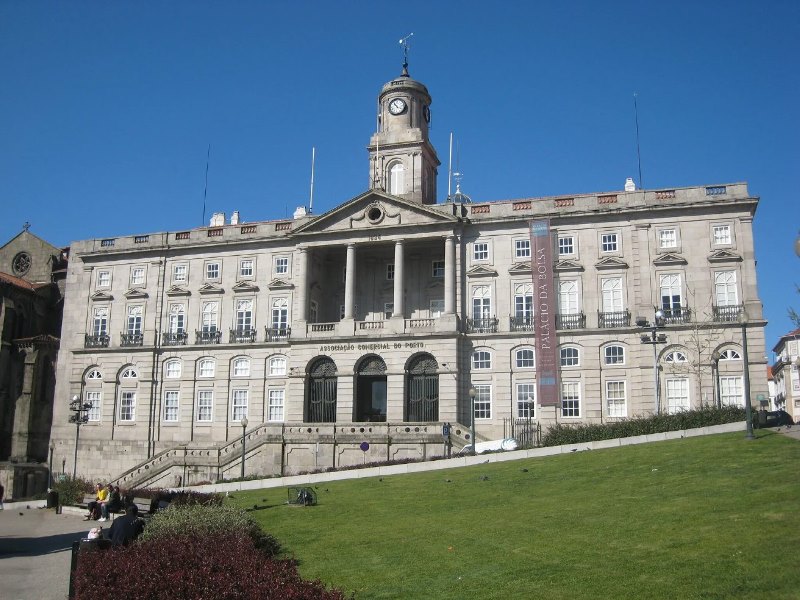
One of the amazing examples of architecture that greets you in Lyon is the Palace of the Bourse - a majestic building that mixes classicism and baroque features, symbolizing the financial supremacy of Lyon in the 19th century. With its balconies, columns and exquisite carved stone details, this magnificent structure stands out on the Place Terreault and Place Bellecour. The history of the Palace began in 1853, when the municipality decided to build it in order to house not only a stock exchange, but also an art museum, shops and workshops. Construction began three years later and soon a magnificent building emerged, the opening of which was attended by Emperor Napoleon III himself and his wife. During its existence, the Exchange Palace has witnessed many historical events: within its walls a credit bank, a commercial court, a workers' rights council and a community of silk merchants were located. Currently, the City Chamber of Commerce and Industry is located in the Palace premises.
Mini World Lyon
The Mini World Lyon amusement park opened in 2016 at Silk Square, an entertainment center located in Vaulx-en-Velin, a suburb of Lyon. Mini World Lyon is a unique miniature park, made on a scale of HO 1:87 and covering an area of 4500 square meters. Here, visitors can enjoy animated real-life scenes, watch vehicles in motion, admire replicas of world-famous landmarks, and see models of famous world capitals. This largest amusement park in France is ideal for the whole family, with something for every age.
Fourvière metal tower
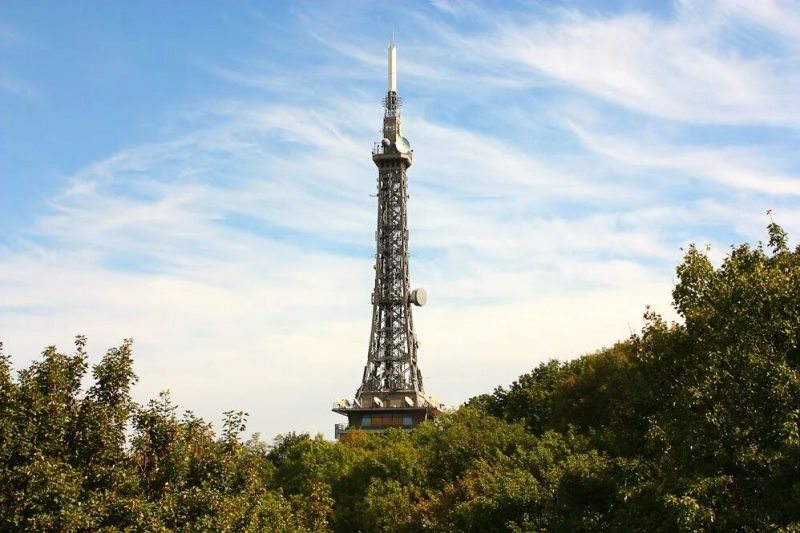
During your stay in old Lyon, be sure to visit the Metal Tower of Fourvière, which is located on a picturesque hill near the Basilica of Notre-Dame de Fourvière. This architectural monument has long become a symbol of the city. It is interesting to note that it was originally planned to be an exact copy of the third level of the famous Eiffel Tower. Construction began shortly after the latter was presented at the World's Fair.
Fourvière would seem to symbolize balance with the neighboring basilica. Republicans, dissatisfied with the construction of the cathedral, put forward the idea of building this tower as an example of republican architecture. Today the tower is striking in its size: its height above the ground is 86 meters, and above the Rhone River - as much as 350 meters. For the convenience of visitors, a cable car leads to Fourvière Hill.
Festival of Lights
The Saone River embankment is illuminated with the lights of "Thank Mary" during the traditional Lyon Festival of Lights, which blooms at the beginning of December, turning the city into a magical place filled with festive spirit. Lyon becomes the center of attention in winter, attracting thousands of people with its bright and dazzling illuminations.
One of the main attractions is the festive lighting, which enlivens local cathedrals, squares and fountains. The flickering lights of lanterns and spotlights create amazing pictures, transporting visitors to a magical world of light and shadow. The history of this festival dates back to 1852, when the residents of Lyon, celebrating the unveiling of the statue of the Virgin Mary on Fourvière Hill, lit candles at their windows. Since then, this wonderful holiday has become a tradition, maintaining its unique spirit and charm.
The Festival of Lights in Lyon is not only an opportunity to enjoy the beauty of the city, but also to see its diversity of cultures and architectural richness. Guests of Lyon will immerse themselves in the atmosphere of exquisite boutiques, cozy restaurants and luxurious hotels, feeling the unique charm of this amazing place. Spending a few nights here on the eve of the New Year holidays will remain etched in the memory of everyone who has visited this magical city.
Golden Head Park
The Parc d'Or in Lyon, France, is one of the most attractive places in this city. Located north of the historical center, this park covers a huge area of 117 hectares and impresses with its beauty and diversity. Here you will find well-groomed alleys, shady paths, picturesque meadows and fragrant flower beds. The lake in the park offers opportunities for boating as well as natural views. In addition, the park offers a lot of entertainment: a zoo, stables, a velodrome, mini golf and much more.
The history of this park goes back to the mid-19th century, when its creators decided to create a landscape complex similar to the famous Bois de Boulogne in Paris. To prevent flooding of the area, a dam was built, and a zoo with many alpine plants and a rose garden with wild roses were created in the park. Later, greenhouses were built where tropical plants, orchids, cacti and azaleas can be seen. In the northern part of the park's lake there are two islands that can be reached by boat, and on one of them there is a military monument.
Do you want to immerse yourself in the atmosphere of ancient Lyon? Contact the travel agency TourPoisk and choose an exciting tour of this magnificent city. From walking tours through the historic center to spectacular fire shows during the Festival of Lights, Lyon offers unforgettable adventures. Trust the experience and professionalism of TurPoisk managers to make your trip bright and memorable. send a request to search for tours and start planning your vacation.


