
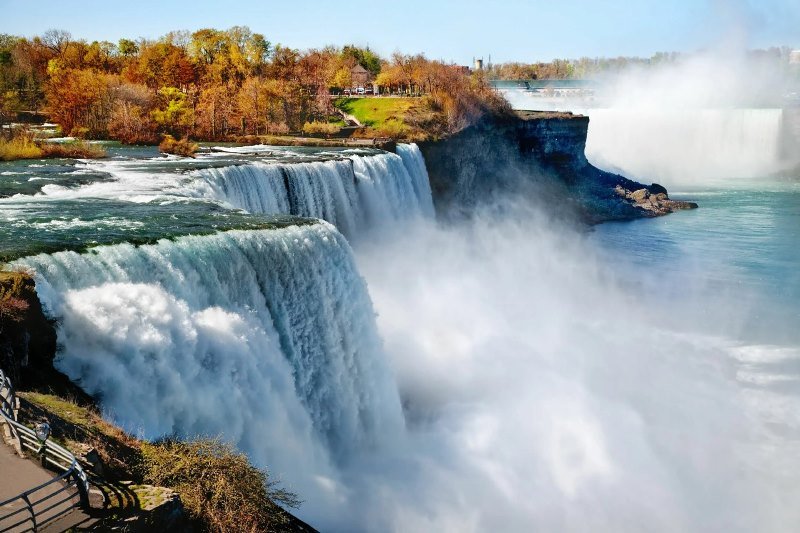
Despite the distance of about 130 kilometers from the city of Toronto, Niagara Falls is its main natural attraction. This waterfall is considered one of the most stunning and picturesque waterfalls in the entire world. Although its origins are in the United States, the most impressive views are from the Canadian side.
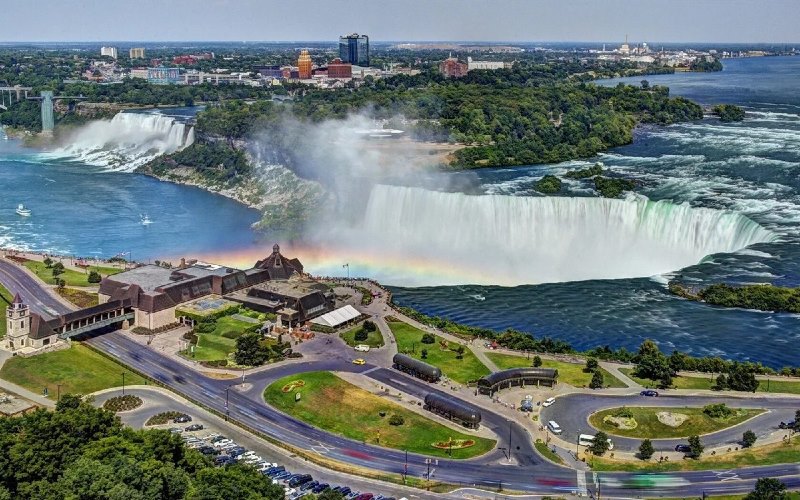
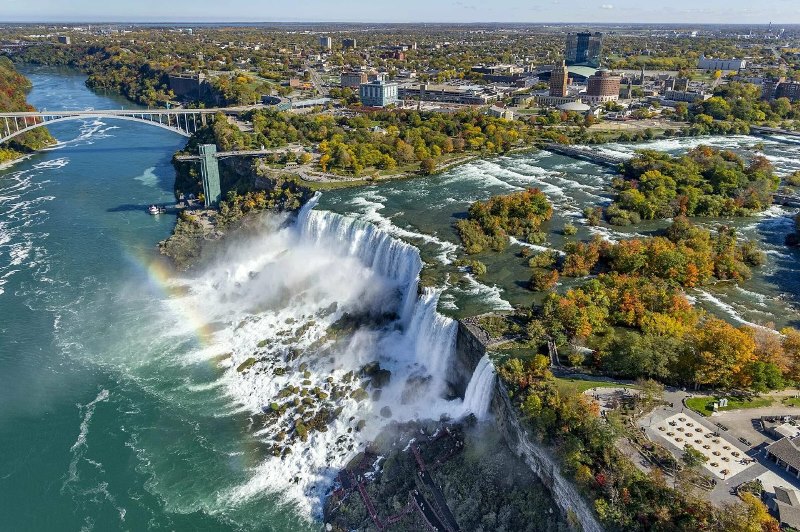
In fact, Niagara Falls is a complex of three separate waterfalls: American Falls, Horseshoe Falls and Bridal Veil Falls.  ;Canadians are lucky, since the most majestic of them, Horseshoe Falls, is located on their territory. And the Bridal Veil and American waterfalls are located in the United States. By the way, most tourists agree that the view from the Canadian side is more impressive than from the American side.
Legends of the ancient Indians
The roar of the falls can be heard for many kilometers around, sounding especially impressive at night, but when you find yourself at Niagara Falls itself, you are plunged into absolute silence. This majestic natural phenomenon gets its name from the Indian dialect, which translates as “rumbling water.” However, there is another version that claims that the word "Niagara" comes from the name of the local Iroquois settlement "Ongniaahra", which literally translates as "forked land".
The legends of the ancient Indians tell different stories, and one of them tells of a young girl named Lelawalae. Her father intended to marry her off to a groom whom she did not love. However, Lelavalae decided to sacrifice herself in the name of true love for the god He-No, who lived in a cave under the waterfalls.
She steered her canoe straight into the stream of menacing water and boldly went down, where her lover was caught in her arms. This legend speaks of courage and devotion to love, which overcomes even the most terrible trials.
History of the formation of Niagara Falls
Over the past two million years, the area occupied by Canada and the northern part of the United States has been repeatedly exposed to glaciers. The massive ice sheet moved like a huge bulldozer, carrying and crushing rocks and soil in its path. In some places, the glacier deepened and widened river beds, creating lakes, while in others it buried them under layers of sea debris, forcing rivers to build new paths. The last ice age, known as the Wisconsin Glaciation, which occurred 75,000 to 11,000 years ago, formed the modern Great Lakes and Niagara River. In the initial stage, all the lakes were united into a huge body of water, which over time began to be divided into smaller ones. The ancestor of modern Lake Ontario was the massive Lake Iroquois, while to the south of it and northeast of Lake Erie there was another Lake Tonawanda, which is now a thing of the past.
As the climate changed and the glacier retreated, melting water flowed from one pool to another at a lower altitude. A narrow strait formed between Lakes Erie and Tonawanda, the predecessor of the modern Niagara River.
Niagara Falls arose several thousand years ago when rivers formed by the melting of a retreating glacier began to erode their beds into soft sandstones. The Niagara River dug a deep gorge until it reached stronger rock formations. This led to the formation of a cliff from which today thousands of tons of water flow screamingly. The characteristic greenish tint of the water of the Niagara River is due to the high content of rock particles dissolved in its streams.
Niagara Falls: Interesting facts
- Strikingly, about 90% of the fish that fall into the waterfall surprisingly survive.
- It would take the average family seven and a half years to use the volume of water that flows through Niagara Falls in just one second.
- Niagara Falls National Park was established in 1885 and is the oldest national park in Canada.
- The popular tourist route "Cave of the Winds" is reviewed and restored every year.
- Three waterfalls combine to form Niagara Falls, creating the largest flow of water on the planet.
- Close to 30 million tourists visit Niagara Falls every year.
- Niagara Falls is the largest producer of electricity in New York State.
- In 1859, Charles Blonde was able to cross Niagara Falls by walking on a tightrope, and he did it while wearing a pink tights.
- Several famous films, including Pirates of the Caribbean, Superman II and Niagara starring Marilyn Monroe, were filmed in the picturesque surroundings of Niagara Falls.
- It's hard to believe, but due to erosion in the future, the waterfall may disappear. However, don’t worry, scientists say that this will happen only after 50,000 years.
- If you're on the Canadian side of the falls, you can almost always see a rainbow. The best time for this colorful natural phenomenon is from noon to sunset.
When is the best time to plan a trip to Niagara Falls?
The best time to visit Niagara Falls is from May to mid-October. This choice is determined by the climatic conditions in the region and the preferences of tourists who want to enjoy the majestic waterfall in the warm season.


