
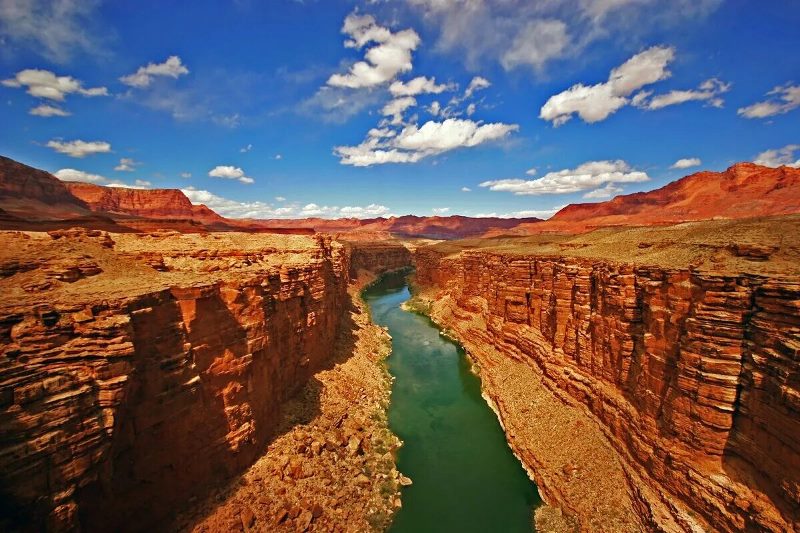
One of the most famous and popular nature reserves in the United States is the Grand Canyon National Park. This huge canyon, which lies on the Colorado Plateau, covers an area of almost 5 thousand square miles. These days, his images can be found everywhere: they are used in advertising, on postcards, in various videos and films. This reserve is popular not only among tourists, but also among Americans themselves. The Colorado River flowing along the bottom of the Grand Canyon is considered to be the factor that contributed to the formation of this amazing formation 5-6 million years ago.
A majestic creation of nature - the Grand Canyon
This canyon stretches an incredible 450 kilometers in length, and its width in some sections reaches an impressive 29 kilometers. The Grand Canyon also amazes with its depth, reaching 1800 meters. In 1919 it was given the status of a National Nature Reserve, and 60 years later it was included in the UNESCO World Heritage List. Despite the fact that this canyon is not the deepest or largest in the world, its attractiveness for nature lovers does not dry out, but, on the contrary, grows every year.
Every year this amazing natural site is visited by close to four million people. It is especially popular among newlyweds who choose this place for their wedding photo shoot. Massive rocks, sheer cliffs, picturesque waterfalls, deep canyons and mysterious caves create the impression that nature itself is the architect here, erecting majestic towers, pagodas and fortress walls. When looking at this amazing landscape, it becomes difficult to imagine the scale of the natural transformations that took place here, turning the flat plateau into this indescribable landscape.
Diversity of flora and fauna
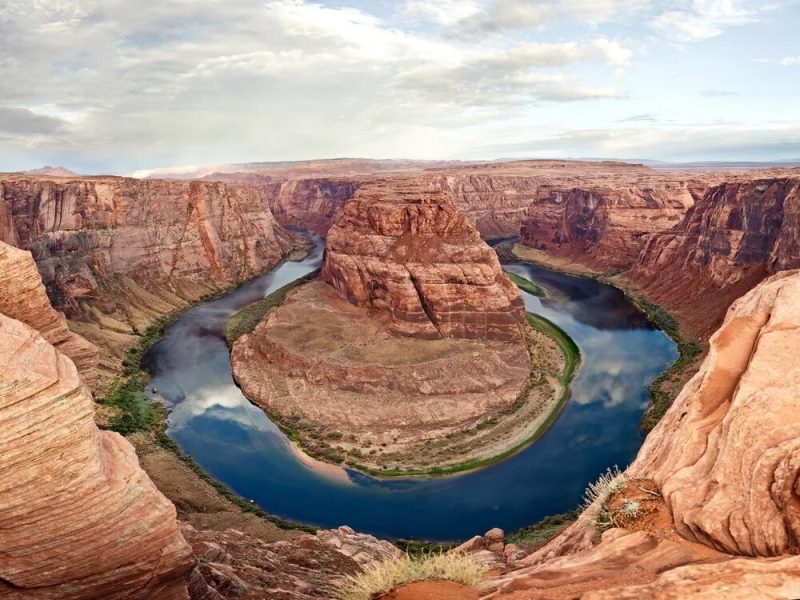
The Grand Canyon is home to a magnificent variety of flora and fauna, as the climate exhibits amazing diversity. The temperature regime at the bottom of the canyon can sometimes reach up to +40 degrees, while at the tops of the plateau it is limited to only +15 degrees. This territory is capable of changing its appearance so dramatically that the desert zone can suddenly give way to forested areas, bringing with it a variety of plants from agaves and cacti to oaks, birches and pines.
More than 1,600 different types of vegetation, approximately 90 species of mammals, 47 species of reptiles, 355 species of birds, as well as 26 species of fish and amphibians live in the natural area of the National Park. For those who prefer active recreation, there is the opportunity to hike along the picturesque plateaus, go on an exciting trip on kayaks, canoes or SUP boards. For a more relaxing holiday, there are options for viewing the canyon from a helicopter, visiting observation decks, and also going down to the river on mules, which is suitable for less active visitors to the park.
Interesting facts from the Grand Canyon
- More than 4 million people visit the Grand Canyon every year (4,425,314 people visited in 2008).
- In 2013, the Grand Canyon attracted the attention of American tightrope walker Nicholas Wallenda, who crossed the chasm on a tightrope without safety ropes.
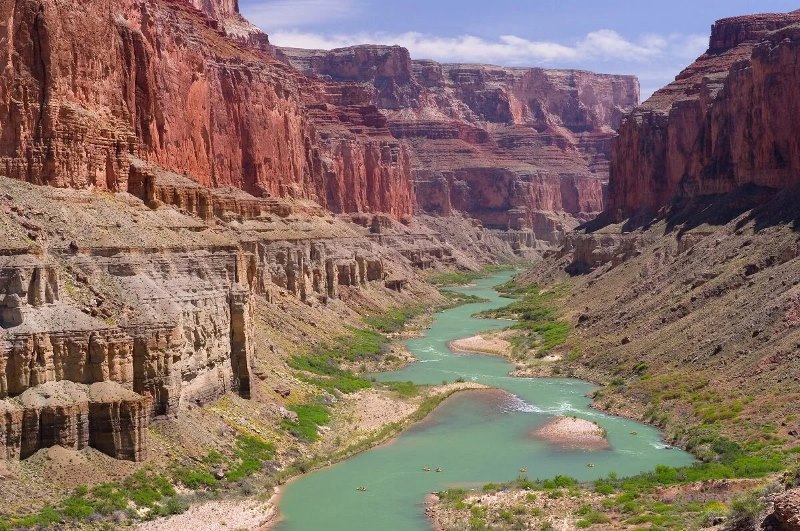
- Rafting down the Colorado River on inflatable rafts and descending into the canyon on mules are especially popular among tourists.


