
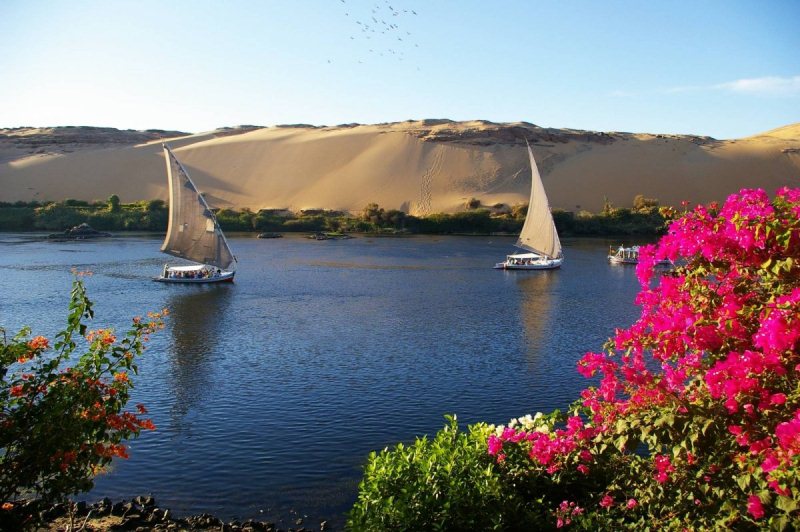
The Nile is the largest river on the planet, the length of which reaches many thousands of kilometers. Africa could not exist without this river, as it is a vital source of water for the continent. On the banks of the Nile there are historical monuments that tell about the peoples who lived here in the past.
Where is the Nile River
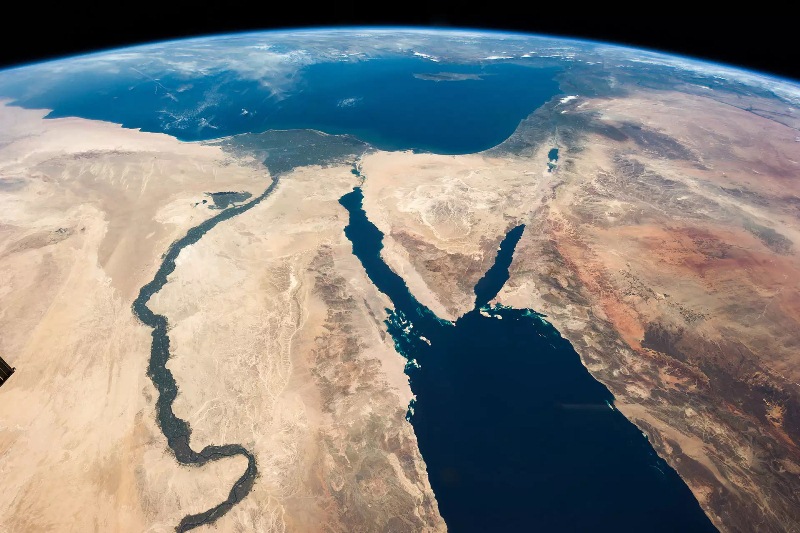
The Nile River begins its journey on the East African Plateau and flows all the way to the Mediterranean Sea. Its total length is 6,852 km, which makes it the second longest river after the Amazon, which is a full-water river on Earth.
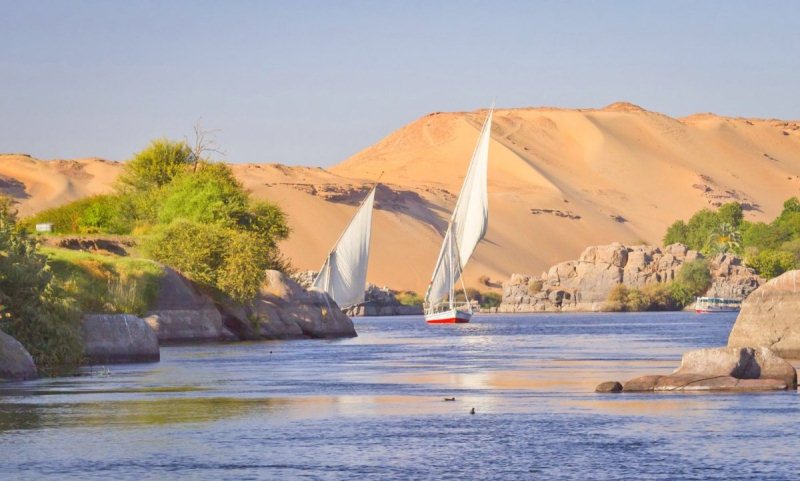
Although the river is one of the longest in the world, it is usually only associated with Egypt. However, the Nile River basin also covers other countries such as Kenya, Uganda, Eritrea, Rwanda, Tanzania, Ethiopia, Burundi, Zaire, Congo and Sudan. Water streams are used to irrigate agricultural land and generate electricity, as well as to transport goods and passengers between many cities and villages.
The Nile washes several of the largest cities in Egypt, including Cairo, Aswan and Alexandria. In addition, the capital of Sudan - Khartoum, which is also a large and famous city, is located on the banks of the Nile.
Features of the river
The river has a unique feature that attracts attention to it. In the period of intense heat, it does not dry up, but goes beyond its banks, coloring the flooded areas in purple. This is due to the presence of red minerals that enter the water from glaciers during the melting period. Thus, this unusual appearance can be explained by natural factors.
In Egypt, the Nile River is only 20% of its total length, but it is here that the famous Nile River Valley is located, which is a mecca for history and archeology buffs. The major cities of Egypt, the most famous historical monuments, famous museums such as the Valley of the Kings, the Luxor Temple, the Pyramids of Giza and many others are located on its territory. The valley stretches from the Nile River delta to the southern border with Sudan.
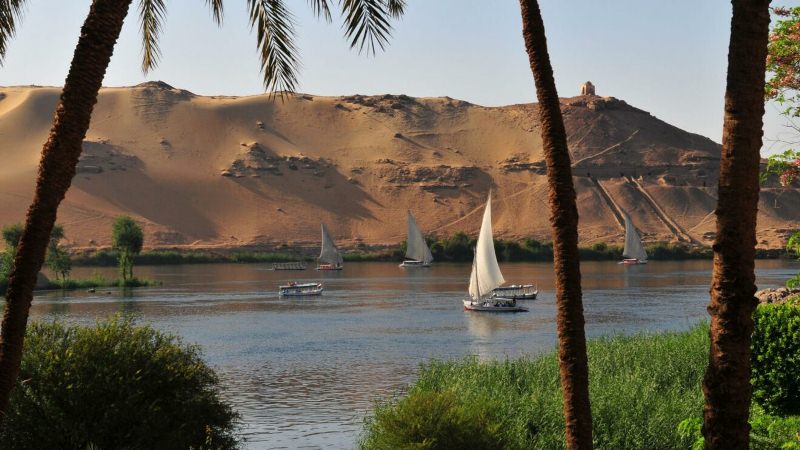
Sources and tributaries of the river
Over time, many scientists and researchers tried to solve the mystery of where the source of the Nile River is located. However, despite all efforts, the exact answer was never found, and this led to the creation of an ancient allegorical image of the Nile god with a draped head. Many famous travelers and scientists have expressed different assumptions about the place where the river begins, but it still remains a mystery.
It is now known that the source of the river system is located on the East African plateau and is connected with the waters of the Kagera River, which flows into Lake Victoria.
The river has many tributaries, extending throughout its territory. The most famous among them are Asua, El Ghazal and Blue Nile. The Blue Nile originates in a lake located in the Ethiopian highlands and makes a significant contribution to the total water volume of the river.
The Nile River flows into the Mediterranean Sea, forming a huge delta with an area of 24,000 square kilometers.
The Nile River in ancient times
Many versions of the origin of the name of the Nile River exist in history. One of the versions connects it with the ancient Greek word "Neilos", and the other - with the Latin "Nilus". It is possible that this name is of Semitic origin and means "valley".
Since ancient times, the banks of the Nile River in Africa have been densely populated. This water artery ensured the life and livelihood of many peoples. In the 3rd millennium BC, Egypt was the largest and most prosperous state in the Eastern Mediterranean. The river was the main way of communication between settlements, and the water was used to irrigate the land.
In ancient Egypt, the Nile was considered the river of the gods. According to mythology, on its banks the god Set killed his brother, the god of the underworld Osiris. The Egyptians considered the Nile to be the boundary between life and death, and built tombs on its western side. There was a belief that the sun god Ra dies every day at sunset.
In the past, crocodiles were common in the Nile River in large numbers. The Egyptians worshiped these beasts of prey, kept them in temples and decorated them with jewels. Their pantheon of gods even included the god Sebek, who was depicted with the head of a crocodile. Archaeologists discovered the city of Krokodilopolis on the banks of the river, where many rich burials of crocodiles were found on the outskirts. However, nowadays this predator is found much less often and not in all parts of the river.
Nile cruises and excursions
The recommended season for Nile cruises and excursions is December to February, although departures are also available between October and May. However, floods and changes in the water level in the river are possible at this time.
If you plan to visit the Nile, be sure to include the most famous sights of the region in your itinerary:
- Luxor is home to the world famous Valley of the Kings - an impressive burial place of Egyptian pharaohs. More than 50 tombs have already been discovered, but archaeological research is still ongoing. Don't miss the majestic ancient temples of Karnak and Luxor, as well as the grandiose stone statues of the Colossus of Memnon.
- Aswan is the southernmost city of Egypt, where the temple of Philae is located. Ancient stone-working techniques can also be seen here by visiting the Unfinished Obelisk. Another popular place on the outskirts of Aswan is the dam, which throws off a stream for 150 meters. Do not miss the opportunity to enjoy the beauty of the Botanical Garden in Nubian Village, located near Aswan.
- Kom-Ombo is a small city on the east bank of the Nile, which is famous for its temples dedicated to two deities - Sebek and Horus. The first was considered the god of water and was depicted as a crocodile, and Horus was the god of the sky and the sun and was depicted with the head of a falcon. Both temples were built in the Ptolemaic era.
- Edfu is a city where there is another temple dedicated to the god Horus (Mountain). The temple was built under the Ptolemies, and then restored by the ancient Greeks. They named it Apollonopolis Magna in honor of Apollo.
- Abu Simbel is a small village near which are located the famous Egyptian temples of Pharaoh Ramses II and his first wife Nefertari Merenmut. It is interesting that at first the temples were in a different place. In the 1950s, during the construction of the dam, the question arose about how to preserve these UNESCO monuments. It was decided to cut them into pieces, move them to another place and restore them. Thus, the temples were moved 180 meters, fully preserving their historical value.
Interesting facts
The Nile feature is not like most other rivers, because it does not flow from north to south, but on the contrary - from south to north. The majority of the population of Egypt lives near the coastal zone of this river - about 95%. During the construction of the pyramids, stone blocks were transported by the Egyptians on the Nile, using galleys and rafts for this purpose. Nile perch is a unique type of fish that lives in the waters of the Nile River. Its weight can reach 140 kg. The Nile crocodile is the second largest species of crocodile on Earth. The length of males can reach 5.5 m, and the weight is up to 200 kg. This species is known as the man-eating crocodile.
It is quite hot on the coast of the river, and the temperature often reaches +50C. It rains here only a few times a year, only in the lands in the Nile Delta. The fauna of the Nile River is very diverse. In addition to a large number of different types of fish, turtles live here. You can also meet quite dangerous snakes and cobras. More than 300 species of birds live on the shores, migratory birds fly here for the winter. A lot of human waste is dumped into the river. Bathing in it and even more so drinking the water is deadly.


