
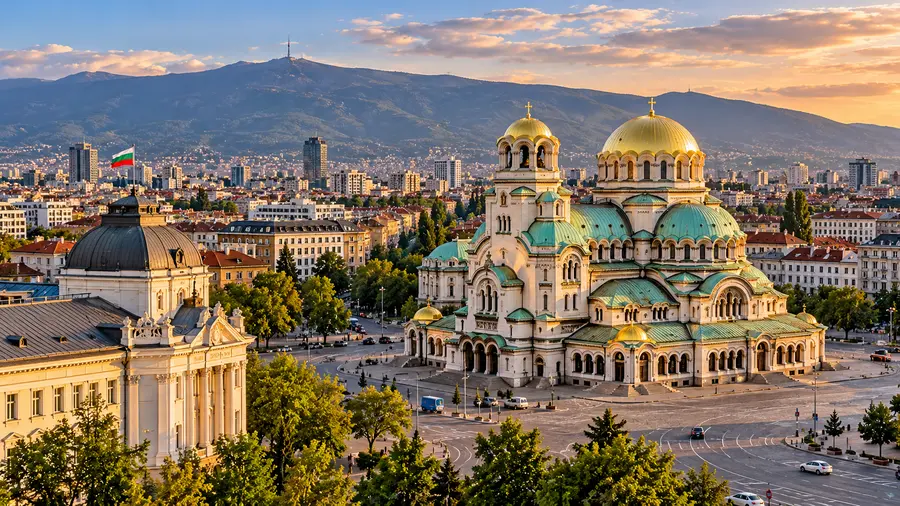
Sofia, the capital of Bulgaria, sits at the foot of Mount Vitosha, with Roman streets still lying beneath its modern pavements. The Thracian Serdi tribe settled here first, the Romans turned the town into Serdica, and Emperor Constantine the Great liked it so much that he often kept his court here. The city took its present name in the late 14th century from the ancient Basilica of St Sofia, so the church gave its name to the city rather than the other way round. Sofia's motto is "Ever growing, never aging", which suits a place where a metro line runs past a 4th-century rotunda and snowy peaks rise at the end of the main boulevard. How many people live in Sofia? About 1.2 million, yet the historic centre is compact and most sights are within walking distance. Is Sofia worth visiting? Very much so, and here is our pick of what to see in Sofia: twenty places, from cathedrals, a mosque and a synagogue to mountain trails and a monastery in the Rila Mountains.
What to see in Sofia first
The heart of Sofia fits into a triangle between Alexander Nevsky Cathedral, Independence Square, known locally as the Largo, and Vitosha Boulevard. Most churches, museums and Roman ruins are 5 to 15 minutes apart on foot, while Boyana Church, the National Historical Museum and Mount Vitosha are best reached by taxi or public transport. The metro lines cross under the centre at Serdika station, where the walls of the ancient city appear right inside the underpasses.
1. Alexander Nevsky Cathedral
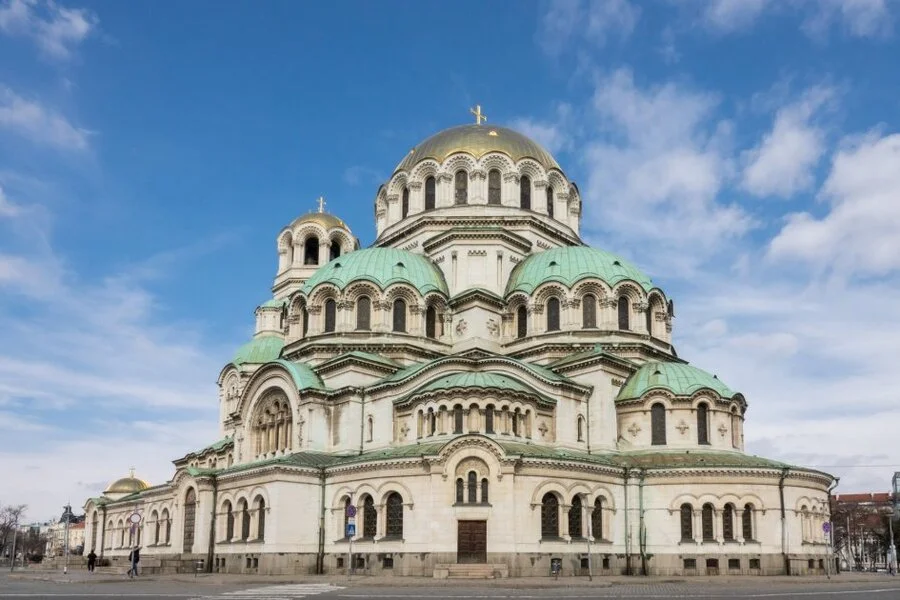
Sofia's best-known landmark and one of the largest Orthodox cathedrals in the Balkans was built mostly between 1904 and 1912. It was raised in memory of the Russian troops killed in the Russo-Turkish War of 1877–78, the conflict that freed Bulgaria from Ottoman rule. The architect Alexander Pomerantsev gave it a gilded dome 45 metres high that serves as a landmark across the centre, and the 53-metre bell tower holds 12 bells, the heaviest weighing 12 tonnes.
Inside, the atmosphere is hushed and dim, with coloured marble, mosaics and murals by Bulgarian and Russian painters. A separate entrance leads down to the crypt, where the National Gallery displays one of the richest collections of Bulgarian icons, from the medieval period to the National Revival. Take a walk around the building: the square ranks among the loveliest corners of Sofia, and in the small garden nearby dealers lay out old coins, badges, medals and vintage cameras.
2. Basilica of St Sofia
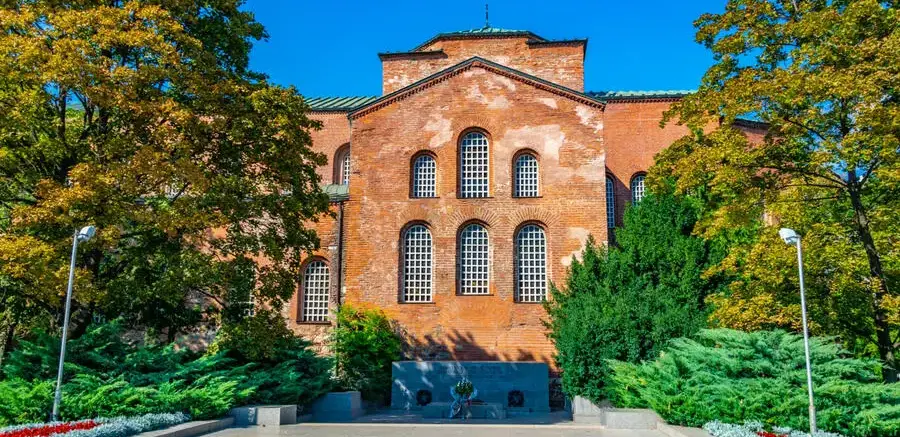
This modest red-brick basilica stands a stone's throw from Alexander Nevsky Cathedral, yet it is some 1,500 years older. The present building dates from the 6th century and replaced several earlier churches on the same site. Its name refers not to a woman but to the Greek word for wisdom, as the church is dedicated to Holy Wisdom. The Ottomans turned it into a mosque, and after 19th-century earthquakes it stood half-ruined for years before being restored.
Beneath the floor lies an underground museum with tombs, fragments of mosaics and the foundations of churches from Roman times. Beside the basilica an eternal flame burns at the Tomb of the Unknown Soldier, guarded by a bronze lion, and nearby is the grave of Ivan Vazov, the classic Bulgarian writer whose name the National Theatre bears.
3. Rotunda of St George
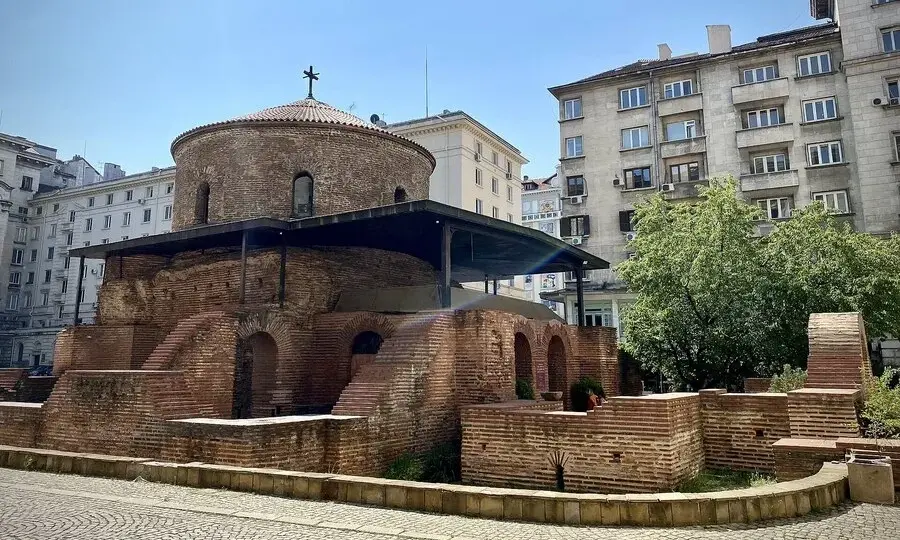
Sofia's oldest surviving building hides in a courtyard between the Presidency and a hotel. This small round church of red brick was built by the Romans in the early 4th century as part of a larger complex in Serdica, probably as a bath house or baptistery, and later became a place of worship. Around it, archaeologists have uncovered a stretch of ancient street with stone paving and the foundations of houses.
The dome preserves several layers of frescoes from the 10th to 14th centuries, crowned by 22 prophets, each over two metres tall. When the building served as a mosque, the paintings were covered over and only revealed again in the 20th century. Afterwards, walk round to the main entrance of the Presidency, where the honour guard in ceremonial historic uniforms changes every hour.
4. Ancient Serdica and the Largo
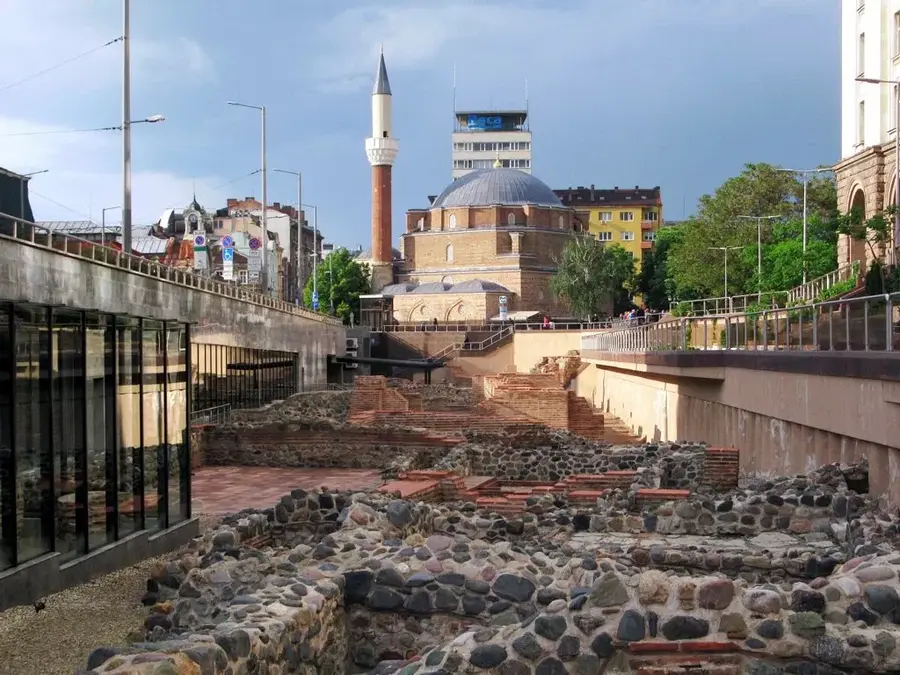
When the metro was being built through central Sofia, archaeologists came across an entire quarter of the Roman city: paved streets, homes, baths and early Christian basilicas. Rather than reburying the finds, the city preserved them in the open air, so you can now stroll among them as if through a museum, and sections of the walls appear inside Serdika metro station. The underpass by the TZUM department store holds the Eastern Gate of the ancient city with part of its fortifications.
Above the ruins rises the Largo, a 1950s ensemble of three monumental buildings in Stalinist neoclassical style: the former Party House, the Council of Ministers and the Presidency together with TZUM. A red star once topped the Party House spire, and where a statue of Lenin used to stand there is now a statue of St Sofia holding a wreath and an owl, symbols of power and wisdom.
5. Banya Bashi Mosque and the Mineral Springs
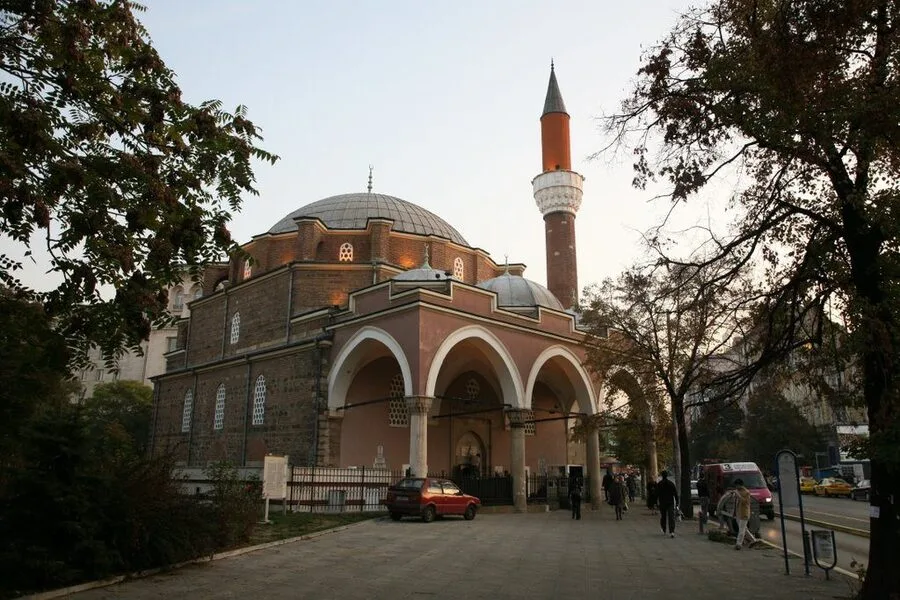
Sofia's only working mosque was completed in 1566 to a design attributed to Mimar Sinan, the greatest architect of the Ottoman Empire. Its name means "many baths", as it stands directly over thermal springs that the Romans already used. The massive dome and slender minaret are easy to spot from Maria Luiza Boulevard.
Next door is the former Central Mineral Baths, an elegant 1913 building with colourful ceramic decoration that blends Viennese Secession with Byzantine motifs. It now houses the Regional History Museum, which tells the story of Sofia from antiquity to the 20th century. In the little park opposite, warm mineral water flows from public taps, and locals come with plastic jerrycans to fill up, so bring a bottle and taste it yourself. Within a few minutes' walk stand the synagogue, the Catholic Cathedral of St Joseph and the Orthodox Church of St Nedelya, which is why this area is called the Square of Religious Tolerance.
6. Russian Church
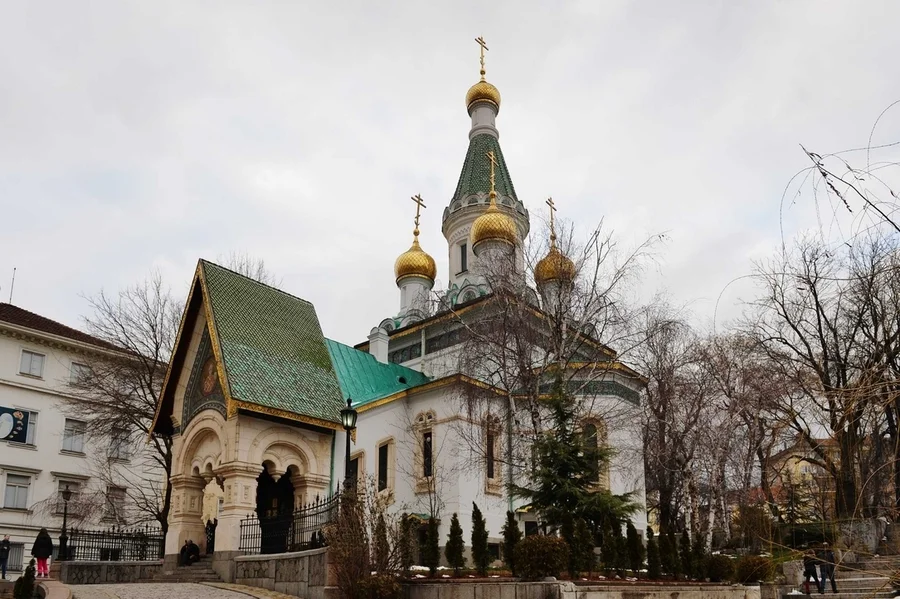
With its gilded onion domes and emerald-green tiles, the Church of St Nicholas the Miracle-Maker looks as if it had been lifted straight out of old Moscow. Its foundation stone was laid in 1907 for the Russian diplomatic mission and the consecration followed in 1914, with the architect Mikhail Preobrazhensky deliberately modelling it on 17th-century Muscovite churches. Among the stern buildings of Tsar Osvoboditel Boulevard, it resembles a little fairy-tale jewellery box.
The crypt holds the tomb of Archbishop Seraphim (Sobolev), venerated by believers as a saint. Visitors go down with handwritten notes asking for help and leave them in a box by the tomb, as local tradition says the wishes made here come true. The church is a few minutes' walk from the National Gallery and the City Garden, so it fits easily into any stroll through the centre.
7. Vitosha Boulevard
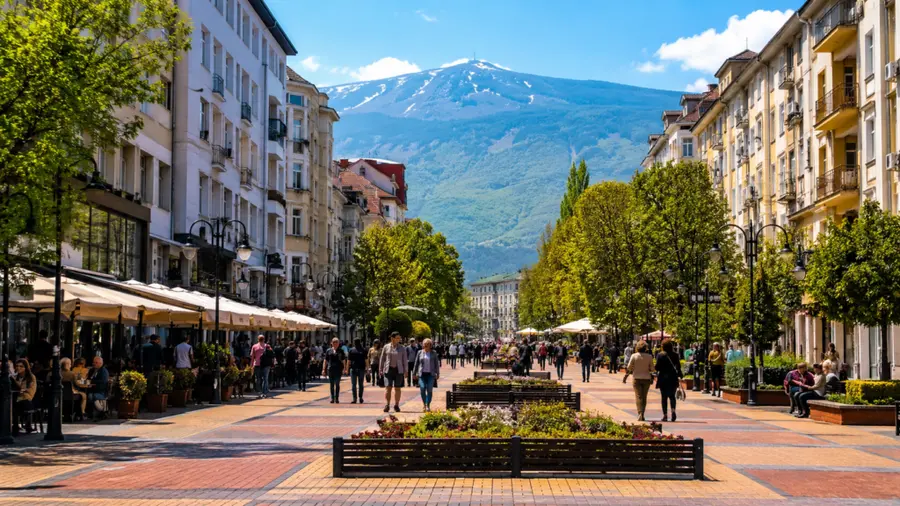
Sofia's main pedestrian street runs south from St Nedelya Church to the National Palace of Culture, and at the far end of the view, like a stage backdrop, rises the mountain that gave the boulevard its name. International brands share the street with local shops, patisseries, cafés with terraces and wine bars.
By day people wander along with coffee and shopping bags; in the evening the terraces fill up and the boulevard becomes the liveliest place in town. This is a good spot to try Bulgarian food: banitsa, a flaky pastry filled with white cheese, shopska salad topped with grated cheese, grilled kebapche and tarator, a cold soup of cucumber and yoghurt. The neighbouring Tsar Shishman Street is quieter, with small coffee shops, designer boutiques and bars frequented mostly by locals.
8. Boyana Church
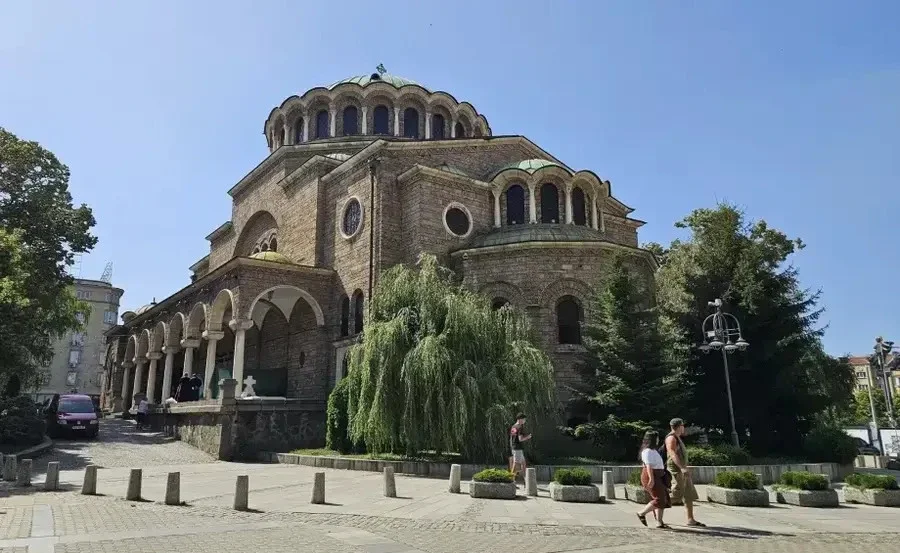
This small medieval church in the Boyana district, on the lower slopes of Vitosha, is on UNESCO's World Heritage list. It was built in three stages between the 10th and mid-19th centuries, but its fame rests on the frescoes of 1259. Unknown painters filled the walls with 89 scenes and more than 240 figures, and many of the faces are strikingly lifelike and individual, long before such realism reached the painting of the Italian Renaissance.
The most celebrated images show the couple who paid for the church, Sebastocrator Kaloyan and Desislava, as well as the royal pair Constantine Tikh and Irina. To protect the murals, visitors enter in small groups for a short time, so it is worth buying a ticket in advance and spending the wait in the shady park around the church. Boyana is about half an hour from the centre by taxi or bus, and the National Historical Museum is close by, so the two make a natural pair.
9. Mount Vitosha
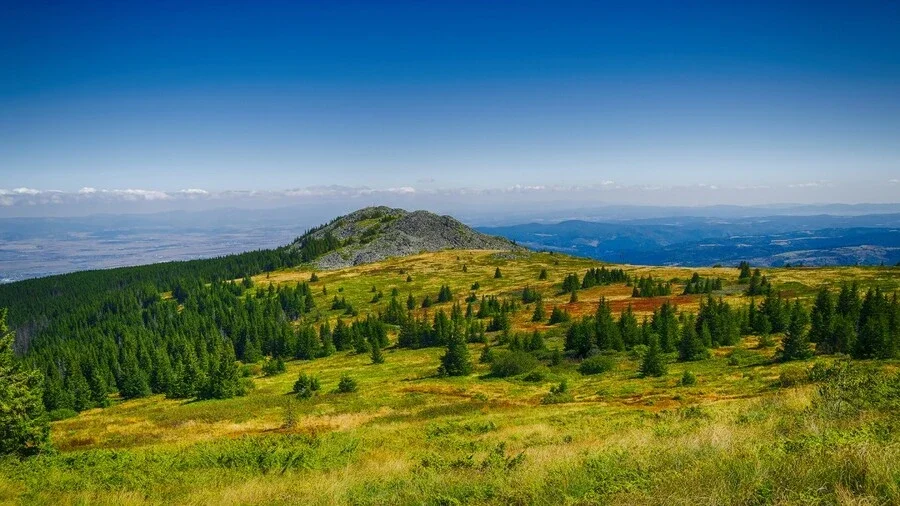
Few European capitals have mountains over 2,000 metres high right on their doorstep. Vitosha's highest summit, Cherni Vrah, reaches 2,290 metres, and in 1934 the massif became the first nature park in the Balkans. In summer people head up for cool air, picnics and hiking, while in winter they ski on the slopes around Aleko.
The most popular spot for a short walk is Zlatnite Mostove, the Golden Bridges, a river of huge rounded boulders with a stream gurgling beneath them and pine forest all around. From there trails lead to the summits, and from the Boyana side you can hike up to Boyana Waterfall. On a clear day the whole of Sofia spreads out in the valley below, with mountain ranges on the horizon. Bring a warm layer, as even in summer it is noticeably cooler up there than in the city.
10. National Historical Museum
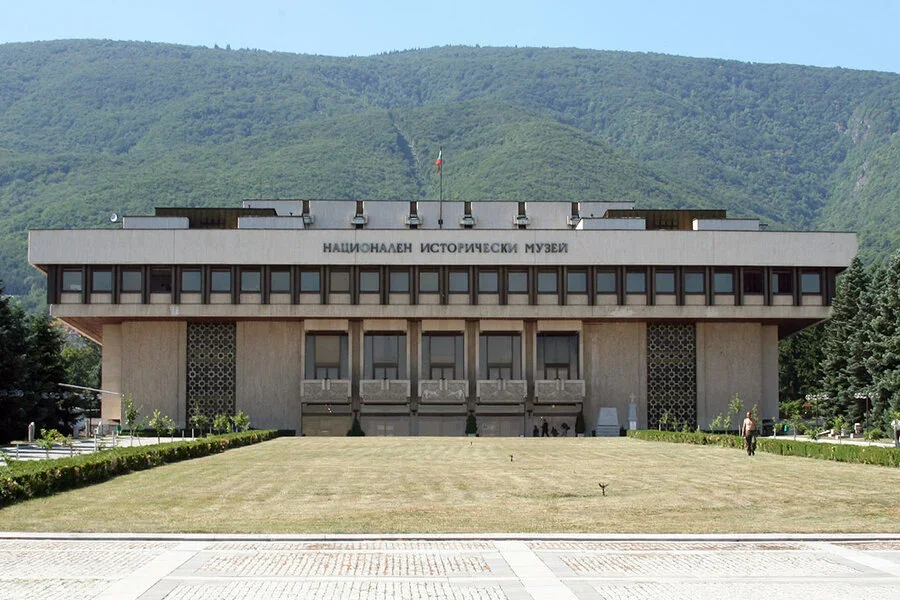
Bulgaria's largest museum occupies a former communist-era government residence in Boyana, set in parkland with views of Vitosha. Its collections number around 650,000 items, from flint tools to everyday life in the early 20th century, and there is no better place to get to grips with the country's past.
The biggest draw is the Thracian gold: rhyta, bowls, jewellery and horse trappings made centuries before Christ. The most famous part of the collection is the Panagyurishte Treasure, nine gold vessels found by chance by three brothers digging clay for a tile factory. The displays then lead through the Roman era, the First and Second Bulgarian Empires, the Ottoman centuries and the National Revival to embroidered costumes, church plate and old weapons.
Sofia Attractions: What Else to Visit While in the City
- Sofia Synagogue — the largest Sephardic synagogue in Europe, opened in 1909 to a design by the Viennese architect Friedrich Grünanger. A chandelier weighing 1.7 tonnes, the biggest in the country, hangs beneath its dome.
- St Nedelya Church — the cathedral between Vitosha Boulevard and the Largo. It was bombed during a funeral service in 1925, then rebuilt and repainted, and today it is again the main Orthodox church of the centre.
- National Gallery — the former royal palace on Prince Alexander I Square, showing Bulgarian painting and sculpture of the 19th and 20th centuries in rooms where the monarchs once lived. The Ethnographic Museum occupies another wing.
- Museum of Socialist Art — a sculpture park with Lenin, Georgi Dimitrov and heroes of labour, plus the very red star that once crowned the Party House. Inside, posters, paintings and newsreels show life in socialist Bulgaria.
- Women's Market — the city's oldest and most colourful market, selling vegetables, fruit, spices, cheese and honey. It is also a handy place to buy Bulgarian yoghurt, white cheese, lyutenitsa relish and rose cosmetics.
- Borisova Gradina — Sofia's oldest park, laid out from 1884 and named after Tsar Boris III. Ponds, shady avenues, the Vasil Levski Stadium and summer cafés make it the locals' favourite place to relax.
- National Palace of Culture — a vast congress centre opened in 1981 for the 1,300th anniversary of the Bulgarian state. In front of it is a park with fountains and a view straight down Vitosha Boulevard.
- Earth and Man Museum — one of Europe's largest mineral collections, housed in a former cartridge factory. Giant crystals of quartz, amethyst and rock crystal impress adults and children alike.
- Rila Monastery — Bulgaria's most famous monastery and a UNESCO site, about two hours' drive south. It was founded in the 10th century by followers of St Ivan of Rila, and its striped arcades and painted church are an emblem of the country.
- Plovdiv — one of Europe's oldest cities, around two hours from Sofia, with a Roman theatre, an Old Town of National Revival houses and the Kapana quarter full of cafés and galleries.
What to See in Sofia in 1, 2 or 3 Days
How many days in Sofia is enough? One day covers the centre, a second takes in Boyana and Vitosha, and a third is best spent at Rila Monastery or in Plovdiv. If you only have one day, start at Alexander Nevsky Cathedral and the Basilica of St Sofia, walk past the Russian Church and the National Gallery to the Rotunda of St George, catch the changing of the guard at the Presidency and explore the Serdica ruins at the Largo. Then visit Banya Bashi Mosque, the mineral springs and the synagogue, have lunch near the Women's Market and spend the evening on Vitosha Boulevard. On day two head to Boyana: Boyana Church and the National Historical Museum in the morning, a walk on Vitosha to the Golden Bridges in the afternoon. Give day three to Rila Monastery or Plovdiv, setting off early or joining an organised tour so you are back by evening.
The most pleasant months are May and June, September and October, when the city is warm and green without the heat. Sofia lies about 550 metres above sea level, so summers are fresher than on the coast, although July and August can top 30 degrees. Winter often brings snow and the ski season on Vitosha, and the larger resort of Bansko lies about 160 km to the south. Is Sofia near the sea? No: the Black Sea coast is about 380 km away, and Burgas is 4 to 5 hours by car.
Free things to do in Sofia include visiting Alexander Nevsky Cathedral, the Basilica of St Sofia and the Rotunda of St George, walking among the Serdica ruins, watching the changing of the guard, filling a bottle at the mineral springs and strolling along Vitosha Boulevard and through Borisova Gradina. Free walking tours in English start in the centre every day, with guides working for tips. Children enjoy the crystals of the Earth and Man Museum, the hands-on Muzeiko children's museum, Sofia Zoo and a picnic on Vitosha. In the evening locals gather on the terraces of Vitosha Boulevard and Tsar Shishman Street, and performances are staged at the Ivan Vazov National Theatre, one of the city's finest buildings. One useful tip: Bulgarians nod to say "no" and shake their heads from side to side to say "yes", so don't be puzzled if a waiter seems to refuse your order.
From Poland there are direct low-cost flights to Sofia from Kraków and Warsaw Modlin, taking about two hours. The airport is roughly 10 km from the centre, and from Terminal 2 the metro reaches Serdika station in about 20 minutes. Are trams free in Sofia? No, public transport requires a ticket, though in the metro and on many routes you can simply tap a contactless bank card. Bulgaria uses the euro, and cards are accepted almost everywhere in the centre.
Sofia combines easily with a beach holiday, and that is exactly how most travellers plan it. TurPoisk travel agency can book a hotel in central Sofia and help you continue your trip on the coast: our tours to Bulgaria on the Black Sea cover the sandy beaches of Sunny Beach and Golden Sands, historic Sozopol on its peninsula and quiet Pomorie with its healing mud. If you prefer a city break by the sea, Varna offers a long promenade and the Sea Garden. Our tour search will find options for your dates, and last-minute tours to Bulgaria are worth checking for bargains. The TurPoisk.ua team will help you decide how many days to give Sofia and how many to the beach.


