
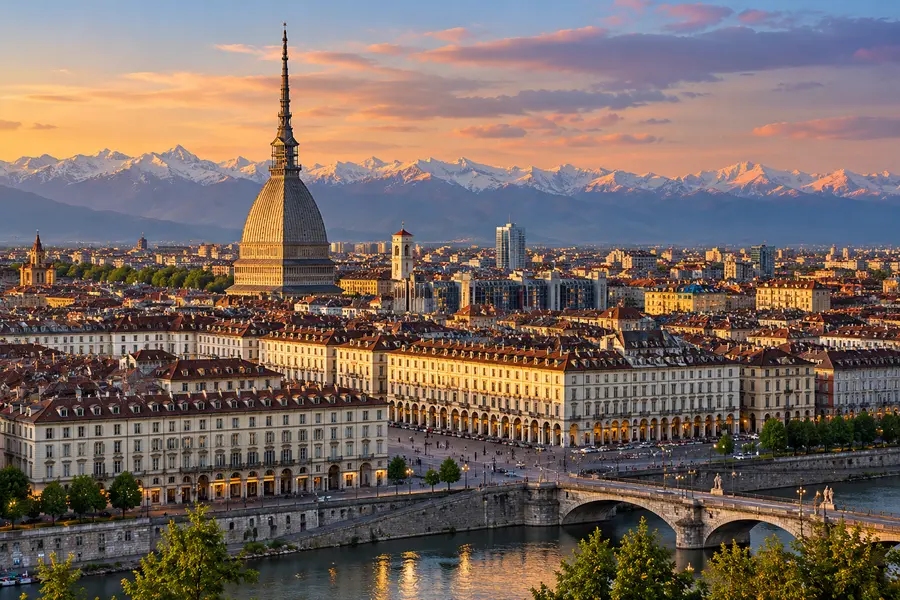
Turin tends to sit in the shadow of Rome, Venice and Milan, and that is exactly its charm: it offers what Italy's busiest destinations often lack — space, calm and the feel of a real working city. Turin served as unified Italy's first capital and as the Savoy dynasty's home, so expect grand boulevards, baroque palaces and miles of arcades you can stroll even in the rain. It is also the home of FIAT and Juventus, of Italian cinema and gianduja chocolate, and when the air is clear the snow-capped Alps rise above its rooftops. Whether you have one day or three, the twenty places in this guide reveal what to see in Turin and capture its character, from royal halls to a car factory with a racetrack on its roof.
What to see in Turin first
Central Turin is laid out almost like a chessboard: its streets have met at right angles since it was the Roman camp of Augusta Taurinorum, so you will rarely lose your way even without a map. The main sights cluster around Piazza Castello, from which the shopping streets of Via Roma, Via Po and Via Garibaldi radiate, and Porta Nuova station is a 15-minute walk away. You can see most places on foot, while the metro, trams and buses cover the outlying ones such as Superga, Venaria and Lingotto. Planning to see a few museums? The Torino+Piemonte Card covers admission to most of them and some public transport.
1. Mole Antonelliana and the National Cinema Museum
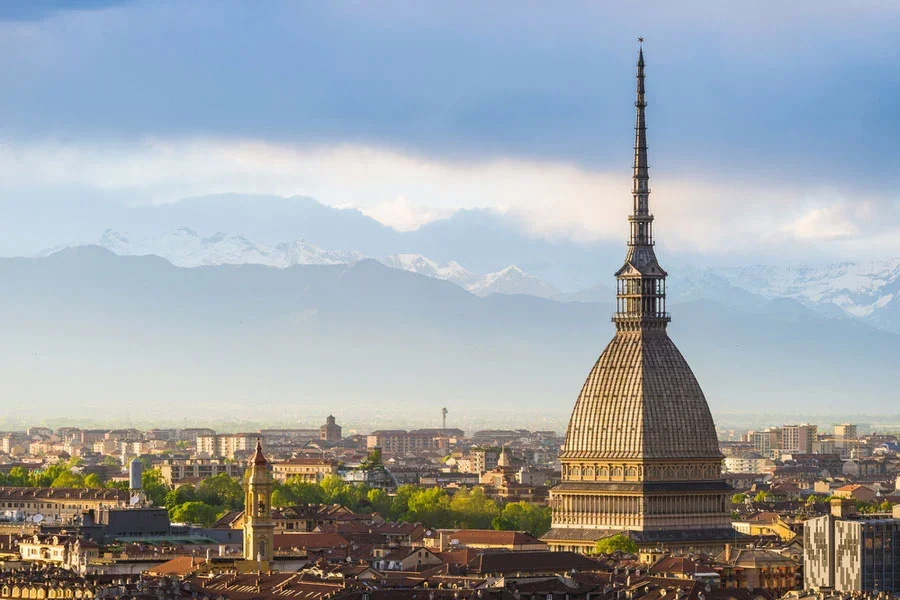
Turin's defining silhouette is the needle-like spire of the Mole Antonelliana, 167.5 metres tall and visible from almost every street. Work began in 1863 on a synagogue, but the architect Alessandro Antonelli kept raising the height, the money ran out, and the Jewish community handed the unfinished shell over to the city. It was completed in 1889, and today it even appears on Italy's two-cent euro coin.
The building now houses Italy's National Cinema Museum, one of the most entertaining in Europe, spanning shadow theatre and early cameras to costumes, posters and film sets. The main hall, with red recliners under the dome, feels like a giant movie theatre, and a glass lift glides straight up through the open space to a panoramic terrace 85 metres above the ground. From there you can see the rooftops of the centre, the River Po, Superga Hill and the Alpine chain. Book the lift online and choose a slot close to sunset.
2. Egyptian Museum
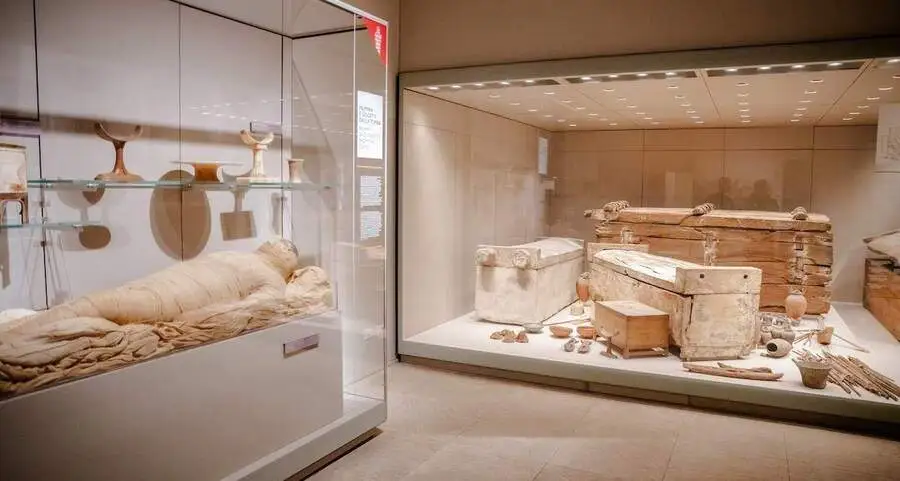
Founded in 1824, the Museo Egizio ranks as the world's oldest museum devoted entirely to ancient Egypt, and locals like to call it second only to Cairo's. Its core is the collection that King Charles Felix bought from Bernardino Drovetti, the French consul in Egypt. Champollion, who cracked the hieroglyphs, studied the papyri here and is said to have remarked that the road to Memphis and Thebes runs through Turin.
The highlights are the Gallery of the Kings, with statues of pharaohs and gods redesigned by Rem Koolhaas's firm OMA for the museum's bicentenary, and the intact tomb of the architect Kha and his wife Merit, complete with pots, clothes, wigs and even leftover food. The museum also holds the Turin King List, a papyrus naming Egypt's rulers. Allow at least three hours and arrive early, as queues build up at the entrance later in the day.
3. Royal Palace and the Royal Museums
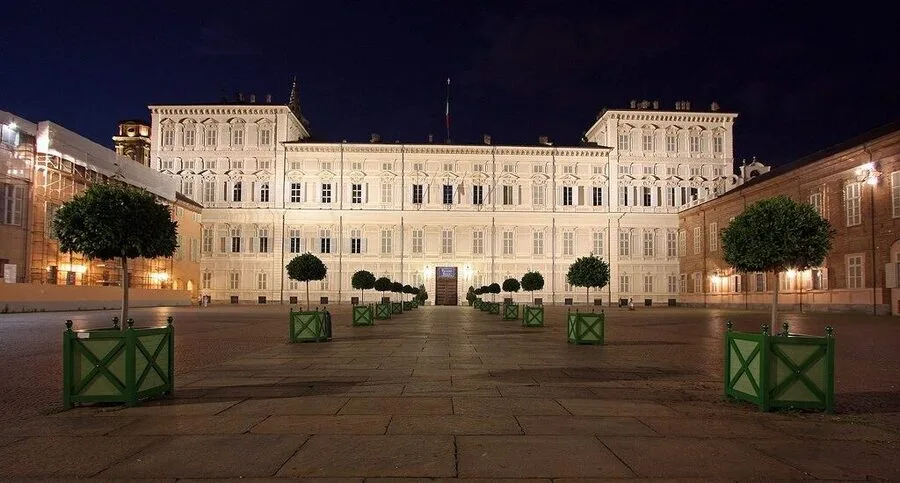
For more than two centuries Palazzo Reale was the principal home of the Savoys, and it is now on the UNESCO list along with the dynasty's other residences in Piedmont. A ceremonial staircase leads to rooms full of gilded stucco, Chinese cabinets, tapestries and porcelain. The palace is part of a single Royal Museums route that also includes the Royal Armoury, with knights in armour mounted on horses, the Galleria Sabauda, with paintings by Van Dyck, Mantegna and Veronese, and the Royal Gardens behind the palace.
Make time for the Chapel of the Holy Shroud by Guarino Guarini, whose ribbed dome seems to spiral upwards like a coil. A fire badly damaged it in 1997, and after more than twenty years of restoration its black marble gleams again. The Royal Library keeps Leonardo da Vinci's famous red-chalk self-portrait, which is displayed only occasionally, so if your visit coincides with a showing, do not miss it.
4. Turin Cathedral and the Shroud
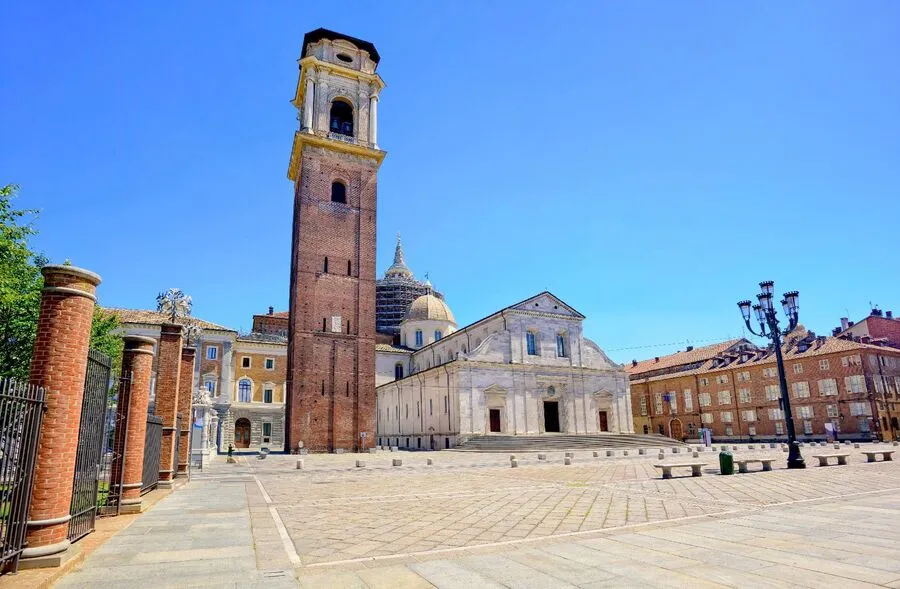
The late 15th-century Cathedral of Saint John the Baptist is Turin's only Renaissance church and looks modest next to its baroque neighbours. It guards the famous Shroud, a linen cloth more than four metres long that carries the faint imprint of a man's body, which millions of believers regard as the burial cloth of Christ. Radiocarbon tests in 1988 dated the fabric to the Middle Ages, yet scholars are still arguing about it.
The relic itself rests in a climate-controlled case and is put on public display only in special years, but a life-size photographic copy is always on view in the cathedral, and the Shroud Museum nearby explains the history of the research. Next to the cathedral rises a separate bell tower, while the Roman Palatine Gate is only a few minutes' walk away and worth seeing straight afterwards.
5. Palazzo Madama and Piazza Castello
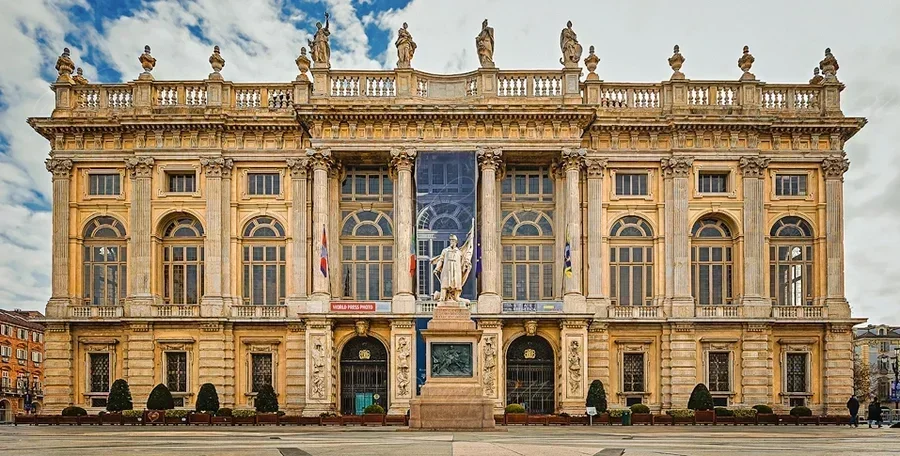
Piazza Castello is the heart of Turin, and in its middle stands a building that holds two thousand years of the city's history. A Roman gate once stood here, then the brick-towered medieval castle of the Princes of Achaea, and in 1718–1721 Filippo Juvarra added a white baroque façade with a grand staircase facing the square. The palace is named after two "Madame Reali", widowed Savoy regents who lived here, and in 1861 the newly united Kingdom of Italy held its first Senate sessions in its halls.
Today Palazzo Madama houses the City Museum of Ancient Art, with Gothic sculpture, medieval miniatures, porcelain and glass. Be sure to climb the tower for a bird's-eye view of the square, with the Mole and the mountains beyond the palace roofs. Around the piazza you will find the Teatro Regio, the church of San Lorenzo with another astonishing Guarini dome, and arcades lined with cafés.
6. Basilica of Superga
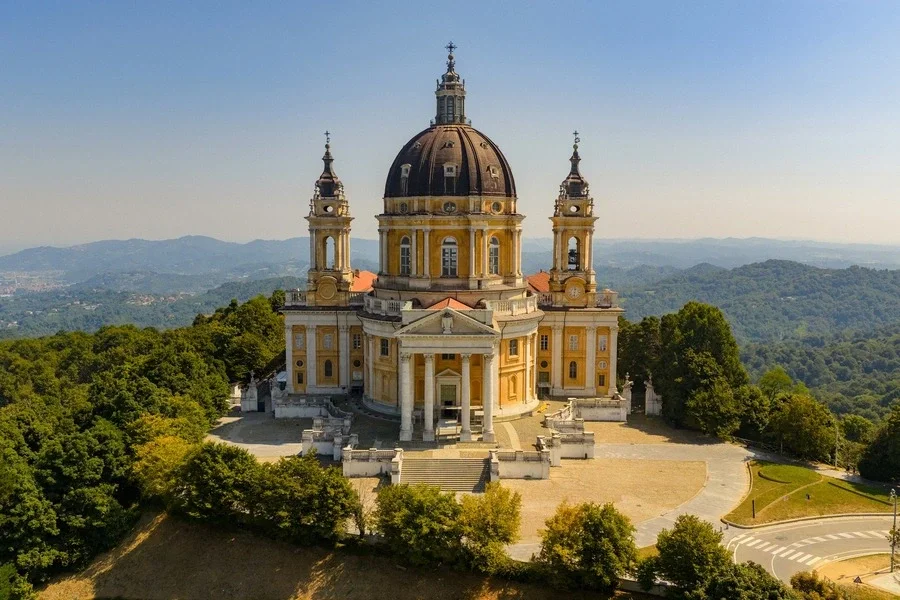
In 1706, while the French were besieging Turin, Duke Victor Amadeus II climbed Superga Hill and vowed to build a church there if the city held out. Victory came, and Filippo Juvarra designed a vast domed basilica with a columned portico at 672 metres, which still crowns the skyline east of the city. Many members of the Savoy dynasty lie in the crypt below.
Beside the basilica is a memorial to Grande Torino, the side that dominated Italian football in the 1940s: on 4 May 1949 the plane carrying the legendary squad flew into the wall behind the church in thick fog, killing everyone on board. The most memorable way up is the historic rack tramway from Sassi station, which climbs three kilometres of hillside in about twenty minutes. From the terrace you can see Turin, the Po and the Alps from Monviso to Monte Rosa.
7. Parco del Valentino and the Medieval Village
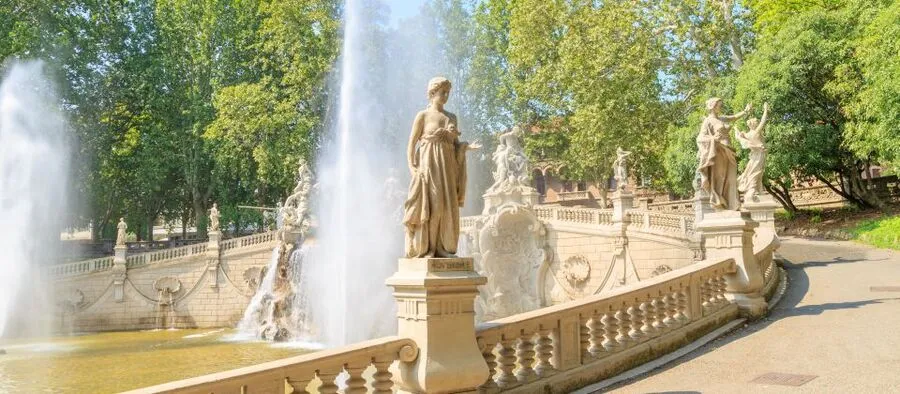
Turin's favourite park runs for a mile or so along the left bank of the Po: locals jog here in the morning, cycle along the paths and picnic by the water. Above the trees rises the Castello del Valentino, a French-style 17th-century château and another UNESCO-listed Savoy residence, which now hosts the architecture students of the Turin Polytechnic.
Further south stands the Medieval Village and its fortress. It looks authentic, but in fact it dates from the Italian General Exhibition of 1884, for which builders copied houses, churches and castles from all over Piedmont and the Aosta Valley. Craft shops line its lanes, and children love the drawbridge and cobbled streets. In the evening you may hear music in the park, and the riverbank offers lovely views of the hills across the water.
8. Piazza San Carlo and the Historic Cafés
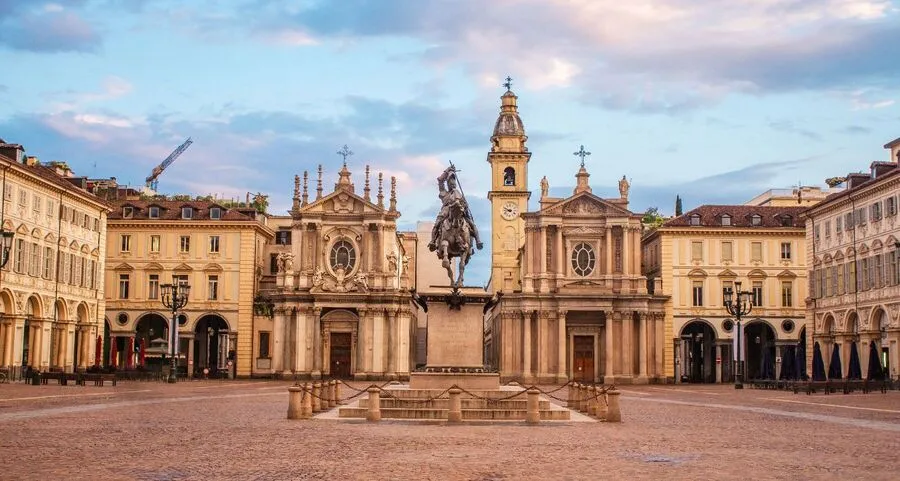
Piazza San Carlo is known as Turin's drawing room: matching arcades frame it, Santa Cristina and San Carlo, a pair of twin churches, stand at one end, and a bronze horseman, Duke Emanuele Filiberto, rises in the centre. Mirrored, velvet-lined cafés fill the arcades, and outside Caffè Torino a mosaic bull, the city's emblem, is set into the pavement; tradition says that stepping on it guarantees you will come back.
Turin is the capital of Italian coffee and chocolate culture, so order a bicerin, espresso, hot chocolate and cream poured in layers into a small glass. The most famous place to try it is the tiny Al Bicerin café opposite the Consolata sanctuary, open since 1763. Taste gianduiotto chocolates made with hazelnut paste and vermouth, which was invented in Turin in the late 18th century, and in the evening join locals for aperitivo, when your drink comes with a whole spread of snacks.
9. Venaria Reale
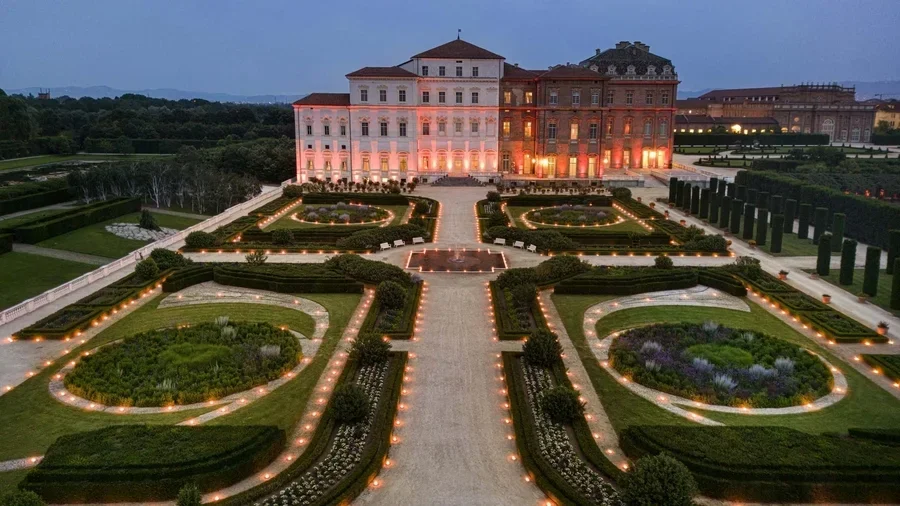
The Savoy dukes' hunting residence, ten kilometres from the centre, is one of the largest palace complexes in Europe and is often compared to Versailles. Construction began in 1658, and later Filippo Juvarra created the Great Gallery, an 80-metre white hall with towering windows and a marble floor that leaves many visitors speechless.
After the Napoleonic wars the palace served as army barracks and fell into decline, and its restoration was only completed in 2007. Today you can visit the state apartments, the church of Sant'Uberto, the stables and huge gardens with fountains and contemporary installations, and the palace regularly hosts major exhibitions. Set aside half a day for Venaria and wear comfortable shoes, since the gardens alone cover dozens of hectares.
10. Lingotto and the Automobile Museum
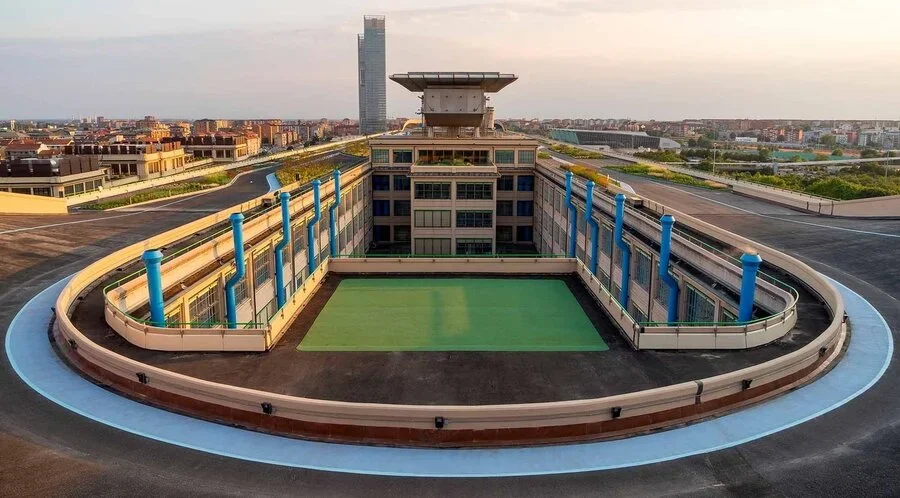
The former FIAT factory at Lingotto, built in 1916–1923, was radical even by the standards of its day: raw materials entered on the ground floor, cars were assembled as they moved up floor by floor, and finished vehicles were tested on an oval track on the roof. You can spot the track in the 1969 film The Italian Job. When production ended, Renzo Piano turned the building into a shopping and exhibition centre, and the roof became the Pista 500 garden, with thousands of plants along the old circuit.
A glass "treasure chest" above the roof holds the Pinacoteca Agnelli, with works by Canaletto, Matisse and Picasso from the FIAT owners' collection. Two kilometres away on the bank of the Po, the National Automobile Museum tells the story of motoring from steam carriages to Formula 1 cars, and ranks among the best car museums in the world. You can combine both in half a day, and the metro runs to Lingotto from the centre.
Turin Attractions: What Else to Visit While in the City
- Via Po and the arcades — Turin has about 18 km of porticoes, and the finest run along Via Po from Piazza Castello to the river, sheltering second-hand book stalls, cafés and old-fashioned shops.
- Porta Palazzo Market — the biggest open-air market in Europe, with farmers' stalls and fish and meat halls. On Saturdays the Balon flea market next door fills with furniture, records and curiosities.
- Quadrilatero Romano and the Palatine Gate — the oldest quarter, laid out on the Roman camp, full of narrow lanes, trattorias and bars. On its edge stands a 1st-century BC Roman gate flanked by two sixteen-sided towers.
- Piazza Vittorio Veneto and the Murazzi — one of Europe's largest arcaded squares, sloping down to the Po. Below its embankment, the old Murazzi storerooms now house bars and clubs where nightlife goes on until dawn.
- Gran Madre di Dio and Monte dei Cappuccini — a neoclassical church on the right bank linked to legends of the Holy Grail, and the hill above it with a Capuchin monastery. Its viewpoint offers the classic panorama of Turin with the Mole spire and the Alps behind.
- Palazzo Carignano and the Risorgimento Museum — Guarini's baroque palace with a rippling brick façade, where Victor Emmanuel II, who became Italy's first king, was born. The first Italian parliament sat here, and the museum explains how the country came together.
- Stupinigi Hunting Lodge — Juvarra's elegant residence on the southern outskirts, topped by a bronze stag. Its wings spread diagonally from an oval ballroom painted with hunting scenes.
- Allianz Stadium and the Juventus Museum — home ground of Italy's most decorated club. The tour leads you through the dressing rooms and the players' tunnel, and the J-Museum displays trophies, shirts and the story of the "Old Lady".
- Castello di Rivoli — an unfinished Savoy castle on a hill outside the city, now a museum of contemporary art where old walls meet installations by Maurizio Cattelan and other artists.
- Sacra di San Michele — a 10th-century abbey perched on a mountaintop 40 km from Turin that inspired Umberto Eco's The Name of the Rose. A steep climb leads to its gate, and at the top the Staircase of the Dead and views over the Susa Valley await.
Is Turin worth visiting? Absolutely, especially if you have already seen Rome and Venice and want Italy without the crowds. How to spend a day in Turin: start with the Egyptian Museum, continue to Piazza Castello, Palazzo Reale and the cathedral, lunch in the Quadrilatero, ride the lift up the Mole Antonelliana in the afternoon and end with aperitivo on Piazza San Carlo. Is 2 days in Turin enough? It covers the essentials: on day two, stroll Via Po to Piazza Vittorio Veneto, wander through the Valentino park, visit the Gran Madre and watch the sunset from Monte dei Cappuccini. With a third day, add Venaria Reale or Lingotto and the Automobile Museum, and with more time take a trip to Superga, the Sacra di San Michele or the Langhe wine hills, home of Barolo, where Alba holds its white truffle fair every autumn. In the evening, head for the Murazzi, the Quadrilatero or the student district of Vanchiglia, where bars stay open late.
What is Turin famous for besides museums and chocolate? It has a reputation as Italy's most mysterious city: legend places it in two magic triangles at once, a white one with Lyon and Prague and a black one with London and San Francisco, and evening walking tours explore its "dark" corners. Free things to do include walking the arcades and squares, browsing Porta Palazzo Market, relaxing in Parco del Valentino and visiting the cathedral and the Gran Madre. Families will enjoy the cinema and car museums, the Egyptian collection, the Medieval Village and the Juventus stadium tour. The most pleasant months fall in spring and autumn, and from November to January the city glows with the Luci d'Artista light installations. Milan is under an hour away by high-speed train, so see our Milan guide if you want to combine the two cities.
Planning a trip to Turin? With TurPoisk online travel agency you can book a hotel in the centre, near Piazza Castello or Porta Nuova station, and plan a route around northern Italy. If you fancy the sea after all the palaces and museums, try our tour search: Barcelona is only about 90 minutes from Turin by air, so a package to the Costa Brava or the Costa Dorada in Spain makes an easy extension. Our team will gladly help you plan the route and choose a beach after Italy.


