
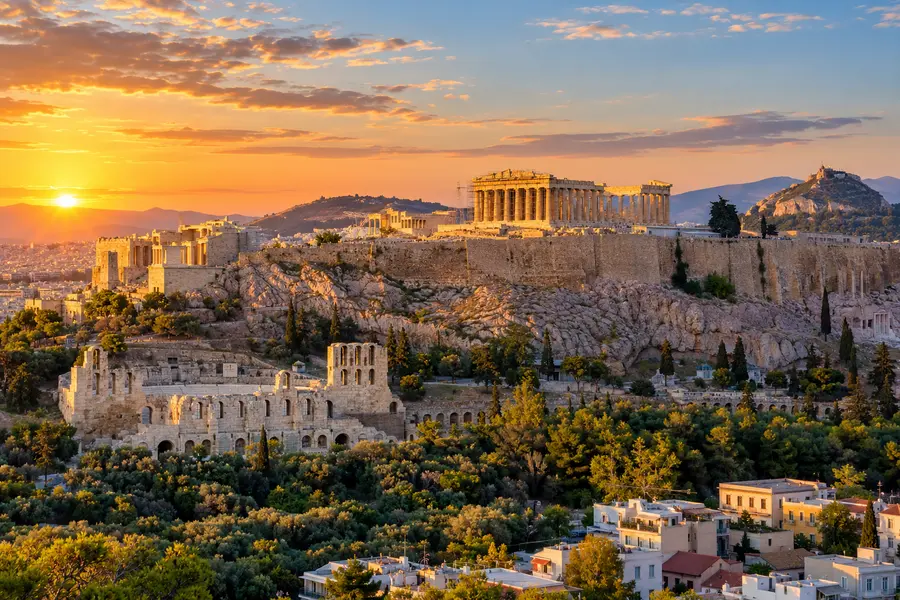
Athens is a city where antiquity is woven into the daily routine instead of being locked behind museum glass. The Parthenon looks down on apartment balconies and café terraces, ancient columns stand between ordinary residential blocks, and several metro stations display pottery, gravestones and other finds uncovered while the tunnels were being dug. The Greek capital has more than three thousand years of recorded history, and it gave the world democracy, drama and philosophy — ideas that still shape European culture. Yet modern Athens is anything but a museum: it has noisy markets, graffiti-covered neighbourhoods, rooftop bars facing the Acropolis and a coastline you can reach from the centre by tram. If this is your first trip and you are asking what to see in Athens, this guide will help you set priorities and plan your days without missing the essentials.
What to see in Athens first
The historic centre of Athens is surprisingly compact. The Acropolis, Plaka, Monastiraki, the Ancient Agora and Syntagma Square all lie within about 1.5 km of one another, and the pedestrian streets of Dionysiou Areopagitou and Apostolou Pavlou wrap around the sacred rock, so you can cover most sights on foot and without a guide. Looking at a map, the city divides neatly into three zones: the ancient core around the Acropolis, "royal" Athens with Parliament, the National Garden and the marble stadium, and the museum district to the east and north of the centre. Book your Acropolis ticket in advance on the official Ministry of Culture ticketing site, because entry works with timed slots.
1. The Acropolis and the Parthenon
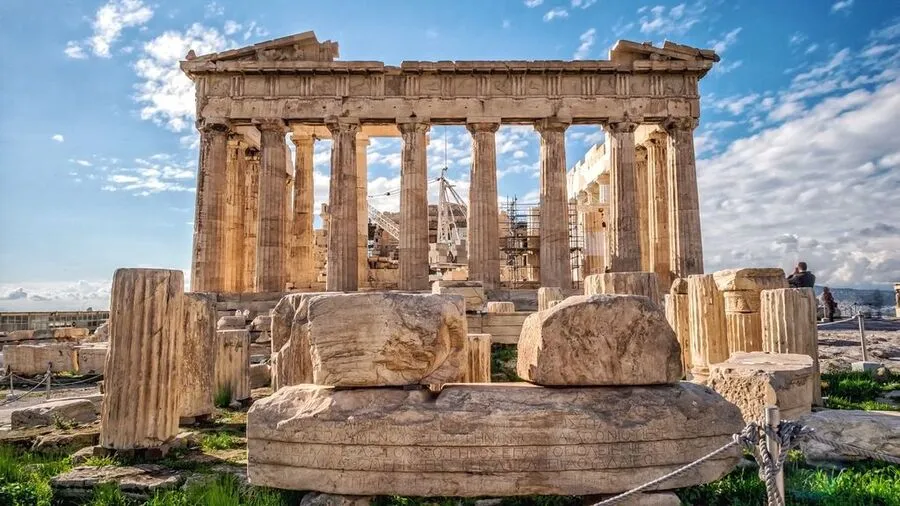
The Acropolis is the emblem of Athens and perhaps the most famous ancient site on UNESCO's list. On the flat top of a 156-metre limestone outcrop, the Athenians of Pericles' age built a group of sanctuaries dedicated to Athena, protector of the city. Its centrepiece, the Parthenon, went up in 447–438 BC to designs by Ictinus and Callicrates, while the sculptor Phidias oversaw the decoration. Next to it stand the Erechtheion, whose porch rests on six maiden statues known as the Caryatids, the Propylaea gateway that visitors still pass through today, and a tiny shrine to Athena Nike. On the southern slope lies the Theatre of Dionysus, where plays by Aeschylus and Sophocles premiered, while the Odeon of Herodes Atticus nearby fills with concert audiences on summer evenings.
Over the centuries the Parthenon served as a church, a mosque and even a gunpowder store. In 1687, during a Venetian siege, a shell hit the powder and the blast tore the temple apart in the middle. Restoration work has continued for decades, and in June 2026 workers permanently took down the scaffolding from the west façade, revealing the pediment in its most complete form in about 220 years. Arrive at opening time or a couple of hours before closing to avoid the worst crowds and heat. Wear shoes with good grip, since the marble has been worn glassy over the centuries, and carry water: on the hottest summer days the site may shut at midday. Daily visitor numbers are capped, so in high season morning slots sell out several days ahead.
2. Acropolis Museum
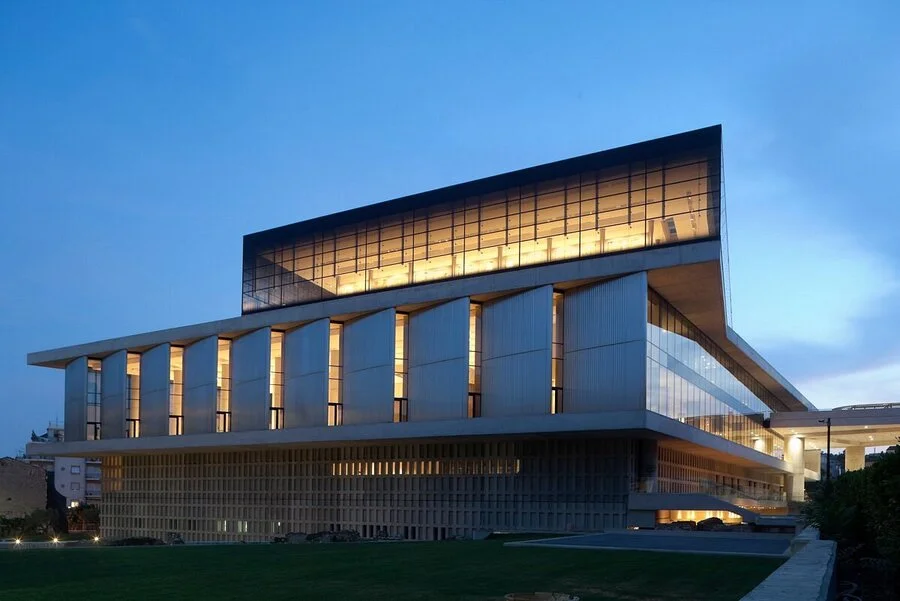
Bernard Tschumi's building, opened in 2009, stands a few hundred metres below the rock. Right at the entrance you walk over a glass floor revealing the lanes, courtyards and wells of an excavated ancient neighbourhood. The lower galleries display finds from the hillsides around the Acropolis plus Archaic statues, while a gallery on the first floor holds five of the original Caryatids from the Erechtheion; the sixth is still in London's British Museum.
The highlight is the glass-walled hall on the top floor. It is aligned exactly like the Parthenon itself, and the temple's frieze is arranged in its original sequence. Marble originals alternate with white plaster casts of the slabs Lord Elgin shipped to London at the start of the 1800s, so you can immediately see how much of the sculpture is still abroad. Visit straight after the Acropolis so that everything you saw on the hill falls into place, then rest on the restaurant terrace overlooking the Parthenon.
3. Ancient Agora and Temple of Hephaestus
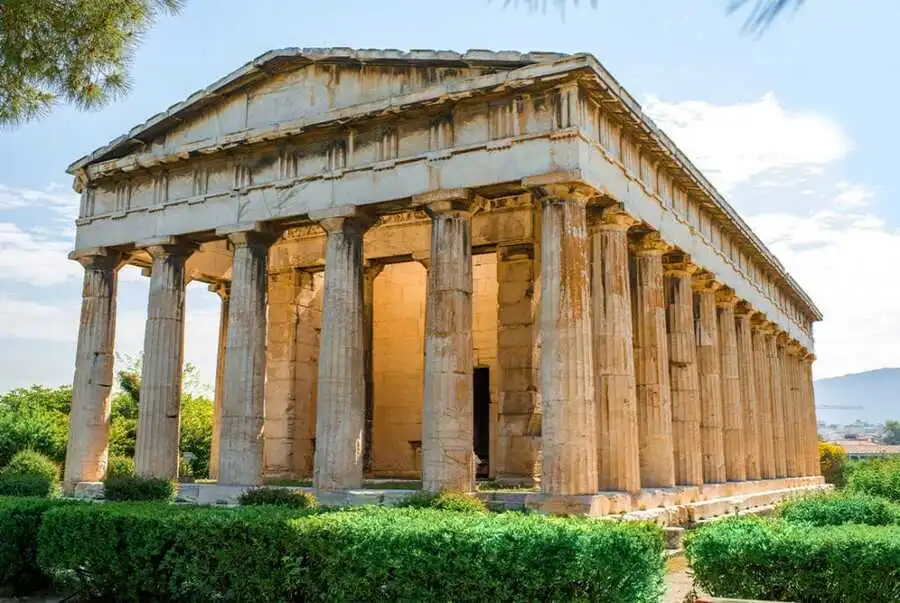
In antiquity the Agora was the hub of public life: a place for trade, courts, elections and endless philosophical debate. Socrates questioned passers-by here, and according to the Acts of the Apostles, Saint Paul preached to the Athenians in the marketplace and on the nearby Areopagus. Today the Agora is a leafy archaeological park dotted with olive trees, where two hours among the foundations of public buildings pass very quickly.
Above the ruins rises the Hephaisteion, a temple to the god of metalworking begun around 450 BC and the best-preserved Doric temple in the country. In the Middle Ages it became the Church of Saint George, which is why it survived with its roof and almost all of its columns. Opposite stands the long two-storey Stoa of Attalos, a gift from King Attalos II of Pergamon. American archaeologists rebuilt it in the 1950s, and today it houses the Agora Museum, where you can see the pottery shards called ostraka, on which citizens scratched the names of politicians they wanted to banish, and a stone machine used to pick jurors by lot.
4. Plaka and Anafiotika
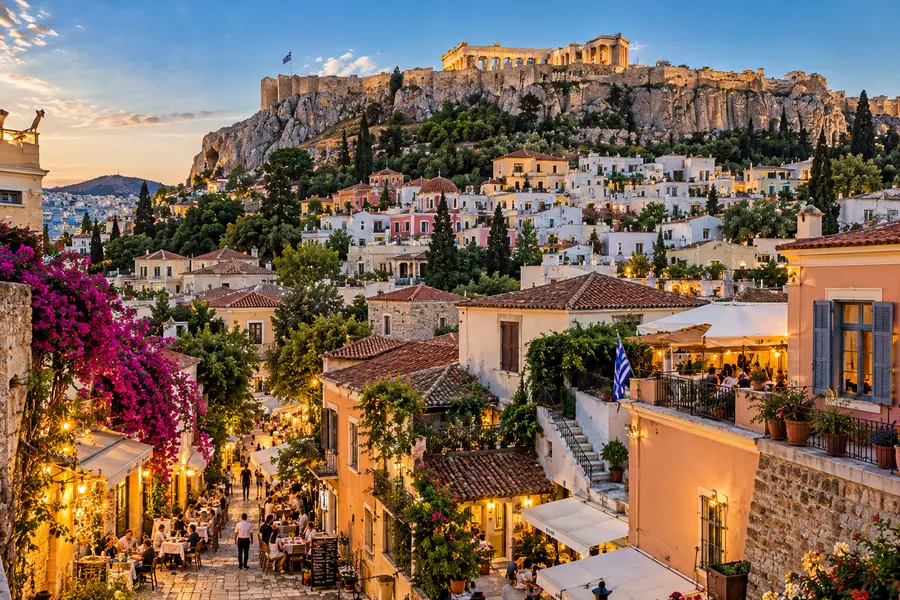
Plaka, the oldest residential district of Athens, clings to the north-eastern side of the Acropolis and is often called the "Neighbourhood of the Gods". Expect narrow lanes draped in bougainvillea, neoclassical mansions with wrought-iron balconies, shops selling leather sandals and olive oil cosmetics, and tavernas with tables set out on the steps. The main streets are Adrianou and Kydathineon, and on a quiet little square stands the Monument of Lysicrates, erected in the 4th century BC to celebrate a win in a theatre competition.
Higher up, right beneath the walls of the Acropolis, hides Anafiotika, a tiny village of whitewashed houses with blue shutters that feels as if it were lifted from the Cyclades. Its first homes went up in the 1800s, when craftsmen from Anafi, a small Cycladic island, came to work on King Otto's palace and built their own houses the way they did back home. This is a living neighbourhood, so keep your voice down, and come in the morning or just before sunset for the best photos.
5. Syntagma Square and the Changing of the Guard
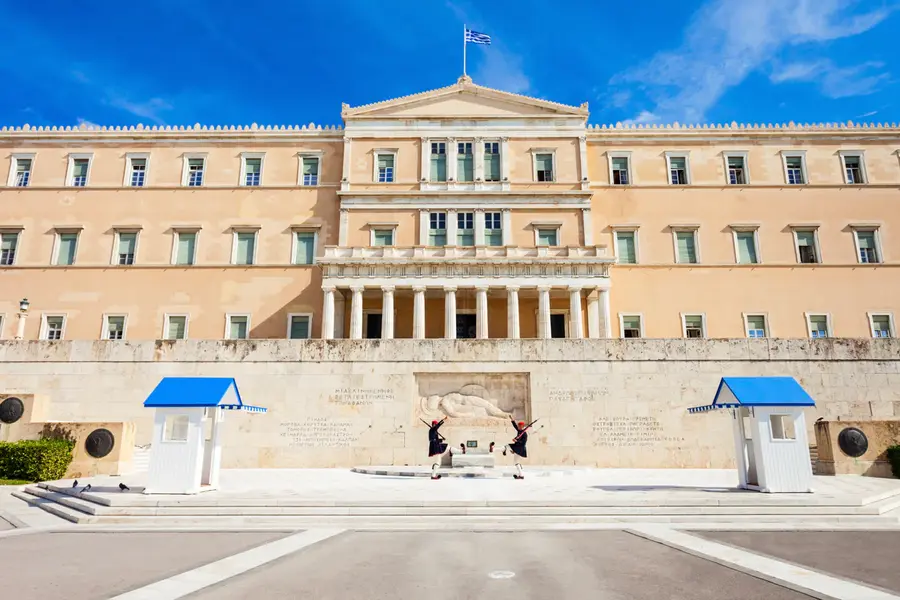
Syntagma, or Constitution Square, is the main square of modern Athens. It takes its name from the uprising of 1843, after which King Otto agreed to grant the country a constitution. The Parliament building, a former royal palace, overlooks the square, and at its foot lies the Tomb of the Unknown Soldier, guarded around the clock by Evzones of the Presidential Guard.
The guard changes every hour: soldiers in pleated fustanella kilts and heavy tsarouchia shoes with pompoms perform a slow ceremonial march with perfect synchronisation. The grandest ceremony takes place on Sundays at 11:00, with a military band and a full company in dress uniform, so arrive early to get a spot at the front. From Syntagma the pedestrian shopping street of Ermou leads west, with the 11th-century Byzantine Church of Kapnikarea sitting among the shopping crowds, and inside Syntagma metro station a glass-fronted cross-section shows ancient graves and a water channel found during construction.
6. Temple of Olympian Zeus
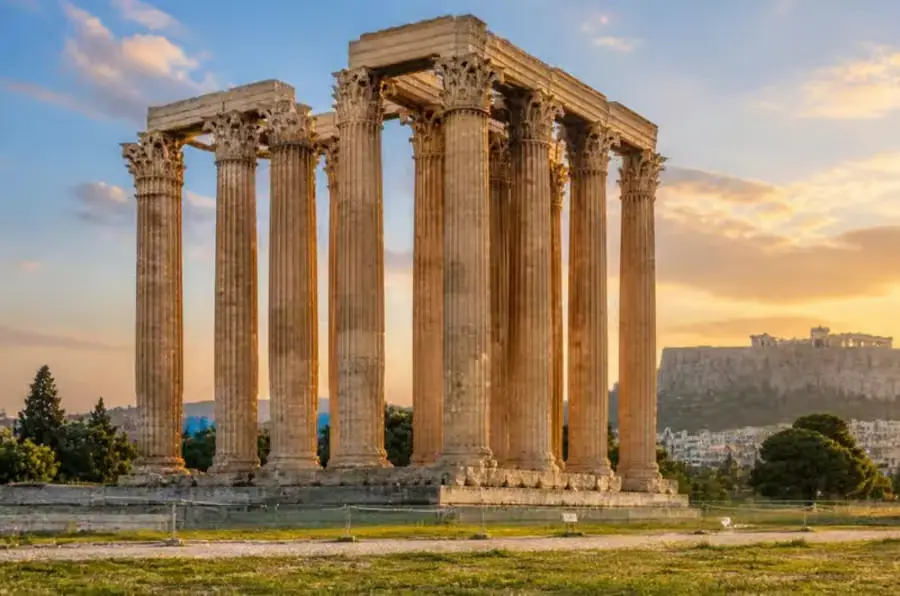
No temple in Greece was bigger in its day. Construction started under the Peisistratid tyrants around 520 BC, yet it took Emperor Hadrian to finish it in AD 131, more than six centuries later. Of the original 104 Corinthian columns, each about 17 metres tall, fifteen still stand, while another lies on the ground broken into drums after a storm toppled it in 1852.
Close by stands Hadrian's Arch, a gateway separating the old town from the new Roman quarter. The inscription on one side presents Athens as the old city of Theseus, while the other side declares it the city of Hadrian rather than Theseus. Some of the columns are being restored, but the overall view is impressive even from outside the fence, and from here it is a pleasant walk through the National Garden to the marble stadium.
7. Panathenaic Stadium
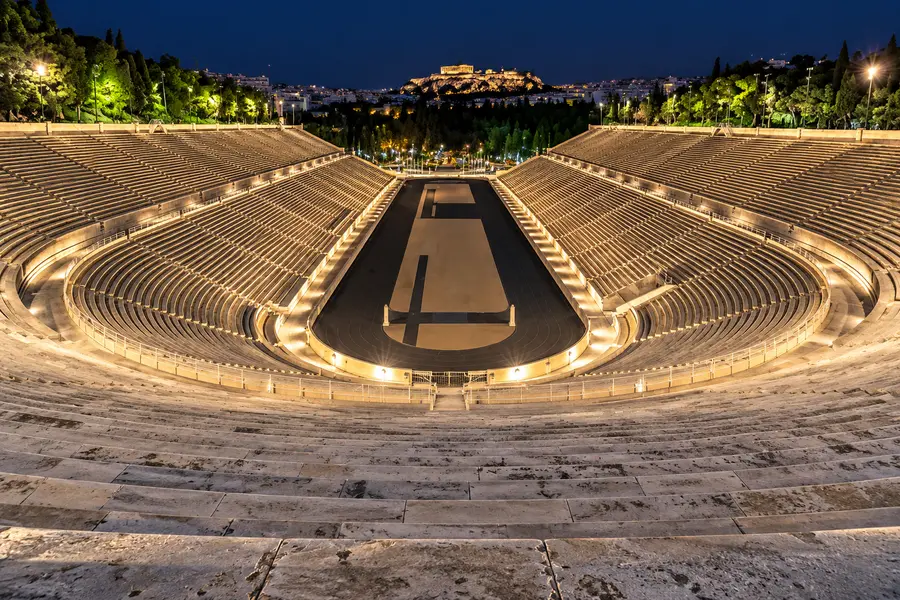
No other major stadium on the planet is made entirely of white marble, which is why Athenians call it Kallimarmaro, "the beautifully marbled". A racecourse for the Panathenaic Games existed here by the 330s BC, around AD 144 the wealthy Herodes Atticus clad the stands in marble, and in the 1890s the benefactor Georgios Averoff paid for its restoration. In 1896 the revived Olympic Games opened here.
Today the Olympic flame is officially handed over here to the country hosting the next Games, and every November the runners of the Athens Authentic Marathon finish on its track. Your ticket includes an audio guide. Climb to the top row, where the Acropolis comes into view, jog a lap on the track like a real Olympian, and look into the tunnel under the stands, which displays Olympic torches and posters from past Games.
8. National Archaeological Museum
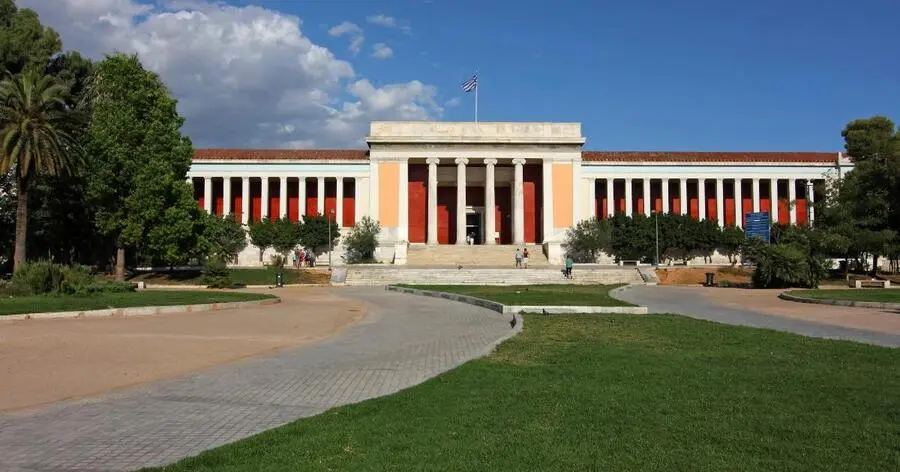
Greece's biggest museum holds one of the world's richest collections of ancient art, from prehistoric finds to Roman portraits. Highlights include the gold "Mask of Agamemnon" unearthed by Heinrich Schliemann at Mycenae in 1876, the bronze statue of Zeus or Poseidon recovered from the sea off Cape Artemision, and the famous Antikythera Mechanism, a hand-cranked set of bronze gearwheels that modelled the motions of the Sun, Moon and planets, often called the oldest analogue computer.
A separate gallery shows wall paintings from Akrotiri on Santorini, preserved under volcanic ash like Pompeii but more than fifteen hundred years earlier. Set aside two or three hours at minimum. The museum is on Patission Street, a ten-minute walk from Omonia Square and a little off the main tourist trail, so it stays calm even in peak season. A major expansion designed by the British architect David Chipperfield is being prepared, but the permanent galleries remain open.
9. Lycabettus Hill
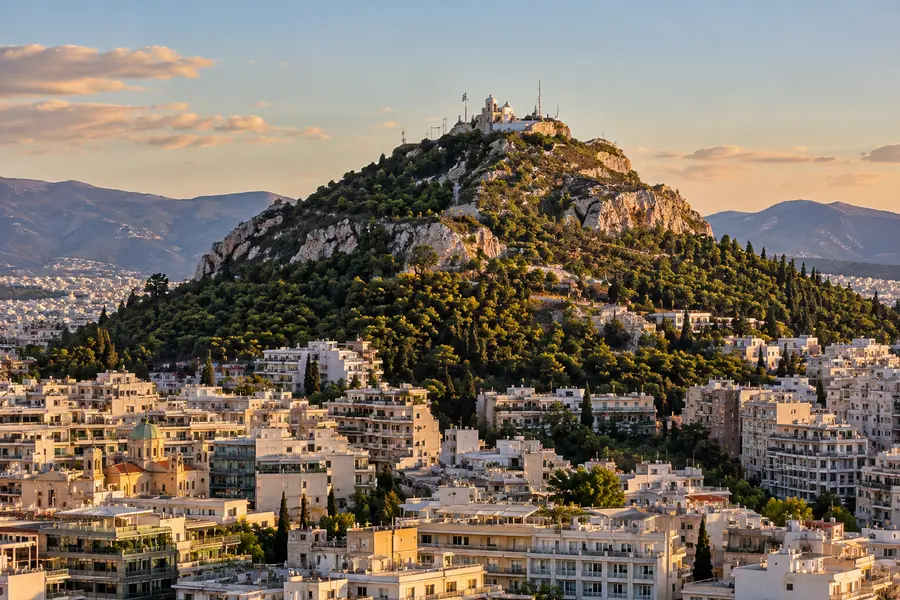
At 277 metres, Lycabettus rises above every other hill in central Athens, the Acropolis included. Legend says Athena dropped this mountain while carrying a rock for her sanctuary. The whitewashed Chapel of Saint George crowns the summit, next to a viewing platform, a café and a restaurant, while a little lower down an open-air theatre hosts summer concerts.
From the top the whole city spreads out below you: the Acropolis looks like a model, the sea around Piraeus glitters beyond the rooftops, and on clear days you can make out the outlines of islands. A funicular runs through a tunnel from the Kolonaki district in a few minutes, or you can hike up the winding path through the pines in 30 to 40 minutes. Plan to reach the summit an hour or so before the sun goes down, when the city turns pink and the Parthenon lights come on soon after.
10. Monastiraki and the Flea Market
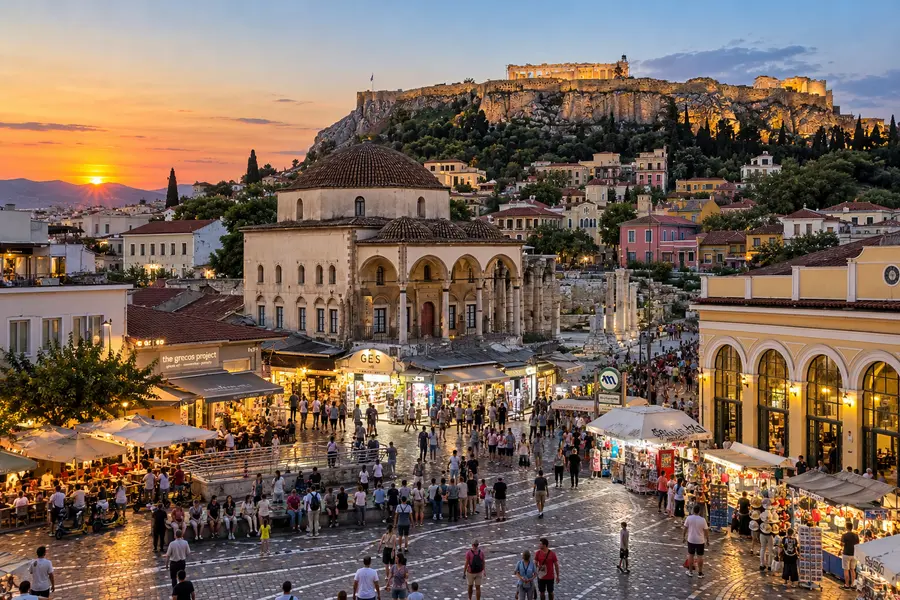
With its street musicians and market stalls, Monastiraki Square is the liveliest spot in the old centre and a handy starting point for walks: one metro line runs from here to the port of Piraeus and another to the airport. Its name comes from a small monastery whose Pantanassa Church still stands, and beside it is the Tzistarakis Mosque of 1759, a reminder of almost four centuries of Ottoman rule. A few steps away begin the ruins of Hadrian's Library, built by the same emperor who so admired Greek culture.
West of the square stretches the flea market: Ifestou Street sells leather sandals, souvenirs and army surplus, and on Sundays antique dealers set up on Avissinias Square with old postcards, ceramics and vinyl records. Rooftop bars around the square look straight at the Acropolis, and the surrounding lanes are known for souvlaki and gyros. Keep your wallet and phone close in the crowds and on the metro, as pickpockets are sadly common here.
Athens Attractions: What Else to Visit While in the City
- Roman Agora and Tower of the Winds — a market square paid for by Julius Caesar and Augustus. Its octagonal marble Tower of the Winds dates from the 1st century BC: each side shows the god of one wind, sundials are carved below, and a water clock once worked inside.
- Areopagus and Philopappos Hill — the rock where Athens' highest court once sat and the neighbouring Hill of the Muses with a monument to a Roman consul, both offering the best photo angles of the Acropolis. Entry is free, but the smooth stone of the Areopagus is slippery, so use the metal stairs.
- National Garden and Zappeion — a shady park beside Parliament, laid out under Queen Amalia, with ducks, turtles and ancient columns among the greenery. On its southern edge stands the neoclassical Zappeion Hall, which hosted the fencing events of the 1896 Games.
- Kerameikos — the ancient cemetery outside the city walls, named after the potters who lived nearby. It preserves the Sacred Gate and the Dipylon, where the Sacred Way to Eleusis started, a street of tombs and a small museum, with far fewer visitors than the Acropolis.
- Museum of Cycladic Art — minimalist marble figurines from the Cyclades dating back to the 3rd millennium BC, which inspired Modigliani and Picasso. The Benaki Museum, covering Greek art from antiquity to the 20th century, is just around the corner on Vasilissis Sofias Avenue.
- Stavros Niarchos Foundation Cultural Center — a Renzo Piano complex that is home to the country's National Library and its opera house, surrounded by a park on an artificial hill with a canal and the "Lighthouse" viewing terrace. Admission is free, concerts and festivals are frequent, and families with children love it.
- Psyrri and Gazi — the go-to districts for an evening out. Psyrri has street art, tavernas with live music and bars, while in Gazi an old gasworks has become the Technopolis cultural centre, surrounded by the city's loudest clubs.
- Piraeus and Mikrolimano — Greece's biggest port, where ferries leave for the islands. After a stroll along the waterfront, grab a table at a fish taverna in the small harbour of Mikrolimano; the metro and tram get you here from the centre in about half an hour.
- Cape Sounion — the Temple of Poseidon from the 440s BC, perched on a headland over the Aegean 70 km from the city. Lord Byron's name is still visible carved into one of the columns, and the sunset here is legendary.
- Athens Riviera and Lake Vouliagmeni — the beaches of Glyfada, Vouliagmeni and Varkiza, reached from the centre by tram and bus. Lake Vouliagmeni is fed by underground springs, so a swim is pleasant even in winter.
How many days do you need in Athens? With a single day, concentrate on the highlights: the Acropolis in the morning, then the Acropolis Museum, lunch in Plaka, the Ancient Agora and Monastiraki in the afternoon, and sunset on the Areopagus or Lycabettus. For a two-day itinerary, add Syntagma with the guard ceremony, the National Garden, Olympian Zeus, Hadrian's Arch and the marble stadium. Is 3 days in Athens enough? It is ideal for a first visit: the third day covers the National Archaeological Museum, Kerameikos and an evening in Psyrri or Gazi, and with a fourth day you can head out of town to Cape Sounion, Delphi (about three hours by bus) or a one-day cruise to Aegina, Poros and Hydra. In the evening, catch a film at one of the summer open-air cinemas facing the Parthenon, stroll along Apostolou Pavlou when the Acropolis is lit up, or take a table at a rooftop bar in Monastiraki.
Athens also has lots of free things to do: watching the Evzones at Syntagma, climbing the Areopagus, Philopappos and Lycabettus hills on foot, walking in the National Garden and the Niarchos park, and wandering the lanes of Plaka and Anafiotika. State museums and archaeological sites open their doors for free on 6 March, 18 April, 18 May, the last weekend of September, 28 October and the first Sunday of every month from November to March. Families with children will enjoy the Panathenaic Stadium, the Niarchos park, Attica Zoological Park, the Eugenides Foundation Planetarium and, in summer, the Riviera beaches. Is Athens expensive? By Western European standards it is moderately priced: public transport and street food are cheap, while the biggest costs are site tickets and hotels in high season. Spring (April to June) and autumn (September and October) are the most pleasant seasons, as July and August often bring 40 °C heat, while winters are mild and quiet. From the airport, take the metro or the X95 express bus to Syntagma.
Athens is also the gateway to the Greek islands. Ferries leave Piraeus every day for the Cyclades, an overnight ferry takes you to Crete, and a short flight gets you to Rhodes for a few lazy beach days after all the sightseeing. If you dream of whitewashed houses above the caldera, read our Santorini guide.
Ready to see Athens for yourself? TurPoisk online travel agency can help you pair the capital with a beach holiday: spend a few days sightseeing, then a week on the islands or the Halkidiki peninsula, and discover more of Greece. Use our tour search to compare offers from tour operators, and find a hotel in a convenient area — in Plaka or Monastiraki close to the sights, or on the Riviera coast. Our managers will tell you the best time to travel and help you plan a route around Athens and the islands.


