
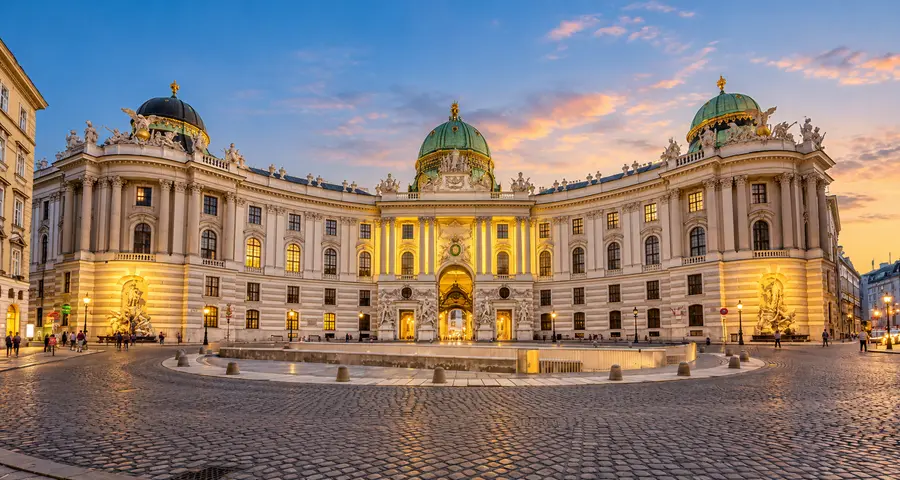
For more than six centuries Vienna was the capital of the Habsburg Empire, and the city still carries itself with imperial confidence. Grand palaces line the Ringstrasse boulevard, the gilded opera house glows at night, and in the famous coffee houses nobody seems to be in a hurry. Mozart, Beethoven, Schubert and Johann Strauss all lived and worked here, so music is part of everyday life — from world-class concert halls to street musicians outside the cathedral. Yet Vienna is far from a museum under glass: it is green, modern, easy to get around and a regular at the top of global rankings of the most liveable cities. That makes a holiday in Vienna equally rewarding as a weekend city break or as part of a longer trip around Austria.
What to see in Vienna first
Vienna's historic centre is protected by UNESCO, and if you mark the main Vienna attractions on a map, you will see that most of them sit inside the Ringstrasse or just a few metro stops away, so the city is easy to explore on foot. To help you plan, we have picked ten places that are the best starting point for a first visit. Together they show every side of the Austrian capital: imperial, spiritual, musical and even a little rebellious.
1. St. Stephen's Cathedral
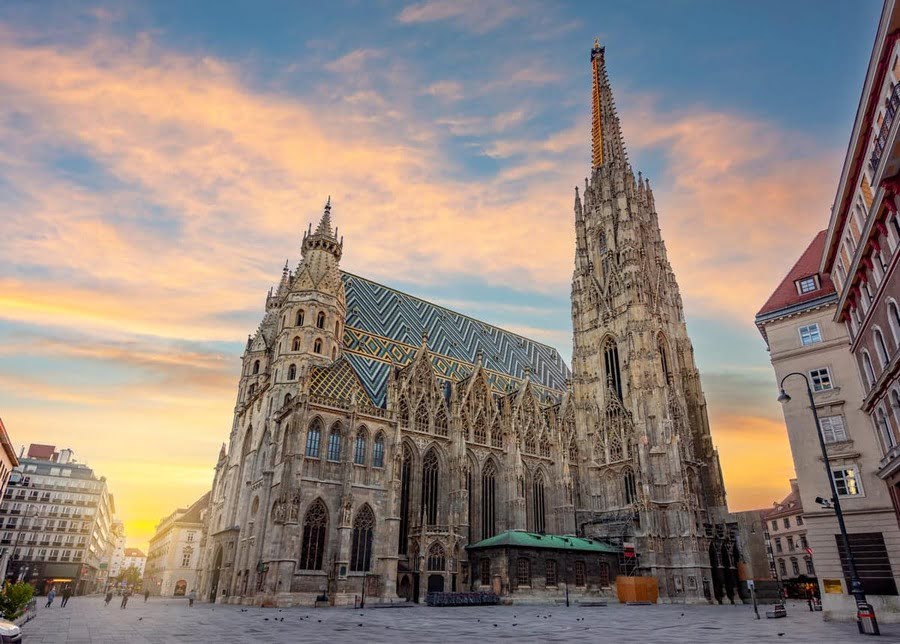
St. Stephen's Cathedral, known locally as Stephansdom, is the symbol of Vienna and the natural starting point for any walk through the centre. The first church on this site was consecrated in the 12th century, while the Gothic building you see today took shape in the 14th and 15th centuries. You can spot it from afar: the 136-metre south tower rises above Stephansplatz, and the roof is covered with colourful glazed tiles arranged into a double-headed eagle and the coats of arms of Austria and Vienna.
Inside, take a closer look at the stone pulpit with its carved Church Fathers and at the high altar. For views, you can climb 343 steps up the south tower or take the lift up the north tower, home to the Pummerin, one of the largest bells in Europe. Below the cathedral lie the catacombs with urns holding Habsburg remains — a slightly eerie but fascinating stop. Mozart was married here, and his funeral service was held here in 1791.
2. Hofburg Palace
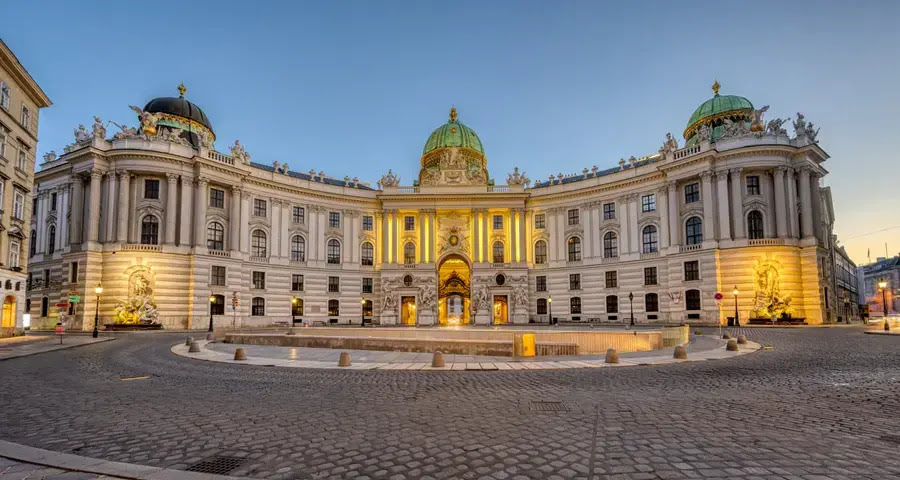
For more than 600 years the Hofburg was the winter residence of the Habsburgs and the seat of power of a vast empire. It is less a single palace than a city within the city: dozens of wings, courtyards and squares added between the 13th and early 20th centuries. Today the Austrian Federal President works from one of its wings, while most of the complex is open to visitors.
The most popular route combines the Imperial Apartments, the Sisi Museum and the Silver Collection with its thousands of pieces of court tableware. The Imperial Treasury holds the crown of the Holy Roman Empire, and the State Hall of the National Library regularly makes lists of the finest library interiors anywhere. Even if you do not go inside, walk across Heldenplatz (Heroes' Square) for one of the grandest views in Vienna.
3. Schönbrunn Palace
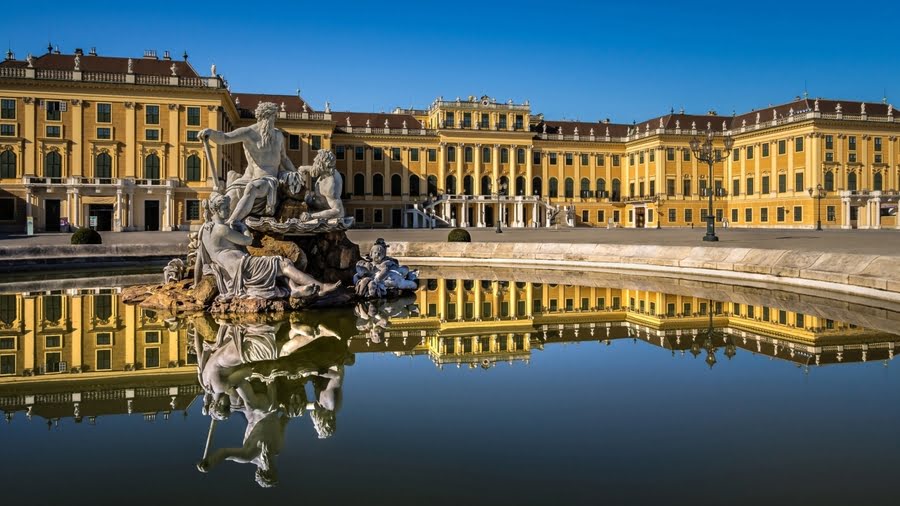
Schönbrunn, the Habsburgs' summer residence, is arguably the most famous sight in Austria. Its Baroque appearance is the work of Empress Maria Theresa, who in the mid-18th century turned a former hunting lodge into a lavish residence with 1,441 rooms. Six-year-old Mozart performed for the imperial family here, and Emperor Franz Joseph was both born and died in the palace. Together with its gardens, Schönbrunn has held World Heritage status since 1996.
A guided tour takes you through the state rooms, the Hall of Mirrors and the private apartments of the imperial family. The park, which is free to enter, is just as impressive: neatly trimmed avenues, the Neptune Fountain, artificial "Roman ruins" and the Gloriette on the hill with a panoramic view of the palace and the city. The grounds are also home to Tiergarten Schönbrunn, the world's oldest operating zoo, open since 1752, which makes Schönbrunn a great choice for visiting Vienna with kids. Allow at least half a day.
4. Belvedere Palace
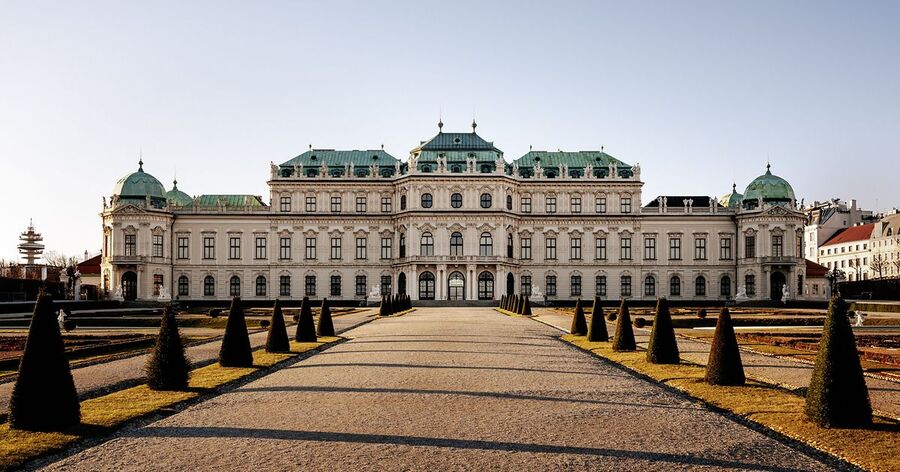
The Belvedere was built in the early 18th century for the military commander Prince Eugene of Savoy and is one of the finest Baroque ensembles in Europe. The Upper and Lower Belvedere are linked by a formal garden with fountains, cascades and sculptures that you can stroll through for free. From the Upper Belvedere you get the classic postcard view of Vienna's historic centre.
Today the palaces house an art museum, and most visitors come for Gustav Klimt: the Belvedere holds the world's largest collection of his paintings, including the legendary "The Kiss", which always draws a crowd. The museum also displays works by Egon Schiele and Oskar Kokoschka, French Impressionists and Austrian Baroque masters.
5. Vienna State Opera
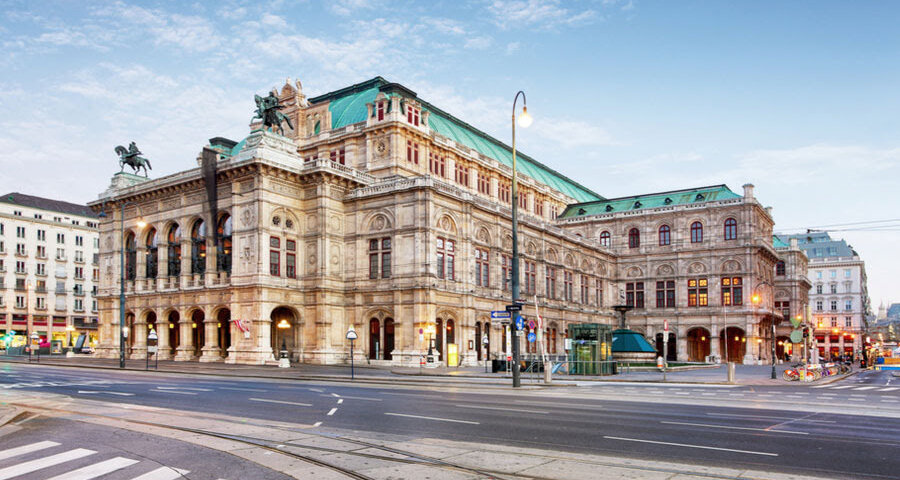
Few stages in the world carry the prestige of the Vienna State Opera, the beating heart of the city's musical life. The Neo-Renaissance building opened in 1869 with Mozart's "Don Giovanni", and ever since, the finest singers, conductors and ballet companies have performed on its stage. With around 350 performances a season, you can catch an opera or ballet almost every evening from September to the end of June.
If seats in the stalls are not in your budget, there are two alternatives. You can join a daytime guided tour of the building, which takes in the grand staircase, the boxes and the backstage areas, or buy a standing-room ticket, sold shortly before the performance for a fraction of the usual price. In winter the building hosts the famous Vienna Opera Ball, one of Europe's most glamorous society events.
6. Vienna City Hall
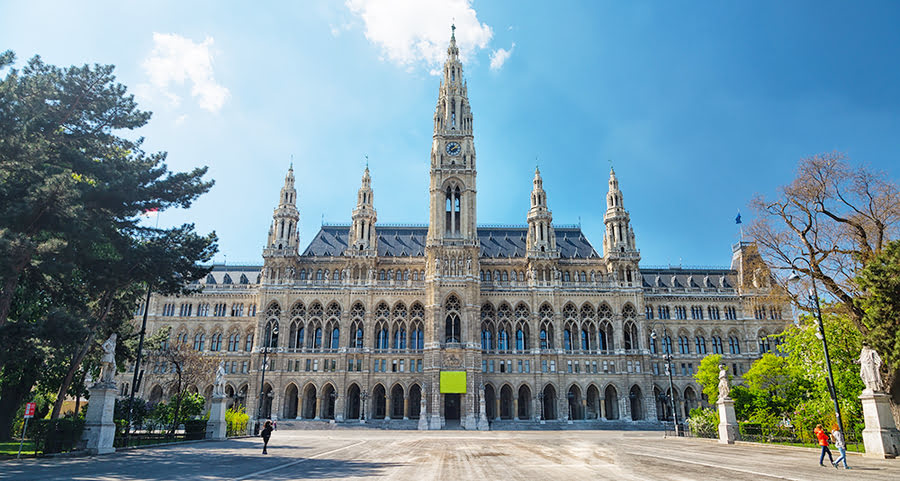
Vienna's City Hall (Rathaus) looks more like a fairy-tale castle than an office building. It was built between 1872 and 1883 in the Neo-Gothic style to a design by Friedrich von Schmidt. Its central tower, almost a hundred metres high, is crowned by the knight figure known as the Rathausmann, an unofficial mascot of Vienna. The mayor and city council still meet here, but parts of the building can be seen on a free guided tour.
The square in front of it is lively all year round. In winter it hosts one of Europe's best-known Christmas markets and a huge ice rink, so if you are planning a trip to Vienna for Christmas or New Year, this is a must. In summer the open-air film festival screens opera and concert recordings on a giant screen, and in the evening the illuminated façade is at its most photogenic.
7. Kunsthistorisches Museum
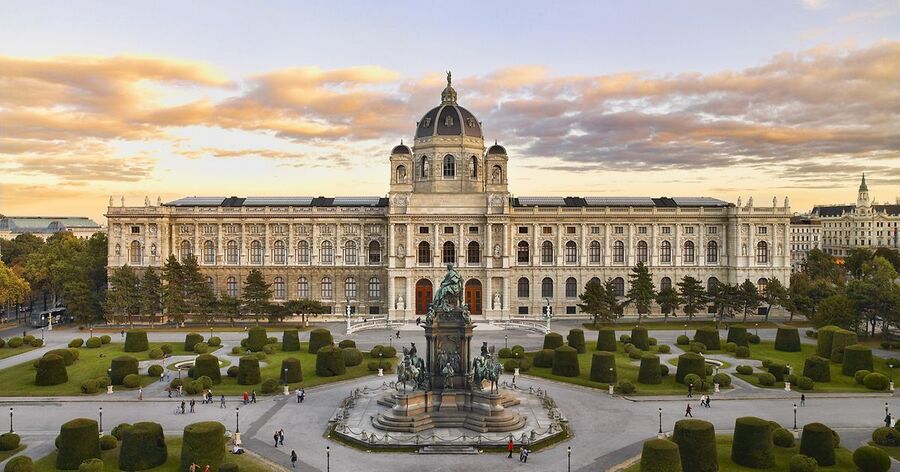
The Kunsthistorisches Museum (Museum of Art History) grew out of the Habsburg collections and ranks among the planet's richest treasure troves of art. It opened in 1891 on the Ringstrasse, and the building is a masterpiece in its own right: polished marble, lavish gilding and paintings by a young Gustav Klimt above the grand stairway.
The picture gallery owns the world's largest collection of paintings by Pieter Bruegel the Elder, including "The Tower of Babel" and "The Hunters in the Snow", alongside masterpieces by Raphael, Titian, Rubens, Velázquez and Vermeer. Other halls are dedicated to ancient Egypt, classical antiquity and the Kunstkammer, a cabinet of exquisite curiosities. Finish your visit at the café beneath the central dome, arguably the loveliest place for coffee in Vienna.
8. Karlskirche
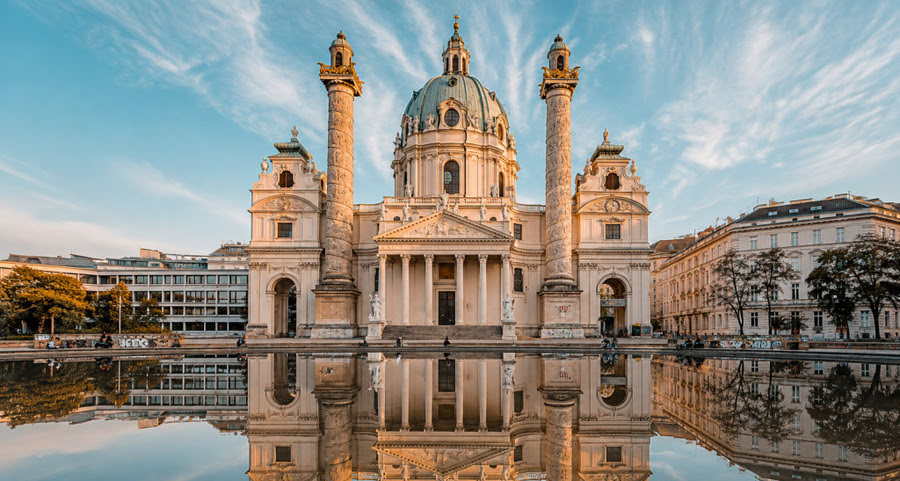
Karlskirche, the Church of St. Charles Borromeo, is the most magnificent Baroque church in Vienna. Emperor Charles VI vowed to build it during the plague epidemic of 1713, and construction began a few years later to plans by Johann Bernhard Fischer von Erlach. The church is an unusual mix of styles: a vast green dome, a portico inspired by ancient Greek temples and two columns decorated with reliefs that echo Trajan's Column in Rome.
Inside, your eye is immediately drawn to the dome frescoes by Johann Michael Rottmayr and the opulent high altar. The pool in front of the church creates a striking reflection, especially after dark when the building is lit up. Karlsplatz is also a handy starting point: the Opera, the Secession and the Naschmarkt are all just a few minutes' walk away.
9. Prater and the Giant Ferris Wheel
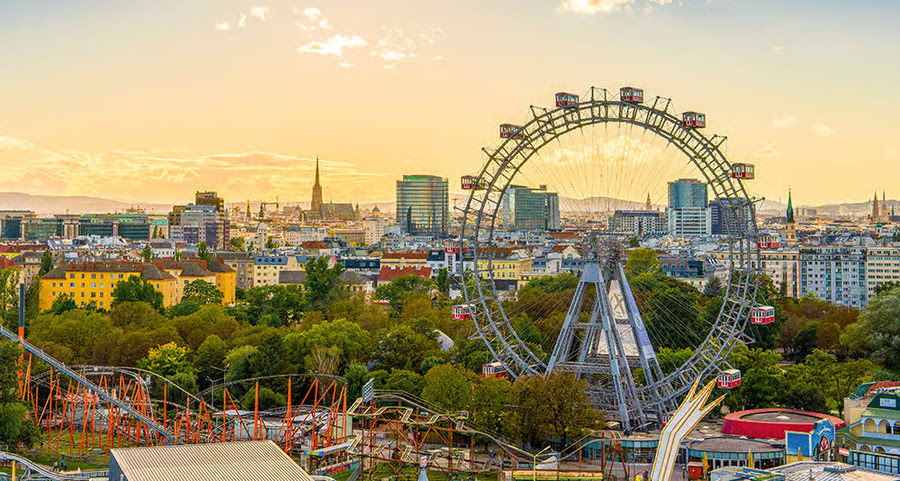
The Prater remained an imperial hunting ground until Emperor Joseph II opened it to the public in 1766. Today this huge park by the Danube is where the Viennese come to jog, cycle and stroll along the long chestnut-lined Hauptallee. Near the Praterstern entrance you will find the Wurstelprater amusement park with roller coasters, carousels and cafés serving classic schnitzel — one of the best places to go in Vienna with children.
The star of the Prater is the Wiener Riesenrad, a giant Ferris wheel built in 1897. It stands about 65 metres tall, and its red cabins look like little railway carriages. The wheel has become a film icon, appearing in "The Third Man" and in one of the James Bond movies. Ride it around sunset, when the lights of Vienna slowly come on below you.
10. Hundertwasser House
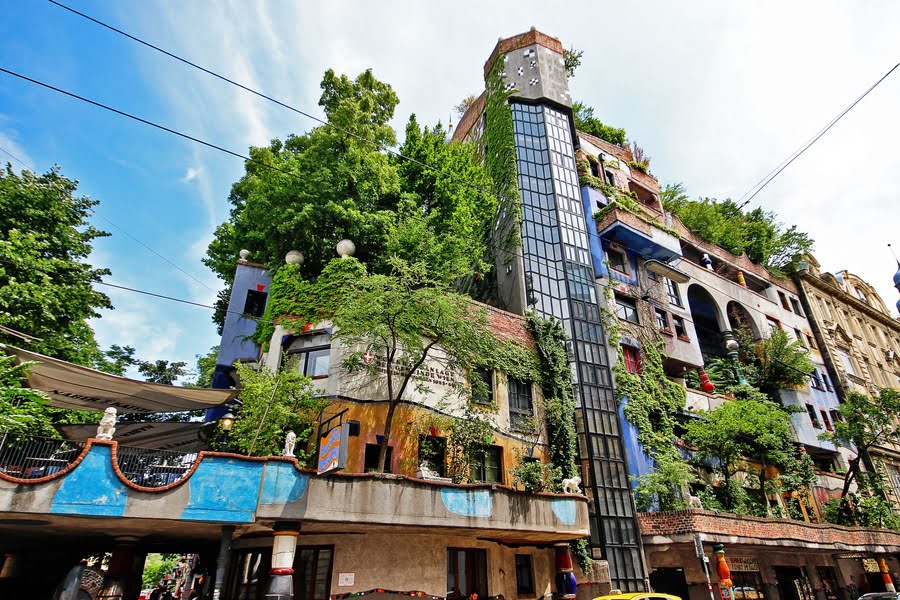
The Hundertwasserhaus is the most colourful residential building in Vienna and one of the city's most unusual sights. The artist Friedensreich Hundertwasser dreamed it up together with architect Joseph Krawina, and it was finished in 1985. He had no patience for rulers and right angles, so the building has undulating floors, multicoloured façades, gilded onion domes and around 250 trees and shrubs growing on its roofs and balconies.
People still live here, so you cannot go inside, but you can admire the façades as long as you like. Across the street, Hundertwasser Village has cafés and souvenir shops, and a few minutes' walk away is the KunstHausWien museum, decorated in the same distinctive style. It is a perfect spot for vivid photos and a fun contrast to the imperial splendour of the centre.
Vienna Attractions: What Else to Visit While in the City
- Albertina — a former Habsburg palace housing one of the world's largest collections of graphic art, including Albrecht Dürer's famous "Young Hare". The permanent exhibition covers paintings from Monet to Picasso.
- MuseumsQuartier — one of the largest cultural complexes in the world, set in the former imperial stables. It is home to the Leopold Museum, with the largest Egon Schiele collection, and the MUMOK modern art museum, while in summer the courtyard fills with people relaxing on colourful lounge benches.
- Secession Building — an exhibition hall topped with a golden openwork dome that locals jokingly call the "golden cabbage". The basement displays Gustav Klimt's celebrated Beethoven Frieze.
- Naschmarkt — Vienna's largest and most colourful market, stretching for about one and a half kilometres. Stalls sell spices, cheese, fruit and delicacies from around the world, and on Saturdays a flea market sets up next door.
- Austrian Parliament — a building in the style of an ancient Greek temple, with the Pallas Athena Fountain at its entrance. After a major renovation it has reopened to visitors with a modern visitor centre and free guided tours.
- Spanish Riding School — the oldest classical riding school in the world, famous for its white Lipizzaner horses. You can watch them at a gala performance or at the morning training session in the Baroque Winter Riding School of the Hofburg.
- Imperial Crypt — the burial vault beneath the Capuchin Church, where around 150 Habsburgs are laid to rest, including Maria Theresa, Franz Joseph and Empress Sisi. It impresses with its ornate sarcophagi and deep silence.
- Mozarthaus Vienna — the only one of Mozart's Vienna apartments to survive, just steps from St. Stephen's Cathedral. This is where he composed "The Marriage of Figaro", and the exhibition tells the story of his years in Vienna.
- Stadtpark — a charming park on the Ringstrasse with the gilded statue of Johann Strauss II, probably the most photographed monument in Vienna. In the evenings, the Kursalon pavilion hosts waltz concerts.
- Danube Tower — rising 252 metres, it is taller than anything else built in Austria. The observation deck overlooks the whole of Vienna and the Vienna Woods, and the revolving restaurant lets you enjoy the panorama over dinner.
Vienna is a city that keeps calling you back: every visit reveals a new museum, another coffee house or a quiet corner of a park. If you are wondering what to see in Vienna in one day, focus on the historic centre: St. Stephen's Cathedral, the Hofburg, the pedestrian streets of Graben and Kärntner Strasse, the Opera and an evening walk along the Ringstrasse. With 2 days, add Schönbrunn and the Belvedere; with 3 days, you will also have time for the museums, a ride on the Giant Ferris Wheel and the Hundertwasser House. If you have more time, take a day trip from Vienna to the Vienna Woods or the scenic Wachau Valley on the Danube.
There are plenty of free things to do in Vienna too: the gardens of Schönbrunn and the Belvedere, the Prater, the Naschmarkt, the façades of the Hundertwasser House and guided tours of City Hall and Parliament. Families travelling with kids will love Schönbrunn Zoo, the Prater rides and the interactive House of Music. And between sightseeing stops, be sure to take a break in a Viennese coffee house with a slice of Sachertorte — no visit to the Austrian capital is complete without it.
Planning a trip to Vienna? The online travel agency TurPoisk will help you find a Vienna tour among offers from all tour operators on one website — use our online tour search or leave a request for our managers. We can also book a hotel in Vienna close to the main sights and suggest interesting excursions. And in winter, a city break in Vienna combines perfectly with a holiday at one of Austria's ski resorts.


