
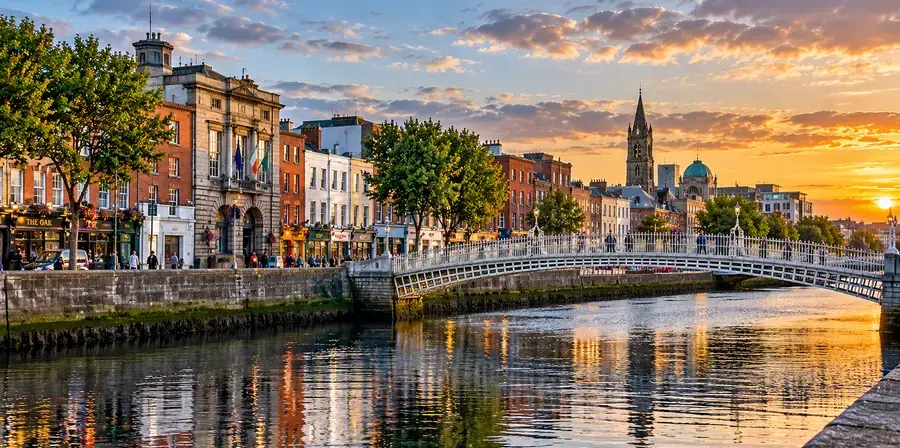
Dublin began as a Viking trading post where the River Liffey meets the Irish Sea, and its name comes from the Irish "Dubh Linn", the black pool. The Irish capital punches far above its size when it comes to literature: Oscar Wilde, George Bernard Shaw, W. B. Yeats and Samuel Beckett were all born here, James Joyce set "Ulysses" on its streets, and UNESCO has named it a City of Literature. Add pubs where fiddles play most nights, Georgian terraces with brightly painted doors, a pint of Guinness poured with near-religious care and a city that turns green every 17 March, and it is easy to see why so many first trips to Ireland start here. The wider metropolitan area is home to around one and a half million people, yet the historic centre is compact and best explored on foot. Below is our pick of twenty places, a ready-made answer to the question of what to see in Dublin.
What to see in Dublin first
The Liffey splits the city in two. South of the river you will find Trinity College, Dublin Castle, both cathedrals, Temple Bar and St Stephen's Green; north of it lie O'Connell Street and the General Post Office. Trinity and St Patrick's Cathedral are just twenty minutes apart on foot, so for the first couple of days you will hardly need transport. The exceptions are the Guinness brewery, Kilmainham Gaol and Phoenix Park, which are easier to reach by Luas tram or bus.
1. Trinity College and the Book of Kells
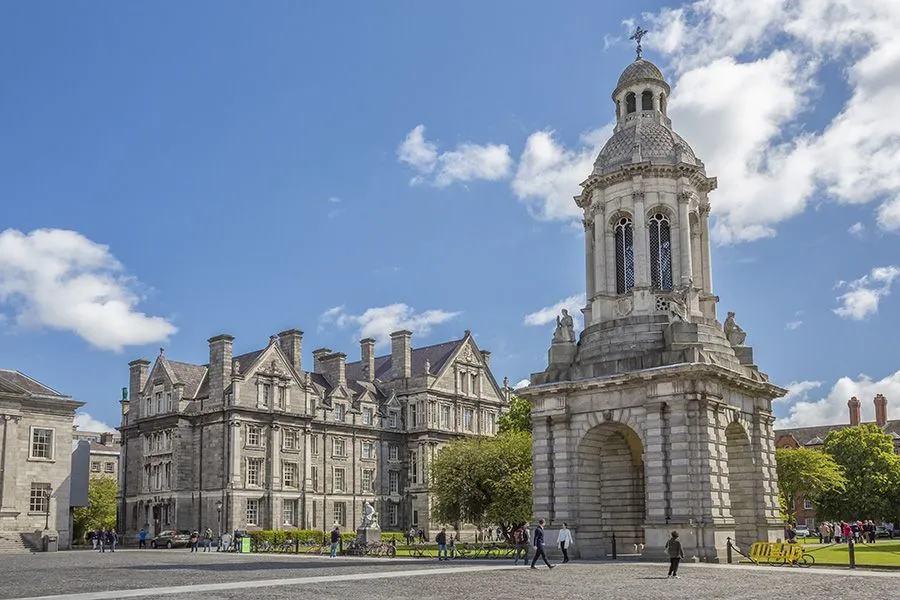
Queen Elizabeth I founded Ireland's oldest university in 1592, and its cobbled squares and bell tower still feel like a small town tucked inside the capital. Jonathan Swift, Oscar Wilde and Samuel Beckett all studied here. The college's greatest treasure is a richly decorated copy of the four Gospels that the world knows as the Book of Kells, made by Irish monks around the year 800. Its pages swirl with knotwork, strange beasts and tiny figures that reward a slow, close look.
The same ticket takes you into the Old Library's Long Room, a 65-metre hall with a barrel-vaulted oak ceiling and rows of marble busts of scholars. The hall also holds the harp linked with the high king Brian Boru, the instrument that became Ireland's national emblem and appears on Irish euro coins. Timed tickets are best booked online, while strolling around the campus itself costs nothing.
2. Dublin Castle
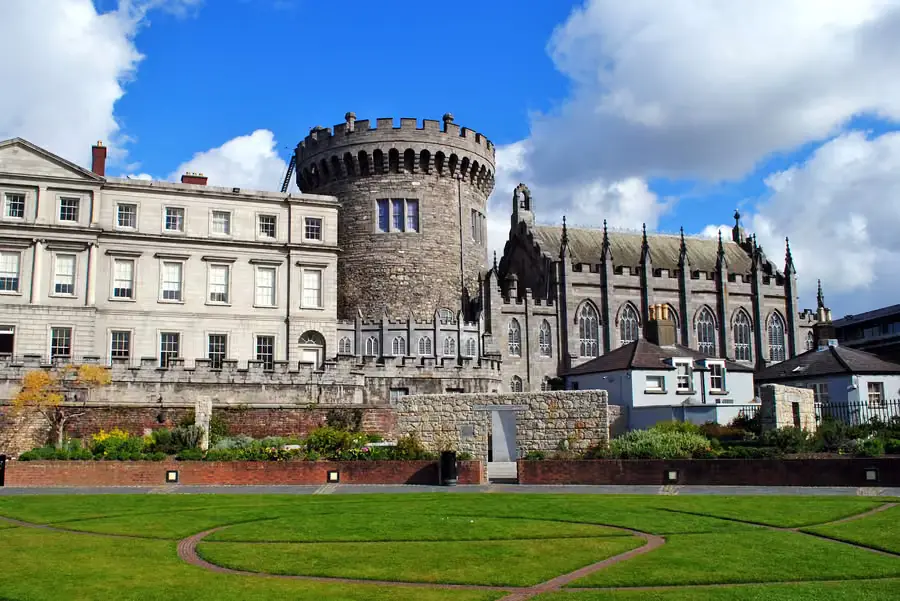
Work on the fortress began in 1204, after King John of England ordered a stronghold here, and for more than seven centuries it served as the centre of British power in Ireland. The Record Tower survives from the Middle Ages, while the State Apartments, including the Throne Room and St Patrick's Hall, still host presidential inaugurations and state receptions. Below ground you can visit the excavated remains of Viking and Norman defences.
Behind the castle lies the Dubh Linn Garden, laid out where the dark pool that gave the city its name once lay. In the castle grounds you will also find the Chester Beatty, a free museum of rare manuscripts, early Christian papyri, illuminated Qurans and Japanese woodblock prints. Few Dublin collections are richer, yet many visitors walk right past without realising it is there.
3. St Patrick's Cathedral
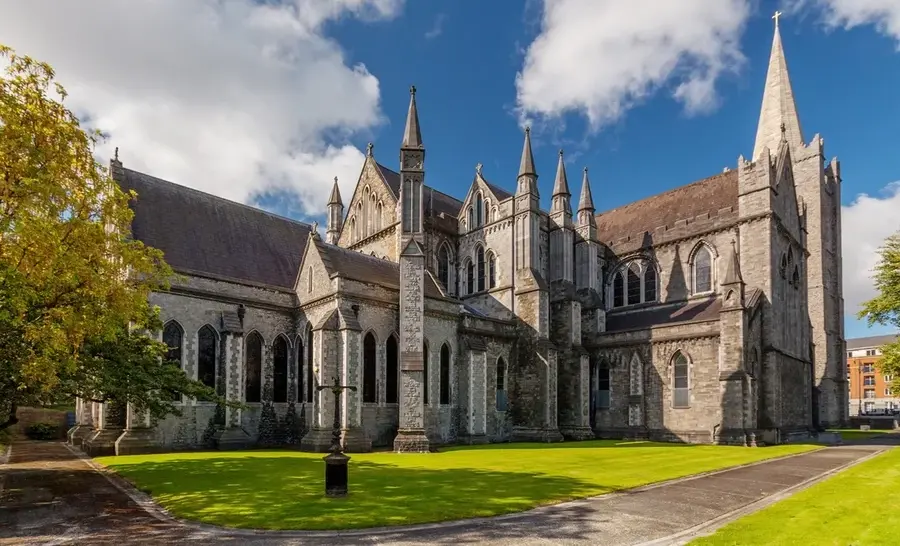
Ireland's largest church stands, legend says, beside a well where St Patrick baptised early converts. St Patrick's dates its foundation to 1191, and the Gothic church standing today went up in the thirteenth century. For over thirty years its dean was Jonathan Swift, who wrote "Gulliver's Travels", and his grave, his epitaph and the pulpit he preached from can all still be seen inside.
Look for an old wooden door with a rough hole cut through it. In 1492 the Earl of Kildare reached his arm through that gap to make peace with a rival hiding on the other side, and that gesture gave Ireland the expression "chance your arm". The small park next door is the best spot to photograph the cathedral, and Marsh's Library, described below, is just around the corner.
4. Christ Church Cathedral
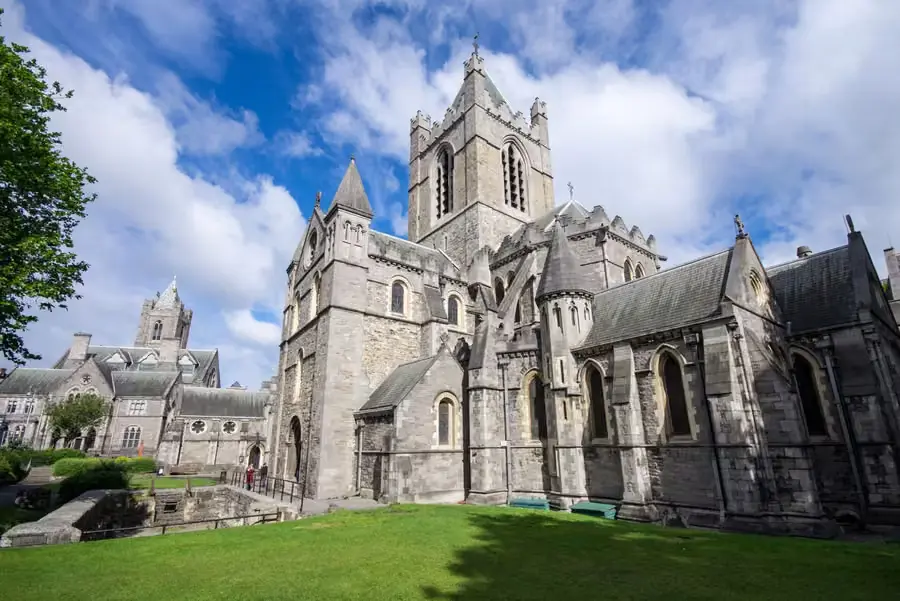
The city's older cathedral was begun around 1030 by the Viking king Sitric Silkbeard, though the stone church that stands today was built after the Norman conquest. Inside lies the tomb of Strongbow, the Norman knight whose arrival marked the start of English involvement in Ireland. Most visitors, however, make a beeline for the crypt, one of the largest medieval crypts in Britain and Ireland.
Among its curiosities are a mummified cat and rat that were discovered trapped inside an organ pipe. The cat was presumably chasing the rat when both got stuck, and Dubliners have nicknamed the pair Tom and Jerry. A covered bridge links the cathedral with Dublinia, a hands-on museum where children can try on a Viking helmet and wander down a reconstructed medieval street.
5. Temple Bar
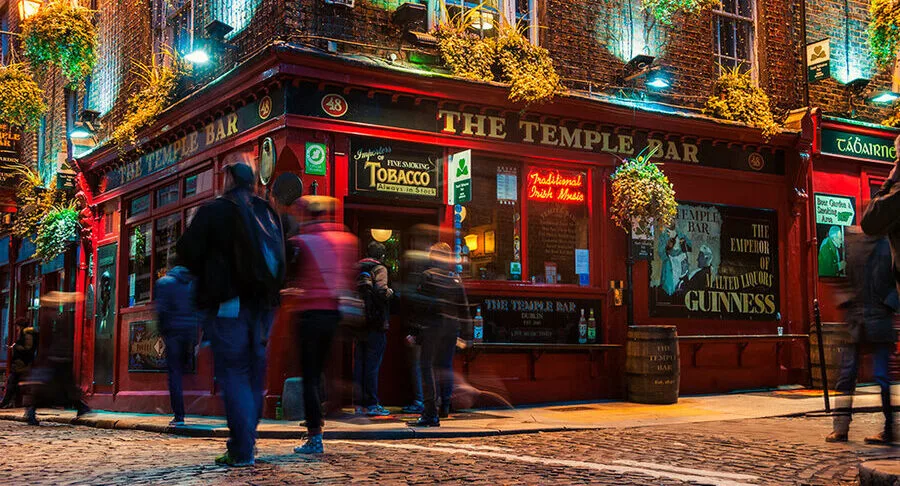
The district squeezed between Dame Street and the Liffey quays is the heart of Dublin's nightlife. Its cobbled lanes are packed with pubs, fiddles and banjos spill out of open doors, and buskers play right outside the entrances. The most photographed pub of all is simply called The Temple Bar, with a red facade, hanging baskets of flowers and a permanent crowd of people taking pictures.
By day the area is all galleries, vintage shops, the Gallery of Photography and the Irish Rock 'N' Roll Museum. A pint here costs more than anywhere else in town, so locals suggest enjoying the music in Temple Bar and drinking a few streets away. Nearby on Suffolk Street stands the bronze Molly Malone with her barrow of cockles and mussels, the heroine of Dublin's unofficial anthem.
6. Guinness Storehouse
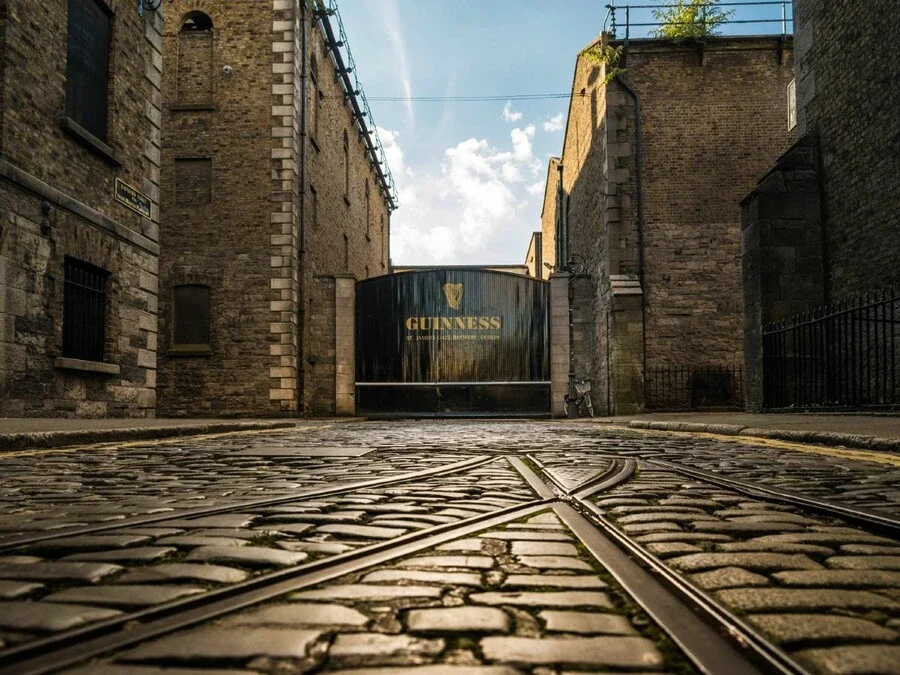
In 1759 Arthur Guinness took over a run-down brewery at St James's Gate on a 9,000-year lease at £45 a year, and a copy of that document is displayed on the ground floor. The former fermentation building now holds seven floors of exhibits arranged around a glass atrium shaped like a giant pint glass. You learn how barley is grown, how stout is brewed and how barrels were made, and you can also browse a century of famously witty Guinness advertising.
The visit ends in the Gravity Bar on the seventh floor, where floor-to-ceiling windows wrap around a view of the whole city as far as the Wicklow Mountains, and a pint is included in the ticket. You can even learn to pull the perfect pint yourself and leave with a certificate to prove it. It ranks among Ireland's most visited sights, so it is worth booking a time slot in advance.
7. National Museum of Ireland – Archaeology
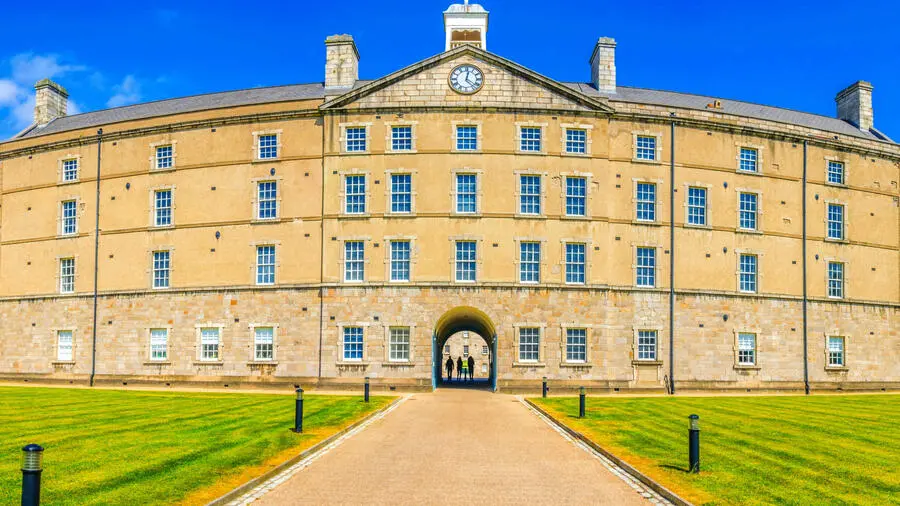
A Victorian building with a domed rotunda on Kildare Street holds the most precious objects in Irish history. The Ór gallery glitters with prehistoric gold, from neck rings and bracelets to delicate Bronze Age collars. Here too are the Ardagh Chalice and the Tara Brooch, high points of Celtic metalwork, together with finds from the Viking settlements excavated beneath Dublin itself.
The most haunting exhibits are the bog bodies, Iron Age people preserved by the peat with their skin, fingernails and even hairstyles intact. Archaeologists believe they were ritual sacrifices connected with kingship. Entry costs nothing, and the same national museum runs the Natural History Museum, whose crowded Victorian cabinets have earned it the affectionate nickname "the Dead Zoo".
8. St Stephen's Green and Grafton Street
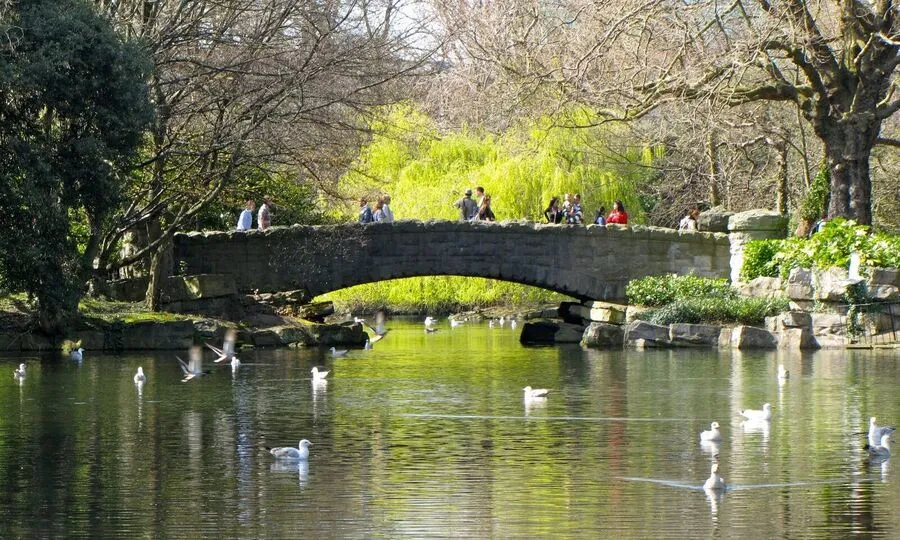
This square in the middle of the city was once common grazing land before becoming a Victorian park with a pond, little bridges and flower beds. It was opened to everyone thanks to Arthur Edward Guinness, great-grandson of the brewery's founder, whose statue stands inside. Locals feed the ducks, picnic on the grass and sit on benches near the busts and monuments of Joyce and Wolfe Tone.
From the park's main gate runs Grafton Street, a pedestrian shopping street of boutiques and cafés. Its real stars are the street performers: Damien Rice and Glen Hansard both busked here before they were famous. Stop at Bewley's café to admire its Harry Clarke stained glass, and look in the side streets for souvenirs such as Aran wool sweaters, Irish whiskey and anything with a shamrock on it.
9. Kilmainham Gaol
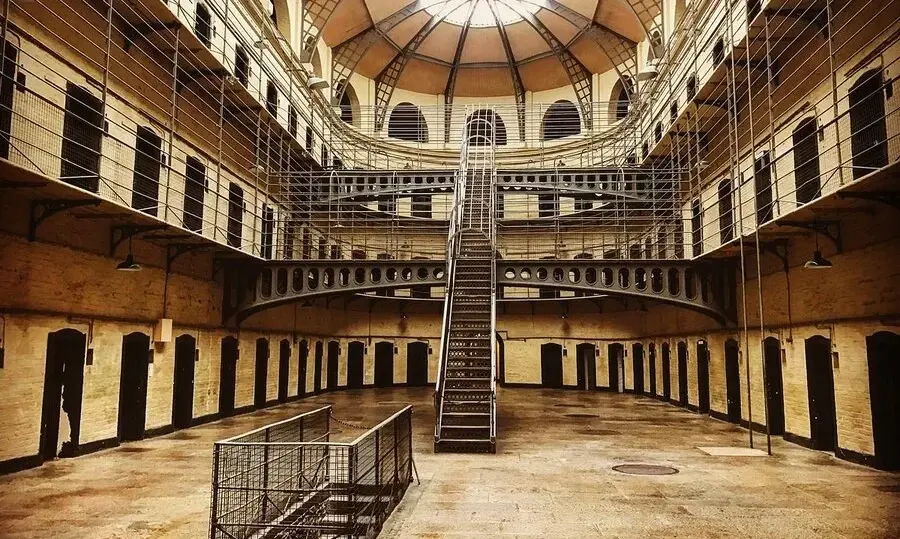
This grim prison, built in 1796, tells the whole story of Ireland's struggle for independence. Rebels from risings across three centuries were held here, and in May 1916 fourteen leaders of the Easter Rising were executed in the Stonebreakers' Yard. Those executions turned public opinion and, in the end, helped bring about an independent Irish state.
You can only go inside on a guided tour, and it is genuinely moving. The highlight is the Victorian wing, three tiers of cells beneath a glass roof, which you may recognise from "In the Name of the Father" and the original "The Italian Job". Timed tickets go quickly, so reserve them before you travel.
10. Phoenix Park
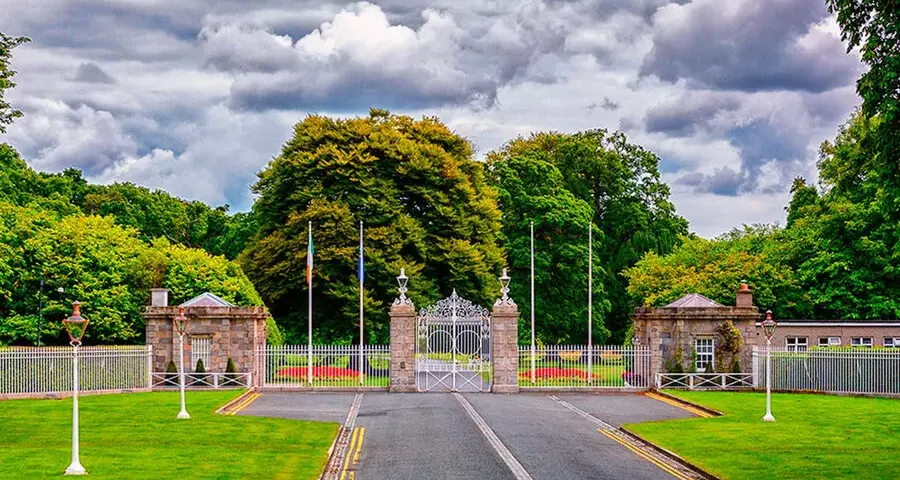
Phoenix Park ranks among Europe's biggest enclosed urban parks: at more than 700 hectares, it is bigger than Hyde Park, Regent's Park and Kensington Gardens combined. Its best-loved residents are the wild fallow deer, whose herd has roamed here since the seventeenth century and which often let people come within a few metres. Feeding them is not allowed, but a photo of a stag with city houses in the background is easy to get.
Inside its walls you will also find Áras an Uachtaráin, where the Irish president lives, the 62-metre Wellington Monument, Europe's tallest obelisk, and Dublin Zoo, which dates back to 1831. Distances are long, so a bike makes the most sense on its wide, flat avenues.
Dublin Attractions: What Else to Visit While in the City
- Ha'penny Bridge — a cast-iron footbridge over the Liffey from 1816. Its name recalls the halfpenny toll once charged to cross it, and it is now a symbol of Dublin, loveliest when lit up at night.
- O'Connell Street, the GPO and the Spire — the main street north of the river. The Irish Republic was proclaimed outside the GPO in 1916, bullet marks still scar its columns, and the 120-metre steel Spire rises beside it.
- EPIC The Irish Emigration Museum — an interactive museum in the brick vaults of an old dockside warehouse, explaining how some ten million people left Ireland and why so many American presidents have Irish roots.
- Marsh's Library — Ireland's first public library, opened in 1707 next to St Patrick's Cathedral. Its dark oak bookcases survive, along with the wire cages where readers were locked in with the most valuable books.
- National Gallery of Ireland — a free gallery whose treasures include Caravaggio's "The Taking of Christ", Vermeer's "Lady Writing a Letter with her Maid" and a room devoted to Jack B. Yeats.
- Merrion Square — a Georgian square whose colourful front doors have become a Dublin postcard. In the park at its centre, a colourful statue of Oscar Wilde lounges on a boulder facing the house where he grew up.
- Jameson Distillery Bow St. — Jameson whiskey was distilled here for almost two hundred years. Tours end with a tasting that explains how Irish whiskey differs from Scotch and bourbon.
- Glasnevin Cemetery — the national cemetery, resting place of Daniel O'Connell and Michael Collins. Guides tell Ireland's history through the lives of those buried here, and you can climb the round tower above O'Connell's grave.
- Howth — a fishing village on a headland half an hour away on the DART train. A clifftop path with lighthouse views, seals by the pier and fresh fish and chips make it the perfect break from the city.
- Malahide Castle — where the Talbots lived for almost eight centuries, with parkland and botanic gardens around it, in a pretty seaside town twenty minutes from the centre by train.
What to See in Dublin in 1, 2 or 3 Days
Is 2 days enough to see Dublin? Two days cover the city-centre highlights at a relaxed pace, and a third lets you escape to the coast or the mountains. If you only have one day, start at Trinity to see the Book of Kells, wander down Grafton Street to St Stephen's Green, spend the afternoon at the castle and Christ Church, and finish the evening in Temple Bar. On day two head for St Patrick's Cathedral, the Guinness Storehouse and Kilmainham Gaol, then cross the Ha'penny Bridge to O'Connell Street at dusk. Day three can go on the National Museum and Merrion Square, or on a trip out of town: the DART to Howth or Malahide, a coach tour to Glendalough in the Wicklow Mountains, or a long day out west to the Cliffs of Moher.
The mildest weather comes between May and September, though rain can arrive in any season, so pack an umbrella whatever the month. The city is at its loudest on 17 March for St Patrick's Day, while on 16 June Joyce fans celebrate Bloomsday dressed in Edwardian outfits.
What attractions are free in Dublin? Quite a few of the best: the National Museum of Ireland, the Natural History Museum, the National Gallery, the Chester Beatty, the Irish Museum of Modern Art, Phoenix Park and St Stephen's Green. Families tend to love Dublin Zoo, the Vikings of Dublinia, the Dead Zoo and the deer in Phoenix Park. In the evening, look for pubs with traditional sessions, where musicians often play every night with no ticket required.
From Poland there are direct low-cost flights to Dublin from Warsaw, Kraków, Gdańsk, Wrocław and other cities, taking around three hours. Airport buses reach the centre in about half an hour. Dublin combines easily with Belfast, two hours away by train, or with London, just over an hour's flight.
Planning a trip to Ireland? TurPoisk online travel agency can sort out the practical side, from hotel bookings near Trinity College or in Temple Bar to a quieter base beyond St Stephen's Green. Irish summers are rarely hot, so for a proper beach holiday we suggest Egypt, where the Red Sea at Hurghada or Sharm el-Sheikh stays warm almost all year. Our tour search will match a package to your dates, and the last-minute Egypt deals are worth checking for bargains. The TurPoisk.ua team can help you fit both Dublin and the sea into one trip.


