
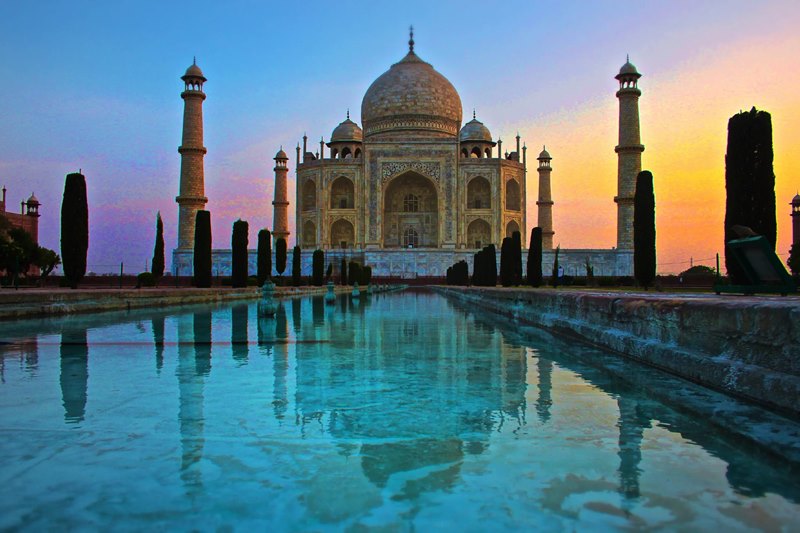
The Taj Mahal Mausoleum and Mosque is an undisputed work of art, listed as a World Heritage Site and one of the Seven New Wonders of the World. This magnificent structure is located in the city of Agra, on the banks of the Jumna River in India. In the 17th century, Shah Jahan, the ruler of the Mughal Empire, ordered the construction of a mosque as a sign of love and respect for his wife Mumtaz Mahal. Subsequently, the great Shah of India himself was buried here.
The history of the Taj Mahal mausoleum in India
The origins of the Taj Mahal are inspired by the legendary love story between the ruler Shah Jahan and a simple girl, Mumtaz Mahal, who was engaged in trading in the local market. In love with her amazing beauty, the Indian monarch soon decided to take her as his wife. From this union 14 children were born, but the happiness was overshadowed by the tragic outcome during the birth of the last child, as a result of which Mumtaz Mahal died. Deeply shocked by the death of his beloved, Shah Jahan ordered the construction of a mausoleum that would surpass all the splendor of this world, as an eternal testimony of their great love.
The construction of the Taj Mahal began in 1632 and was completed in 1653. The project attracted more than 20 thousand craftsmen and workers from all over the empire. The construction was supervised by a group of architects, but the key idea in creating this magnificent structure is the contribution of Ustad Ahmad Lakhauri. There is also a version that the main architect of the project was the Persian master Ustad Isa (Isa Muhammad Effendi).
The construction of the tomb and platform took approximately 12 years, and in the next ten years the minarets, mosque, jawab and Great Gate were erected.
Taj Mahal: Amazing Palace Architecture
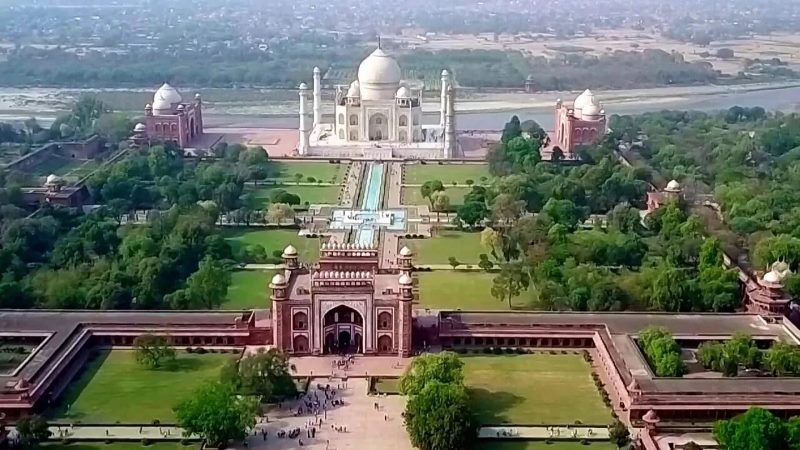
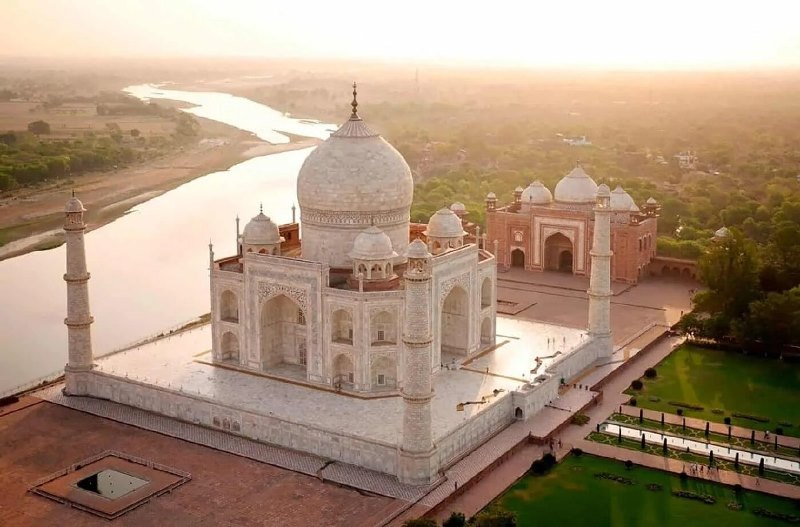
The architectural marvel known as the Taj Mahal is a five-domed structure with four corner minarets. Inside the mausoleum there are two tombs - the Shah and his wife.
The mosque is installed on a platform raised 50 meters above the level of the Jamna River, which ensures the strength of the foundation. The total height of the Taj Mahal is 74 meters. In front of the building stretches a three-hundred-meter garden with fountains and a marble pool, creating a symmetrical reflection of the entire structure in its waters from a certain angle.
The central and outstanding element of the Indian Taj Mahal is the white marble dome. The walls of this majestic structure are also lined with glossy, translucent marble, decorated with inserts of precious stones and semi-precious stones, such as pearls, sapphires, turquoise, agate, malachite, carnelian and many others. Completed in accordance with Islamic tradition, the inside of the Taj Mahal Mosque is decorated with abstract symbols and passages from the Koran.
The Taj Mahal is celebrated as the crown jewel of Muslim art in India, representing an outstanding example of Mughal architecture that fuses Indian, Persian and Arabic styles.
Interesting facts about the Taj Mahal
- Taj Mahal is translated from Persian as “The Greatest Palace” (where “Taj” means crown and “Mahal” means palace).
- Since 2007, the Indian Taj Mahal has been included in the list of the New Seven Wonders of the World.
- Tens of thousands of people visit the Taj Mahal every day, and per year this number reaches from 3 to 5 million. Peak attendance occurs in October, November and February.
- Many valuable interior items of the Taj Mahal were stolen, including precious stones, gems, the crown of the main dome - a golden spire, and even the entrance doors made of silver.
- Thanks to the characteristics of marble, the Taj Mahal building is able to change color during the day and depending on weather conditions: white during daylight hours, pink at dawn and silver during a moonlit night.
How to visit: information on prices, tickets and opening hours
Entry fee: For foreign tourists - INR 1100
Working hours:
Daytime: 6:00 - 19:00 (weekdays, except Fridays, when the day of prayer is held in the mosque).
Evening time: 20:30 - 00:30 (two days before the full moon and two days after, excluding Fridays and the month of Ramadan).
Visiting rules: Allowed to bring in the Taj Mahal only small handbags, mobile phones, cameras, compact video cameras and bottled water in transparent packaging.
How to get to the famous Taj Mahal temple in India
The Taj Mahal is located at: Uttar Pradesh, Agra city, Tejginj district, Forest Colony, Dharmaperi.
If you are vacationing on the coast of Goa and dream of seeing the splendor of the Taj Mahal, you should consider the lack of direct flights from Goa Airport to Agra. One option is to fly to Delhi and then take daily flights to Agra. The distance between Goa and Agra is approximately 2000 km.
There are various ways to get from Delhi to Agra: air travel will take 3-4 hours, bus travel will cost around $15-20 and will take 3 hours, and morning train 12002 Bhopal Shatabdi will cost 5-10 dollars and will take 2-3 hours.
If you prefer a more comfortable option, it is recommended to book an excursion or private tour to Agra with a visit to the Taj Mahal. Popular routes are tours from Goa to Agra and from Delhi to Agra.


