
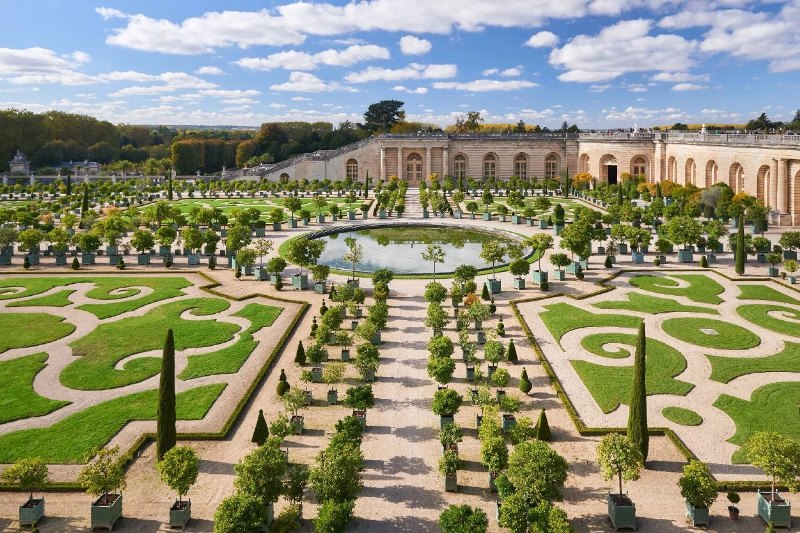
Versailles is a majestic palace and park ensemble (Parc et château de Versailles), located in the suburb of Paris of the same name. Versailles is included in the prestigious list of 100 Wonders of the World, and was also included in the UNESCO World Heritage Register in 1979.
This magnificent complex can be divided into several key parts:
- Chateau (the main palace of Versailles), a majestic building, a symbol of luxury and art.
- Grand Trianon, another architectural gem located in this amazing location.
- Petit Trianon, the private residence of Marie Antoinette, which still inspires visitors with its sophistication.
- Marie Antoinette Farm, a secluded retreat with country charm.
- Magnificent gardens where nature meets art in harmony.
- An extensive park that provides a unique opportunity for walking and outdoor recreation.
History of Versailles
Versailles under the Bourbon dynasty
Initially, these territories were the hunting estate of Louis XIII. Subsequently, his son and heir, the famous "Sun King" Louis XIV, ascended the throne in 1654. After the events of the Fronton Uprising, the life of the “Sun King” in the Louvre seemed alarming and unsafe to him, which prompted him to decide to build a palace on the Versailles grounds, on the site where his father’s hunting grounds had previously been located.
In 1661, under the leadership of Louis XIV, construction of this unique palace and park complex began, and it continued throughout the reign of his son, Louis XV. Architects such as Louis Leveau, François D'Orbe, and the artist Charles Lebrun created a majestic palace in a classical style, which is still considered the crowning achievement of architectural masterpieces.
Until 1789, Versailles served as the main residence of the French kings. However, at the beginning of October 1789, people gathered on the palace square, outraged by the high prices of bread. The response to these protests was the famous phrase attributed to Marie Antoinette: “If they have no bread, let them eat cake!” However, historians are still arguing whether she uttered this phrase, or whether it was an invention of the townspeople. Despite this, after this unrest, Versailles ceased to be the center of public life in France, and the king, the queen, and the deputies of the bourgeoisie (National Assembly) moved to Paris.
History of the Palace of Versailles during the period of revolutions and wars
Preserving and restoring the Palace of Versailles was a very difficult task. In 1799, after Napoleon I came to power, Versailles came under his generous patronage. In 1806, the emperor issued a decree on urgent work on the restoration of the Palace of Versailles. This work began two years later, and the interior rooms were restored in amazing detail: famous mirrors, gold paneling and furniture, including objects from the Louvre.
After the revolution of 1814-1815, power again passed to the Bourbon dynasty. Under Louis Philippe, many of the rooms of Versailles were restored to their full glory. The palace turned into a national museum, where a unique collection of portraits, busts and paintings of great historical significance was presented.
An important chapter in the history of Versailles was the events associated with the French-Prussian War. After the defeat of France, the Palace of Versailles became the temporary residence of the German army headquarters in 1870-1871. At the beginning of 1871, the German Empire was proclaimed in the Gallery of Mirrors at Versailles, which was deliberately done to humiliate the French. However, a preliminary peace treaty was soon signed between the parties, and the capital was moved from Bordeaux back to Paris. In fact, only 8 years later, in 1879, Paris again became the French capital.
From Versailles in the 20th century to today
The Versailles faith has changed dramatically from 20th century times to the present day. After the end of the First World War, in which Germany had already suffered a crushing defeat, the Palace of Versailles became the site of the signing of the Treaty of Versailles. This time the French choice in favor of Versailles was symbolic - they sought to restore historical justice and humiliate the Germans.
In 1952, the government allocated a huge sum - 5 billion francs - for the restoration of Versailles. Also, from the 1950s to the mid-1990s, heads of state visiting France held meetings with the French president in the palace.
In 1995, Versailles became a legal entity and a government agency. Since 2010, its name has changed to "Public Institution of the National Estate and Museum of Versailles", emphasizing its importance as a national and cultural heritage of France.
What to see in Versailles: The splendor of the Halls and Interiors of the Palace
Each space, be it the living room, salon or bedroom, is a true masterpiece, testament to the countless talent and effort that has gone into this majestic place.
Royal Chapel Church
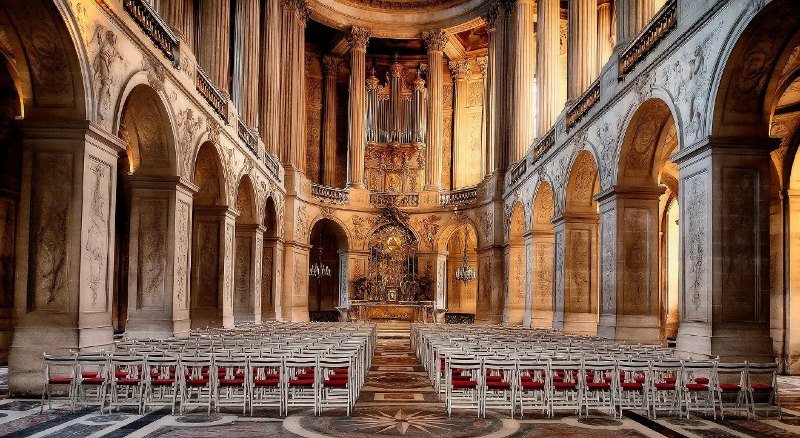
Located near the entrance on the right side of the building, the Royal Chapel is a majestic place. Here, the magnificent Royal Altar is surrounded by graceful figures of ancient Greek gods, giving the place a special character. On the floor of the Royal Chapel you can see a luxurious coat of arms created from multi-colored marble, which enhances the atmosphere of luxury. To access the second tier of the chapel, an elegant spiral staircase is provided, which gives the space additional grandeur.
Mirror Gallery – Diamond of Versailles
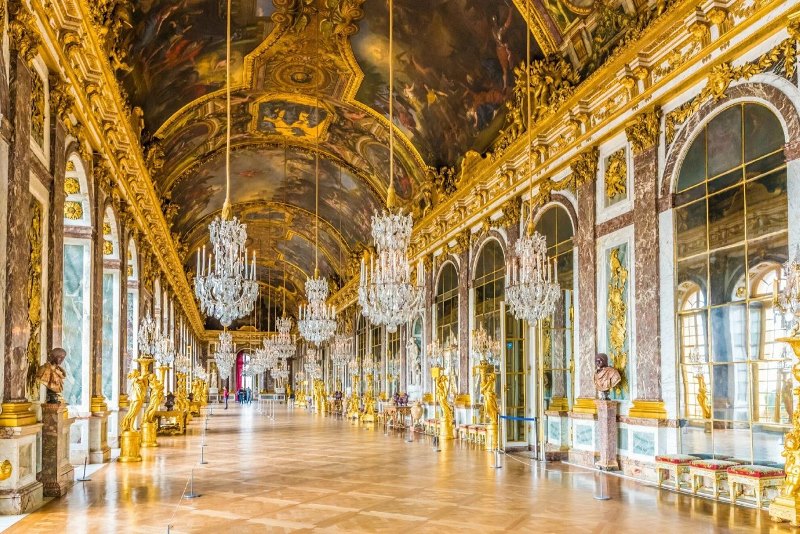
The Hall of Mirrors is considered the undoubted pearl of the Palace of Versailles. Its total area reaches 803 square meters. Inside this magnificent gallery, there are as many as 357 mirrors arranged in parallel rows, highlighting the unique charm of the room. The entire room is decorated with crystal chandeliers, exquisite silver candelabra, antique floor lamps, vases and pilasters from the Rouge de Rance, finished with gilded bronze capitals, which give this room an innovative look that has become known as the "French style" and was created by the master of design, Le Brun.
The real visual splendor, however, is the ceiling of the Gallery of Mirrors, which features 30 illustrations telling the glorious story of Louis XIV during the first 18 years of his reign. Marriages were also held here in the Gallery of Mirrors, making this place even more significant in the context of Versailles.
Apollo Hall: Palazzo Publico
The Apollo Hall, also known as the Throne Room, was designed to host audiences of foreign delegations and ceremonies associated with royal occasions. In the evenings, this majestic hall was transformed into an entertainment center where guests could enjoy dancing, theatrical performances and live music.
Hall of War
The Hall of Military Glory was designed to honor the magnificent military exploits of the French military. On its walls are majestically displayed artistic paintings telling about their triumphs and victories.
Diana's Hall
Diana's Salon at the Palace of Versailles surprises with its interior, which impresses with antique busts and sculptures, picturesque walls and vaults covered with gold.
Venus Gallery
The main artifact of this exhibition gallery is a sculpture depicting the French King Louis XIV, often called the "Sun King".
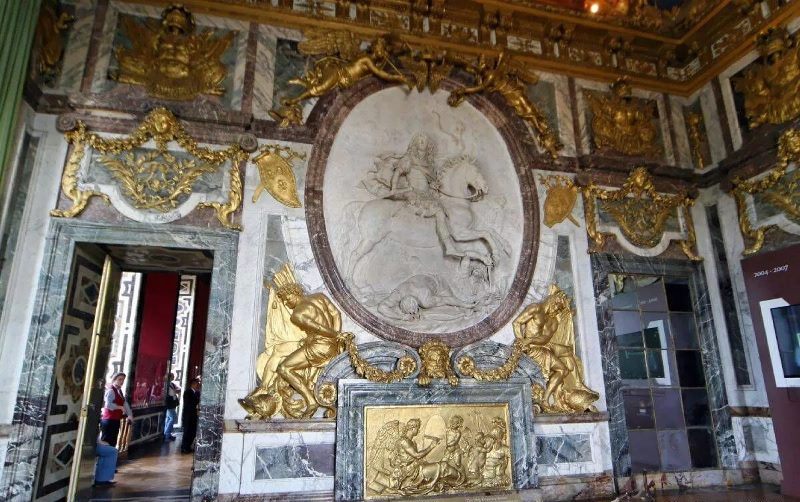
Bull's Eye Hall
From the window of this room you can see a cozy oval courtyard. This place often served as a refuge for those close to the monarch and the highest nobility, who wanted to observe what was happening in the royal apartments through a special window, which is shaped like the eye of a bull.
Bedroom of King Louis XIV
Louis XIV was renowned for his extravagant style and passion for luxury, and his bedroom was the epitome of this refined lifestyle. This room resembled a real theater set, where the king himself played the main role. At the moments of awakening and sunset, specially selected persons were always present in the bedroom who had the honor of witnessing this ceremony. When the “sun king” woke up, four servants offered him a glass of wine, and two helped him dress in a luxurious lace shirt.
Queen's Bedroom
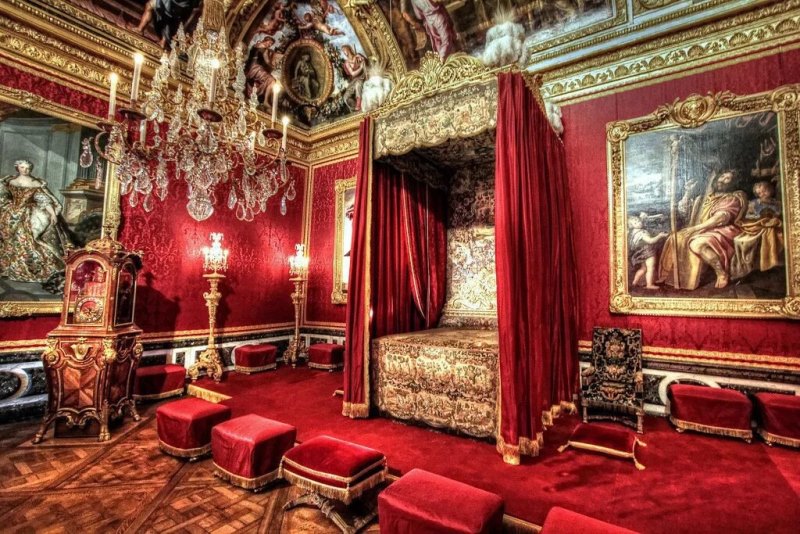
The royal bedroom deserves attention due to its magnificent interior. Here you will be amazed by the huge bed, the walls of which are decorated with elegant stucco, portraits and picturesque panels, creating a unique atmosphere.
Gardens and park of Versailles
This is an exceptional place, created by approximately 36,000 people. Year after year, this amazing complex is visited by more than 6 million tourists.
The location of all elements of the park is thought out to the smallest detail. The scale of this place is so large that it is simply impossible to explore it all in one day. Fountains, pools, waterfalls, grottoes and sculptures - everything in the park is designed to emphasize the splendor of the “Sun King”.
About 350,000 trees grow in the garden. Maintenance of trees, bushes and lawns is carried out in strict accordance with the original design conceived by the creator of the complex in the 17th century.
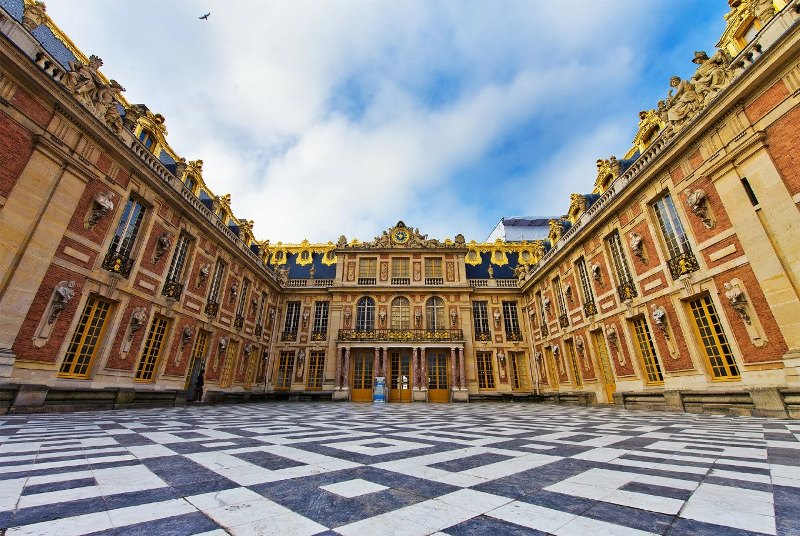
Royal Ball
Before the nightly fountain performance, a real royal ball is held in the Hall of Mirrors. The dancers perform amazing dances, traditional for royal balls, to classical music, creating a magical atmosphere.
Night Fountains
Every Saturday from May to September, guests are invited to an amazing light and music show with fountains. This show is wonderful on its own, and it ends with a magnificent fireworks display.
Exhibitions and Exhibitions
Galleries and other spaces at Versailles regularly host interesting exhibitions. Here you can see both works of contemporary artists and masterpieces of masters of past centuries.
How to get to Versailles
Address: Place d'Armes, 78000 Versailles, France.
From Paris to Versailles it is easy and convenient to travel in just half an hour using the fast RER trains, line C. At Versailles, your final stop will be called Versailles Rive Gauche, and from there to the palace gates just 10 minutes of a pleasant walk.
Another option is to take bus number 171, which departs from the Pont de Sevres metro station in Paris. Buses run at short intervals, approximately every 15-20 minutes, and will take you to Versailles.


