
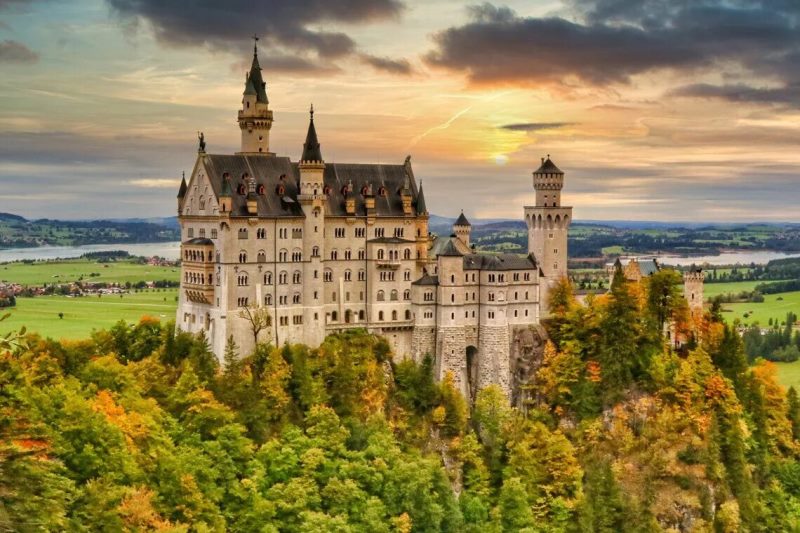
On the border of Germany and Austria, in the small Bavarian town of Schwangau, is the majestic royal castle of Neuschwanstein, which seems to have come out of a fairy tale. An amazing castle that proudly rises on a high hill located in a picturesque part of the Bavarian Alps. This majestic castle is considered one of the most impressive in Germany. A visit to Neuschwanstein will give you the feeling of being in a fairy tale, where every corner of the castle seems like a place where fantastic characters could appear.
Swan Stone Castle in Schwangau, Bavaria
Known as Neuschwanstein, located in Bavaria, is an unusual palace, not built for defense or royal festivities. Its construction was inspired by King Ludwig II's deep love for the opera about the swan knight known as "Lohengrin," composed by Richard Wagner.
From the moment Ludwig II ascended the throne, he became a passionate admirer of Wagner and his music, and dedicated his life to supporting the composer. He dreamed of immersing himself in the world of operatic characters created by Wagner, and decided to build “fairytale castles” to bring this dream to life.
Over the course of 15 years, three amazing castles were built on his orders, but the most famous of them was Neuschwanstein, which translated from German means “New Swan Stone.” This castle rises in neo-Romanesque style and represents a beautiful creation inspired by music and opera.
The history of the castle and the fate of King Ludwig
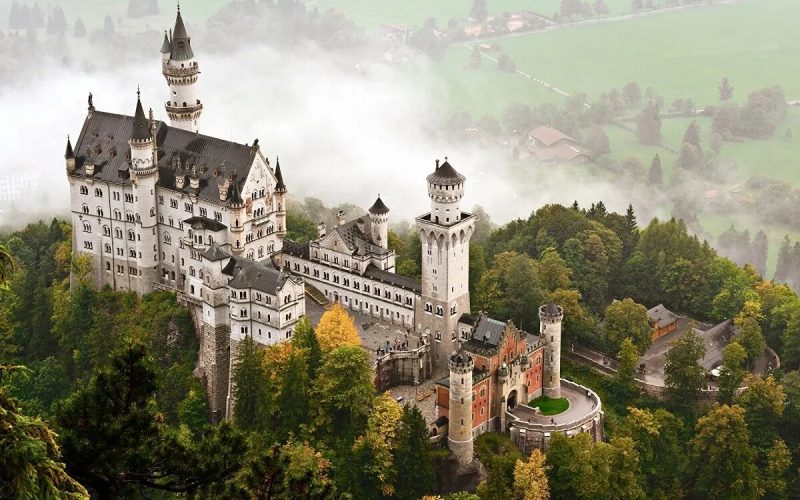
Construction of Neuschwanstein began in 1869 under the direction of Munich artist Christian Janck and architect Eduard Riedel. However, this castle is also considered the personal work of King Ludwig II, since he was personally closely involved in the creation of every detail of the project.
When the construction was not yet completed in 1884, Ludwig had already moved and settled in Neuschwanstein. Here he lived only 172 days, after which he was removed from the throne due to suspicions of mental disorders. His excessive fascination with fairytale castles distorted his view of reality. He became so absorbed in his dream that he lost contact with the outside world.
In 1886, Ludwig II mysteriously drowned in Lake Starnberg. His death put an end to the construction of Neuschwanstein.
What is hidden inside Neuschwanstein Castle
Inside this palace there are 5 floors and 110 rooms, although only 16 of them are intended for living, and most of the rest remained unfinished. The interiors of Neuschwanstein surprise with the richness of its symbolism, inspired by the operas of Richard Wagner, as well as illustrations from ancient Germanic legends. Particularly common are motifs related to swans, which are inspired by Ludwig II's opera Lohengrin. The presence of images of these birds is not accidental, since the swan was chosen as the coat of arms of the royal dynasty.
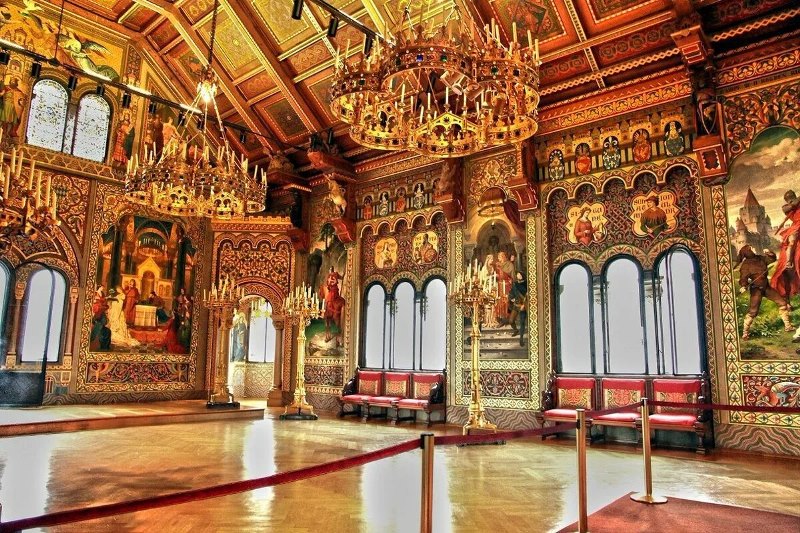
In the central part of Neuschwanstein Palace is the Singers' Hall, although it remained unused until 1933. The first time music filled this room was in honor of the 50th anniversary of the death of Richard Wagner.
However, the real gem of the palace is the throne room, which is decorated with portraits of kings and religious frescoes. Interestingly, the throne itself is missing here, replaced only by a ledge that is reached by stairs.
The monarch’s personal apartments were located on the third floor. A particularly outstanding room was a room designed in the shape of a magical cave, depicting a grotto with a lake and a small waterfall. However, when information about the existence of this exquisite cave inside the castle reached parliament, it led to Ludwig being considered eccentric.
The surroundings near the castle, what to see
The Neuschwanstein Castle observation deck offers impressive panoramic views of the Alps. To the right you can see the cozy village of Schwangau, and to the left you can see the outlines of another castle - Hohenschwangau, which was the childhood place of Ludwig II. The area also has an attractive attraction: Swan Lake (Schwansee), which served as a source of inspiration for the great composer Pyotr Ilyich Tchaikovsky.
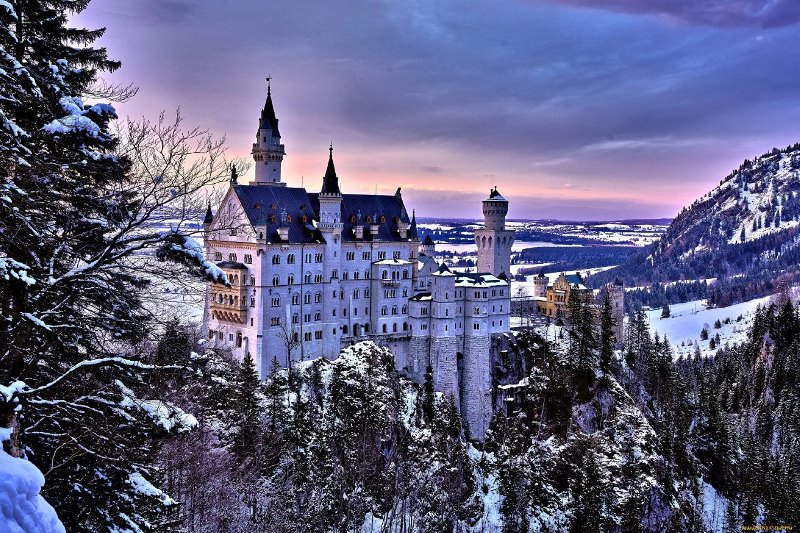
You can't miss the Marienbrücke, the bridge spanning the Pollat gorge. It was named after King Ludwig's mother, Maria. This bridge offers stunning views of the Bavarian Neuschwanstein Castle and waterfall. However, it should be remembered that Mary's Bridge is located 92 meters above the ground and, as such, is not for the faint of heart. In winter, visiting the bridge is prohibited for safety reasons.
Interesting facts about Neuschwanstein Castle
- For the construction of Neuschwanstein Castle, King Ludwig II had to spend a huge amount of 7.5 million German marks - for that period of time this was colossal money. The king accumulated a huge debt to creditors, and after his death it was decided to open the castle for paid visits. In 13 years, thanks to tourists, we managed to pay off this debt.
- The image of Neuschwanstein Castle is forever captured in the painting of Adolf Hitler, which was sold in 2015 for the amount of 100 thousand euros.
- The prototype of Neuschwanstein was the Sleeping Beauty Castle in Disneyland Paris. In addition, a similar castle can be seen on the logos and screensavers of the Walt Disney Animation Studio.
- The fairy-tale Neuschwanstein Castle has also become an object of attention for cinema. Its history and architecture have been depicted in films such as Ludwig II: The Rise and Fall of a King (1955), Ludwig (1972) and Ludwig of Bavaria (2012).


